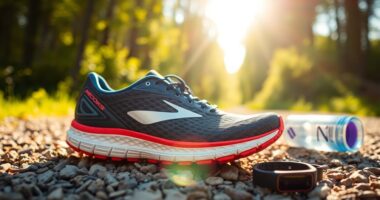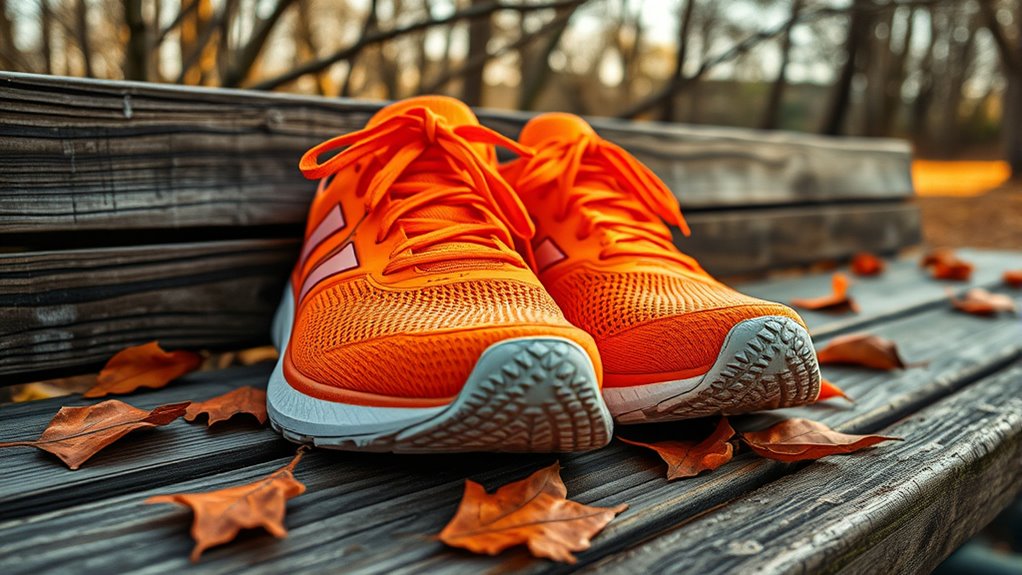

You should retire your running shoes when their cushioning feels compressed or uneven, and the outsole shows significant wear, such as smooth patches or bald spots. If you notice persistent discomfort, pain, or changes in your running form, it’s a clear sign they no longer provide proper support. Typically, it’s time to replace them every 300 to 500 miles. Keep an eye on these signs to stay safe and prevent injury—there’s more to contemplate if you keep going.
Key Takeaways
- Replace shoes every 300 to 500 miles or when cushioning feels compressed or uneven.
- Look for signs of outsole wear, such as smooth, bald spots or thinning rubber patches.
- Replace shoes if you experience persistent discomfort, pain, or changes in running form.
- Regularly inspect for visible signs of deterioration, including worn tread and reduced traction.
- Consider your running style, weight, and terrain to determine optimal replacement timing.
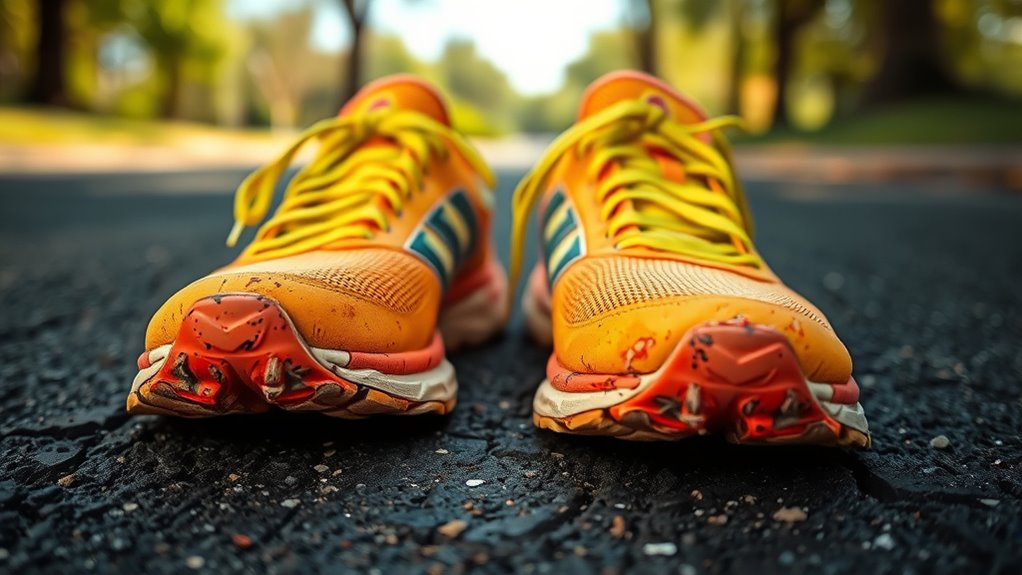
Knowing when to retire your running shoes is essential to prevent injuries and maintain ideal performance. One of the most noticeable signs is the deterioration of shoe cushioning. Over time, your shoes lose their ability to absorb shock, which can lead to increased stress on your joints, tendons, and muscles. If you find that your shoes no longer feel as supportive or plush as they once did, it’s a clear indicator that their cushioning has broken down. This loss of shock absorption not only impacts comfort but also raises your risk of overuse injuries like shin splints or stress fractures. Pay attention to how your shoes feel during runs; if cushioning feels compressed or uneven, it’s time to think about retiring them.
Another vital aspect to monitor is outsole wear. The outsole is the part of the shoe that contacts the ground, and over time, it wears down from constant contact and friction. When the tread pattern becomes smooth or uneven, your shoes can lose traction and stability, which can compromise your safety and running efficiency. Excessive outsole wear often manifests as bald spots or thinning rubber patches, especially in high-pressure areas like the heel or forefoot. If you notice that the outsole is heavily worn down or the shoe’s grip has diminished, it’s a sign that your shoes are no longer providing the necessary support and protection. Continuing to run in shoes with worn-out outsoles increases your chances of slipping or sustaining injuries.
Beyond cushioning and outsole wear, it’s also wise to think about other signs like persistent discomfort, new aches, or changes in your running form. If you find yourself adjusting your gait or feeling pain that wasn’t there before, it’s time to evaluate your shoes. Keep in mind that even the most expensive running shoes won’t last forever—most experts recommend replacing them every 300 to 500 miles, depending on your running style, body weight, and terrain. Regularly inspecting your shoes for signs of wear and paying attention to how they perform can help you determine the right moment to retire them. Additionally, understanding the wear patterns of your shoes can give insight into your gait and biomechanics, helping prevent injuries and optimizing performance. By doing so, you’ll help prevent injuries, optimize your performance, and enjoy running safely for years to come.
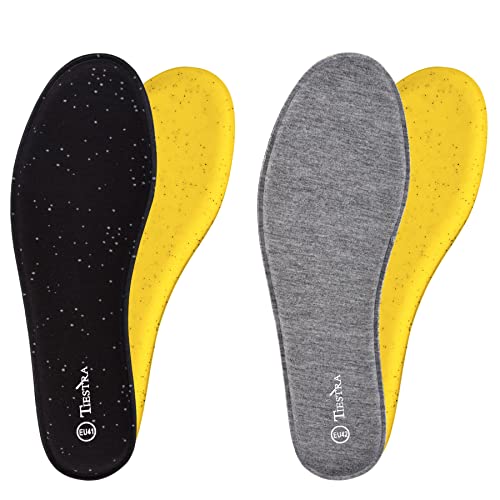
2 Pair -Shoe Inserts for Mens Memory Foam Insoles,Replacement Insoles for Work Boots Running Shoes, Cushion Shock Absorbing for Foot Pain Relief, Comfort Breathable Inner Soles 44EU,US11
Package Included: 2 pair memory foam insoles
As an affiliate, we earn on qualifying purchases.
As an affiliate, we earn on qualifying purchases.
Frequently Asked Questions
How Do I Identify Early Signs of Shoe Wear?
You can identify early signs of shoe wear by paying attention to your shoe cushioning; if it feels less supportive or more compressed, it’s time to consider retiring them. Check the outsole for deterioration, such as cracks or smooth spots, which indicate reduced traction and protection. Also, notice if you experience more discomfort or fatigue during runs—these signs suggest your shoes are no longer providing ideal support and need replacing.
Can Running Surface Affect Shoe Lifespan?
Running surface definitely affects your shoe’s lifespan. Hard surfaces like concrete cause quicker foam degradation and increase outsole peeling, while softer trails are gentler on your shoes. If you notice your shoes are losing cushioning or the outsole is peeling faster than usual, especially after running on tough surfaces, it’s time to contemplate retiring them. Protect your knees and joints by rotating shoes and paying attention to these signs.
Do Brand or Model Impact Shoe Durability?
Brand and model do influence shoe durability, so choose carefully. Certain brands boast better build quality, offering longer-lasting support and cushioning, while some models are designed for specific running styles, affecting their longevity. You notice these differences through consistent comfort and performance, indicating when it’s time to retire your shoes. By paying attention to brand impact and model durability, you ensure your running shoes stay supportive, safe, and effective mile after mile.
How Does My Running Style Influence Shoe Wear?
Your running style considerably influences shoe wear through your gait analysis and footwear ergonomics. If you land heavily or have an uneven gait, your shoes may wear out faster in certain areas. Pay attention to how your shoes wear unevenly or develop signs of breakdown. Regular gait analysis can help identify issues, allowing you to choose shoes that better support your biomechanics, ultimately extending their lifespan and reducing injury risk.
Should I Replace Shoes After a Certain Mileage Threshold?
You should consider replacing your running shoes after about 300 to 500 miles, as shoe cushioning diminishes and outsole degradation occurs. Once the cushioning feels less supportive and the outsole shows signs of wear, it’s time for new shoes. This helps prevent injuries and guarantees peak performance. Keep track of your mileage and inspect your shoes regularly to know when they’ve reached their lifespan.

BRONAX Womens Wide Tennis Shoes Athletic Running Mesh Breathable Rubber Outsole Everyday Walking Jogging Sneakers Size 8 Purple 39
Roomy toe box: Help your toes move more freely and space through the midfoot
As an affiliate, we earn on qualifying purchases.
As an affiliate, we earn on qualifying purchases.
Conclusion
Knowing when to retire your running shoes can prevent injuries and keep your runs comfortable. Remember, most shoes should be replaced every 300-500 miles; neglecting this can increase injury risk by up to 30%. Pay attention to signs like worn-out treads or decreased cushioning. By replacing your shoes on time, you’ll enjoy better support and performance, helping you stay motivated and injury-free on every run. Don’t wait too long—your feet will thank you!

ASICS Men's Gel-Venture 10 Running Shoes, 10.5, Monument Blue/Black
Mesh upper: Improves breathability
As an affiliate, we earn on qualifying purchases.
As an affiliate, we earn on qualifying purchases.

CURREX RunPro Insoles for Running Shoes, Arch Support Inserts to Help Reduce Fatigue, Prevent Injuries, Boost Performance for Men & Women (High Arch, Size Large)
FEEL BETTER, PERFORM BETTER: Flexible support and shock absorbing cushioning from heel to toe help reduce fatigue, prevent…
As an affiliate, we earn on qualifying purchases.
As an affiliate, we earn on qualifying purchases.