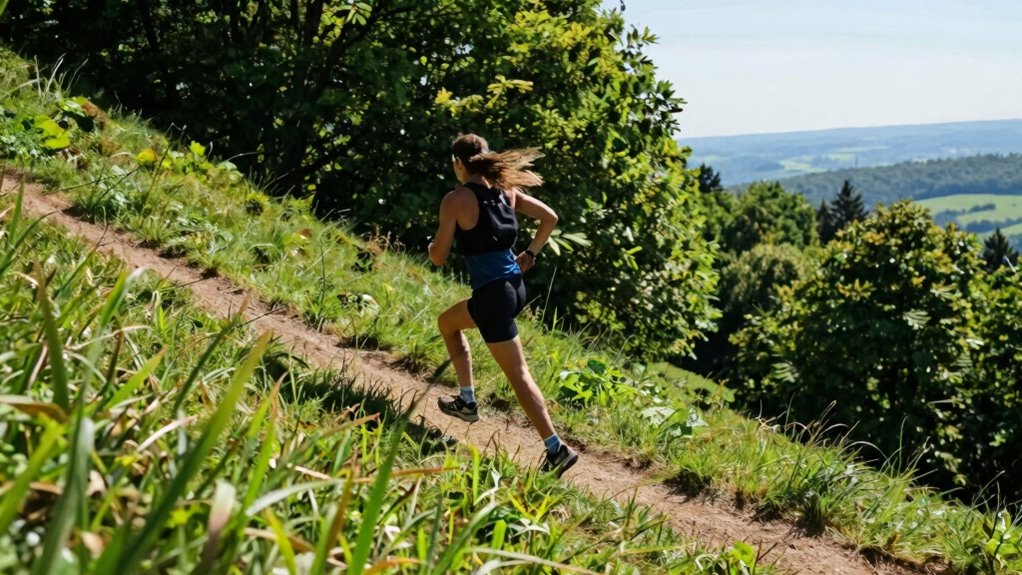

Decline training feels different from flat running because it changes your body mechanics and activates various muscle groups. You engage your quads and calves more, which can enhance strength and power. As you run downhill, your heart rate typically remains lower, creating a deceptive sense of ease despite increased muscular strain. This unique combination can improve your endurance but also heightens the risk of injury. Stick around, and you’ll discover more insights on how to optimize your training approach.

Get workout gear delivered free — and shop member deals
- Fast, free delivery on millions of items
- Access to Prime Big Deal Days deals on October 6–7
- Prime Video, Amazon Music and more included
Key Takeaways
- Decline training alters body angle, primarily engaging quads and calves, leading to a different muscle activation pattern compared to flat running.
- Higher speeds are achievable with less exertion during decline running, creating a false sense of ease despite significant muscular strain.
- The heart rate during decline running is typically lower, which can mislead runners about their actual effort level and fatigue.
- Increased risk of knee and joint injuries in decline training necessitates careful attention to posture and core engagement for stability.
- Decline training focuses on strength and power, while flat running promotes endurance and consistent cardiovascular benefits, making each method uniquely different.
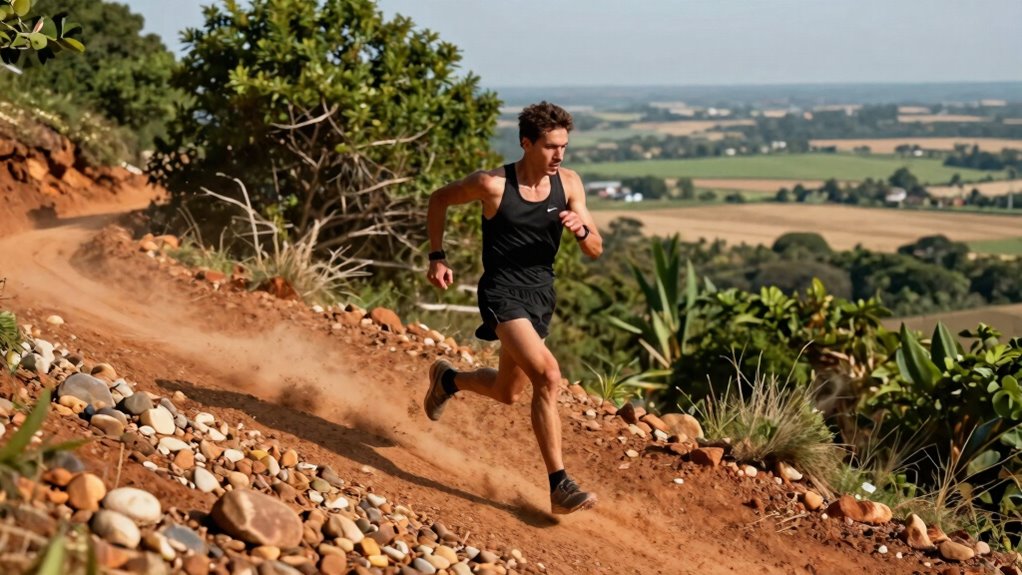
When you’re weighing the benefits of decline training versus flat running, it’s essential to evaluate your fitness goals and overall experience. Decline training, which involves running on a downward slope, feels distinctly different from running on flat terrain. This difference stems from the unique downhill biomechanics at play, influencing how your body engages during the workout.
As you run downhill, your body adapts to the altered angle, requiring different muscle groups to activate. You might notice that your quads and calves work harder to control your descent. This shift can lead to increased muscle engagement and can help improve your strength and power over time. On the other hand, flat running promotes a more balanced use of muscles, which might feel easier but doesn’t provide the same intensity of muscle challenge that decline running does.
You’ll also notice a significant difference in the cardiovascular impact. Running downhill generally allows you to maintain higher speeds with less exertion, leading to a lower heart rate than you’d experience while running flat. This can create a false sense of ease, making you feel like you’re not working as hard. However, the reality is that while your heart rate may be lower, the muscles are still under considerable strain. Incorporating proper biomechanics can help optimize your downhill running technique and reduce injury risk. Understanding muscle engagement during downhill running can further help tailor your training to maximize benefits and minimize injury.
This combination of lower cardiovascular demand and higher muscular engagement can lead to improved endurance, but it’s essential to approach decline training with caution. The risk of injury, particularly to your knees and joints, can increase if you push yourself too hard without proper technique. You’ll want to focus on maintaining a balanced posture and engage your core to help stabilize your movements. Incorporating proper technique and safety precautions is crucial for minimizing injury risks. Additionally, being aware of terrain variations can help you adapt your running style and reduce impact-related injuries. Recognizing muscle fatigue and adjusting your pace accordingly can further prevent overuse injuries and promote sustainable training.
In contrast, flat running typically offers a more consistent cardiovascular workout. You can control your pace more easily, which can be beneficial for building endurance over longer distances. Plus, it reduces the risk of injury associated with abrupt downhill impacts.
Ultimately, the choice between decline training and flat running comes down to your specific fitness goals. If you’re looking to build strength and power while challenging your body in new ways, decline training might be the way to go. However, if you aim to improve endurance and cardiovascular fitness without the added strain on your joints, sticking to flat running could be your best bet. It’s all about finding what feels right for you and keeping your long-term health and fitness in mind.
running shoes for downhill training
As an affiliate, we earn on qualifying purchases.
As an affiliate, we earn on qualifying purchases.
Frequently Asked Questions
How Can I Incorporate Decline Training Into My Routine?
To incorporate decline training into your routine, start by finding a hill or using a treadmill with a decline feature. Focus on your technique: lean slightly forward and engage your core. Mix in workout variations like sprints, lunges, or step-ups to keep it exciting. Aim for short bursts, gradually increasing intensity. Don’t forget to stretch after each session to prevent injury. You’ll notice improvements in speed and strength over time!
What Are the Best Shoes for Decline Running?
Finding the right shoes for decline running is like choosing a trusty sidekick for an adventure. Look for shoes with good grip and cushioning to handle various terrain types. Features like a responsive midsole and sturdy outsole are essential for stability and comfort. Make certain they fit snugly but allow your toes to move freely. This way, you’ll stay confident and agile as you tackle those downhill challenges.
Can Decline Training Help Prevent Injuries?
Yes, decline training can help prevent injuries. By incorporating this type of training, you strengthen specific muscle groups that support your joints, reducing the risk of strains or overuse injuries. It also enhances muscle recovery, as the varied movement patterns promote better blood flow and flexibility. Just make sure you start gradually to avoid overdoing it. With the right approach, you’ll not only improve performance but also keep injuries at bay.
How Does Decline Running Affect My Heart Rate?
When you’re racing downhill like a deer on a slope, your heart rate spikes differently. Decline running increases your heart rate variability due to the unique metabolic response your body has to the angle. This challenge forces your heart to work harder, adapting to the rapid shifts in intensity. You’ll find your cardiovascular system becomes more efficient, helping you build endurance while also enhancing your overall fitness level. Keep pushing those limits!
What Muscles Are Most Engaged During Decline Training?
During decline training, you engage your quadriceps, hamstrings, and calves considerably. The increased angle activates your muscles more intensely, enhancing muscle activation compared to flat running. You’ll also notice improvements in your balance as your body adjusts to the incline. This unique challenge forces you to stabilize more, which can boost your overall performance. So, while you run downhill, you’re not just working harder; you’re also building strength and coordination effectively.
Conclusion
To sum up, decline training engages different muscle groups and alters your biomechanics, making it feel distinct from flat running. For instance, a runner who switched to decline sprints noticed improved speed and power due to enhanced leg strength and reduced impact. By incorporating decline training into your routine, you can experience these unique benefits, tapping into new performance levels you might not have thought possible. Embrace the difference, and let it elevate your running game!
Halloween Picks
halloween
As an affiliate, we earn on qualifying purchases.