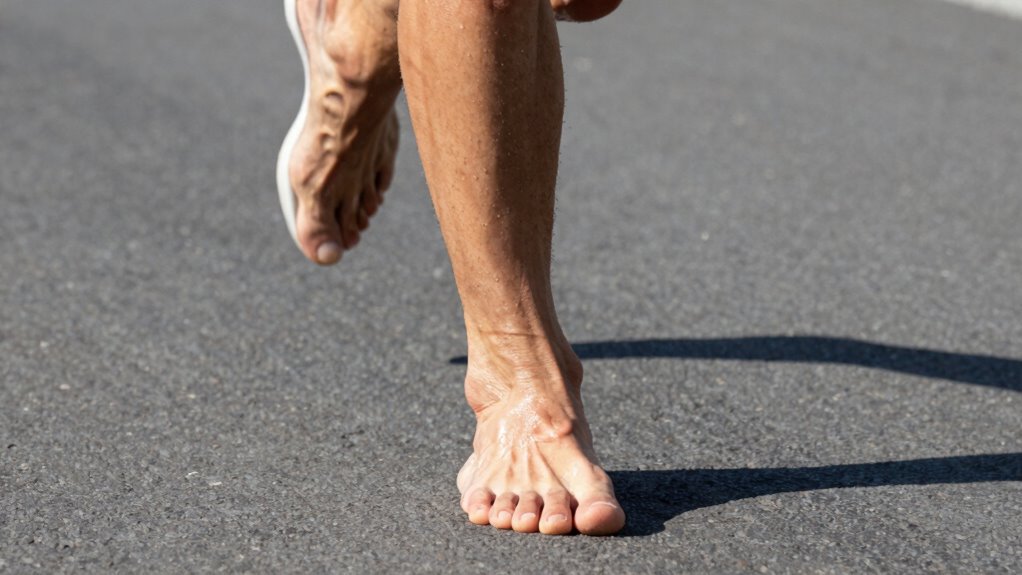

A heel drop modifies the load on your calves and Achilles tendons by focusing on eccentric contractions, where your muscles lengthen while under tension. During this controlled descent, you gradually lower your heels, which puts more stretch on the tendons and muscles, strengthening them over time. Proper technique ensures the force distribution targets the right tissues and minimizes injury risk. Continue exploring to understand how biomechanical analysis can optimize this movement for safer, more effective results.

Get workout gear delivered free with Prime
- Fast, free delivery on millions of items
- Prime Video, Amazon Music and more included
- Member-only deals all year
Key Takeaways
- Heel drops involve controlled eccentric movement, increasing load on calves and Achilles tendons during the downward phase.
- Proper biomechanics during heel drops ensure optimal load distribution, strengthening muscles and tendons effectively.
- Adjusting step height or range of motion alters the load, targeting specific areas of the calf and Achilles for better adaptation.
- Biomechanical analysis helps detect improper technique, reducing uneven stress and preventing injury while maximizing load benefits.
- Gradual progression during heel drops enhances tendon resilience and reduces injury risk by safely increasing load over time.
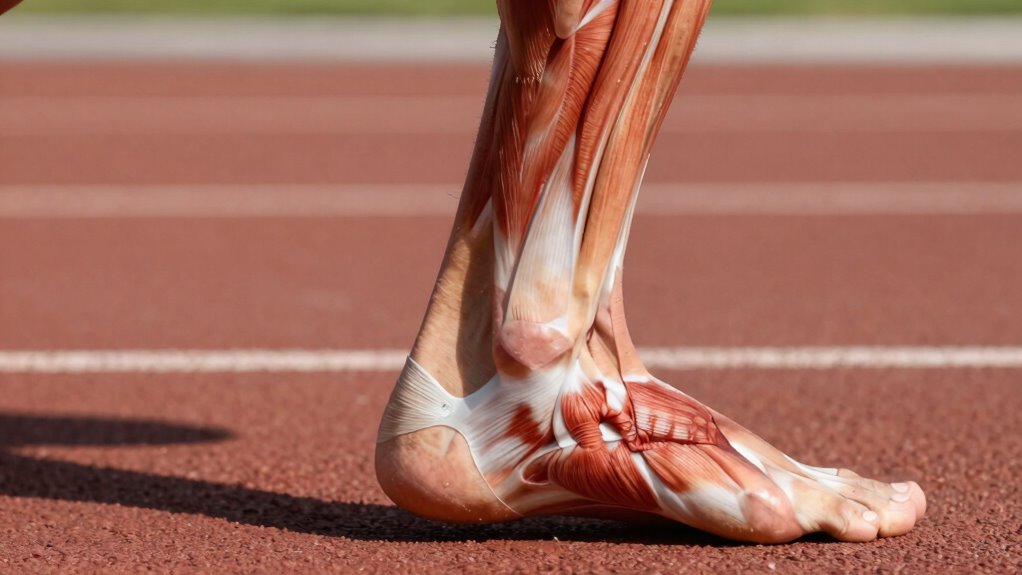
Have you ever wondered what the heel drop technique really involves and how it can benefit your fitness routine? At its core, the heel drop is a simple yet powerful movement that targets your calves and Achilles tendons, but understanding the biomechanics behind it can reveal even greater benefits. When you perform a heel drop, you’re essentially controlling the lowering phase of a calf raise, which allows you to engage specific muscle groups more effectively. This movement isn’t just about building strength; it’s also about understanding how your muscles and tendons work together during activity. That’s where biomechanical analysis comes into play. By examining how your joints, tendons, and muscles coordinate during a heel drop, you gain insight into proper form and load distribution. This understanding helps you optimize the movement for maximum benefit while minimizing risk.
Incorporating heel drops into your routine can markedly aid in injury prevention. When you perform this exercise with proper technique, you strengthen the muscles and tendons that stabilize your ankle and lower leg. Over time, this added resilience reduces the likelihood of common injuries like Achilles tendinitis or calf strains, especially if you’re involved in running, jumping, or other impact sports. The controlled eccentric phase inherent in heel drops encourages gradual stretching and strengthening, which helps reinforce the tendons’ ability to handle sudden loads. This is vital because injuries often occur when tendons are overstressed or weakened. By systematically loading your Achilles and calves, you’re fundamentally preparing your body to better absorb shocks and uneven terrain. Additionally, understanding the biomechanics of movement can enhance your training by ensuring optimal technique and load distribution.
Furthermore, a biomechanical analysis of your movement can reveal imbalances or improper technique that might be increasing your injury risk. For example, if your heel drops are uneven or if you’re compensating with other muscles, you might inadvertently cause strain elsewhere. Correcting these issues ensures that you’re loading the right tissues in the right way. Plus, the heel drop can be tailored to your specific needs by adjusting the height of the step or your range of motion, making it a versatile tool in injury prevention and strength development. By paying close attention to how your body responds during the exercise, you can fine-tune your technique for safer, more effective results.
calf raise heel drop resistance bands
As an affiliate, we earn on qualifying purchases.
As an affiliate, we earn on qualifying purchases.
Frequently Asked Questions
How Does Heel Drop Affect Long-Term Calf Muscle Elasticity?
Heel drop exercises improve your calf muscle flexibility and tendon resilience over time. When you regularly perform heel drops, you stretch and strengthen the muscles and tendons, making them more elastic and better able to handle stress. This long-term adaptation reduces injury risk and enhances performance. Consistent heel drop training helps you maintain healthy, flexible calves, supporting overall lower-leg function and resilience against strain or overuse.
What Are the Risks of Excessive Heel Drop During Training?
A stitch in time saves nine—excessive heel drop during training risks ankle flexibility and can lead to injuries like Achilles tendinitis. Wearing improper footwear design forces your calves and Achilles tendons to overcompensate, increasing strain. You might experience pain, reduced mobility, or long-term damage. Be cautious with heel drop, listen to your body, and prioritize balanced training to protect your muscles and joints from unnecessary stress.
Can Heel Drop Modifications Improve Achilles Tendon Health?
Yes, heel drop modifications can improve Achilles tendon health. By adjusting heel height, you influence ankle mobility and reduce strain on your Achilles. Using appropriate footwear choices, like shoes with a lower heel or orthotics, can help you gradually strengthen your tendon and prevent injuries. Incorporating these modifications into your training allows for better load management, promoting healthier tendons and improved overall ankle function.
How Does Heel Drop Influence Running Performance?
Heel drop influences your running performance by affecting shoe cushioning and running biomechanics. A lower heel drop encourages a more natural gait, improving foot strike and reducing impact forces, which can boost efficiency. Conversely, a higher heel drop offers extra cushioning, helping you absorb shock better. Adjusting heel drop based on your biomechanics can enhance comfort, reduce injury risk, and optimize your overall running performance.
Are There Specific Heel Drop Techniques for Injury Prevention?
Yes, you can use specific heel drop techniques to prevent injuries. Focus on heel drop biomechanics by gradually increasing the heel height in your running shoes, which helps adapt your calves and Achilles tendons. Incorporate barefoot running occasionally to strengthen your foot muscles and improve biomechanics. Always listen to your body, increase heel drop gradually, and combine these techniques with proper stretching to minimize injury risk.
Conclusion
Understanding heel drop is like tuning a musical instrument—you adjust the tension, and suddenly, everything feels in harmony. When you change your heel height, you’re shaping the tension in your calves and Achilles, steering your body’s symphony. Think of each stride as a brushstroke on a canvas; with mindful heel drops, you craft a masterpiece of movement, reducing injury risk and revealing your true running potential. Embrace the change, and let your body sing.
Fall Picks
fall essentials
As an affiliate, we earn on qualifying purchases.