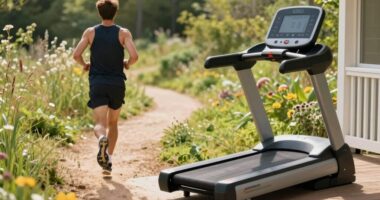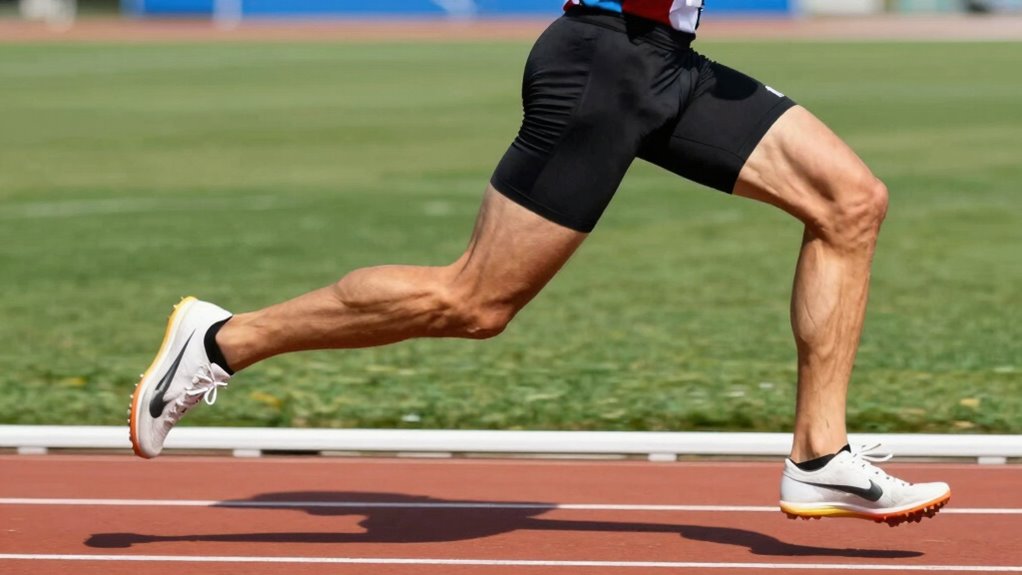

Running efficiency refers to how well your biomechanics, like stride, posture, and muscle activation, support smooth movement with less wasted effort. Running economy measures how efficiently your body uses energy, especially oxygen, at a given pace. While both improve your performance, efficiency focuses on movement mechanics, and economy on energy use. Understanding the differences helps you optimize your runs. Stick with this, and you’ll discover ways to boost both aspects for faster, more sustainable running.
Prime for Young Adults — start your free trial
Fast free delivery, streaming and member deals for eligible 18–24 year olds.
As an affiliate, we earn on qualifying purchases.
Key Takeaways
- Running efficiency focuses on biomechanical aspects like stride, posture, and muscle activation, while running economy measures energy use during running.
- Efficiency reduces wasted motion and improves movement smoothness; economy reflects how effectively the body uses energy at a given pace.
- Efficiency involves biomechanical adjustments; economy relates to metabolic and oxygen consumption during running.
- Improving efficiency enhances movement mechanics; enhancing economy decreases oxygen consumption and energy expenditure.
- Both aspects complement each other to boost overall running performance and endurance.
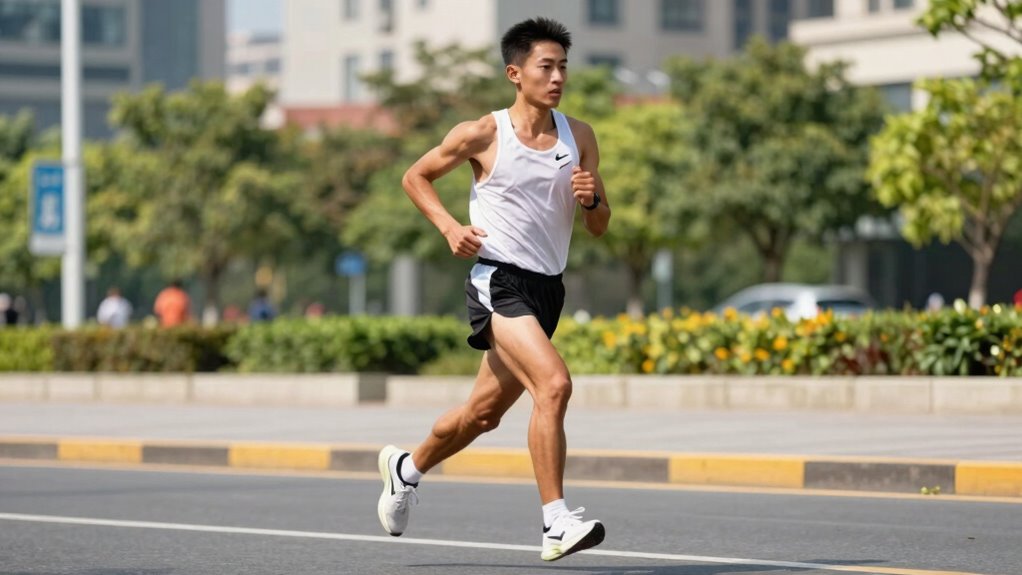
Understanding the differences between running efficiency and running economy can considerably improve your performance. While they’re related, they highlight different aspects of how you move and use energy during a run. Improving your running efficiency involves making biomechanical improvements—adjustments in your stride length, cadence, posture, and muscle activation that reduce wasted motion. When you focus on these biomechanical changes, you’re fundamentally teaching your body to move more smoothly, which minimizes unnecessary energy expenditure. This, in turn, leads to better efficiency because you’re converting more of your effort into forward motion. On the other hand, running economy refers to how effectively your body uses energy at a given pace, often measured by oxygen consumption. If you have a good running economy, you’ll use less oxygen to run at the same speed compared to someone with a poorer economy.
To enhance your running efficiency, you need to pay close attention to your biomechanics. Small adjustments like maintaining an upright posture, keeping your arms relaxed, and improving your foot strike can lead to significant biomechanical improvements. These improvements help you move more fluidly, reducing the amount of energy wasted with each stride. When your body moves more efficiently, your metabolic optimization kicks in—meaning your body requires less energy for each mile, allowing you to sustain higher speeds or longer distances without burning out as quickly. This is especially critical during races or long training sessions, where saving energy can make the difference between finishing strong or hitting a wall. Additionally, biomechanical efficiency can be further enhanced by incorporating drills and exercises that improve muscle activation and coordination. Focusing on training techniques that target these areas can accelerate your progress. Developing a strong neuromuscular connection can also contribute to more precise movements and greater efficiency over time. Improving your overall movement patterns is essential for long-term gains in running performance. Incorporating cross-training methods can also support biomechanical improvements by enhancing strength and flexibility.
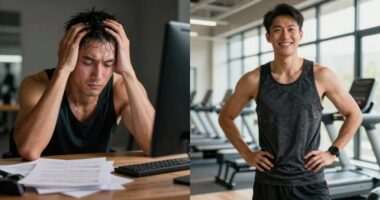
Running economy, however, is influenced by factors that extend beyond biomechanics. It involves your cardiovascular fitness, muscle fiber composition, and even your training background. Improving your running economy often requires targeted aerobic training, strength work, and sometimes altitude training to boost your oxygen delivery and utilization. The goal here is to make your body more adept at using oxygen efficiently, so that at a given pace, you’re consuming less oxygen and, by extension, expending less overall energy. When both your biomechanical efficiency and your metabolic optimization are optimized, you’ll notice a marked improvement in your performance. You’ll be able to run faster, longer, and with less fatigue—all because you’re harnessing your body’s potential more effectively.
running shoes with good arch support
As an affiliate, we earn on qualifying purchases.
As an affiliate, we earn on qualifying purchases.
Frequently Asked Questions
How Can I Improve My Running Efficiency Quickly?
To improve your running efficiency quickly, focus on refining your breathing techniques to maximize oxygen intake and control fatigue. Incorporate strength training to build muscle stability and power, which helps you run more economically. Regularly practice breathing drills during your runs and include exercises like squats and core work in your routine. These adjustments boost your overall efficiency, making your runs smoother and less tiring in less time.
Are Running Economy and Efficiency Equally Important for Marathon Training?
Running economy and efficiency are both essential for marathon training, but focusing on biomechanical analysis helps optimize your form and reduce energy expenditure. Improving your running economy allows you to use less energy at a given pace, making your runs more sustainable. Meanwhile, efficiency enhances how well your muscles convert energy into movement. Prioritizing both guarantees you’re conserving energy and maintaining a steady pace, ultimately boosting your marathon performance.
What Factors Most Significantly Affect Running Economy?
Think of your running economy as a finely tuned engine. Biomechanical factors, like stride length and ground contact, shape how efficiently you move. Metabolic adaptations, such as improved oxygen use, also play a big role. These elements work together, like gears in a machine, influencing how effortlessly you run. To improve, focus on proper form and endurance training, which optimize both biomechanical and metabolic aspects of your running.
Can Running Shoes Influence Running Efficiency?
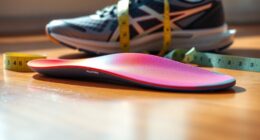
Yes, running shoes can influence your running efficiency. Advanced shoe technology and footwear biomechanics play a vital role in optimizing your stride. Lightweight, well-cushioned shoes with proper arch support reduce energy loss and improve movement mechanics. When your shoes align with your foot’s biomechanics, you’ll likely run more efficiently, conserving energy and minimizing fatigue. Investing in the right footwear tailored to your running style can make a noticeable difference.
How Do Running Economy and Efficiency Change With Age?
As you age, both running economy and efficiency tend to decline due to age-related biomechanical changes and the impact of muscle degeneration. You might notice you’ll use more energy to run the same distance, and your stride becomes less ideal. These changes happen because muscles weaken and joints stiffen, reducing your ability to move smoothly. To combat this, maintaining strength and flexibility becomes essential for preserving your running performance.
Conclusion
By understanding the difference between running efficiency and running economy, you reveal the secret to transforming your performance. Think of it as upgrading your running engine—making every stride feel like gliding on air. Focus on improving both, and you’ll soon be breaking your personal records faster than you ever imagined. Remember, the journey to better running isn’t just a walk in the park—it’s a leap into a world where your potential knows no bounds!
Fall yard work Picks
leaf blowers
As an affiliate, we earn on qualifying purchases.