To set up reflective gear without feeling overloaded, focus on high-impact areas like your chest, back, and legs, and avoid excessive material everywhere else. Use strategically placed reflective strips on your arms, legs, and torso to maximize visibility from multiple angles without overcrowding your look. Secure all gear flat against your clothing to prevent shifting or distraction. If you’re interested in more tips on balancing safety and comfort, you’ll find valuable guidance ahead.

Get workout gear delivered free with Prime
- Fast, free delivery on millions of items
- Prime Video, Amazon Music and more included
- Member-only deals all year
Key Takeaways
- Focus on high-impact areas like chest, back, and legs to maximize visibility without excessive coverage.
- Use strategically placed reflective strips on key spots rather than covering entire clothing.
- Secure reflective gear flat against clothing to prevent shifting and visual distraction.
- Avoid overlapping too many reflective pieces to reduce glare and visual clutter.
- Regularly check and maintain gear to ensure effectiveness without adding unnecessary accessories.
Have you ever wondered how to guarantee you’re visible and safe during low-light conditions? Setting up reflective gear correctly is essential for your safety, especially if you’re running, cycling, or walking at dawn, dusk, or night. The safety benefits of reflective gear are clear: they make you more visible to drivers and others around you, reducing the risk of accidents. But the key lies in proper placement. If your reflective gear isn’t positioned correctly, it can be ineffective or even distracting, which defeats its purpose.
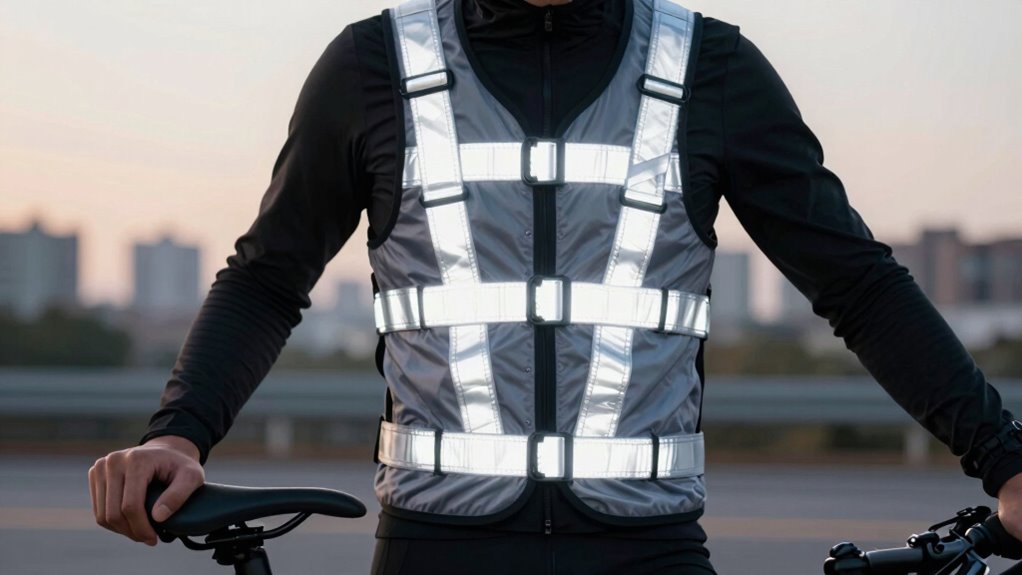
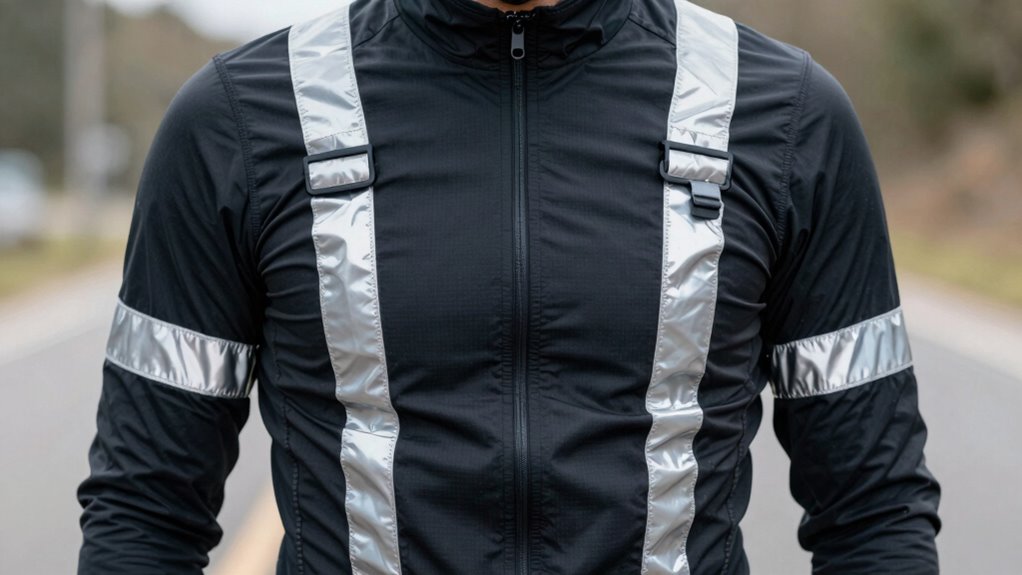
Start by assessing your activity and environment. For runners and cyclists, the goal is to maximize visibility from multiple angles. You want reflective strips or vests that catch light from approaching vehicles or other sources. Proper placement means wearing reflective materials on your arms, legs, and torso where they can be seen easily. For example, a reflective vest worn over your clothing ensures your front and back are visible, while reflective bands on your wrists and ankles create additional points of visibility as you move. If you’re on a bike, attach reflective stickers or tape to your frame and wheels, making sure they’re positioned where they can reflect light from headlights. Choosing durable gear is also important to withstand outdoor conditions and maintain effectiveness over time. Additionally, selecting gear with environmentally-friendly materials can help support sustainability efforts.
Maximize visibility with reflective gear on arms, legs, torso, and bike frame for safer low-light activities.
It’s equally important to avoid overload. You might be tempted to wear all your reflective gear at once, but that can be counterproductive. Too much reflective material can create glare, making it harder for others to judge your movement or distance. Instead, select key spots where reflective elements will be most effective without overwhelming you. Focus on high-impact areas like your chest, back, and legs, which are most likely to catch light from approaching vehicles. When placing reflective gear, ensure it’s secure and flat against your clothing or accessories, so it doesn’t shift or fall off during movement. Introducing reflective placement strategies can further enhance your visibility and safety. Remember that the correct positioning of your gear can significantly influence your overall safety during low-light activities.
Another tip is to keep your reflective gear in good condition. Clean it regularly to maintain its reflectivity and check for tears or damage that could reduce its effectiveness. Proper placement combined with well-maintained gear maximizes your safety benefits, giving you peace of mind during low-light activities. Additionally, choosing gear made from biodiversity-friendly materials can help minimize environmental impact. Remember, the goal isn’t just to wear reflective gear but to wear it smartly—positioned where it can be seen clearly without causing distraction. With a little attention to detail, you can set up your reflective gear effectively, staying visible and safe without feeling overloaded or uncomfortable.
As an affiliate, we earn on qualifying purchases.
Frequently Asked Questions
What Types of Reflective Gear Are Safest for Different Activities?
For different activities, choose reflective gear with high color visibility, like bright yellows or oranges, to stand out. Opt for materials with durable construction, such as reinforced nylon or polyester, to withstand wear and weather. For running or cycling, lightweight vests or bands work best, while for outdoor work, sturdier jackets or gear with reflective strips on sleeves and legs offer added safety. Prioritize gear that balances visibility and durability for your activity.
How Often Should I Replace My Reflective Gear for Optimal Safety?
Think of reflective gear like a trusty flashlight—its brightness dims over time. You should replace your reflective gear every 6 to 12 months, depending on gear durability and usage. Regularly inspect for fading or cracks, and don’t wait until it’s visibly worn out. Staying proactive with replacement guarantees you remain visible and safe, especially during those early morning or late evening activities when visibility is essential.
Can Reflective Gear Be Worn With Regular Clothing Comfortably?
Yes, reflective gear can be worn with regular clothing comfortably. When choosing gear, consider fashion compatibility by selecting designs and colors that blend well with your outfits. Comfort considerations are key—look for lightweight, breathable materials that don’t restrict movement. Adjustable straps and flexible fabrics help guarantee you stay safe while feeling comfortable and stylish in your daily wear. This way, safety and fashion go hand in hand effortlessly.
Are There Any Health Risks Associated With Prolonged Reflective Gear Use?
Wearing reflective gear for long periods generally isn’t risky, but you should stay aware of potential health concerns. Prolonged exposure to the materials might cause skin irritation or discomfort for some people. To avoid health risks, take regular breaks, guarantee proper fit, and choose gear made from breathable, hypoallergenic materials. If you notice any skin issues or discomfort, remove the gear and consult a healthcare professional.
How Do I Choose the Best Reflective Gear for Nighttime Visibility?
To choose the best reflective gear for nighttime visibility, focus on flexible, fluorescent, and firmly fitted options. Look for gear with high-quality reflective material that provides maximum visibility enhancement from all angles. Bright colors combined with reflective strips ensure you stand out in low light. Prioritize comfort and durability, and select gear suited for your activity—whether running, biking, or walking—to stay safe and seen during nighttime adventures.
Conclusion
Now that you’ve mastered the art of setting up your reflective gear without feeling overwhelmed, imagine stepping into the night, your gear quietly glowing, blending safety with confidence. As shadows stretch and the world grows dim, you become almost invisible—yet unmistakably seen. The road ahead isn’t just safer; it’s a journey where preparation and clarity illuminate your path. Ready to take that step and make your presence known in the dark? The night awaits.
Halloween Picks
halloween
As an affiliate, we earn on qualifying purchases.