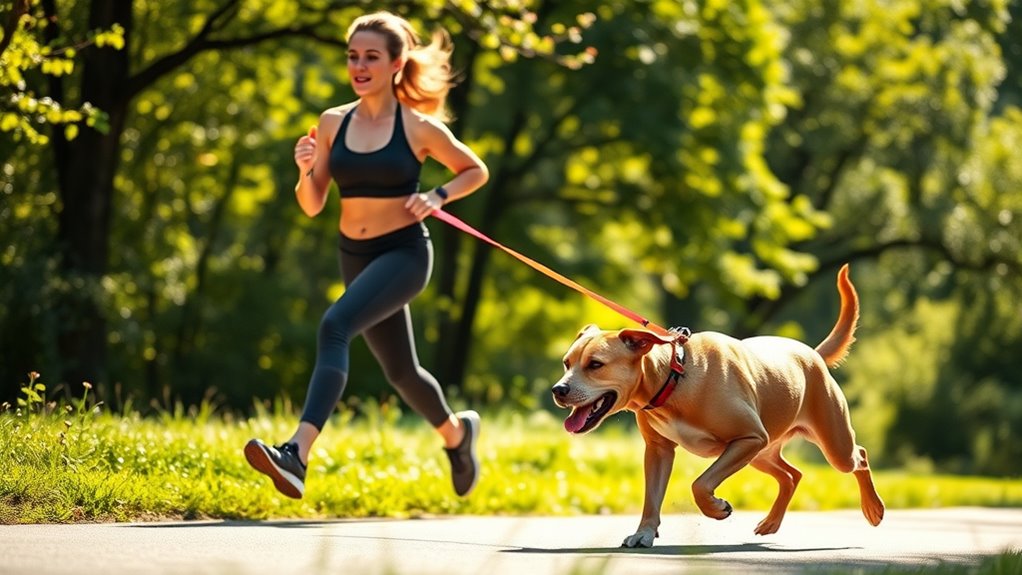

When running with your dog, keep the leash secure and relaxed, using a harness for control. Adjust your pace to match your dog’s size, breed, and fitness level, watching for signs of fatigue or discomfort. Practice good etiquette by cleaning up after your dog, respecting others, and keeping your dog on a leash where required. Staying attentive to your dog’s needs and surroundings helps you both enjoy the run safely—there’s more to guarantee a smooth, fun experience ahead.

Get workout gear delivered free — and shop member deals
- Fast, free delivery on millions of items
- Access to Prime Big Deal Days deals on October 6–7
- Prime Video, Amazon Music and more included
Key Takeaways
- Use a sturdy, comfortable harness and teach your dog to walk calmly on a leash with positive reinforcement.
- Adjust your running pace according to your dog’s size, breed, and fitness level, watching for signs of fatigue.
- Carry water and offer regular hydration to keep your dog well-hydrated and prevent overheating.
- Choose safe, well-maintained routes, avoiding crowded areas and hazards to ensure a secure running environment.
- Practice proper running etiquette by cleaning up after your dog, keeping them on a leash around others, and being attentive to their needs.

Running with a dog can be a rewarding way to stay active and bond with your pet, but it requires proper preparation to guarantee safety and enjoyment. One of the first things you should focus on is guaranteeing your dog stays well-hydrated throughout the run. Dogs can quickly become dehydrated, especially in warmer weather or during intense activity. Carry a portable water bottle or a collapsible bowl to offer water at regular intervals, and watch for signs of dehydration like excessive panting, drooling, or lethargy. Proper hydration helps your dog maintain their energy and prevents overheating, making your runs safer and more enjoyable for both of you.
Equally important is leash training, which forms the foundation for safe running sessions with your dog. Before hitting the pavement, you should work on teaching your dog to walk calmly on a leash and respond reliably to commands like “heel” or “stop.” A well-trained leash behavior prevents sudden pulls or darting, reducing the risk of accidents or injuries. Use a sturdy, comfortable harness rather than a collar to give you better control and avoid strain on your dog’s neck. Consistent training and positive reinforcement will help your dog understand boundaries and stay focused during your runs. Remember, leash training isn’t just about control; it’s about creating a safe environment where your dog feels secure and knows what’s expected.
When you start running, pay attention to your dog’s pace and comfort level. Not all dogs are built for long-distance sprints, so tailor your speed to their size, breed, and fitness level. Younger or high-energy breeds might keep up longer, but smaller or older dogs could tire quickly. Keep an eye on their body language—panting, lagging behind, or stopping frequently are signs they need a break. Use a hands-free leash system if possible, which allows for better control and keeps your hands free to manage your dog more comfortably. Also, be mindful of your surroundings; choose routes that are safe, avoid crowded areas, and steer clear of busy roads or rough terrain that could pose hazards.
Practicing good etiquette is essential when running with your dog. Always clean up after them and be respectful of other trail users. Keep your dog on a leash unless you’re in an off-leash designated area, and ensure they’re well-behaved around other animals and pedestrians. During your run, remain attentive to your dog’s needs and comfort, adjusting the pace or taking breaks as necessary. Proper preparation, attentive leash training, and awareness of your dog’s limits will help you both enjoy running together safely and happily.
As an affiliate, we earn on qualifying purchases.
Frequently Asked Questions
How Do I Train My Dog to Run Calmly on a Leash?
To train your dog to run calmly on a leash, start with positive reinforcement, rewarding good behavior with treats and praise. Use gradual training by introducing short, controlled runs, gradually increasing duration as your dog stays calm. Keep sessions consistent and patient, avoiding punishment. With time and patience, your dog will learn to stay calm and focused during runs, making the experience enjoyable for both of you.
What Should I Do if My Dog Pulls During a Run?
If your dog pulls during a run, gently stop and redirect their attention with a command or treat. Use a proper dog leash manners approach to teach them to stay by your side, and avoid pulling back. Consistently practice a proper running pace, ensuring your dog feels comfortable and not rushed. Over time, your dog will learn to respect the leash and run calmly alongside you.
Are There Specific Running Shoes for Dog Owners?
Yes, there are running shoes designed for dog owners, especially if you frequently hit dog-friendly trails. Look for running gear considerations like extra comfort, good traction, and support for uneven terrain. These shoes help you stay stable and comfortable while managing your dog’s pace and leash. Choosing the right footwear guarantees a safer, more enjoyable run, no matter if you’re on smooth paths or rugged trails with your furry friend.
How Can I Prevent My Dog From Overheating During Runs?
To prevent your dog from overheating during runs, make sure to provide plenty of dog hydration before, during, and after your run. Choose shaded routes or run in the early morning or late evening when temperatures are cooler. Keep an eye on your dog for signs of heat exhaustion, and take frequent breaks. Always carry water for your dog and guarantee they have access to shade and cool spots to rest.
What Are the Best Locations for Running With a Dog?
You should look for off-leash parks and urban trails that welcome dogs, offering plenty of space and safety. Off-leash parks give your dog freedom to run without restrictions, while urban trails provide scenic routes for a more controlled run. Make sure the area is dog-friendly, has good footing, and isn’t too crowded. Always follow local regulations and clean up after your dog to keep the spots enjoyable for everyone.
Conclusion
Running with your dog can boost both your fitness and your bond, making every run more enjoyable. Remember to keep your pup on a leash, match your pace, and follow proper etiquette to make certain safety. Did you know that over 60% of dog owners say running together strengthens their relationship? So, lace up, stay aware, and cherish those shared miles — your loyal companion will thank you with endless enthusiasm and love.
Halloween Picks
halloween
As an affiliate, we earn on qualifying purchases.