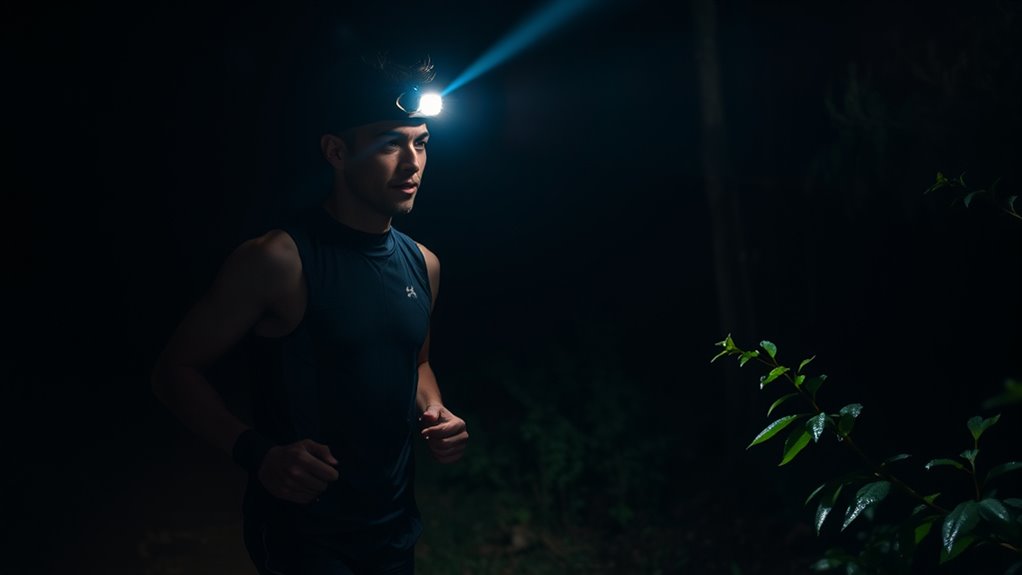

To stay safe while running with a headlamp at night, make certain your light has adjustable brightness and a wide beam to illuminate your path clearly. Wear a comfortable, adjustable band to prevent shifting and check your battery life beforehand, carrying spares if needed. Stay aware of your surroundings, including potential obstacles and wildlife, by adjusting your beam distance and focus. If you keep these tips in mind, you’ll enjoy safe, confident night runs—plus, there’s more to optimize your experience beyond this.
Key Takeaways
- Ensure your headlamp offers adjustable brightness and a focused beam for clear trail visibility.
- Wear reflective gear and choose headlamps with red or green lights to enhance visibility and minimize wildlife disturbance.
- Carry backup batteries or spares and check battery life before extended night runs.
- Select a comfortable, secure headlamp and gear to prevent shifting or discomfort during your run.
- Familiarize yourself with the route beforehand and run in well-lit or familiar areas to reduce navigation risks.
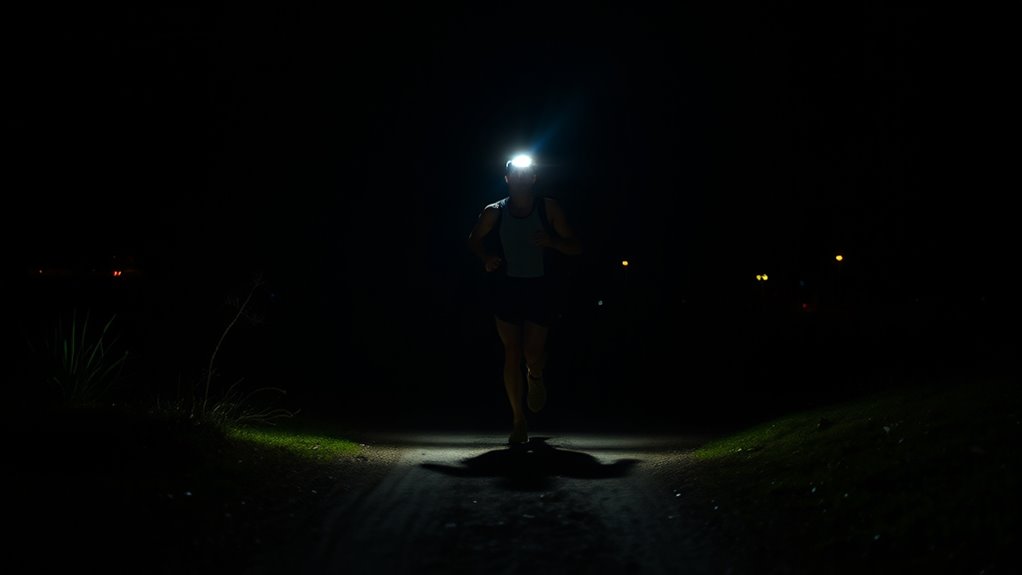
Running with a headlamp allows you to extend your outdoor workouts into early mornings or late evenings when it’s dark outside. It’s a practical way to stay active without sacrificing safety, but to do so effectively, you need to understand how to maximize trail visibility and make the most of headlamp technology. When you’re running in low-light conditions, a reliable headlamp ensures you see obstacles, uneven terrain, or wildlife ahead, preventing trips or accidents. The key is choosing a headlamp with sufficient brightness—look for models with adjustable lumens—so you can tailor the illumination to your environment. For well-lit trails, a lower setting may suffice, conserving battery life, while darker or more complex terrain demands higher brightness levels.
Using a headlamp extends safe outdoor running into early mornings and late evenings.
Modern headlamp technology offers numerous features that enhance your safety and comfort. Some models come with multiple lighting modes, allowing you to switch between wide beams for peripheral vision and focused beams for distance. This versatility ensures you can adapt quickly to changing trail conditions. Many headlamps also include red or green light options, which are less disruptive to your night vision and less likely to disturb wildlife or other trail users. Additionally, lightweight and adjustable headbands keep the device secure and comfortable during extended runs, so you don’t have to worry about discomfort or shifting gear. Furthermore, advancements in robotics technology are influencing headlamp design, leading to more durable and adaptive lighting solutions.
Trail visibility is essential for safe night running, and a well-designed headlamp plays an important role. It illuminates the path ahead, allowing you to spot roots, rocks, or other hazards in advance. This proactive awareness helps you maintain a steady pace and avoid sudden missteps. When selecting a headlamp, consider its beam distance—how far the light reaches—and how wide the spread is. A combination of a long-range beam and a broad floodlight provides a balanced view of the trail, making your run safer and more enjoyable. Remember to check the battery life before heading out, especially if you’re planning a longer run. Many headlamps offer rechargeable options, which save money and reduce waste, but always carry a backup battery or a spare if you’re venturing far.
Ultimately, the right headlamp technology transforms your night runs from a risky venture into a safe, enjoyable experience. By paying attention to trail visibility features, adjusting settings appropriately, and ensuring your gear is comfortable and reliable, you empower yourself to run confidently in the dark. With proper preparation, your night runs can become a rewarding part of your fitness routine, offering solitude, tranquility, and a fresh perspective—while staying safe every step of the way.
adjustable brightness headlamp for running
As an affiliate, we earn on qualifying purchases.
As an affiliate, we earn on qualifying purchases.
Frequently Asked Questions
How Do I Choose the Best Headlamp for Running at Night?
To select the optimal headlamp for night running, consider its weight and battery life. You want a lightweight headlamp that won’t cause fatigue over long distances. Look for one with long-lasting batteries or rechargeable options to guarantee it doesn’t die mid-run. Also, check the beam strength and adjustability for different terrains. A comfortable, durable, and bright headlamp will keep you safe and focused during your night runs.
What Is the Optimal Headlamp Brightness for Night Running?
Think of your headlamp brightness as the lighthouse guiding your night run. For ideal lighting, aim for a headlamp with 200 to 400 lumens—bright enough to illuminate uneven terrain without blinding you or others. This range balances visibility and battery life, enhancing safety and comfort. Adjust brightness based on trail conditions or urban settings, ensuring you see clearly while staying alert to your surroundings.
How Often Should I Replace or Recharge My Headlamp Batteries?
You should replace or recharge your headlamp batteries every 2 to 4 weeks, depending on usage. Regular battery maintenance helps guarantee reliable brightness during night runs. Store batteries in a cool, dry place when not in use to prolong their lifespan. Check the manufacturer’s recommendations for specific replacement intervals, and always test your headlamp before heading out. Proper battery care guarantees safety and consistent illumination during your nighttime runs.
Are There Any Health Risks Associated With Running With a Headlamp?
Running with a headlamp is like shining a flashlight into your eyes—there’s a small chance it can cause eye strain if the light’s too bright or poorly positioned. You might also contribute to light pollution, affecting others nearby. To minimize health risks, use adjustable brightness, keep the beam focused, and take breaks if you feel eye discomfort. Properly managing your headlamp keeps you safe and reduces unnecessary light spill.
How Can I Prevent My Headlamp From Slipping During a Run?
To prevent your headlamp from slipping during a run, focus on achieving a proper headlamp fit. Adjust the strap so it’s snug but comfortable, ensuring it stays in place without causing discomfort. Use slipping prevention techniques like silicone grip strips or anti-slip headbands if needed. Regularly check and tighten the strap during your run, and choose a headlamp with adjustable straps for better stability and security.
reflective running gear with red light
As an affiliate, we earn on qualifying purchases.
As an affiliate, we earn on qualifying purchases.
Conclusion
Running with a headlamp is like steering through the darkness with a trusted lantern—it guides your path and keeps you safe. Remember, your headlamp isn’t just a tool; it’s your beacon, illuminating obstacles and showing you the way forward. Embrace this gear, stay alert, and enjoy the night’s quiet beauty. With every stride, you’re charting your own adventure—so let your light lead the way and keep you safe on every run.
battery spares for headlamp
As an affiliate, we earn on qualifying purchases.
As an affiliate, we earn on qualifying purchases.
lightweight adjustable running headlamp
As an affiliate, we earn on qualifying purchases.
As an affiliate, we earn on qualifying purchases.