
To stop drifting too far forward on the treadmill, align your head with your spine and keep your gaze forward. Make sure your feet land directly beneath your hips and focus on controlled, shorter strides. Keep your elbows bent at a 90-degree angle, swinging your arms in sync with your legs for better balance. Setting a slight incline can also help. Pay attention to your form, and you’ll discover even more tips to enhance your workout experience.

Get workout gear delivered free with Prime
- Fast, free delivery on millions of items
- Prime Video, Amazon Music and more included
- Member-only deals all year
Key Takeaways
- Maintain proper posture by aligning your head with your spine and keeping your gaze forward, not downward.
- Land your feet directly beneath your hips and avoid overextending your stride.
- Use a slight incline (1-2%) to encourage a more natural running posture and prevent drifting.
- Keep your core stabilized to enhance balance and reduce the tendency to lean forward.
- Regularly assess your form during breaks to ensure proper alignment and foot placement.

Drifting on the treadmill can derail your workout, but with a few simple adjustments, you can stay focused and maintain your pace. One of the most critical aspects you need to take into account is your treadmill posture. When you stand too far forward, you compromise your form and energy efficiency. To combat this, make sure your head is aligned with your spine, keeping your gaze forward rather than down at your feet. This alignment helps stabilize your core and opens up your lungs, making it easier to breathe and sustain your workout.
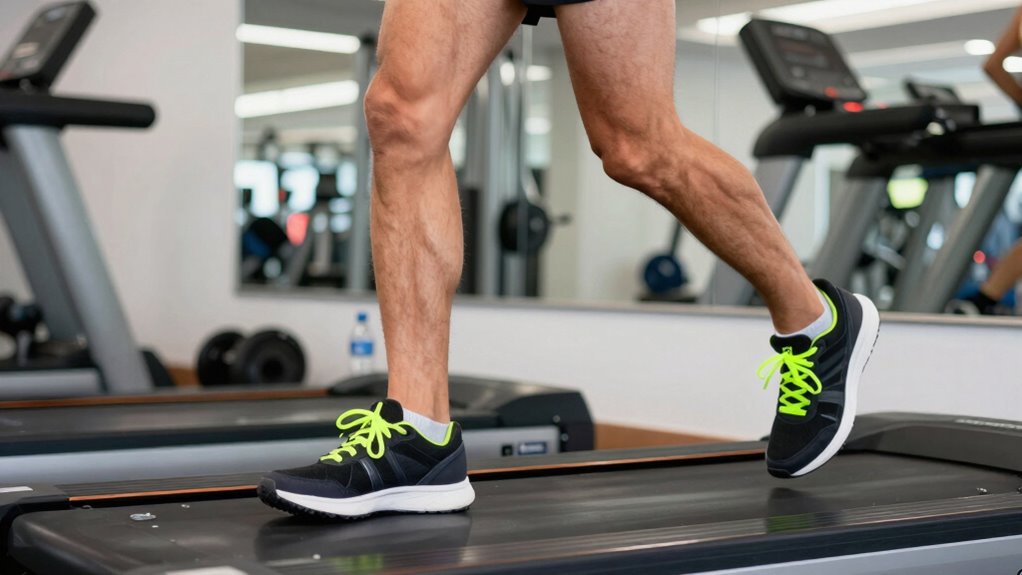
Foot placement also plays a significant role in preventing drift. You want to land your feet directly beneath your hips as you run or walk. If you notice your toes are pointing outward or your feet are landing too far in front of your body, it’s time to make some adjustments. A solid foot placement not only supports your posture but also minimizes the risk of injury. So, focus on making your strides shorter and more controlled. Think about pushing off from your toes rather than letting your feet swing too far forward.
Proper foot placement is crucial; land your feet beneath your hips and push off from your toes for better control and injury prevention.
Another key factor is your arm swing. If your arms are flailing or not moving harmoniously with your legs, you might find yourself drifting. Keep your elbows bent at about a 90-degree angle, and let your arms move forward and backward in sync with your steps. This coordinated movement can help you maintain balance and keep your momentum steady.
You should also pay attention to your treadmill settings. If you’re running on a flat incline, it may encourage you to lean forward. Try setting a slight incline, like 1-2%, to mimic outdoor running conditions. This will help your body adapt to a more natural running posture, reducing the tendency to drift. Additionally, focusing on maintaining consistent pacing can help prevent you from unintentionally drifting as your body adjusts to different speeds.
Finally, take breaks to assess your form periodically. If you feel yourself drifting, slow down and reset your posture. Use these moments to check in with your foot placement, making sure your feet are landing correctly and your body is aligned. By focusing on these elements, you can effectively curb drifting, allowing you to enjoy a more effective and satisfying workout. Remember, it’s all about finding that sweet spot where your form supports your energy and keeps you moving steadily forward.
As an affiliate, we earn on qualifying purchases.
Frequently Asked Questions
What Are Common Causes of Drifting on the Treadmill?
Common causes of drifting on the treadmill include poor treadmill posture and improper running technique. If you lean too far forward or backward, it can throw you off balance, making you drift. Additionally, if your stride is too long or short, it might contribute to this issue. To prevent drifting, focus on maintaining an upright posture and a consistent running technique. This way, you’ll stay centered and improve your overall treadmill experience.
Can Treadmill Incline Affect Drifting Forward?
Yes, treadmill incline can definitely affect drifting forward, much like trying to balance on a hill. When you increase the incline, it shifts your center of gravity, encouraging better posture and engagement of your core. This helps you stay grounded and reduces the tendency to drift. The incline benefits your workout by enhancing calorie burn and muscle activation, while also improving your overall treadmill mechanics, making your run feel smoother and more controlled.
Is It Safe to Run Barefoot on a Treadmill?
Yes, it can be safe to run barefoot on a treadmill, but you should take precautions. Running barefoot offers benefits like improved foot strength and better form, but be cautious of the treadmill’s surface and speed. Start slow to avoid injury and guarantee you’re familiar with your balance. Always listen to your body; if it feels uncomfortable, switch to shoes. Prioritize treadmill safety to enjoy your workout without risks.
How Often Should I Check My Treadmill Settings?
You should check your treadmill settings regularly, ideally before each workout. This guarantees peak treadmill calibration, which affects your user posture and overall performance. If you notice any changes in your workout feel or experience discomfort, it’s time for an adjustment. Keeping an eye on the incline, speed, and other settings not only enhances your experience but also helps prevent injury and keeps your sessions productive. Stay safe and get the most out of your workouts!
What Type of Shoes Are Best for Treadmill Use?
When it comes to shoes, “the right fit is half the battle.” For treadmill use, look for shoes with good cushioning and arch support to absorb impact. You’ll want a solid grip to prevent slipping and guarantee foot stability while you run. Choose a shoe that feels comfortable and supportive, allowing you to focus on your workout without distractions. Investing in the right shoes makes a significant difference in your treadmill experience!
Conclusion
To stop drifting too far forward on the treadmill, focus on your posture and foot placement. Imagine running through a beautiful park, where each stride feels controlled and steady. You might worry that adjusting your form will slow you down, but embracing these small tweaks can actually enhance your speed and efficiency. With practice, you’ll find that staying centered on the belt transforms your workout into the enjoyable experience you crave—one where you feel powerful and in control.
Columbus Day / Indigenous Peoples' Day Picks
long weekend sales
As an affiliate, we earn on qualifying purchases.