

To stop ear fatigue on your two-hour runs, manage your sound exposure. Use quality earplugs to reduce external noise while still hearing important sounds around you. Opt for quieter routes like parks or trails, where nature sounds can enhance your experience. If you listen to music or podcasts, keep the volume low to lessen strain on your ears. Don’t forget to take breaks, allowing your ears to recover and your mind to reset. There’s more to explore about maximizing your running comfort.

Get workout gear delivered free with Prime
- Fast, free delivery on millions of items
- Prime Video, Amazon Music and more included
- Member-only deals all year
Key Takeaways
- Use quality earplugs designed for running to reduce external noise while maintaining awareness of surroundings.
- Choose quieter running routes, like parks or trails, to minimize exposure to harsh urban sounds.
- Keep audio volume low when listening to music or podcasts to prevent ear fatigue.
- Consider using bone conduction headphones to enjoy audio without direct ear exposure.
- Take regular breaks during runs to allow your ears to recover and enhance mindfulness.
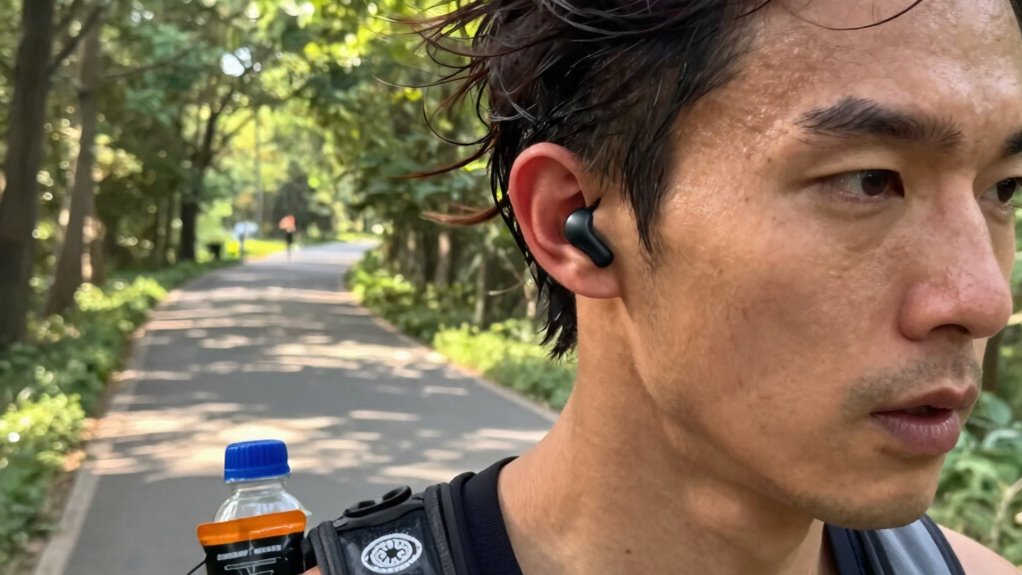
When you’re pounding the pavement, you might not realize that ear fatigue can sneak up on you, making your runs less enjoyable. Long runs, especially those that stretch to two hours, can expose your ears to a barrage of sounds that might not seem bothersome at first. But over time, this relentless noise can lead to discomfort and fatigue, leaving you wishing for a quieter environment. The good news is that you can take simple steps to manage sound and protect your ears.
First, consider investing in quality ear protection. Earplugs designed for running can greatly reduce external noise while still allowing you to hear critical sounds, like traffic or other runners. This balance guarantees you stay safe while giving your ears a much-needed break from harsh sounds. By dampening the volume of your environment, you’ll notice less strain on your eardrums, which can help maintain your focus and enjoyment throughout your run.
Investing in running earplugs can reduce noise while keeping you aware, ensuring a safer and more enjoyable run.
Another effective strategy for sound management is to choose your running route wisely. Urban areas might be bustling with noises that can quickly lead to ear fatigue. If possible, seek out quieter paths, parks, or trails where nature’s sounds can replace the clamor of city life. The rustle of leaves or the gentle flow of a nearby stream can act as soothing background noise, allowing you to stay engaged without overwhelming your ears. Incorporating soundscapes in nature can further enhance your experience and reduce fatigue. Additionally, paying attention to the ambient noise levels in your environment can help you better tailor your route and sound management techniques.
You might also want to experiment with music or podcasts at lower volumes. While these can provide a motivational boost, cranking up the volume can contribute to ear fatigue over time. Try using bone conduction headphones, which transmit sound through your cheekbones rather than directly into your ears. This way, you can enjoy your favorite tunes or shows without compromising ear health.
Finally, remember to take breaks during your run. Pausing briefly to let your ears recover from constant sound exposure can make a considerable difference. Use these moments to focus on your surroundings and embrace the natural sounds of your environment. This practice not only helps with ear fatigue but also cultivates mindfulness and enhances your overall running experience. Incorporating sound management techniques into your routine can significantly improve your comfort and enjoyment on long runs.
Products Worth Considering

Garmin Forerunner 70 GPS Running Smartwatch, 43 mm, Black

Garmin Forerunner 570 GPS Running Smartwatch, 47mm, Aluminum, Black

Garmin Forerunner 55 GPS Running Smartwatch, Black
As an affiliate, we earn on qualifying purchases.
Frequently Asked Questions
Can Ear Fatigue Affect My Hearing Long-Term?
Yes, ear fatigue can potentially affect your hearing long-term. If you frequently expose your ears to loud sounds without proper hearing protection, you might risk permanent damage. To safeguard your hearing, consider using earplugs designed for runners or reducing the volume of your audio devices. Taking breaks during long runs can also help minimize fatigue. Prioritizing your ear health now can prevent serious issues down the line, so don’t overlook it!
Are Certain Earbud Types Better for Long Runs?
Yes, certain earbud types are definitely better for long runs. Wireless earbuds with noise cancellation can enhance your experience by blocking out distractions. Look for options that prioritize earbud comfort, as a snug fit helps prevent fatigue. Additionally, consider sound quality; clear audio keeps you motivated. Brands that focus on these features often provide the best experience, allowing you to enjoy your run without worrying about discomfort or distractions.
How Can I Clean My Earbuds Safely?
To keep your earbuds pristine and perfect, start with soft cloths and gentle cleaning techniques. For silicone or rubber earbud materials, use a damp cloth with mild soap to wipe away grime. For mesh screens, a dry toothbrush can dislodge dirt. Avoid harsh chemicals that could damage them. Regularly clean your earbuds to guarantee sound stays stellar and your listening experience is always superb. Don’t forget to dry them thoroughly afterward!
What Are Signs of Ear Infections From Running?
If you’re experiencing ear pain, discomfort, or unusual discharge after running, these could be signs of an ear infection. You might also notice a decrease in sound quality when using your earbuds. Maintaining good ear hygiene is essential; make sure your earbuds are clean and dry, and avoid sharing them. If symptoms persist, it’s best to consult a healthcare professional to prevent further complications. Take care of your ears!
Should I Avoid Music Entirely During Long Runs?
You don’t have to avoid music entirely during long runs, but it’s smart to be mindful of your music preferences and sound levels. Opt for lower volumes to reduce strain on your ears and consider using open-ear headphones. This way, you can enjoy your favorite tunes while still being aware of your surroundings. Mixing in periods of silence can also help balance things out, keeping your ears refreshed and ready for your run.
Conclusion
In the grand symphony of your two-hour runs, don’t let ear fatigue steal the spotlight. By tuning into the right gear, adjusting your volume, and taking those precious breaks, you can keep your auditory senses dancing instead of dragging. So, lace up, hit the pavement, and let the rhythm of your run flow freely, ensuring your ears stay as energized as your stride. After all, every great performance deserves a harmonious finale!