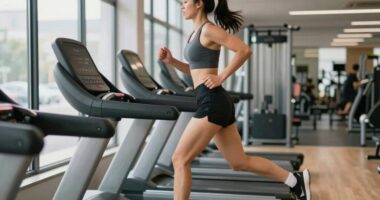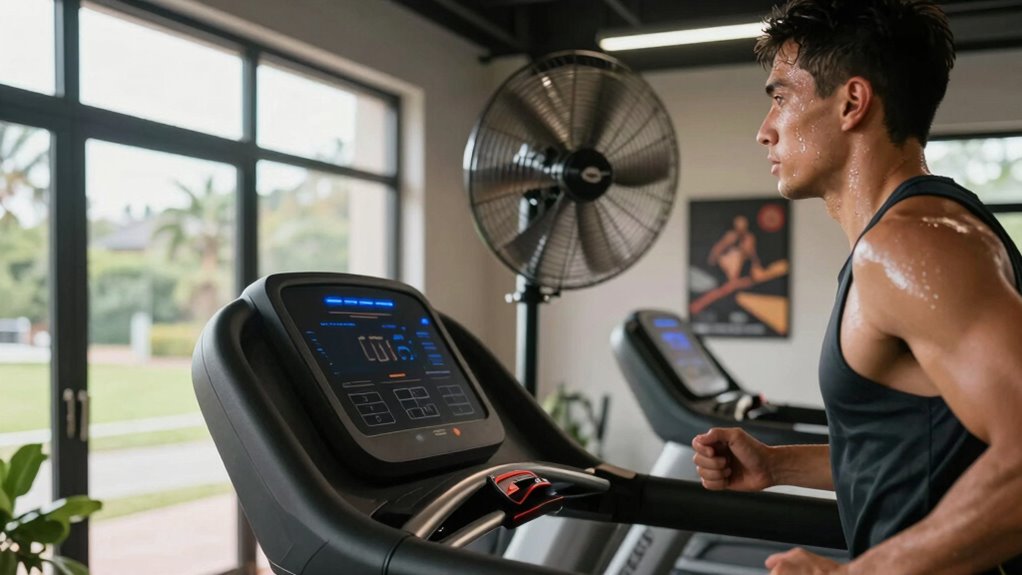

The treadmill fan myth suggests that fans are the key to comfort during indoor runs, but that’s not the whole story. Increased airflow can feel nice, yet it doesn’t effectively lower your core temperature. Humidity plays a big role too, often making you feel stickier and less comfortable. Staying hydrated is essential and outperforms fans in regulating body temperature. Finding the right fan placement also matters. Curious about how to optimize your indoor workouts? There’s more to explore!

Get workout gear delivered free with Prime
- Fast, free delivery on millions of items
- Prime Video, Amazon Music and more included
- Member-only deals all year
Key Takeaways
- Increased airflow from fans may not effectively lower core body temperature during indoor runs, leading to a false sense of comfort.
- Humidity significantly diminishes a fan’s cooling effectiveness, often resulting in increased discomfort rather than relief.
- Staying properly hydrated is crucial; it regulates body temperature better than relying solely on a fan.
- Optimal fan placement varies by individual, so experimenting with angles and distances can enhance comfort during workouts.
- Adjusting workout intensity based on personal comfort and signs of overheating is essential for safety and performance.

When you step onto a treadmill, you might think that using a fan will boost your workout by keeping you cooler, but that’s not always the case. Many people assume that increased airflow directly translates to better comfort during their runs. While it’s true that a fan can help reduce the buildup of sweat and humidity around you, it doesn’t necessarily lower your core body temperature or improve your overall workout experience.
Using a fan on the treadmill may not enhance your workout; it often doesn’t lower core temperature or improve comfort effectively.
The effectiveness of a fan largely depends on the workout temperature and your personal preferences. If you’re running in a gym that’s already cool, a fan might feel invigorating. However, if the room is warm, the fan can create a false sense of comfort. You might feel a breeze, but your body still heats up due to exertion. This can lead to a deceptive perception of how hard you’re working, which might affect your performance.
Many runners underestimate the role of humidity in their workouts. In a humid environment, a fan’s effectiveness diminishes considerably. Instead of cooling you down, it can make you feel sticky and uncomfortable. You may find that you’re sweating more without feeling any cooler. So, while a fan provides airflow, it doesn’t always equate to better temperature regulation. Understanding the role of airflow can help you make better decisions about using fans during indoor exercise. Additionally, recognizing the impact of humidity on comfort can prevent misconceptions about cooling methods. A good understanding of indoor environmental factors can help you optimize your workout conditions.
To optimize your indoor runs, consider how you can manage your environment. If you’re in a warmer space, hydrating properly becomes more essential. Keep a water bottle nearby and take sips regularly. This can help regulate your body temperature better than relying solely on a fan. Also, consider adjusting your workout intensity based on how you feel. If you notice your heart rate is spiking or you’re sweating excessively, it might be time to slow down.
You should also think about the placement of the fan. Direct airflow can be great, but if it’s too close, it might dry out your throat or create discomfort. Experimenting with angles and distances can help you find the sweet spot that works for you. Proper ventilation not only improves comfort but also supports overall wellness during your exercise.
As an affiliate, we earn on qualifying purchases.
Frequently Asked Questions
How Can I Improve My Overall Indoor Running Experience?
To improve your overall indoor running experience, create a motivating environment. Pump up your playlist with energizing music that keeps you moving. Adjust the room temperature for comfort, and use a fan to circulate air if needed. Make sure your space feels inviting—add some visuals or scents you love. Set achievable goals to track your progress, and mix up your routine to keep things fresh and exciting. Enjoy your runs!
Do Hydration Levels Affect My Comfort While Running Indoors?
Yes, hydration levels considerably affect your comfort while running indoors. Implementing effective hydration strategies, like drinking water before, during, and after your run, keeps you feeling great. Proper sweat management also plays an essential role; if you’re well-hydrated, your body can regulate temperature better, reducing discomfort. So, make sure you’re sipping water regularly and consider electrolyte drinks for longer sessions to maintain that comfortable stride throughout your workout.
What Should I Wear for Indoor Treadmill Workouts?
For indoor treadmill workouts, wear lightweight, breathable fabrics and supportive footwear. Imagine running in a sauna; if your clothes cling and your shoes pinch, you’ll feel every minute. Opt for moisture-wicking shirts and shorts that let your skin breathe, keeping you cool. Choose running shoes that fit well, offering cushioning and stability. This combination helps you stay comfortable, so you can focus on your workout instead of your outfit.
Are There Specific Warm-Up Exercises for Treadmill Running?
Yes, there are specific warm-up exercises for treadmill running! Start with dynamic stretching to loosen your muscles, like leg swings and arm circles. Incorporate mobility drills, such as walking lunges and high knees, to improve your range of motion. Spend about 5-10 minutes on these warm-ups to prepare your body for the workout ahead. You’ll feel more energized and less prone to injury when you take the time to warm up properly!
How Do I Choose the Right Treadmill for My Needs?
Choosing the right treadmill is like picking the perfect partner for your fitness journey. Start by identifying your needs—think about treadmill features like incline settings, speed ranges, and built-in workouts. Don’t forget your budget considerations; you want quality without breaking the bank. Test a few models if you can, and imagine how each one can elevate your workouts, making every step feel like a leap toward your goals.
Conclusion
In the end, the treadmill fan myth doesn’t hold water. While fans can help with airflow, it’s really your body’s ability to regulate heat that keeps those indoor runs comfortable. So, next time you’re sweating it out, remember that staying hydrated and adjusting your pace are key. Don’t let the fan be a crutch; focus on what truly matters to keep you running strong. After all, it’s not just about the breeze, but how you handle the heat!
Halloween Picks
halloween
As an affiliate, we earn on qualifying purchases.