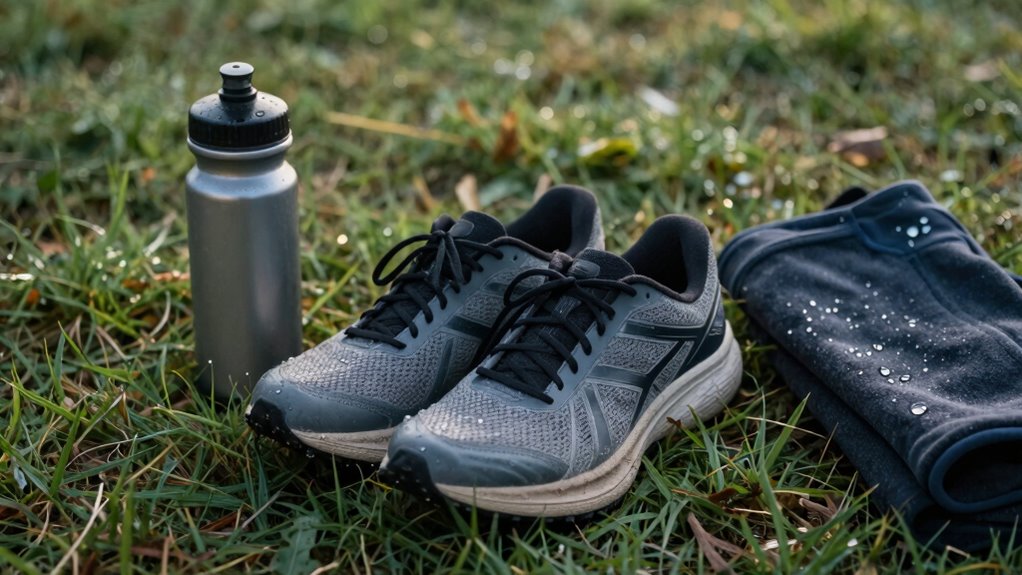

As a beginner runner, prioritizing recovery keeps you injury-free, boosts endurance, and keeps motivation high. Proper recovery means staying hydrated with water or electrolytes, taking rest days, and listening to your body’s signals. Good sleep and balanced nutrition are essential for muscle repair and energy. Incorporate gentle active recovery and choose natural, fresh environments to support your progress. Stick with these tips, and you’ll discover more ways to recover effectively and enjoy your running journey.

Get workout gear delivered free with Prime
- Fast, free delivery on millions of items
- Prime Video, Amazon Music and more included
- Member-only deals all year
Key Takeaways
- Prioritize rest days and listen to your body’s signals to prevent overtraining and injuries.
- Rehydrate with water and electrolyte drinks post-run to support muscle recovery.
- Incorporate active recovery like walking or stretching to enhance healing without overexertion.
- Ensure quality sleep and balanced nutrition to facilitate muscle repair and immune health.
- Choose natural, biodiverse environments for runs to boost mental well-being and overall recovery.

Starting a running routine is exciting, but recovery is just as important as the workout itself. When you finish a run, it’s tempting to jump right into your next session, but taking time to recover properly helps you avoid setbacks and keeps you motivated long-term. One key part of recovery is paying attention to hydration tips. Proper hydration isn’t just about quenching your thirst; it’s essential for muscle repair, reducing soreness, and preventing dehydration, which can impair your performance and slow down your progress. After a run, drink water or an electrolyte-rich beverage to replenish lost fluids, especially if you’ve sweated heavily. Carry a water bottle with you and sip regularly, even if you don’t feel thirsty. Hydration should be an ongoing process, not just a post-run task—consistent fluid intake helps your muscles recover faster and keeps you energized for your next run. Biodiversity in the environment can also influence the quality of your running routes, making it beneficial to choose natural areas that promote a healthier, more sustainable outdoor experience. Incorporating proper recovery techniques can further enhance your progress and reduce the risk of injury. Additionally, paying attention to environmental factors such as air quality and weather conditions can help you plan your runs and recovery periods more effectively, supporting overall well-being. Recognizing the importance of scientific research can also guide you toward more effective recovery strategies tailored to your individual needs.
A balanced approach to recovery includes understanding the importance of listening to your body, which can help prevent overtraining and injuries. Incorporating rest days and active recovery sessions into your routine can make a significant difference. Rest days are essential; they give your body time to repair damaged tissues and strengthen muscles. Skipping rest can lead to overtraining, which not only hampers progress but also increases the likelihood of injury.
Listening to your body is indispensable. If you feel persistent pain or unusual fatigue, don’t push through it—take a break and seek professional advice if needed. Sleep is another powerful recovery tool; quality sleep allows your muscles to repair and your immune system to stay strong. Nutrition matters, too—fuel your body with balanced meals rich in protein, healthy fats, and carbohydrates to support muscle recovery and replenish energy stores.
hydration water bottles for runners
As an affiliate, we earn on qualifying purchases.
As an affiliate, we earn on qualifying purchases.
Frequently Asked Questions
How Often Should Beginners Schedule Recovery Days?
As a beginner, you should schedule recovery days every 2-3 days, depending on your workout intensity. During these days, focus on hydration strategies like drinking plenty of water and electrolyte drinks. Incorporate nutrition tips such as consuming protein and healthy carbs to repair muscles. Listen to your body; if you feel fatigued, don’t hesitate to add extra rest days. Proper recovery prevents injury and boosts your running progress.
What Are the Signs of Overtraining in New Runners?
You might notice overtraining if you experience persistent muscle soreness that doesn’t improve, along with declining sleep quality. You could feel unusually fatigued, lose motivation, or notice a decrease in performance despite consistent training. Your muscles may feel tight or achy longer than usual, and you might have trouble falling asleep or staying asleep. Paying attention to these signs helps prevent injury and guarantees you recover properly, keeping your running enjoyable and sustainable.
Can Recovery Methods Speed up Injury Healing?
Yes, recovery methods like nutrition planning and sleep optimization can speed up injury healing. Proper nutrition supplies your body with essential nutrients, promoting tissue repair and reducing inflammation. Sleep allows your body to rest and regenerate, which is vital for healing. By prioritizing these recovery strategies, you help your body recover faster, minimize setbacks, and get back to running stronger and healthier in less time.
Is Stretching Necessary After Every Run for Beginners?
Think of stretching as watering your running garden; it helps your muscles flourish. While not always necessary after every run, stretching benefits beginners by easing tightness and boosting flexibility. Incorporate simple recovery techniques like gentle stretches to keep your muscles happy and prevent injury. If you’re pressed for time, focus on key areas like hamstrings and calves. Consistent stretching turns your running routine into a well-nourished, thriving adventure.
How Do I Stay Motivated to Prioritize Recovery?
To stay motivated to prioritize recovery, focus on nutrition planning that fuels your body and supports healing. Remind yourself that recovery prevents injuries and boosts performance, making running more enjoyable. Build mental resilience by setting small recovery goals and celebrating progress. Keep a journal to track improvements, and surround yourself with supportive runners. When you see the benefits, you’ll naturally stay committed to recovery as an essential part of your running journey.
Conclusion
Remember, Rome wasn’t built in a day, and neither is a strong, injury-free runner. Prioritize recovery, listen to your body, and don’t rush the process. By taking recovery seriously, you’ll build a solid foundation for progress and enjoy running more each day. Keep in mind that patience and persistence are your best allies—your future self will thank you for making recovery an essential part of your training. Stay committed, and happy running!
Fall Picks
fall essentials
As an affiliate, we earn on qualifying purchases.