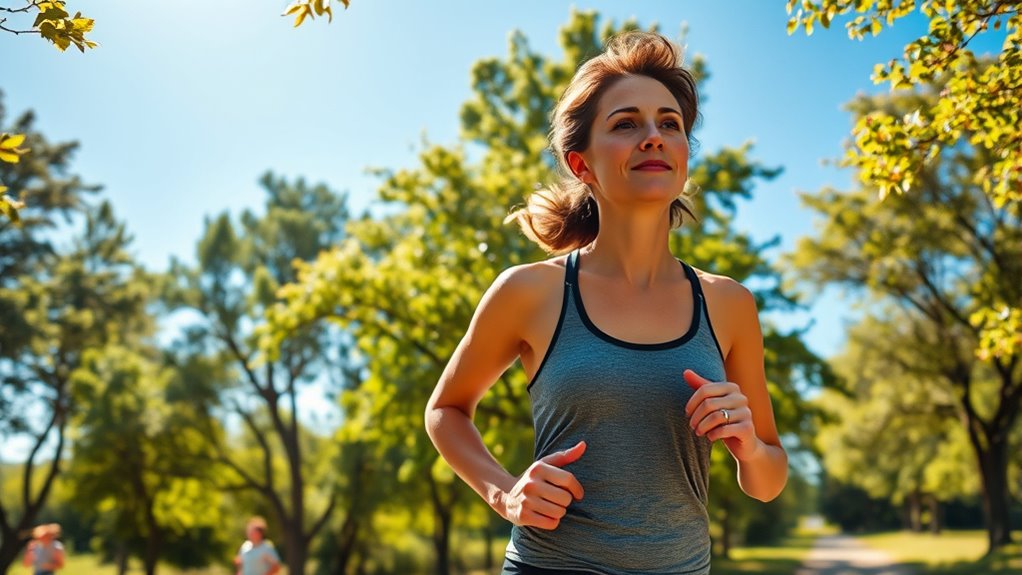

To adapt safely to heat, start with short, 15-30 minute exposure sessions and gradually increase the duration and intensity over time. Stay well-hydrated by drinking fluids regularly before, during, and after heat exposure, using electrolyte drinks for intense activity. Wear lightweight clothing, take breaks in shaded or cool areas, and monitor how you feel for signs of fatigue or dizziness. Keep progressing at a pace that feels safe, and you’ll build resilience effectively—learn some useful tips next.

Get workout gear delivered free with Prime
- Fast, free delivery on millions of items
- Prime Video, Amazon Music and more included
- Member-only deals all year
Key Takeaways
- Gradually increase heat exposure duration and intensity over at least one week to allow safe adaptation.
- Maintain consistent hydration by drinking fluids regularly before, during, and after heat exposure.
- Monitor your body’s response and stop heat exposure if you experience dizziness, nausea, or excessive fatigue.
- Wear light, breathable clothing and take frequent breaks in shaded or cool areas to prevent overheating.
- Start with short sessions (15-30 minutes) and progressively extend them, prioritizing safety over speed of adaptation.
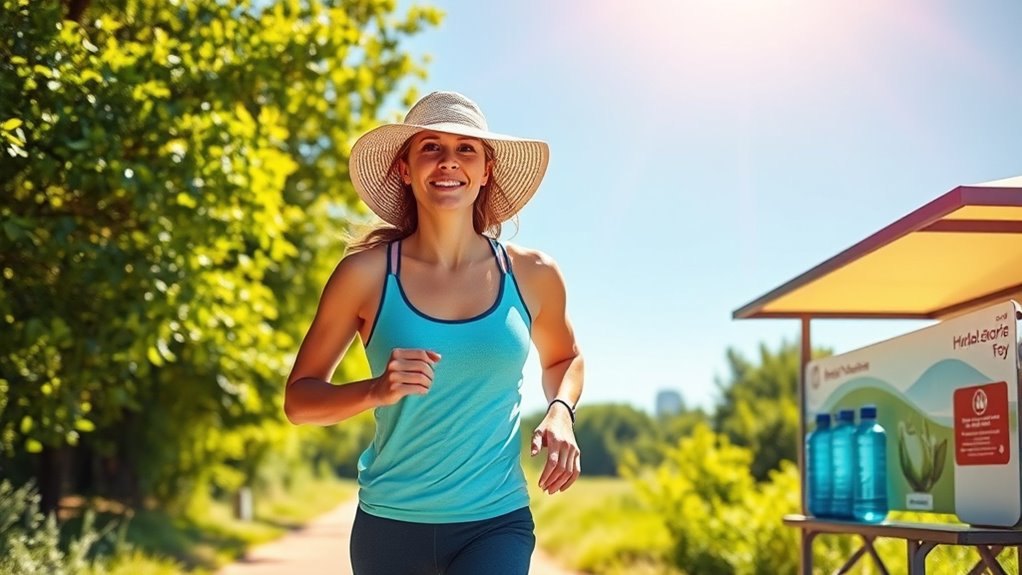
Have you ever wondered how athletes or workers adapt to hot environments? The process is called heat acclimation, and it’s essential for maintaining safety and performance in high temperatures. To do this effectively, you need to focus on hydration strategies and gradual exposure. Proper hydration is the foundation of heat acclimation because it helps regulate your body temperature and prevents dehydration. You should start by drinking fluids regularly before, during, and after exposure to heat. Water is usually sufficient, but for longer periods or intense activity, sports drinks containing electrolytes can help replace lost minerals. It’s important not to wait until you’re thirsty to hydrate—proactive intake guarantees your body stays balanced.
Proper hydration before, during, and after heat exposure is essential for safe heat acclimation.
Gradual exposure is another critical component of heat acclimation. You don’t want to jump into intense heat or prolonged workouts immediately, as this can lead to heat exhaustion or heat stroke. Instead, start with shorter periods of exposure in the heat, maybe 15 to 30 minutes, and gradually increase the duration and intensity over a week or more. This slow progression allows your body to adapt without overwhelming it. During this process, your body begins to improve its ability to sweat efficiently, maintaining a stable core temperature and reducing the risk of heat-related illnesses. Consistency is key; regular exposure helps build tolerance and confidence in hot conditions.
As you continue with your heat acclimation program, pay close attention to how your body responds. Keep track of your hydration levels, and listen to any signs of fatigue, dizziness, or nausea. If you feel unwell, take a step back and rest in a cool environment. Remember, the goal is to adapt safely, not to push yourself to the point of danger. Incorporating additional strategies such as wearing light clothing, taking breaks in shaded or air-conditioned areas, and using cooling towels if available can further enhance your acclimation process. These strategies complement your hydration and gradual exposure efforts, making the process more effective and comfortable.
Ultimately, heat acclimation is about preparing your body to handle high temperatures more efficiently. It takes time, patience, and careful attention to your hydration and exposure levels. By gradually increasing your time in the heat and ensuring you’re well-hydrated, you reduce the risk of heat-related illnesses and improve your resilience in hot environments. Whether you’re an athlete training outdoors or a worker performing physically demanding tasks, these steps will help you adapt safely and perform at your best under the sun.
electrolyte sports drinks for hydration
As an affiliate, we earn on qualifying purchases.
As an affiliate, we earn on qualifying purchases.
Frequently Asked Questions
How Long Should I Wait Before Starting Heat Acclimation?
You should wait at least one to two weeks before starting heat acclimation, following duration guidelines for safe adaptation. The acclimation timeline involves gradually increasing exposure and intensity, allowing your body to adjust securely. Pay attention to how you feel during this period, and don’t rush the process. Consistency is key, so stick to a gradual schedule to avoid heat-related illnesses and ensure effective adaptation.
Can Heat Acclimation Improve Athletic Performance?
Yes, heat acclimation can boost your athletic performance by increasing your tolerance to heat stress. By practicing proper hydration strategies and using cooling techniques like shaded rest and ice towels, you help maintain your core temperature and prevent dehydration. This allows you to train harder and longer in hot conditions, ultimately improving endurance and efficiency. Just remember to gradually adapt and listen to your body for safe, effective results.
What Are Signs of Heat Exhaustion During Acclimation?
Did you know that dehydration contributes to over 75% of heat-related illnesses? During acclimation, signs of heat exhaustion include heavy sweating, weakness, dizziness, and nausea. You might also notice symptoms of dehydration like dry mouth and dark urine. To prevent this, follow proper hydration strategies—drink water regularly, replace electrolytes, and listen to your body. If symptoms worsen, seek shade and medical help immediately.
Is Heat Acclimation Safe for Older Adults?
Heat acclimation can be safe for older adults if you prioritize elderly safety and gradually adapt to higher temperatures. You should start slowly, monitor your body’s response, and stay hydrated to support your temperature regulation. Always consult your healthcare provider before beginning any heat adaptation routine. Pay attention to signs of heat exhaustion or heat stroke, and avoid overexertion to ensure your safety during the process.
How Does Humidity Affect Heat Acclimation Processes?
Humidity barriers can slow down your heat acclimation process because high humidity reduces sweat efficiency. When the air is moist, your body struggles to cool itself through sweating, making it harder to adapt to heat. You might feel more uncomfortable and risk overheating. To stay safe, gradually increase exposure, stay hydrated, and avoid high-humidity conditions during your acclimation period so your body can adapt effectively without undue stress.
Conclusion
By following these heat acclimation tips, you’ll become nearly invincible against the scorching sun. Remember, your body is more adaptable than you think—like a superhero building unstoppable endurance. Take it slow, stay hydrated, and listen to your body’s signals. With patience and consistency, you’ll master the heat without risking your health. So go ahead, conquer those hot days with confidence—your body’s resilience is truly a force to be reckoned with!
Fall Picks
fall essentials
As an affiliate, we earn on qualifying purchases.