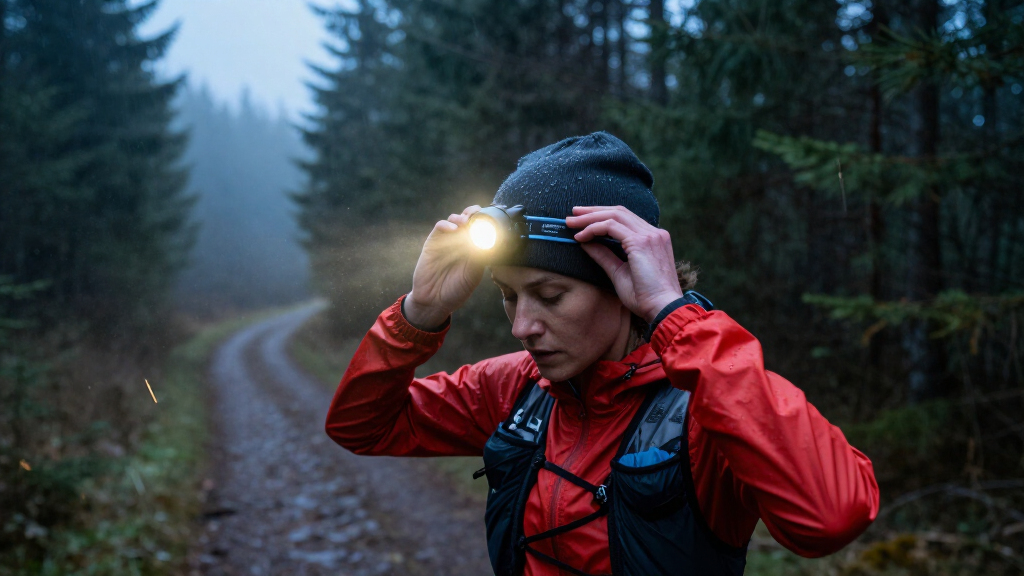

For most runners, the BioLite Range 300 is the best overall running headlamp in this roundup, pairing a running-focused design with USB-C charging and waterproof construction. The Nitecore NU25 MCT UL is a strong compact alternative, while the Petzl Swift LT suits runners who want a more premium rechargeable option. The main tradeoffs are a stable fit and useful beam pattern versus weight, battery convenience, and simpler wide-beam designs. Some of the multi-packs offer flexibility for occasional use, but their motion sensors and broad beams may not suit every running route. Read on for the full comparison and help matching a headlamp to your runs.

Get workout gear delivered free with Prime
- Fast, free delivery on millions of items
- Prime Video, Amazon Music and more included
- Member-only deals all year
Complete the kit

Key Takeaways
- BioLite Range 300 leads for regular running because the roundup’s standout balance is a purpose-suited fit, waterproof build, and USB-C charging.
- Nitecore NU25 MCT UL favors compact carry; its 400-lumen rating and small form make it a more focused alternative to heavier or broader multi-pack designs.
- Petzl Swift LT is the premium-oriented pick for runners prioritizing a rechargeable headlamp from an established outdoor brand over multi-pack flexibility.
- Wide-beam motion-sensor models emphasize hands-free convenience, but their broad light pattern and extra controls may be less suited to runners who want a predictable forward beam.
- Several options arrive in multi-packs, including Energizer, Avlxt, WopkDupk, and Lepro; this can help outfit multiple runners, though it does not by itself make a headlamp better for running.
| Nitecore NU25 MCT UL 400-Lumen USB-C Rechargeable Headlamp | 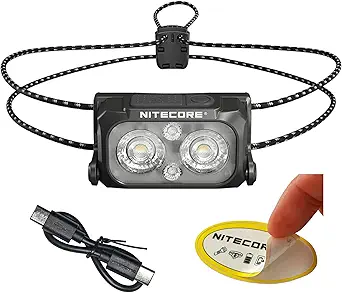 | Best for Lightweight Night Runs | Maximum output: 400 lumens | Maximum beam distance: 144 yards | Weight: 1.65 oz | VIEW LATEST PRICE | See Our Full Breakdown |
| Energizer Vision HD+ LED Headlamps, 2-Pack |  | Best for Backup and Shared Use | Pack size: 2 headlamps | Brightness: 260 lumens | Beam distance: Up to 80 meters | VIEW LATEST PRICE | See Our Full Breakdown |
| Avlxt 2-Pack Rechargeable LED Headlamps with Motion Sensor |  | Best Wide-Beam Pair | Quantity: 2 headlamps | Brightness: Up to 350 lumens | Beam angle: 230° | VIEW LATEST PRICE | See Our Full Breakdown |
| Rechargeable 230° Wide-Beam LED Headlamp with Motion Sensor |  | Best for Short, Hands-Free Runs | Beam angle: 230° | Lighting modes: 6 | Motion sensor range: Within 10 cm | VIEW LATEST PRICE | See Our Full Breakdown |
| WopkDupk Rechargeable LED Headlamps, 3-Pack, 230° Wide Beam |  | Best for Group Runs and Shared Gear | Quantity: 3 headlamps | Beam angle: 230° | Spotlight range: Nearly 300 feet | VIEW LATEST PRICE | See Our Full Breakdown |
| BioLite Range 300 Waterproof USB-C Headlamp, Slate Blue |  | Best for Wet-Weather Runs | Maximum brightness: 300 lumens | Beam distance: 75 m | Water resistance: IP67 | VIEW LATEST PRICE | See Our Full Breakdown |
| Lepro Rechargeable LED Headlamp, IPX4 Waterproof, 5 Modes, Black |  | Best for Beginner Runners | Maximum brightness: 300 lumens stated; white brightness listed as 150 lumens | Beam distance: Up to 500 feet | Lighting modes: 5 (3 white, 2 red) | VIEW LATEST PRICE | See Our Full Breakdown |
| LHKNL Rechargeable LED Headlamp, 8 Modes |  | Best Two-Pack for Shared Gear | Included quantity: 2 headlamps | Brightness: 1,200 lumens | Beam distance: 984.25 feet | VIEW LATEST PRICE | See Our Full Breakdown |
| Black Diamond Cosmo 350 Headlamp |  | Best for Backup-Battery Flexibility | Maximum brightness: 350 lumens | Power source: 3 included AAA batteries or compatible BD 1500 Li-ion battery | Lighting modes: Dimming, strobe, red night vision | VIEW LATEST PRICE | See Our Full Breakdown |
| Rechargeable LED Headlamps, 2-Pack, 230° Wide Beam with Motion Sensor |  | Best for Wide Peripheral Light | Quantity: 2 headlamps | Beam angle: 230 degrees | Lighting modes: 6 | VIEW LATEST PRICE | See Our Full Breakdown |
| Petzl Swift LT Rechargeable Headlamp, Desert Green |  | Best for Lightweight Night Runs | Weight: 43 g | Maximum brightness: 380 lumens | Lighting modes: Three white levels and red light | VIEW LATEST PRICE | See Our Full Breakdown |
| Lepro Rechargeable LED Headlamp, 2-Pack, Black |  | Best Two-Pack for Shared Gear | Pack size: 2 | Brightness: Up to 2000 lux | Beam distance: Up to 500 ft (150 m) | VIEW LATEST PRICE | See Our Full Breakdown |
| Blukar Rechargeable LED Headlamp, 2000L | 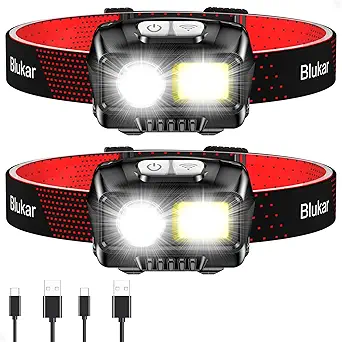 | Best for Adjustable Lighting | Light modes: 8 (5 standard and 3 motion-sensor modes) | Brightness adjustment: Stepless, 100% to 30% | Battery capacity: 1200 mAh | VIEW LATEST PRICE | See Our Full Breakdown |
| running headlamp | Water resistance | Lighting modes | Weight | Runtime |
|---|---|---|---|---|
| Nitecore NU25 MCT UL 400-Lumen | IP66 | — | 1.65 oz | Up to 45 hours |
| Energizer Vision HD+ LED Headl | Not water resistant | High, spot, and wide | — | — |
| Avlxt 2-Pack Rechargeable LED | IPX4 | 5 | — | 3–8 hours |
| Rechargeable 230° Wide-Beam LE | IPX4 | 6 | 2.47 oz | — |
| WopkDupk Rechargeable LED Head | IPX4 | 5 | — | 2.5–8 hours |
| BioLite Range 300 Waterproof U | IP67 | — | — | Up to 100 hours on low; 4 hours on high |
| Lepro Rechargeable LED Headlam | IPX4 | 5 (3 white, 2 red) | 2.86 oz | Up to 30 hours |
| LHKNL Rechargeable LED Headlam | IPX4 | 8 | 1.87 oz | 4–10 hours |
| Black Diamond Cosmo 350 Headla | IP67 | Dimming, strobe, red night vision | — | — |
| Rechargeable LED Headlamps | IPX4 | 6 | 2.47 oz | — |
| Petzl Swift LT Rechargeable He | IPX4 | Three white levels and red light | 43 g | 5 hours |
| Lepro Rechargeable LED Headlam | IPX4 | 6: spot high/low, flood high/low, red steady/flash | 2.65 oz | — |
| Blukar Rechargeable LED Headla | IPX5 | — | 2.96 oz | — |
More Details on Our Top Picks
Nitecore NU25 MCT UL 400-Lumen USB-C Rechargeable Headlamp
At 1.65 ounces, the NU25 MCT UL is the lightest clearly specified option in this group, which makes it a strong fit for runners who want less weight bouncing on their head. Its 400-lumen output and 144-yard beam distance give it more reach than the Energizer Vision HD+ 2-Pack, while warm, neutral, and cool white settings let you choose a beam tone for different paths. Red light and USB-C charging add useful flexibility, and the IP66 rating offers more water protection than the IPX4 wide-beam models here. The tradeoff is that its longest runtime depends on the selected setting, and its focused beam is less about the broad near-field view offered by the Avlxt 2-Pack. Choose it for light, adaptable runs; skip it if you need multiple lamps or broad peripheral illumination.
Pros:- Low 1.65-ounce listed weight helps reduce bounce and forehead fatigue
- Warm, neutral, and cool white settings provide more beam-tone choice than the other listed lamps
- USB-C charging takes just over an hour
- IP66 waterproof rating and 1-meter impact resistance suit rougher outdoor use
Cons:- Maximum runtime varies with the selected light setting
- A focused beam offers less broad-angle coverage than the Avlxt 230° flood beam
Best for: Runners who prioritize a light headlamp, adjustable white-light tone, and stronger water protection for regular outdoor use
Not ideal for: Runners who want a wide flood beam for close peripheral visibility or a multi-headlamp pack
- Maximum output:400 lumens
- Maximum beam distance:144 yards
- Weight:1.65 oz
- Light settings:Warm, neutral, and cool white
- Additional modes:Red light, SOS, beacon
- Recharge:USB-C
- Runtime:Up to 45 hours
- Water resistance:IP66
Our verdict“Pick the NU25 MCT UL for a lightweight, weather-ready running lamp with versatile light settings, provided a wide flood beam is not your priority.”
Energizer Vision HD+ LED Headlamps, 2-Pack
The Energizer Vision HD+ 2-Pack is better suited to runners who want a spare lamp or need to outfit a running partner than to someone seeking a single purpose-built running headlamp. Each unit offers 260 lumens, an 80-meter beam, and adjustable brightness, so runners can dial back output for familiar routes and save battery. Its included AAA batteries also avoid charging downtime: unlike the rechargeable Nitecore NU25 MCT UL, it can be ready with replacement batteries on hand. That convenience comes with compromises. Each lamp needs three AAA batteries, the listing says it is not water resistant, and no weight or runtime is provided. The red LED is useful around camp or at a stop, but the lack of stated weather protection makes this a less dependable choice for wet runs.
Pros:- Two headlamps provide a spare or equip a running partner
- Adjustable brightness from 10% to 100% helps tailor output to the route
- Three lighting modes include high, spot, and wide
- Six AAA batteries are included
Cons:- Listed as not water resistant, limiting confidence for wet-weather running
- Each lamp uses three AAA batteries rather than rechargeable power
- No runtime or weight is specified in the supplied product data
Best for: Running partners or households that want two lamps for dry evening routes, with replaceable batteries ready as backup
Not ideal for: Solo runners who train in rain or want a rechargeable lamp with stated runtime and weather protection
- Pack size:2 headlamps
- Brightness:260 lumens
- Beam distance:Up to 80 meters
- Lighting modes:High, spot, and wide
- Brightness control:Adjustable from 10% to 100%
- Batteries:3 AAA batteries per headlamp; 6 included
- Power source:Battery powered
- Water resistance:Not water resistant
Our verdict“Choose this pair for dry-route backup lighting and shared use, but pick the rechargeable NU25 MCT UL for more dependable wet-weather running.”
Avlxt 2-Pack Rechargeable LED Headlamps with Motion Sensor
For runners who prefer to see a broad area around them, the Avlxt pair makes a different trade from the Nitecore NU25 MCT UL: its 230° beam favors near-field coverage, while the Nitecore offers a longer stated beam distance and more water protection. The Avlxt supplies up to 350 lumens, a separate side light, and motion sensing, so it can also serve as a shared pair for short outings or camp chores. Its IPX4 rating covers splashes, but it falls short of the Nitecore’s IP66 protection. The stated 3–8-hour runtime is also much shorter than the Nitecore’s maximum, and varies with mode. That makes this pair a practical choice for runners who value wide visibility and a second lamp, but a weaker match for long, wet training sessions.
Pros:- 230° beam covers a broad viewing area without frequent head turns
- Two headlamps make it useful for running partners or household backup
- Motion sensor allows hands-free switching
- Rechargeable battery with a stated 3–8-hour runtime
Cons:- IPX4 protection is limited to splashes and does not match the Nitecore NU25 MCT UL’s IP66 rating
- Runtime varies by mode and tops out below the Nitecore’s stated maximum
- Two-hour charging time requires more planning than a quick battery swap
Best for: Runners who want wide near-field visibility and a second rechargeable lamp for a partner or household member
Not ideal for: Distance runners who need long stated runtime or stronger protection from sustained rain and water exposure
- Quantity:2 headlamps
- Brightness:Up to 350 lumens
- Beam angle:230°
- Lighting modes:5
- Battery capacity:1200 mAh
- Runtime:3–8 hours
- Charging time:2 hours
- Water resistance:IPX4
Our verdict“Choose the Avlxt pair for broad coverage and shared use on shorter outings, while the Nitecore better suits longer or wetter runs.”
Rechargeable 230° Wide-Beam LED Headlamp with Motion Sensor
This single wide-beam headlamp suits runners who want an uncluttered 230° view and the convenience of switching modes with a nearby hand motion. Its spotlight and six modes give it more lighting choices than the five-mode WopkDupk 3-Pack, but the listing specifies only that the sensor works within 10 cm—so runners need to bring a hand close to the lamp to use it. At 2.47 ounces, it is heavier than the Nitecore NU25 MCT UL, whose lower listed weight may be more comfortable over longer distances. The IPX4 rating handles splashes, not submersion, and no runtime or charging time is supplied. That missing endurance information makes it harder to recommend for long training routes; it is a more straightforward fit for short runs and general outdoor use.
Pros:- 230° beam illuminates a broad area without constant head movement
- Six modes include both a wide beam and a spotlight
- Motion sensor enables hands-free switching at close range
- Listed weight is 2.47 ounces
Cons:- Motion sensor only works within 10 cm, requiring a close hand gesture
- IPX4 protection covers splashes but not submersion
- Runtime and charging time are not specified in the supplied data
Best for: Runners on short routes who value wide peripheral illumination and hands-free mode switching
Not ideal for: Long-distance runners who need a stated runtime, lighter headgear, or stronger water protection
- Beam angle:230°
- Lighting modes:6
- Motion sensor range:Within 10 cm
- Weight:2.47 oz
- Water resistance:IPX4
- Materials:Soft silicone and adjustable elastic headband
- Power:Rechargeable
Our verdict“Pick this lamp for short runs where wide coverage and hands-free switching matter more than low weight or documented endurance.”
WopkDupk Rechargeable LED Headlamps, 3-Pack, 230° Wide Beam
The WopkDupk set is the group-oriented pick: three rechargeable lamps let a household or running group outfit several people, and the included hardhat clips add utility beyond running. Each lamp pairs a 230° floodlight with a side spotlight whose stated range is nearly 300 feet, giving it broader close coverage than the Nitecore NU25 MCT UL while retaining a dedicated longer-range beam. The tradeoff is a built-in, non-detachable battery, so a drained unit must be recharged rather than quickly swapped. Runtime ranges from 2.5 to 8 hours depending on mode, and IPX4 protects against splashes rather than heavier exposure. Compared with the single rechargeable 230° lamp, this pack offers more units and cables, but its group value matters less to a solo runner who wants low weight and long endurance.
Pros:- Three headlamps equip a group or provide spares
- 230° floodlight is paired with a separate spotlight rated for nearly 300 feet
- USB Type-C charging and three included cables support charging multiple units
- Twelve hardhat clips extend use to work gear
Cons:- Built-in batteries cannot be detached or quickly replaced
- Runtime varies from 2.5 to 8 hours depending on mode
- IPX4 protection is limited to splashes
Best for: Running groups or families that need several rechargeable lamps for short outings and shared outdoor tasks
Not ideal for: Solo distance runners who need replaceable batteries, a lightweight single lamp, or stronger weather protection
- Quantity:3 headlamps
- Beam angle:230°
- Spotlight range:Nearly 300 feet
- Lighting modes:5
- Battery capacity:1200 mAh per headlamp
- Runtime:2.5–8 hours
- Charging:USB Type-C; 2–4 hours
- Water resistance:IPX4
Our verdict“Choose the WopkDupk pack when several people need wide-beam lamps, but a solo runner will likely get more from a lighter, longer-running option.”
BioLite Range 300 Waterproof USB-C Headlamp, Slate Blue
The BioLite Range 300 earns its place for runners who want meaningful water protection alongside a useful 75 m beam. Its IP67 rating offers more reassurance in heavy rain than the Lepro’s IPX4 splash protection, while USB-C charging can reach 80% in 30 minutes—a practical perk before an evening run. The strap is adjustable and moisture-wicking, which may help during sweaty outings. The tradeoff is its four-hour high-mode runtime; runners who need sustained maximum output on long outings should look at the Black Diamond Cosmo 350, which can use AAA batteries. The BioLite’s 100-hour low-mode figure applies to low, so it suits steady, lower-output use better than all-night high-beam running.
Pros:- IP67 waterproof protection
- 75 m beam distance
- USB-C charging reaches 80% in 30 minutes
- Moisture-wicking adjustable strap
Cons:- High mode runs for up to four hours
- The 100-hour runtime applies only to low mode
Best for: Runners who train in wet weather and want USB-C charging with strong water protection
Not ideal for: Runners who need maximum brightness for long outings, given the four-hour high-mode runtime
- Maximum brightness:300 lumens
- Beam distance:75 m
- Water resistance:IP67
- Runtime:Up to 100 hours on low; 4 hours on high
- Charging:USB-C; 0–80% in 30 minutes
- Power source:Included lithium-ion battery
- Strap:Adjustable, moisture-wicking fabric
- Color:Slate Blue
Our verdict“Choose the BioLite if rain protection and quick USB-C charging matter more than extended high-output runtime.”
Lepro Rechargeable LED Headlamp, IPX4 Waterproof, 5 Modes, Black
The Lepro Rechargeable LED Headlamp is a straightforward choice for runners who want white and red light without juggling many controls. Its five modes include two red-light settings, useful when preserving night vision or being less glaring around others. At 2.86 oz, it stays light on the head, and the 45-degree tilt lets you aim the beam toward the path. The product data lists 150 lumens for white light but also gives a 300-lumen maximum, so I would not choose it based on the higher figure alone. Compared with the BioLite Range 300, it has less water protection and slower-to-verify brightness, but offers red modes. Its IPX4 rating covers splashes, not immersion.
Pros:- Five modes include two red-light settings
- Lightweight at 2.86 oz
- 45-degree adjustable lamp angle
- Up to 30 hours of stated runtime
Cons:- Specifications list 150 lumens for white light despite a 300-lumen maximum claim
- IPX4 protection covers splashes rather than submersion
- USB power adapter is not included
Best for: New runners seeking a light rechargeable lamp with red modes for familiar routes and occasional night runs
Not ideal for: Runners who need clearly specified high white-light output or protection for sustained heavy rain
- Maximum brightness:300 lumens stated; white brightness listed as 150 lumens
- Beam distance:Up to 500 feet
- Lighting modes:5 (3 white, 2 red)
- Runtime:Up to 30 hours
- Water resistance:IPX4
- Weight:2.86 oz
- Adjustable angle:45 degrees
- Charging:USB; USB-C cable included, adapter not included
Our verdict“Pick the Lepro for a light, simple starter headlamp with red modes if its listed white-light output suits your routes.”
LHKNL Rechargeable LED Headlamp, 8 Modes
For runners who want a spare or share gear with a partner, the LHKNL two-headlamp set provides two lights in one package. Each weighs 1.87 oz and has a 60-degree pivot, so you can adjust the beam without changing your stride. Motion sensing and eight white and red modes add flexibility, though they also mean more settings than the Lepro’s five-mode layout. The listed 1,200-lumen output and 984-foot beam distance are ambitious figures for a compact running light; the stated runtime is only four to ten hours, varying by use. Like the wide-beam 230° two-pack, this set favors versatility, but its IPX4 protection is for splashes, not submersion.
Pros:- Includes two headlamps
- Lightweight at 1.87 oz each
- 60-degree pivot helps aim light toward the path
- Motion sensing plus white and red modes
Cons:- Runtime varies from four to ten hours
- IPX4 rating does not indicate submersion protection
- High stated brightness may reduce practical runtime
Best for: Running partners or solo runners who want a lightweight lamp with a ready spare
Not ideal for: Runners seeking dependable submersion protection or a clearly specified long runtime at maximum output
- Included quantity:2 headlamps
- Brightness:1,200 lumens
- Beam distance:984.25 feet
- Runtime:4–10 hours
- Battery capacity:1,500 mAh
- Lighting modes:8
- Water resistance:IPX4
- Weight:1.87 oz
- Pivot angle:60 degrees
Our verdict“Choose this set if you want two light, adjustable lamps and can work within the variable runtime and splash-only protection.”
Black Diamond Cosmo 350 Headlamp
The Black Diamond Cosmo 350 suits runners who value the option to swap in fresh batteries on a trip. It takes three included AAA batteries and can also run on a compatible BD 1500 rechargeable battery, sold separately. That flexibility is a practical contrast with the BioLite Range 300, which relies on its included rechargeable battery and has a stated four-hour high-mode runtime. The Cosmo also offers dimming and red night vision alongside strobe, letting you tune the light for a dark trail or a brief visibility signal. Its IP67 rating adds stronger water protection than the IPX4-rated Lepro. The main compromise is carrying AAA spares or buying the compatible rechargeable pack; the product data does not specify runtime or beam distance.
Pros:- Runs on included AAA batteries
- Compatible with a BD 1500 rechargeable battery
- Dimming, strobe, and red night-vision modes
- IP67 waterproof protection
Cons:- Compatible BD 1500 rechargeable battery is not included
- Product data does not specify runtime or beam distance
- Wet headlamp must be dried completely after use
Best for: Trail runners and travelers who want to carry spare AAA batteries or choose a compatible rechargeable pack
Not ideal for: Runners who want USB charging and documented runtime and beam-distance figures in the product specifications
- Maximum brightness:350 lumens
- Power source:3 included AAA batteries or compatible BD 1500 Li-ion battery
- Lighting modes:Dimming, strobe, red night vision
- Water resistance:IP67
- Mounting type:Head mount
- Dimensions:4 × 3 × 2 inches
- Color:BD Graphite
Our verdict“Choose the Cosmo 350 if replaceable power matters more to you than built-in USB charging and a documented runtime.”
Rechargeable LED Headlamps, 2-Pack, 230° Wide Beam with Motion Sensor
The standout here is the 230-degree beam, which lights a broad area without requiring as much head turning on familiar, well-lit routes or during warmups. The included spotlight gives you a narrower option when you need to look farther ahead, a useful pairing compared with the LHKNL set’s pivoting lamp. This package includes two rechargeable headlamps, each weighing 2.47 oz, and six modes with hand-wave control. That sensor works only when your hand is within 10 cm, so it may be less convenient while running than a direct button. Its IPX4 rating handles splashes but offers no stated submersion protection. The product data does not list brightness, beam distance, or runtime, making it harder to judge for dark, technical trails.
Pros:- 230-degree wide beam provides broad near-field illumination
- Includes a spotlight and six lighting modes
- Two rechargeable headlamps in the package
- Lightweight at 2.47 oz each
Cons:- Motion sensor needs a hand wave within 10 cm
- IPX4 rating is for splashes, not submersion
- Product data does not specify brightness, beam distance, or runtime
Best for: Runners who want broad near-field visibility for easy routes and a second lamp for a partner or spare
Not ideal for: Runners on dark technical trails who need documented beam distance, brightness, or submersion protection
- Quantity:2 headlamps
- Beam angle:230 degrees
- Lighting modes:6
- Motion sensor range:Within 10 cm
- Weight:2.47 oz
- Water resistance:IPX4
- Power:Rechargeable
Our verdict“Pick this two-pack for wide peripheral light on less demanding routes if you can accept close-range motion control and unspecified output.”
Petzl Swift LT Rechargeable Headlamp, Desert Green
At 43 g, the Petzl Swift LT is the lightest-feeling choice in this group on paper, a useful distinction for runners who want to limit bounce and bulk over longer outings. Its 380-lumen output and three white levels offer a simpler setup than the Lepro Rechargeable LED Headlamp, 2-Pack, which lists several spot, flood, and red settings. The Swift LT instead pairs white light with a red mode for preserving night vision during brief stops. USB-C charging and a reflective headband suit regular low-light use, while IPX4 covers rain and splashes. The main compromise is its listed five-hour runtime; runners planning longer outings or wanting more reserve should compare battery-life claims closely before choosing it.
Pros:- Low 43 g weight helps keep headgear unobtrusive on runs
- Three white lighting levels plus a red light mode
- USB-C rechargeable lithium-ion battery
- Reflective headband and IPX4 resistance suit low-light runs in rain
Cons:- Listed runtime is limited to five hours
- IPX4 covers splashes and rain, not submersion
- Fewer listed lighting options than the Lepro Rechargeable LED Headlamp, 2-Pack
Best for: Runners who prioritize a compact, 43 g headlamp for shorter evening runs and want a red mode for pauses.
Not ideal for: Ultrarunners and runners who need a stated runtime beyond five hours or a higher water-resistance rating.
- Weight:43 g
- Maximum brightness:380 lumens
- Lighting modes:Three white levels and red light
- Power source:Rechargeable lithium-ion battery
- Charging port:USB-C
- Water resistance:IPX4
- Runtime:5 hours
- Color:Desert Green
Our verdict“Choose the Swift LT for a light, compact setup on shorter runs; pick a longer-runtime alternative for extended outings.”
Lepro Rechargeable LED Headlamp, 2-Pack, Black
The Lepro’s clearest running advantage is practical: two headlamps make it easy for running partners or a household to keep a light ready without sharing one unit. Its spot, flood, and red settings give it more beam choices than the streamlined Petzl Swift LT, and the 45-degree adjustable angle lets a runner aim the beam toward the path. The listed runtime of up to 15 hours is appealing for frequent use, though actual endurance can depend on the selected mode. A sweat-proof elastic band and 2.65 oz weight make it a reasonable utility option, but the product data gives brightness in lux, not lumens, so direct output comparisons are limited. IPX4 handles rain and splashes, not immersion.
Pros:- Two headlamps in the pack suit running partners or shared household use
- Spot, flood, and red steady or flashing modes
- Listed battery life of up to 15 hours
- USB rechargeable with USB-C cable included and 45-degree angle adjustment
Cons:- At 2.65 oz, each unit is substantially heavier than the 43 g Petzl Swift LT
- Brightness is listed as up to 2000 lux rather than lumens, limiting direct output comparison
- IPX4 resistance is for rain and splashes, not submersion
Best for: Running partners, couples, or households who want two rechargeable lights with several beam and red-light settings.
Not ideal for: Runners seeking the lightest setup or a clearly specified lumen output and robust protection against heavy water exposure.
- Pack size:2
- Brightness:Up to 2000 lux
- Beam distance:Up to 500 ft (150 m)
- Lighting modes:6: spot high/low, flood high/low, red steady/flash
- Battery life:Up to 15 hours
- Charging:USB rechargeable; USB-C cable included
- Weight:2.65 oz
- Water resistance:IPX4
Our verdict“Pick this two-pack when sharing and flexible beam modes matter more than minimum weight or directly comparable brightness data.”
Blukar Rechargeable LED Headlamp, 2000L
Blukar gives runners more control over how light is delivered: XPG and COB LEDs, eight modes, and stepless brightness adjustment let the user tailor the beam instead of choosing only a fixed level. Its motion-sensor modes may help when hands are occupied, though they add complexity a runner who wants a simple on-and-go light may not need. The lamp tilts up to 45 degrees, useful for shifting the beam between nearby footing and a farther view. At 2.96 oz, it is heavier than the 43 g Petzl Swift LT, but its IPX5 rating offers stronger stated water resistance than either that model or the Lepro two-pack. The key gap is battery life: no runtime is supplied, making it harder to judge for long runs.
Pros:- Eight modes include motion-sensor control
- Stepless brightness adjustment from 100% to 30%
- IPX5 water resistance is stronger on paper than the IPX4 Petzl Swift LT and Lepro two-pack
- USB-C charging, adjustable washable headband, and 45-degree lamp tilt
Cons:- No battery runtime is specified
- At 2.96 oz, it weighs more than the 43 g Petzl Swift LT
- IPX5 does not indicate protection against submersion
Best for: Runners who like to adjust brightness and beam angle for changing routes and want stronger stated rain resistance.
Not ideal for: Runners who need a known runtime for long outings or prefer a very light, uncomplicated headlamp.
- Light modes:8 (5 standard and 3 motion-sensor modes)
- Brightness adjustment:Stepless, 100% to 30%
- Battery capacity:1200 mAh
- Charging:USB-C; cable included
- Water resistance:IPX5
- Weight:2.96 oz
- Lamp head tilt:45°
- LED types:XPG and COB
Our verdict“Choose Blukar for adjustable lighting and IPX5 resistance, provided the missing runtime information fits your running plans.”

How We Picked
I ranked these 13 headlamps by how well their listed designs and features match the needs of running after dark. I gave the most weight to fit and stability, beam usefulness on a moving route, practical brightness, weather protection, control simplicity, and charging or battery convenience. A headlamp with a running-oriented design and useful protection ranked ahead of models whose strongest appeal is a wide beam, motion sensor, or multi-pack format. I also considered whether the product details give a runner enough information to judge its suitability; an impressive lumen figure alone does not establish a stable fit or a useful beam.
The order reflects those tradeoffs rather than treating all 13 as interchangeable. The BioLite Range 300, Nitecore NU25 MCT UL, and Petzl Swift LT lead because their positioning and rechargeable designs align more closely with regular outdoor use. The Black Diamond Cosmo 350 and the simpler Lepro, LHKNL, Blukar, and Energizer options serve different needs around straightforward operation, weather resistance, or basic utility. Wide-beam multipacks rank lower for dedicated running because convenience and quantity do not resolve questions about bounce, beam control, or long-run comfort.
| running headlamp | Water resistance |
|---|---|
| Nitecore NU25 MCT UL 400-Lumen | IP66 |
| Energizer Vision HD+ LED Headl | Not water resistant |
| Avlxt 2-Pack Rechargeable LED | IPX4 |
| Rechargeable 230° Wide-Beam LE | IPX4 |
| WopkDupk Rechargeable LED Head | IPX4 |
| BioLite Range 300 Waterproof U | IP67 |
| Lepro Rechargeable LED Headlam | IPX4 |
| LHKNL Rechargeable LED Headlam | IPX4 |
| Black Diamond Cosmo 350 Headla | IP67 |
| Rechargeable LED Headlamps | IPX4 |
| Petzl Swift LT Rechargeable He | IPX4 |
| Lepro Rechargeable LED Headlam | IPX4 |
| Blukar Rechargeable LED Headla | IPX5 |
Factors to Consider When Choosing Running Headlamps
Choosing a running headlamp starts with your route and how long you will be out, not the largest number on the package. I would weigh stability, light distribution, controls, weather exposure, and battery planning together, since a strength in one area can bring a compromise in another.
Match Brightness to the Route
On a lit neighborhood loop, a modest setting may be enough to help you stay visible and spot uneven pavement. Dark trails call for more forward reach and enough usable light to read terrain before you reach it. A maximum lumen figure tells you little about how long a headlamp can hold that output, so check for multiple modes and the stated runtime at each level. Using the brightest mode for every run can drain a rechargeable battery faster than expected. I would prioritize a useful medium setting and a clear beam over peak brightness alone.
Look for Stability in Motion
A lamp that feels secure while standing can shift once you start running, especially if the strap is loose or the lamp sits far from the forehead. Headband adjustability, a low-profile lamp body, and balanced weight all affect bounce. Try the fit with the clothing or hat you expect to wear, since winter layers can change strap tension. A broad beam may spread light across the sides of a path, but it can also make it harder to direct illumination where you need it. If you run technical trails, favor secure positioning and a predictable forward beam.
Plan for Battery Life and Charging
USB-C rechargeability makes it easy to top up from common cables, but it still depends on charging before a run and having power available away from home. Replaceable batteries can be convenient on a long outing or trip when recharging is not practical. Check whether the product gives runtime details for the brightness levels you would actually use. Cold weather can reduce battery performance, so leave a margin instead of planning around the shortest advertised runtime. For regular training, a consistent charging routine matters more than an unusually high maximum output.
Choose Controls You Can Use While Running
Small buttons, mode cycling, and touchless sensors can feel different once you are moving with gloves or sweaty hands. Motion activation is handy when you need to switch the light without finding a button, though an accidental gesture can change the setting at an inconvenient moment. Multiple modes add flexibility but can slow down operation if reaching the right one requires cycling through several options. Before buying, look for a lock function or a simple way to return to the setting you use most. On a dark route, predictable controls reduce distractions.
Treat Water Resistance as Route Insurance
Light rain, sweat, and a soaked trail can all reach a headlamp during a run. An IPX4 rating indicates splash resistance, while a product described as waterproof may offer stronger protection, but the exact rating and conditions still matter. Read the rating details rather than relying on broad marketing terms. A more protective body can be worthwhile for runners who train in wet weather, though it may add weight or cost. For fair-weather road runs, fit and beam quality may matter more than protection built for harsher conditions.
Decide Whether a Multi-Pack Fits Your Routine
A two- or three-pack makes sense if you run with family, want a spare in a car, or need lights for occasional household use as well as exercise. It does not tell you whether each unit has a comfortable running fit, dependable controls, or enough battery life for your longest route. Bundled models may also share the same compromises, so buying several does not create a better primary headlamp. If you run alone and often, a single model with a better fit may serve you more reliably. Choose the pack format for the way you will use the extras, not as a substitute for checking running suitability.
Frequently Asked Questions
Is a wide-beam headlamp a good choice for running?
A wide beam can help illuminate the edges of a path and suit easy routes where peripheral visibility matters. On technical trails, a broad wash of light may not project far enough ahead to show roots or turns early. Fit also matters: a wide lamp that bounces can be more distracting than a narrower, stable beam. Check whether the headlamp offers a focused mode or adjustable output if your routes vary. Pick beam shape around the terrain you run most often.
Should I choose a rechargeable headlamp or one with replaceable batteries?
Rechargeable models are convenient for frequent runs when you can charge between outings, and USB-C can simplify cable sharing. Replaceable batteries can be easier to manage on trips or long events without access to power. Compare runtime at the mode you expect to use, since battery type alone does not predict how long the light lasts. Consider how reliably you remember to charge gear before leaving home. The best fit is the power system that matches your routine.
How much brightness do I need for running?
There is no single lumen level that suits every runner because street lighting, route speed, and terrain change what you need to see. A modest output can work on familiar, lit roads, while dark trails need more reach and a useful beam pattern. Maximum output can also shorten runtime, so check the lower modes and their operating times. Avoid choosing solely by the biggest lumen claim on the package. Prioritize enough light to see hazards at your pace with some battery reserve.
Can I use a multi-pack headlamp as my main running light?
You can, if an individual unit fits securely and provides a beam and runtime that suit your route. Multi-packs in this roundup lean toward practical extras such as motion sensing or a wide flood of light, but those features do not establish long-run comfort. Check strap adjustment, weight, weather protection, and controls on the specific model. A spare is useful, though carrying one does not compensate for a poor fit. Test the lamp on a short run before relying on it for a longer or remote outing.
What matters most for trail running at night?
Stable fit, forward visibility, and a dependable battery are central when the route is uneven or remote. A beam that reaches far enough to reveal changes in terrain gives you more time to react, while peripheral spill can help with turns and side obstacles. Weather protection matters more when you expect rain or muddy conditions. Simple controls are useful when you need to adjust light without stopping. For a long trail run, plan around the runtime of your chosen setting and carry a backup light if the route warrants it.
Conclusion
For most regular night runners, I recommend the BioLite Range 300 as the best overall choice in this lineup, with the Nitecore NU25 MCT UL a better fit for runners who favor compact carry. The Petzl Swift LT is the premium-oriented pick, while the Energizer Vision HD+ 2-Pack is a straightforward starting point for beginners or households that need more than one light. Runners who want wide-area illumination or spare lights can look at the motion-sensor and multi-pack options, but should check stability and beam control before making one their primary running lamp. Match your pick to your routes: compactness for easy carry, protection and stability for regular training, and a wider beam for less technical paths.
Fall Picks
fall essentials
As an affiliate, we earn on qualifying purchases.