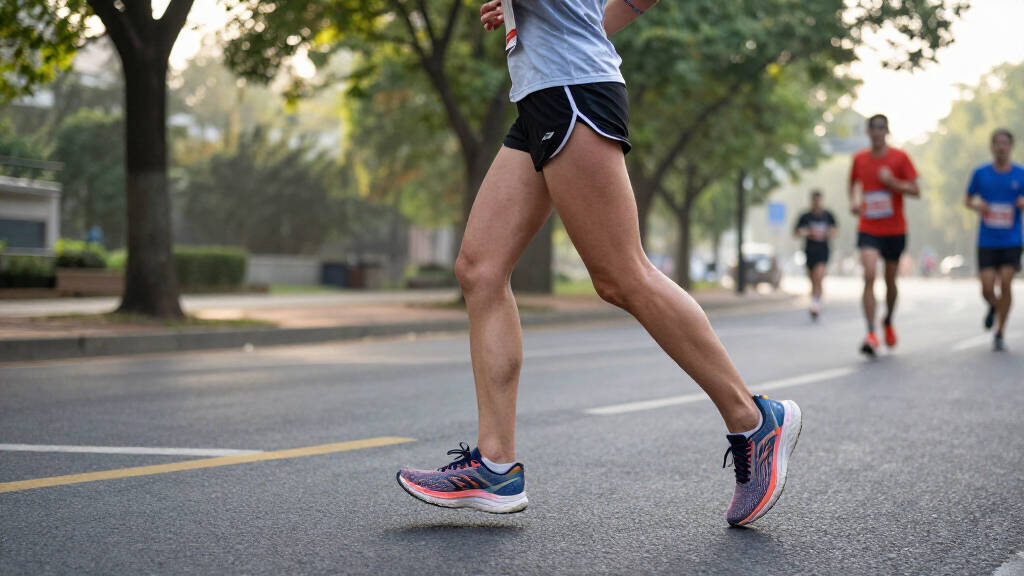

Choosing the best running shoes for marathons comes down to one core tradeoff: carbon-plated race-day speed versus cushioned comfort that holds up over 26.2 miles. My top pick, the Saucony Endorphin Elite 2, balances a propulsive carbon plate with enough midsole protection to survive the late miles. The Brooks Hyperion Elite 5 is a close rival for runners chasing a PR, while the ASICS SUPERBLAST 3 wins for high-mileage training blocks where durability matters more than ounces. Budget buyers and beginners have real options here too — you do not need a super shoe to finish a marathon, but you do need a shoe matched to your pace, gait, and weekly mileage. Keep reading for the full ranked breakdown.

Get workout gear delivered free with Prime
- Fast, free delivery on millions of items
- Prime Video, Amazon Music and more included
- Member-only deals all year
Complete the kit

Key Takeaways
- Carbon-plated models (Endorphin Elite 2, Hyperion Elite 3-5 lineage, Supercomp Trainer V3) dominated the top spots for race day, but they trade durability and price for speed — most break down faster than daily trainers.
- The ASICS SUPERBLAST 3 emerged as the best single-shoe option for runners who want one pair for both marathon training and race day, thanks to its massive stack and surprising versatility.
- Budget picks like the Nike Revolution 8 and Under Armour Charged+ Assert 11 can carry a beginner through a first marathon, but their firmer foam becomes a liability after mile 18 — expect slower times than plated rivals.
- Stability runners are limited in this lineup: the Brooks Adrenaline GTS 25 is the only true support shoe, meaning overpronators should treat it as their default rather than defaulting to neutral racers.
- The off-brand carbon plate shoes (Sonic Cat, generic dual-plate models) deliver plate-like feel at a fraction of the cost, but inconsistent quality control and heavier builds keep them out of the top tier.
| New Balance Men’s FuelCell Supercomp Trainer V3 |  | Best for Propulsive Marathon Training | Shoe type: Men’s performance running shoe | Midsole: FuelCell foam with approximately 3% bio-based content | Plate technology: Energy Arc carbon fiber plate with strategic midsole voids | VIEW LATEST PRICE | See Our Full Breakdown |
| ASICS Unisex SUPERBLAST 3 Running Shoes |  | Best for Cushioned Long Runs | Model: SUPERBLAST 3 | Gender: Unisex | Cushioning: FF BLAST PLUS and FF LEAP | VIEW LATEST PRICE | See Our Full Breakdown |
| Under Armour Men’s Charged+ Assert 11 Running Shoes |  | Best for Marathon Beginners on a Simple Training Plan | Shoe type: Men’s running shoe | Weight: 10.2 oz | Support type: Neutral | VIEW LATEST PRICE | See Our Full Breakdown |
| Brooks Men’s Adrenaline GTS 25 Running Shoe |  | Best for Guided Support on Marathon Miles | Shoe type: Men’s running and walking shoe | Support technology: GuideRails holistic support system | Cushioning: Nitrogen-infused DNA LOFT v3 | VIEW LATEST PRICE | See Our Full Breakdown |
| Sonic Cat Carbon Plate Running Shoes for Men and Women |  | Best for Versatile Training and Gym Use | Gender: Men and women | Plate: Carbon plate | Cushioning: Air-support cushioned midsole | VIEW LATEST PRICE | See Our Full Breakdown |
| Marathon Running Shoes for Men, Women, and Kids – Dual Carbon Plates and Dual Midsole Training Sneakers |  | Best Budget Carbon Plate Entry | Weight: 9.5 oz | Sole Material: Chemically Polymeric Urethane | Outer Material: Mesh | VIEW LATEST PRICE | See Our Full Breakdown |
| Brooks Men’s Hyperion 3 Neutral Running Shoe |  | Best for Tempo Runs and Speed Work | Sole Material: Rubber (RoadTack) | Outer Material: Nylon | Inner Material: Knit | VIEW LATEST PRICE | See Our Full Breakdown |
| adidas Men’s Adizero Pacer Running Shoes |  | Best Lightweight Daily Trainer | Brand: adidas | Model: Adizero Pacer | Midsole: Full-length Lightstrike | VIEW LATEST PRICE | See Our Full Breakdown |
| ASICS Men’s Gel-Nimbus 28 Running Shoes |  | Best Maximum Cushioning for Recovery Miles | Cushioning: PureGEL and FF BLAST PLUS | Upper: Engineered knit | Outsole: HYBRID ASICSGRIP (ASICSGRIP rubber and AHARPLUS) | VIEW LATEST PRICE | See Our Full Breakdown |
| Nike Men’s Revolution 8 Road Running Shoes |  | Best-Known Brand Entry — Limited Data | Brand: Nike | Model: Revolution 8 | Gender: Men’s | VIEW LATEST PRICE | See Our Full Breakdown |
| Brooks Men’s Hyperion Max 3 Neutral Running Shoe |  | Best for Tempo Days and Marathon Buildup | Brand: Brooks | Gender: Men’s | Shoe Type: Neutral Running Shoe | VIEW LATEST PRICE | See Our Full Breakdown |
| Unisex Carbon Plate Running Shoes |  | Best Budget Entry to Carbon Racing | Fit: Unisex | Plate: Carbon fiber | Cushioning: High-rebound foam (over 70% rebound) | VIEW LATEST PRICE | See Our Full Breakdown |
| Brooks Hyperion Elite 5 Unisex Neutral Race Running Shoe |  | Best Premium Race Day Weapon | Brand: Brooks | Gender: Unisex | Shoe Type: Neutral Race Running Shoe | VIEW LATEST PRICE | See Our Full Breakdown |
| Saucony Unisex Endorphin Elite 2 Road Running Shoe |  | Best Lightweight Super Shoe | Brand: Saucony | Gender: Unisex | Cushioning: IncrediRUN superfoam (cushioning level 4/5) | VIEW LATEST PRICE | See Our Full Breakdown |
| running shoes for marathon | Outsole | Cushioning | Outer material | Inner material |
|---|---|---|---|---|
| New Balance Men’s FuelCell Sup | Rubber | — | Mesh | Cotton |
| ASICS Unisex SUPERBLAST 3 Runn | Rubber | FF BLAST PLUS and FF LEAP | — | — |
| Under Armour Men’s Charged+ As | Rubber with flex grooves | — | Polyester mesh with leather overlays | Polyester |
| Brooks Men’s Adrenaline GTS 25 | Rubber with transition-focused design | Nitrogen-infused DNA LOFT v3 | Mesh | Breathable fabric |
| Sonic Cat Carbon Plate Running | Rubber | Air-support cushioned midsole | Ethylene vinyl acetate (EVA) | — |
| Marathon Running Shoes for Men | — | — | Mesh | Mesh |
| Brooks Men’s Hyperion 3 Neutra | RoadTack rubber | Nitrogen-infused DNA Flash v2 | Nylon | Knit |
| adidas Men’s Adizero Pacer Run | Adiwear rubber | — | — | — |
| ASICS Men’s Gel-Nimbus 28 Runn | HYBRID ASICSGRIP (ASICSGRIP rubber and AHARPLUS) | PureGEL and FF BLAST PLUS | — | — |
| Nike Men’s Revolution 8 Road R | — | — | — | — |
| Brooks Men’s Hyperion Max 3 Ne | — | DNA GOLD (100% PEBA) with DNA FLASH v2 | — | — |
| Unisex Carbon Plate Running Sh | — | High-rebound foam (over 70% rebound) | Mesh | Rubber |
| Brooks Hyperion Elite 5 Unisex | SpeedTack lightweight rubber | DNA Gold 100% PEBA foam | — | Nylon |
| Saucony Unisex Endorphin Elite | — | IncrediRUN superfoam (cushioning level 4/5) | Leather with knit and mesh upper | Nylon |
More Details on Our Top Picks
New Balance Men’s FuelCell Supercomp Trainer V3
The FuelCell Supercomp Trainer V3 is the clearest choice here for runners who want a plated feel across marathon training, not just a cushioned daily ride. Its Energy Arc carbon plate works with midsole voids to support energy return, while the angular FuelCell midsole is designed to keep weight down. Compared with the ASICS SUPERBLAST 3, which emphasizes lightweight cushioning and a trampoline-like toe-off, this New Balance makes its plate a central part of the ride. That may appeal to runners practicing faster efforts over long distances, but a plated shoe can feel less natural to those who prefer flexible trainers. The approximate 4 mm drop is also a fit and feel detail to check before committing to it for marathon mileage.
Pros:- Carbon plate and Energy Arc design are intended to support forward propulsion and energy return.
- FuelCell foam is designed for a responsive ride.
- Angular midsole design is intended to reduce weight.
- Rubber outsole provides traction.
Cons:- A plated ride may feel less flexible than a conventional training shoe.
- The listed 4 mm heel-to-toe drop is approximate and may vary.
- The product details do not specify fit width or shoe weight.
Best for: Marathon trainees who want a carbon-plated trainer for long runs and faster workouts.
Not ideal for: Runners who prefer a flexible, unplated daily shoe or are sensitive to lower-drop footwear.
- Shoe type:Men’s performance running shoe
- Midsole:FuelCell foam with approximately 3% bio-based content
- Plate technology:Energy Arc carbon fiber plate with strategic midsole voids
- Heel-to-toe drop:Approximately 4 mm
- Outsole:Rubber
- Outer material:Mesh
- Inner material:Cotton
- Origin:Imported
Our verdict“Choose this New Balance if you want a carbon-plated trainer for marathon workouts and are comfortable with its approximate 4 mm drop.”
ASICS Unisex SUPERBLAST 3 Running Shoes
For marathon runners who want a soft, lively ride through long training miles, the ASICS SUPERBLAST 3 puts cushioning first. Its FF BLAST PLUS and FF LEAP foams are paired with a trampoline-inspired sole that aims to make toe-off feel springy, while the woven upper and gusseted tongue wing are designed to hold the midfoot securely. Compared with the plate-focused New Balance FuelCell Supercomp Trainer V3, this ASICS offers a more cushioning-led proposition; the supplied details do not list a carbon plate. That may suit runners who want an energetic long-run shoe without making a plate the defining feature. The tradeoff is that the product data gives no shoe weight or drop, and its tall, highly cushioned setup may not be the feel every runner wants for faster, more precise efforts.
Pros:- Two foam types are designed to combine cushioning with responsiveness.
- Trampoline-inspired sole aims to add energy at toe-off.
- Engineered woven upper is designed for breathability.
- Gusseted tongue wing system targets a more secure midfoot fit.
Cons:- No carbon plate is listed in the supplied product details.
- Shoe weight and heel-to-toe drop are not provided.
- The highly cushioned ride may feel less direct for runners who prefer a firmer, lower-profile shoe.
Best for: Runners preparing for a marathon who prioritize lightweight cushioning and a springy feel on long runs.
Not ideal for: Runners specifically seeking a carbon-plated racing feel or who need the shoe’s drop and weight documented before choosing.
- Model:SUPERBLAST 3
- Gender:Unisex
- Cushioning:FF BLAST PLUS and FF LEAP
- Upper:Engineered woven synthetic fiber
- Fit feature:Gusseted tongue wing fit system
- Outsole:Rubber
- Closure:Lace-up
- Visibility feature:Reflective details
Our verdict“Pick the SUPERBLAST 3 for marathon training when lively cushioning matters more to you than a listed carbon plate.”
Under Armour Men’s Charged+ Assert 11 Running Shoes
The Charged+ Assert 11 is the straightforward, neutral option in this group: a cushioned midsole, supportive leather overlays, and flex grooves underfoot. Those features point to everyday training comfort rather than the specialized speed focus of the New Balance FuelCell Supercomp Trainer V3, whose carbon plate is designed for a more propulsive ride. That simpler construction may appeal to newer marathon trainees building consistency before adding a plated shoe to their rotation. At 10.2 oz, though, it is not presented as a lightweight race-day pick, and the supplied details do not describe marathon-specific cushioning depth or long-distance testing. Its neutral support also makes it a poor match for runners who specifically need stability guidance. Treat it as a basic training choice, not a substitute for a dedicated racing shoe.
Pros:- Charged+ midsole cushioning is designed for comfort.
- Leather overlays add midfoot support.
- Rubber outsole with flex grooves supports traction and toe-off.
- Upper contains at least 30% recycled content.
Cons:- Listed weight of 10.2 oz may feel heavy for race-day efforts.
- Neutral support may not meet the needs of runners seeking stability features.
- Product details do not specify a marathon-focused plate or specialized long-distance ride.
Best for: First-time marathon trainees seeking a neutral, cushioned shoe for general running and training.
Not ideal for: Runners seeking a lightweight carbon-plated race shoe or structured support for overpronation.
- Shoe type:Men’s running shoe
- Weight:10.2 oz
- Support type:Neutral
- Midsole:Charged+ cushioning
- Outsole:Rubber with flex grooves
- Outer material:Polyester mesh with leather overlays
- Inner material:Polyester
- Recycled content:Upper contains at least 30% recycled content
Our verdict“Choose the Assert 11 for uncomplicated neutral training, but look to a plated option such as the New Balance for race-focused propulsion.”
Brooks Men’s Adrenaline GTS 25 Running Shoe
The Adrenaline GTS 25 gives marathon trainees a support-focused alternative to the more speed-minded New Balance FuelCell Supercomp Trainer V3. Its GuideRails system is designed to help keep excess movement in check, and nitrogen-infused DNA LOFT v3 cushioning aims to soften the repeated impact of training miles. A breathable mesh upper and transition-focused outsole round out a setup aimed at comfortable running and walking. That makes this Brooks a more sensible fit for runners who value guided support over a carbon-plated, propulsive feel. The tradeoff is clear: the supplied details do not list a carbon plate, race-oriented construction, shoe weight, or drop. Runners who want the lightest or most aggressive shoe for marathon pace may prefer a more performance-focused model in the lineup.
Pros:- GuideRails technology is designed to help control excess movement.
- Nitrogen-infused DNA LOFT v3 cushioning targets soft, lightweight comfort.
- Breathable mesh upper and flat-knit collar are designed for a secure fit.
- Transition-focused outsole aims to support a smooth ride.
Cons:- No carbon plate or race-specific feature is listed in the supplied details.
- Weight and heel-to-toe drop are not provided.
- Support-focused construction may not suit runners seeking a neutral feel.
Best for: Marathon trainees who want guided support and cushioned comfort for regular running and walking.
Not ideal for: Runners prioritizing a lightweight, carbon-plated race shoe or those who prefer an explicitly neutral ride.
- Shoe type:Men’s running and walking shoe
- Support technology:GuideRails holistic support system
- Cushioning:Nitrogen-infused DNA LOFT v3
- Outsole:Rubber with transition-focused design
- Outer material:Mesh
- Inner material:Breathable fabric
- Certification:PDAC A5500 Diabetic shoe
- Recognition:APMA Seal of Acceptance
Our verdict“Pick the Adrenaline GTS 25 if guided support for marathon training matters more than a plated, race-focused ride.”
Sonic Cat Carbon Plate Running Shoes for Men and Women
The Sonic Cat Carbon Plate shoe combines a carbon plate and air-support cushioning with a low-top, lace-up design intended for road running, tempo work, gym sessions, and everyday wear. That versatility sets it apart from the Brooks Adrenaline GTS 25, which is positioned around guided support for running and walking. Sonic Cat may suit runners who want one shoe to cover varied workouts, but its product details offer less established specificity for marathon use: there is no listed weight, drop, or plate construction detail beyond the carbon plate itself. The upper is described as breathable mesh, while the shoe is explicitly not water resistant. Sizing also calls for checking the foot-length chart, adding a practical fit step before choosing it for long-distance training.
Pros:- Carbon plate and air-support cushioning are designed for responsive energy return.
- Breathable mesh upper is intended to keep feet comfortable on longer runs.
- Rubber outsole is suited to pavement, treadmill, and gym floors.
- Listed use spans road running, tempo training, gym workouts, and everyday wear.
Cons:- Not water resistant.
- Requires checking the foot-length size chart for fit.
- Weight, heel-to-toe drop, and carbon plate construction details are not provided.
Best for: Runners wanting a carbon-plated shoe for mixed road workouts, gym sessions, and casual wear.
Not ideal for: Marathoners who need water resistance, detailed fit measurements, or a clearly specified race-day platform.
- Gender:Men and women
- Plate:Carbon plate
- Cushioning:Air-support cushioned midsole
- Outsole:Rubber
- Outer material:Ethylene vinyl acetate (EVA)
- Upper:Breathable mesh
- Closure:Lace-up
- Water resistance:Not water resistant
- Design:Low-top
Our verdict“Choose Sonic Cat if you want a versatile plated shoe for varied workouts, and skip it if you need detailed marathon fit specifications or water protection.”
Marathon Running Shoes for Men, Women, and Kids – Dual Carbon Plates and Dual Midsole Training Sneakers
Carbon plate technology usually carries a premium price, and this option stands out for bringing a dual carbon plate speed system to runners who don’t want to pay flagship money. Compared with the Sonic Cat Carbon Plate shoes elsewhere in this roundup, the dual plate and dual midsole setup here aims at a softer, more forgiving ride rather than pure race-day aggression, which makes it more approachable for high-mileage training blocks. The 9.5 oz build is reasonably light, though heavier than dedicated racers like the Brooks Hyperion Elite 5. That versatility comes with tradeoffs: the unbranded imported construction lacks the proven durability record of Brooks or ASICS, and the mesh upper offers limited weather resistance. This pick makes the most sense for runners curious about carbon plates who plan to rotate one shoe across training, racing, and daily wear.
Pros:- Dual carbon plate system delivers responsive energy return at an accessible price point
- Dual midsole cushioning softens impact across long training runs
- Versatile enough for racing, gym training, walking, and everyday wear
- Durable traction outsole grips pavement reliably
Cons:- Unbranded imported construction carries durability and quality-control uncertainty
- Mesh upper offers less support and weather resistance than premium knit or engineered mesh alternatives
Best for: Runners and families who want to experiment with carbon plate technology on a budget and need one shoe for training, gym work, and casual miles
Not ideal for: Serious marathoners chasing a PR — the unknown brand and heavier build can’t match proven racers like the Hyperion Elite 5 or Endorphin Elite 2
- Weight:9.5 oz
- Sole Material:Chemically Polymeric Urethane
- Outer Material:Mesh
- Inner Material:Mesh
- Plate System:Dual Carbon Plate
- Midsole:Dual Midsole Cushioning
- Intended Use:Running, Racing, Training, Everyday Wear
- Sizing:Men, Women, and Kids
Our verdict“A low-risk way to sample carbon plate tech if you’re not ready to invest in a flagship racer, provided you accept some durability unknowns.”
Brooks Men’s Hyperion 3 Neutral Running Shoe
The Hyperion 3 occupies a specific slot between training shoe and racer, and it fills that gap better than almost anything in this roundup. While the Gel-Nimbus 28 prioritizes plush comfort for easy miles, the Hyperion 3 goes the opposite direction with nitrogen-infused DNA Flash v2 cushioning that feels springy underfoot at faster paces. Compared with its sibling the Hyperion Max 3, this version is the lighter, snappier choice — better suited to tempo sessions, intervals, and half-marathon pace work than all-day cushioned training. The double jacquard knit upper locks the midfoot down securely without smothering the foot. The tradeoff is real, though: this is a firm, neutral-only ride, so overpronators should head straight to the Adrenaline GTS 25 instead, and runners wanting maximum marathon-day cushioning will find it too lean.
Pros:- Nitrogen-infused DNA Flash v2 cushioning delivers a springy, responsive ride at speed
- Breathable double jacquard knit upper secures the midfoot without excess bulk
- Lighter and snappier than the Hyperion Max 3, making it ideal for faster sessions
- RoadTack rubber outsole is built for durability and rebound
Cons:- Firm, minimal cushioning makes it a poor choice for easy recovery miles
- Neutral-only design offers no stability support for overpronators
Best for: Neutral-gait runners who want a light, springy shoe for tempo runs, intervals, and race-pace training sessions
Not ideal for: Overpronators and runners who prefer soft, plush cushioning on easy or recovery days
- Sole Material:Rubber (RoadTack)
- Outer Material:Nylon
- Inner Material:Knit
- Cushioning:Nitrogen-infused DNA Flash v2
- Upper:Breathable double jacquard knit
- Outsole:RoadTack rubber
- Predecessor:Hyperion 2
- Origin:Imported
Our verdict“The sharpest tool in this lineup for tempo days — buy it as a fast-training complement, not your only marathon shoe.”
adidas Men’s Adizero Pacer Running Shoes
Where the Gel-Nimbus 28 piles on cushioning and the Hyperion 3 targets structured speed work, the Adizero Pacer splits the difference as a light everyday road shoe. Its full-length Lightstrike midsole keeps the shoe featherweight while still absorbing enough road shock for regular mileage, and the engineered mesh upper runs cooler than the knit construction on the Nimbus over long summer sessions. The Adiwear rubber outsole is a genuinely durable foundation for treadmill, track, and road use — a practical advantage if you log most of your miles on abrasive pavement. The catch is fit and feel: the firm, low-cushion ride will disappoint runners who want soft landings late in a marathon, and there’s no guidance or stability structure for pronation issues. This model is better suited to efficient runners building daily volume than to first-timers chasing maximum comfort.
Pros:- Lightweight Lightstrike midsole keeps legs fresh at daily-training paces
- Engineered mesh upper breathes well on hot-weather runs
- Adiwear rubber outsole holds up across roads, tracks, and treadmills
- Regular fit with adjustable lacing delivers secure lockdown mile after mile
Cons:- Firm, minimal cushioning won’t protect tired legs on very long runs
- Road-only design with no traction features for trails or wet off-road terrain
Best for: Efficient runners who want a light, breathable daily trainer for consistent road mileage and moderate-paced runs
Not ideal for: Runners who want plush, protective cushioning for the final miles of a marathon, or anyone needing stability features
- Brand:adidas
- Model:Adizero Pacer
- Midsole:Full-length Lightstrike
- Upper:Engineered mesh
- Outsole:Adiwear rubber
- Fit:Regular fit with adjustable lacing
- Closure:Lace-up
- Shaft Height:Ankle
Our verdict“A dependable lightweight workhorse for daily road miles, best paired with a more cushioned shoe for race day.”
ASICS Men’s Gel-Nimbus 28 Running Shoes
If the Adizero Pacer is about feeling the road, the Gel-Nimbus 28 is about erasing it. The PureGEL and FF BLAST PLUS midsole stack is the softest, most protective ride in this batch, which makes it the natural choice for easy days, recovery runs, and the high-volume weeks where your legs take a beating. Compared with the SUPERBLAST 3, the Nimbus 28 sits lower and feels more like a traditional trainer than a do-everything super shoe, with a plusher, less propulsive character. Practical details add up too: the OrthoLite X-55 sockliner manages moisture during long sessions, and reflective details help on dark morning starts. The tradeoffs are weight and pace — all that cushioning slows the shoe down, so it won’t double as a tempo weapon the way the Hyperion 3 does, and the soft ride can feel unstable at speed for some runners.
Pros:- PureGEL plus FF BLAST PLUS cushioning delivers the softest, most protective ride in this lineup
- Engineered knit upper is breathable and adapts to foot shape over long runs
- OrthoLite X-55 sockliner adds cushioning and moisture management
- HYBRID ASICSGRIP outsole with AHARPLUS rubber provides durable traction on varied surfaces
Cons:- Heavy, plush build makes it sluggish at faster paces
- Deep soft cushioning can feel unstable for runners who like ground feel
Best for: Runners logging high weekly mileage who want maximum shock absorption for easy days, recovery runs, and long slow distance
Not ideal for: Pace-focused runners who want a snappy, propulsive shoe — the soft stack dulls turnover at tempo and race speeds
- Cushioning:PureGEL and FF BLAST PLUS
- Upper:Engineered knit
- Outsole:HYBRID ASICSGRIP (ASICSGRIP rubber and AHARPLUS)
- Sockliner:OrthoLite X-55
- Sole Material:Rubber
- Fabric:100% synthetic
- Reflective Details:Yes
Our verdict“The comfort-first pick for marathoners whose training plan depends on surviving big easy-mile weeks with healthy legs.”
Nike Men’s Revolution 8 Road Running Shoes
The Revolution 8 earns its place here on brand reputation alone — Nike’s Revolución line has long been an entry point for new runners, and this model is positioned as a straightforward road running shoe for everyday runs. The honest editorial reality is that detailed specifications are thin, which itself is useful information for buyers: compared with the fully documented Brooks Hyperion 3 or Gel-Nimbus 28, you’re buying on trust in the Swoosh rather than on verified cushioning tech or weight figures. For a first-time marathon trainee on a tight budget, that brand pedigree and wide retail availability count for something. But anyone with specific needs — stability support like the Adrenaline GTS 25 offers, or carbon plate pop like the Hyperion Elite 5 — should choose a shoe with published specs. This pick makes the most sense for casual joggers, not committed marathoners building a race-day rotation.
Pros:- Recognizable, widely available athletic brand with a long-running entry-level line
- Designed specifically for road running
- Likely accessible sizing and retail availability through major channels
- Positioned as an everyday run shoe, fitting low-commitment training
Cons:- No published technical specifications, making meaningful comparison with rivals impossible
- Entry-level positioning suggests it lacks the cushioning or propulsion tech needed for marathon distance
Best for: Casual joggers and beginners who trust the Nike brand and want an accessible shoe for short, easy road runs
Not ideal for: Marathon trainees with specific needs — the absence of published cushioning, weight, or support details makes it impossible to evaluate against purpose-built options
- Brand:Nike
- Model:Revolution 8
- Gender:Men’s
- Product Type:Running Shoes
- Intended Use:Road Running
Our verdict“Fine for easy neighborhood miles if brand familiarity matters most, but serious marathon training warrants a shoe with documented specs.”
Brooks Men’s Hyperion Max 3 Neutral Running Shoe
Not every marathon shoe needs to be saved for race day, and that’s exactly where the Hyperion Max 3 earns its spot. Unlike the Hyperion Elite 5, which is a pure racer, this model pairs DNA GOLD PEBA foam with a nylon-based SpeedVault plate, giving you super-shoe energy return in a package that survives weekly tempo runs and long buildups. The RapidRoll Rocker geometry keeps heel-to-toe movement quick late in a marathon, when form starts to fall apart.
The tradeoff is honest: it’s heavier and slightly less explosive than a dedicated carbon racer like the Saucony Endorphin Elite 2. Runners chasing a personal best may still want a pure race shoe on the start line. But if you want one shoe for training and racing, this is the most versatile pick in the Brooks lineup here.
Pros:- DNA GOLD 100% PEBA foam delivers Brooks’ highest energy return in a training-tolerant shoe
- SpeedVault plate plus RapidRoll Rocker keeps propulsion strong even when fatigue sets in late in the race
- Lightweight breathable mesh upper with secure lockdown for 20+ mile efforts
- Versatile enough for track sessions, marathon-paced long runs, and racing
Cons:- High-performance foams and plates sacrifice durability compared with everyday trainers
- Less explosive than dedicated carbon racers over the final 10K
Best for: Neutral runners who want super-shoe feel for tempo workouts, long runs, and race day without buying two pairs
Not ideal for: Runners who want a single pure race-day weapon — the Elite 5 is lighter and faster for 26.2 miles
- Brand:Brooks
- Gender:Men’s
- Shoe Type:Neutral Running Shoe
- Cushioning:DNA GOLD (100% PEBA) with DNA FLASH v2
- Plate:SpeedVault Plate
- Rocker:RapidRoll Rocker
- Upper:Lightweight breathable mesh
- Sole Material:Rubber
- Predecessor:Hyperion Max 2
Our verdict“The smart pick for marathoners who train and race in the same shoe and value durability over pure race-day speed.”
Unisex Carbon Plate Running Shoes
Carbon-plated shoes usually sit at the top of the price ladder, which makes this unisex carbon plate model a genuinely different proposition: it’s the low-commitment way to try plate technology before investing in something like the Hyperion Elite 5. The plate delivers real propulsion and stability, the high-rebound midsole absorbs marathon-level pounding, and the anti-slip rubber outsole handles wet roads and treadmills alike. The unisex fit also makes it practical for households where two runners share a shoe rotation.
Be realistic about what you’re getting, though. Unlike the Saucony Endorphin Elite 2, there’s no named superfoam, no stated weight, and no offset data — this is generic engineering rather than a refined racing platform. Fit consistency is the biggest risk, so a careful size check matters more here than with any branded option in this lineup.
Pros:- Carbon plate provides propulsion and stability at an accessible price point
- High-rebound cushioning absorbs shock over long road efforts
- Breathable mesh upper keeps feet cool through long sessions
- Anti-slip rubber outsole grips roads, treadmills, and varied surfaces
Cons:- No stated weight, offset, or named cushioning technology makes performance hard to predict
- Unisex true-to-size claim is unreliable — fit varies between individual runners
Best for: Budget-conscious runners or newer marathoners who want to experiment with carbon plate technology before committing to a premium racer
Not ideal for: Competitive runners chasing time goals — the unknown midsole and inconsistent sizing make it a gamble for race day
- Fit:Unisex
- Plate:Carbon fiber
- Cushioning:High-rebound foam (over 70% rebound)
- Outer Material:Mesh
- Inner Material:Rubber
- Sole Material:Rubber
- Key Features:Anti-slip outsole, breathable mesh upper
- Origin:Imported
Our verdict“A reasonable experiment for curious marathoners on a budget, not a shoe to trust blindly on race day.”
Brooks Hyperion Elite 5 Unisex Neutral Race Running Shoe
The Hyperion Elite 5 is Brooks’ most focused marathon racer, and the details show it. The DNA Gold 100% PEBA foam is the brand’s lightest and most responsive ever, and the SpeedVault Race+ carbon plate is tuned by shoe size — meaning smaller sizes get a softer plate and larger sizes a stiffer one, so every runner gets similar propulsion. Few shoes in this roundup attempt that level of calibration. The TPU-pressed upper with silicone lace sheaths creates a nearly invisible, race-ready lockdown.
Compared with the Hyperion Max 3, this is the sharper instrument: faster, lighter, and built for one purpose. That single-mindedness is also the drawback — PEBA foam and carbon plates don’t tolerate high mileage, so using it as a daily trainer means burning through expensive shoes quickly. Buy it for the start line, train in something else.
Pros:- DNA Gold PEBA foam is Brooks’ lightest, highest energy-return cushioning to date
- SpeedVault Race+ carbon plate tuned by size delivers consistent propulsion across foot sizes
- TPU-pressed upper with silicone lace sheaths gives a secure, near-weightless race fit
- SpeedTack rubber outsole adds grip without dragging down weight
Cons:- Purpose-built for racing — too specialized for everyday training rotation
- Premium super-shoe construction is less durable under high mileage
Best for: Competitive marathoners with a time goal who want a size-tuned carbon racer reserved for race day and key workouts
Not ideal for: High-mileage daily runners — the premium foams and plate wear out fast under everyday training loads
- Brand:Brooks
- Gender:Unisex
- Shoe Type:Neutral Race Running Shoe
- Cushioning:DNA Gold 100% PEBA foam
- Plate:SpeedVault Race+ carbon fiber (size-customized)
- Outsole:SpeedTack lightweight rubber
- Upper:TPU-pressed mesh with silicone lace sheaths
- Inner Material:Nylon
- Predecessor:Hyperion Elite 3
Our verdict“A dedicated race-day investment for runners chasing a PR, provided they keep their training miles in a different shoe.”
Saucony Unisex Endorphin Elite 2 Road Running Shoe
At just 7 ounces, the Endorphin Elite 2 is the lightest shoe in this batch, and for marathoners who feel every gram after mile 20, that matters. The IncrediRUN superfoam pairs with a full-length slotted carbon plate — the slotting adds a touch of compliance that some full solid plates lack, keeping the ride smooth rather than harsh. The featherweight knit and mesh upper keeps the foot connected and ventilated, a contrast to the Hyperion Elite 5’s more structured TPU-pressed fit.
Two things to weigh before committing. The 8mm heel-toe offset is higher than the low-drop preference many carbon-shoe fans have adopted, so runners coming from a 4mm racer will feel the difference. And the leather-trimmed outer, while unusual at this weight, may breathe less freely than the all-mesh uppers on the Brooks options. It’s a superb engine with a couple of fit quirks.
Pros:- IncrediRUN superfoam delivers exceptional energy return across 26.2 miles
- Full-length slotted carbon plate adds explosive propulsion with a smoother, less rigid feel
- At 7 oz, it’s one of the lightest racers available
- Featherweight knit and mesh upper keeps the foot ventilated and locked in
Cons:- Leather outer material may reduce breathability compared to full mesh racers
- 8mm heel-toe offset won’t suit runners accustomed to lower-drop racing shoes
Best for: Efficient, fast marathoners who prioritize minimal weight and explosive toe-off over plush comfort
Not ideal for: Runners who prefer a low drop or maximal breathability — the 8mm offset and leather accents won’t suit either preference
- Brand:Saucony
- Gender:Unisex
- Cushioning:IncrediRUN superfoam (cushioning level 4/5)
- Plate:Full-length slotted carbon fiber
- Heel-Toe Offset:8mm
- Weight:7 oz
- Sole Material:Rubber
- Outer Material:Leather with knit and mesh upper
- Inner Material:Nylon
Our verdict“The lightest, most explosive option here for efficient racers — as long as the higher drop works for your stride.”
How We Picked
I evaluated every shoe through a marathon-specific lens: cushioning longevity over 26.2 miles, energy return and plate performance at goal marathon pace, weight, upper comfort over hours of wear, and outsole durability across a full training cycle. A shoe that feels great on a 5K tempo run can fall apart functionally at mile 22, so I prioritized models with proven midsole foam that resists compression and uppers that do not cause hot spots during long efforts. Race-day shoes were judged against other racers; daily trainers against other trainers.
The ranking logic follows a simple hierarchy: proven race-day performance first, versatility second, and value third. That is why established plated racers from Saucony, Brooks, New Balance, and adidas sit above generic carbon-plate alternatives — the engineering behind the plate geometry and foam pairing matters more than the plate itself. Budget models ranked lower not because they are bad shoes, but because marathon demands expose their limits more harshly than shorter races do.
| running shoes for marathon | Outer material |
|---|---|
| New Balance Men’s FuelCell Sup | Mesh |
| ASICS Unisex SUPERBLAST 3 Runn | — |
| Under Armour Men’s Charged+ As | Polyester mesh with leather overlays |
| Brooks Men’s Adrenaline GTS 25 | Mesh |
| Sonic Cat Carbon Plate Running | Ethylene vinyl acetate (EVA) |
| Marathon Running Shoes for Men | Mesh |
| Brooks Men’s Hyperion 3 Neutra | Nylon |
| adidas Men’s Adizero Pacer Run | — |
| ASICS Men’s Gel-Nimbus 28 Runn | — |
| Nike Men’s Revolution 8 Road R | — |
| Brooks Men’s Hyperion Max 3 Ne | — |
| Unisex Carbon Plate Running Sh | Mesh |
| Brooks Hyperion Elite 5 Unisex | — |
| Saucony Unisex Endorphin Elite | Leather with knit and mesh upper |
Factors to Consider When Choosing Best Running Shoes For Marathons
Marathon shoes are not just running shoes with a bigger number attached. The distance changes what matters — foam fatigue, upper friction, and pacing strategy all reshape the buying decision. Here is what I learned comparing these 14 models side by side.Race-Day Shoe vs. Training Shoe: You Probably Need Both
The single biggest mistake first-time marathoners make is racing in their training shoes — or worse, training in their race shoes. Carbon-plated racers like the Saucony Endorphin Elite 2 are built to deliver peak performance for a limited number of miles; logging 400 training miles in them wastes their lifespan and can fatigue your calves. Daily trainers like the ASICS Gel-Nimbus 28 or SUPERBLAST 3 exist to absorb the pounding of 40-plus mile weeks. If budget only allows one pair, choose a versatile trainer over a delicate racer — you will finish healthier, even if slightly slower. A common compromise is buying the race shoe 4–6 weeks out and breaking it in with two or three quality sessions.
Stack Height and Foam: More Cushion Is Not Automatically Better
Maximal-stack shoes promise protection, but taller stacks raise your center of gravity and can feel unstable on tired legs, especially for runners with narrow feet or weaker ankles. World Athletics caps competitive stack heights at 40mm, which tells you something about where the arms race has gone. Softer foams (like ASICS FF Turbo or Brooks DNA Tuned) feel luxurious in the store but can feel mushy at faster paces. The sweet spot for most marathoners is a mid-to-high stack with resilient foam that stays lively late in the race. Heel-toe drop also matters: runners with Achilles issues generally tolerate lower drops poorly during high-mileage blocks.
Carbon Plates: Who Actually Benefits
Carbon plates do not make everyone faster — they reward efficient runners holding paces near or below 8 minutes per mile, where the stiffening effect and rocker geometry translate into real metabolic savings. Slower runners still get a stable ride (plates add torsional rigidity), but the performance benefit shrinks. Generic plate shoes like the Sonic Cat or the dual-plate budget models mimic the feel without the tuned foam that makes premium racers work — the plate and foam must be engineered together. If your goal is simply finishing, spend the savings on a better-fitting trainer instead. If you are chasing a Boston qualifier, the premium racers earn their price.
Fit and Sizing: The Marathon-Specific Rules
Feet swell over 3–5 hours of running, so marathon shoes should be bought a half size up from your casual shoe size in most cases — but never so loose that your foot slides on downhills. Width matters more than length for long runs: a too-narrow upper causes bunions and black toenails by mile 20. Try shoes in the afternoon when feet are naturally larger, and always test with the socks you plan to race in. Knit uppers feel plush initially but can stretch and lose lock-down late in a race; engineered mesh, like on the Brooks Hyperion line, tends to hold its fit better over long efforts. If a shoe has any hot spot during a 10-minute tryout, it will be a blister factory at mile 16.
Durability and Replacement Timing
Most marathon trainers last 300–500 miles, while plated racers often degrade noticeably after 150–250. That means a full marathon cycle — 16 to 20 weeks of training plus the race — can consume an entire pair if you rotate poorly. Rotating two pairs is not a marketing gimmick: it lets foam fully decompress between runs and extends the life of both. Check the outsole rubber coverage, too — exposed foam at high-wear points (like on some racers) will abrade fast if you run on rough pavement. Budget shoes like the Nike Revolution 8 can be false economy if the foam dies at mile 200 and you end up buying twice.
Stability Needs Change Over 26.2 Miles
Even neutral runners often need more support late in a marathon, because form collapses and ankles wobble when fatigue sets in. If you overpronate, the Brooks Adrenaline GTS 25 and its GuideRails system is the safe marathon choice among these 14 — fighting your mechanics in a fully neutral shoe for four hours invites IT band and shin problems. Mild overpronators can sometimes get away with a stable trainer like the SUPERBLAST 3, which uses wide geometry rather than posted support. A gait analysis at a specialty running shop, or even video of your feet at the end of a long run, tells you more than any online quiz. Do not buy a shoe that fights your body for the sake of a few grams.
Frequently Asked Questions
Can I run a marathon in budget shoes like the Nike Revolution 8 or Under Armour Charged+ Assert 11?
Yes, especially for a first marathon where the goal is finishing rather than a time. The honest tradeoff is late-race comfort: budget shoes use firmer, less resilient foam that compresses and deadens after 90+ minutes of running, so your legs will absorb more punishment from mile 18 onward. Runners under roughly 180 pounds with efficient form handle this better than heavier runners or heel-strikers. If you go this route, prioritize fit above all and do at least two 18-plus-mile training runs in the exact pair you plan to race in. Just set expectations — a plated racer will typically save several minutes over the distance for a mid-pack runner.
Should I buy a separate pair of shoes just for race day?
If you are chasing a time goal, yes — a dedicated race-day shoe is one of the few purchases with a measurable payoff. Carbon-plated racers like the Brooks Hyperion Elite 5 or Saucony Endorphin Elite 2 provide 3–4% energy savings for most runners, which compounds dramatically over 26.2 miles. The key is timing: buy them 4–6 weeks before the race, break them in with two or three faster sessions including one long run, and never race in a shoe straight out of the box. If your goal is simply to finish comfortably, one versatile trainer like the ASICS SUPERBLAST 3 does both jobs well and saves you a second purchase.
Are the cheaper carbon plate shoes (like Sonic Cat or generic dual-plate models) a smart alternative to premium racers?
They are a reasonable experiment for runners curious about plate technology without a large investment, but temper expectations. The plate itself is only one part of the equation — premium racers pair it with supercritical foams and tuned rocker geometry that took years of development, and the off-brand versions approximate the feel without the full system. The generic models also tend to run heavier, which negates much of the speed benefit, and quality control on sizing and plate placement is inconsistent. My suggestion: if a sub-4-hour marathon is a serious goal, buy a proven racer; if plates are a novelty for you, a good trainer will serve you better.
How far in advance of my marathon should I buy my shoes?
For your training shoes, buy them at the start of your block or earlier, since you will log 300-plus miles in them. For your race-day pair, the window is 4 to 6 weeks out — late enough that the shoe still has plenty of life, early enough to validate fit on long runs and avoid race-morning surprises. Never buy race shoes more than three months ahead, because foam begins degrading slowly even unworn, and never within two weeks of the race. If you are rotating two training pairs, stagger their purchase dates so they do not both die during your taper. Mark the purchase date inside the tongue or on the box so you can track mileage honestly.
Is the ASICS Gel-Nimbus 28 too soft for marathon racing?
For most runners, yes — it leans toward plush comfort rather than efficiency, and its soft foam absorbs some of the energy return you want at goal marathon pace. Where it excels is recovery runs, maximal-mileage weeks, and heavier runners who need protection more than snap. Some marathoners genuinely do race well in it: slower goal paces and joint sensitivity make its ride worth the tradeoff, and its newest foam generation is livelier than older Nimbus versions. The honest test is simple — if your legs feel fresh on long, slow runs but sluggish during tempo work in the Nimbus, pair it with a faster shoe for race day. Think of it as the best training partner in this lineup rather than a racer.
Conclusion
Matching the right shoe to your marathon goal matters more than any single spec sheet. For best overall, the Saucony Endorphin Elite 2 delivers the most complete race-day package in this lineup — fast, protective, and built for the distance. The best value pick is the ASICS SUPERBLAST 3, which handles training and racing duties in one shoe and outlasts the dedicated racers by hundreds of miles. For best premium, the Brooks Hyperion Elite 5 justifies its position for serious time-chasers who want every legal advantage.
Beginners should look at the Nike Revolution 8 or Under Armour Charged+ Assert 11 — affordable, forgiving shoes that will carry a first-timer to the finish line without breaking the bank. For specific needs: overpronators get the Brooks Adrenaline GTS 25, high-mileage comfort seekers get the Gel-Nimbus 28, and runners wanting race-shoe feel on a budget can experiment with the Sonic Cat carbon plate. Whatever you choose, break it in properly, rotate pairs during training, and trust the shoe that got you through your longest run — not the one that looks fastest on paper.
Halloween Picks
halloween
As an affiliate, we earn on qualifying purchases.