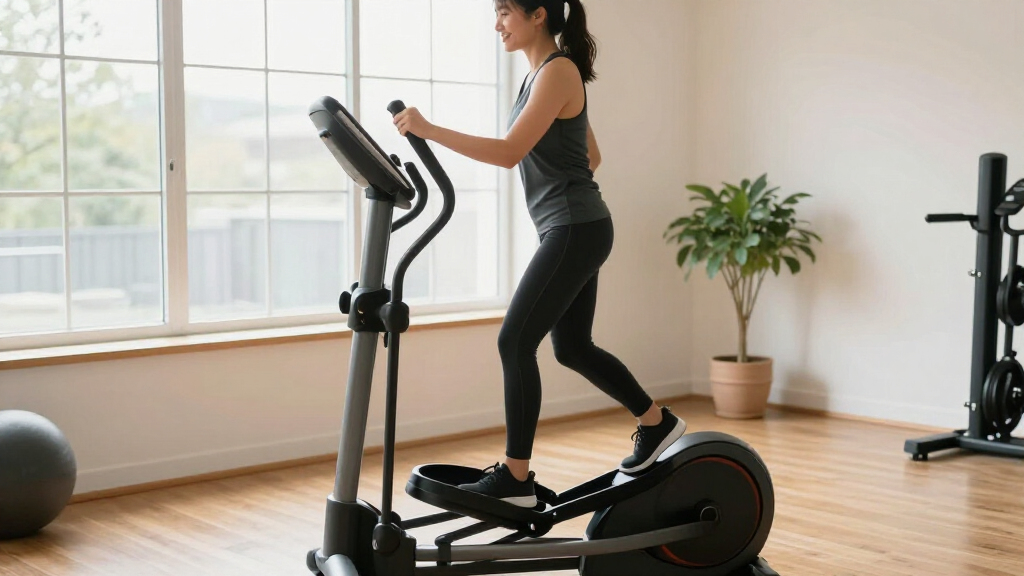
Compact elliptical trainers come in two very different shapes, and picking the wrong one is the most common mistake buyers make in this category. If you want a full-body standing workout in a small footprint, the Dripex Elliptical with 16 resistance levels stands out as my best overall pick for its smooth magnetic drive and quiet operation in an apartment-friendly frame. For seated use — desk work, senior mobility, or gentle rehabilitation — the Cubii JR1 and Putnen electric leg exerciser lead the under-desk group, with the Cubii offering smoother manual resistance and the Putnen adding motor-assisted motion for those who need it. The core tradeoff is stride length versus floor space: foldable machines like the YOSUDA and ANCHEER save room but shorten your stride, while under-desk models take almost no space but won’t raise your heart rate the same way. Budget, ceiling height, and whether you’ll pedal standing or seated should drive your choice more than feature counts. Keep reading for the full breakdown of all 15 models.

Get workout gear delivered free with Prime
- Fast, free delivery on millions of items
- Prime Video, Amazon Music and more included
- Member-only deals all year
Complete the kit

Key Takeaways
- Standing compact ellipticals split into two camps: foldable machines (YOSUDA, ANCHEER) that save storage space but restrict stride, and fixed-frame machines (Dripex, Niceday, THERUN) that offer a more natural motion at the cost of a permanent floor footprint.
- Stride length was the single biggest differentiator in the standing group — the Niceday’s 16-to-20-inch stride options felt dramatically more natural than the 12-to-14-inch strides on budget models like the CURSOR, which suit shorter users only.
- Among under-desk models, manual machines (Cubii JR1, GUGTTR) deliver a better workout, while motorized units (Putnen) make more sense for seniors or rehab users who cannot sustain pedaling on their own.
- The two Sunny Health & Fitness machines occupy opposite ends of the intensity spectrum: the upright elliptical suits steady cardio, while the air walker glider favors low-intensity, joint-friendly motion with almost zero learning curve.
- Two Dripex models made the lineup, and the difference matters: the 13.2 lb flywheel version runs smoother and more stable than the lighter standard model, justifying its step up for daily users.


More Details on Our Top Picks
Dripex Elliptical Exercise Machine for Home with 16 Resistance Levels, Quiet & Smooth Magnetic Drive, LCD Monitor & Pulse
The Dripex elliptical earns the top spot because it balances everything a compact-machine buyer actually needs: 16 magnetic resistance levels, a 13.2 lb flywheel for smooth momentum, and a footprint small enough for an apartment or spare corner. Compared with the YOSUDA Foldable, it gives up some folding convenience but compensates with dual bidirectional handlebars that let you pedal in reverse to hit different muscle groups — something YOSUDA doesn’t offer. The pulse-sensing LCD means you can train with a heart-rate target rather than guessing at effort, which matters if you’re using this for steady cardio rather than casual movement. Where it falls short: the display is basic against app-connected machines like the Cubii JR1, and assembly will take an evening for anyone who hasn’t built fitness equipment before.
Pros:- 16 resistance levels provide a real progression path from beginner to advanced cardio
- Quiet magnetic drive works in shared spaces, apartments, and during calls
- Dual bidirectional handlebars engage upper body and allow reverse-stride training
- Transport wheels make repositioning a one-person job
Cons:- Assembly is time-consuming for first-time builders
- LCD monitor is basic — no app connectivity or preset programs
Best for: Home users who want a full-body standing elliptical workout with progressive resistance in a small living space
Not ideal for: Very short ceilings or tiny studios where even a standing frame won’t fit — an under-desk unit like the Putnen is the better call there
- Resistance Levels:16
- Flywheel Weight:13.2 lbs
- Max User Weight:265 lbs
- Handlebars:Dual, bidirectional
- Monitor:Multi-function LCD with pulse sensors
- Frame Material:Heavy-duty steel
- Supported Heights:4’9″ to 6’1″
Our verdict“The strongest all-around pick for anyone who wants genuine elliptical training at home without surrendering a whole room to it.”
Putnen Under Desk Elliptical Machine, Electric Leg Exerciser for Seniors
The Putnen is built around one idea: passive, seated movement that anyone can do, which is why it stands out for seniors and rehab users. Its auto mode moves your legs for you — a genuine advantage over the manual-only Cubii JR1, because it lets people with limited strength or mobility exercise without driving the motion themselves. At 8.1 lbs and under seven inches tall, it slides under most desks where a standing machine like the Dripex simply can’t go. The included remote control means you can adjust speed mid-session without bending down, a small detail that matters a lot for anyone with back or hip issues. The tradeoff is ceiling on intensity: this is circulation and light-strength work, not cardio training, and the remote needs its own batteries.
Pros:- Motorized auto mode enables passive exercise for users with limited strength
- Remote control allows speed changes without bending or reaching
- Ultra-quiet operation suits offices and shared living rooms
- Light 8.1 lb frame moves easily between rooms
Cons:- Limited to lower-body, low-intensity exercise
- Remote requires separate batteries
Best for: Seniors, desk workers, and people in leg rehabilitation who need low-effort seated movement
Not ideal for: Anyone seeking a sweat-inducing cardio workout — the motorized motion caps out at light intensity
- Dimensions:14.8″L x 13.8″W x 6.3″H
- Weight:8.1 lbs
- Modes:Manual (12-level speed), Auto (P1-P3)
- Display:LCD
- Controls:Remote control
- Intended Users:Seniors, office workers, rehabilitation
Our verdict“The right choice when the goal is gentle daily movement and circulation, not fitness progression.”
GUGTTR Under Desk Elliptical Machine, Low Impact Leg Exerciser for Seniors
The GUGTTR SF-S6 delivers nearly everything the Putnen does — 12 manual speeds, auto programs, remote control, quiet operation — as a more budget-friendly package, which is why it earns the value slot. Like the Putnen, it’s low-impact and joint-friendly, making it a sensible fit for seniors and anyone recovering from lower-body injury. The one-year warranty and included accessories (lubricant oil, power cord, remote) mean you’re not buying extras separately. Compared with the Cubii JR1, the GUGTTR’s powered auto mode gives it a leg up for users who can’t sustain continuous pedaling. Be realistic about limits, though: it tops out at moderate intensity, has no preset workout programs, and needs a wall outlet — so it’s tethered to wherever your nearest plug sits.
Pros:- Powered auto mode supports passive leg movement for rehabilitation
- Whisper-quiet operation works in offices and bedrooms
- 12 adjustable speeds offer meaningful control over effort
- Includes remote, power cord, and lubricant oil out of the box
Cons:- Intensity ceiling rules out serious cardio training
- Requires a power source, limiting placement flexibility
- No built-in preset workout programs
Best for: Budget-conscious buyers who want motorized seated exercise without paying brand-name premiums
Not ideal for: Users without access to a power outlet where they sit, or anyone wanting structured workout programs
- Model:SF-S6
- Modes:Manual and Auto
- Speed Levels:12
- Controls:Remote control
- Warranty:1 year
- Included Components:Lubricant oil, power cord, remote control, user guide
- Power Requirement:Wall outlet required
Our verdict“A cost-effective seated exerciser that covers the essentials well, provided you have an outlet nearby and modest fitness goals.”
Cubii JR1 Under Desk Elliptical
The Cubii JR1 stands out for one thing the budget under-desk rivals don’t match: app-connected tracking. Syncing with the Cubii mobile app turns casual desk pedaling into measurable progress — strides, distance, calories — which is genuinely motivating if you’re the type who abandons equipment without visible results. Unlike the GUGTTR or Putnen, the JR1 is fully manual and cordless, so it works anywhere without hunting for an outlet, and its ergonomic motion is smooth enough for all-day use. The compromises are real, though: resistance ceiling is limited (fine for movement, not for training), and the full tracking experience depends on having and using the app — the LCD alone tells a more basic story. For app-averse buyers, the GUGTTR’s powered simplicity may serve better.
Pros:- Cubii app integration creates long-term activity tracking and accountability
- Cordless manual design works anywhere with no outlet needed
- Smooth, ergonomic stride suits all ages including seniors and rehab users
- Compact footprint fits under most desks
Cons:- Limited maximum resistance caps workout difficulty
- Full tracking features require the mobile app
Best for: Data-driven users and office workers who want to log activity, sync progress, and stay motivated via app
Not ideal for: Buyers who want powered assistance or high resistance — this is a manual, light-effort machine
- Type:Under desk elliptical
- Display:Built-in LCD fitness tracker
- Connectivity:Cubii mobile app
- Power:Cordless / manual
- Impact Level:Low impact
- Intended Use:Home, office, rehab, seniors
- Tracks:Calories, strides, distance
Our verdict“The pick for anyone motivated by metrics — a cordless desk elliptical that turns light movement into a trackable habit.”
YOSUDA Foldable Elliptical Exercise Machine for Home, Compact Design
If footprint is your deciding factor, the YOSUDA foldable elliptical is the strongest argument in this lineup. Its 2-square-foot folded footprint lets it tuck behind a door or into a closet — a capability the Dripex, with its fixed frame, can’t match despite being similarly compact in use. The specs also outclass the batch where it counts: a 350 lb weight capacity (vs. Dripex’s 265), a 15-inch stride for a more natural gait, and the same 16 magnetic resistance levels. The 5.5-inch display is larger than most at this size. What you give up is refinement: folding mechanisms add a setup-and-stow ritual each workout, and at 66 lbs it’s portable but not effortless to drag out daily — buyers who can leave a machine out permanently may prefer the Dripex’s simpler always-ready design.
Pros:- Folds down to roughly a 2 sq ft footprint for closet or corner storage
- 350 lb weight capacity accommodates a wider range of users
- 15-inch stride delivers a more natural motion than shorter-compact rivals
- 16 magnetic resistance levels support long-term progression
Cons:- Folding and unfolding adds daily setup friction
- 66 lb frame is manageable but not effortless to move frequently
Best for: Apartment dwellers and multi-use-room owners who must stow their equipment between workouts
Not ideal for: Anyone wanting grab-and-go convenience — the daily fold-and-unfold routine becomes a friction point for frequent use
- Resistance Levels:16
- Resistance Mechanism:Magnetic
- Stride Length:15 inches
- Max User Weight:350 lbs
- Display:5.5-inch LCD
- Folded Footprint:Approx. 2 sq ft
- Dimensions:47.6″D x 22.7″W x 62″H
- Item Weight:66 lbs
- Material:Alloy steel, plastic, rubber
Our verdict“The space-saving champion for small homes — a full-size-feeling elliptical that disappears when you’re done.”
ANCHEER Elliptical Exercise Machine for Home – Foldable Magnetic Elliptical
Most compact ellipticals cap out around 300-400 lbs, which makes the ANCHEER’s 550 lb rating a genuine outlier in this category. That capacity translates directly into a rock-solid, wobble-free platform for heavier riders or anyone who simply hates the flex that lighter machines develop over time. The 16-inch stride matches the ANCHEER’s stride nearly inch-for-inch with the Niceday, so taller users aren’t shortchanged, and the 3-position adjustable pedal angle is a feature none of the other full-size picks here offer — it lets you shift emphasis between calves, quads, and glutes. Folding capability is another edge over the CURSOR, which has no storage story at all. The tradeoff is weight: everything that makes this machine stable also makes it a chore to relocate, and assembly is more involved than the Niceday’s 20-minute setup.
Pros:- 550 lb weight capacity, far above typical compact ellipticals, delivering a rock-solid ride
- Adjustable pedal angles across three positions let you target different muscle groups
- Foldable frame shrinks the footprint for storage, unlike the CURSOR
- 16 magnetic resistance levels with quiet operation suitable for shared living spaces
Cons:- Assembly takes real time and effort compared with mostly pre-assembled rivals
- Heavy build makes it difficult to reposition despite the foldable design
Best for: Heavier riders or stability-focused users who want a full-stride machine that won’t flex or wobble during hard sessions
Not ideal for: Apartment dwellers who plan to move the machine between rooms often — the heavy-duty frame that enables the 550 lb capacity makes relocation a two-person job
- Weight Capacity:550 lbs
- Stride Length:16 inches
- Resistance Levels:16 (magnetic)
- Pedal Adjustment:3 levels (5°, 10°, 16°)
- Display:Time, speed, distance, calories, odometer, pulse sensors
- Foldable:Yes
Our verdict“This pick makes the most sense for buyers who need maximum stability and a high weight rating without giving up a full 16-inch stride or fold-away storage.”
Niceday Elliptical Exercise Machine with 15.5-inch, 16-inch, and 20-inch Stride Options
Stride length is where most compact ellipticals quietly compromise, and that’s exactly where the Niceday refuses to. With configurable 15.5, 16, and 20-inch stride options, it’s the only machine in this lineup that comfortably accommodates users over six feet tall — the CURSOR maxes out at 14 inches, which taller riders will find choppy and cramped. The 16 lb flywheel gives the pedal motion a smooth, gym-quality feel that lighter builds can’t match, and the 20-minute assembly is the fastest in this batch, beating the ANCHEER by a wide margin. Compared with the ANCHEER, you trade 150 lbs of weight capacity and foldability for a more refined ride and stride flexibility. The 400 lb ceiling still covers the vast majority of households. Just don’t expect the 20-inch stride configuration to feel as compact as the machine’s default footprint suggests.
Pros:- Selectable stride lengths up to 20 inches accommodate tall users better than any rival here
- 16 lb flywheel delivers a notably smoother, more natural pedal motion
- Roughly 20-minute assembly is the quickest setup in this batch
- 400 lb weight capacity with transport wheels for repositioning
Cons:- Not foldable, so it claims permanent floor space unlike the ANCHEER
- Longer footprint in the 20-inch stride configuration limits placement options
Best for: Tall users (6 feet and up) who have been burned by short-stride compact ellipticals and want a smooth, natural gait
Not ideal for: Buyers prioritizing absolute minimal footprint — the extended 20-inch stride configuration demands more floor length than the CURSOR or the 15.5-inch stride models
- Stride Length:15.5-inch, 16-inch, or 20-inch (selectable)
- Maximum User Weight:400 lbs
- Resistance Levels:16
- Flywheel Weight:16 lbs
- Drive System:Magnetic
- Assembly Time:About 20 minutes
Our verdict“If you’re over six feet tall and tired of feeling clipped-in on short-stride machines, this option stands out as the one that actually fits your body.”
Elliptical Machine for Home with 15.5-inch Stride and 14 Resistance Levels
This machine’s pitch is straightforward: a real 15.5-inch stride at a price point where most competitors offer far less. Against the CURSOR, you gain an inch and a half of stride and six more resistance levels, which matters if you plan to build fitness over months rather than weeks. The standout spec is the 20dB noise rating — quieter than a whisper, and the best sound claim in this batch, making it the safer choice for thin-walled apartments or late-night sessions. The 90% pre-assembled delivery means you’re rolling within an hour, unlike the ANCHEER’s more involved build. The compromises are real, though: the 300 lb weight capacity is the lowest among full-size picks here, and the 14 resistance levels top out lower than the ANCHEER or Niceday’s 16, so very fit users may outgrow the top setting.
Pros:- 20dB operation is the quietest claim in this lineup, ideal for apartments
- 15.5-inch stride beats the CURSOR’s shorter range for a more natural gait
- Ships 90% pre-assembled for a fast setup
- Built-in wheels make it easy to shift into a closet or corner
Cons:- 300 lb weight capacity is the lowest of the full-size machines here
- 14 resistance levels with a lower ceiling may not challenge conditioned athletes
Best for: Budget-conscious buyers and apartment residents who want a full-size, full-stride elliptical without noise complaints or a big spend
Not ideal for: Heavier or advanced riders — the 300 lb capacity and capped top resistance will limit hard training and long-term durability
- Stride Length:15.5 inches
- Resistance Levels:14 (adjustable)
- Weight Capacity:300 lbs
- Noise Level:20dB
- Max User Height:Up to 6’5″
- Portability:Built-in transport wheels
Our verdict“For first-time buyers who want genuine elliptical motion and near-silent operation on a budget, this pick makes the most sense — just don’t expect it to handle heavy daily abuse.”
CURSOR Elliptical Exercise Machine for Home with Magnetic Drive, 8 Resistance Levels, 12-Inch & 14-Inch Stride, LCD Monitor, 350 lbs Capacity
The CURSOR wins on pure footprint. With stride options of just 12 and 14 inches, it occupies noticeably less floor space than the Niceday or ANCHEER, which is exactly the point — this is the machine for a bedroom corner or a small home office where a full-size elliptical simply won’t fit. The 350 lb weight capacity punches above its compact size, beating the budget 15.5-inch model’s 300 lb rating while taking up less room. The magnetic drive keeps things quiet for shared spaces. The honest tradeoff is stride: at 14 inches maximum, taller users will feel a truncated, choppy motion compared with the Niceday’s 20-inch option, and just 8 resistance levels means coarser jumps between settings than the 16-level machines. There’s also no foldability or detailed smart-feature story to fall back on.
Pros:- Smallest footprint of the full-size machines thanks to 12-14 inch stride options
- 350 lb capacity exceeds the budget pick despite the compact frame
- Quiet magnetic drive suits shared living spaces
- Simple LCD monitor with adjustable resistance for straightforward training
Cons:- Short 12-14 inch stride produces a choppy motion for taller riders
- Only 8 resistance levels, with coarser jumps than 16-level rivals
Best for: Small-space dwellers — studio apartments, dorms, home offices — who need the smallest possible full-body cardio footprint
Not ideal for: Taller or endurance-focused users; the 14-inch maximum stride feels restrictive compared with the Niceday or ANCHEER’s longer gait
- Resistance Levels:8 (adjustable)
- Stride Length:12 inches & 14 inches
- Weight Capacity:350 lbs
- Drive System:Magnetic
- Monitor:LCD display
- Use Case:Home, all fitness levels
Our verdict“This model is better suited to buyers whose first constraint is floor space, not stride quality — it’s the machine that fits where others can’t.”
Sunny Health & Fitness Smart Upright Elliptical Machine with Pulse Sensor
Where every other machine here is a dumb terminal with a basic LCD, the Sunny Health & Fitness Smart Upright goes all-in on connectivity. The SunnyFit app integration adds workout tracking, personalization, and progression tools that the ANCHEER and Niceday can’t touch — a meaningful advantage for data-driven users who abandon machines once motivation dips. The built-in pulse sensors pair with a full metric readout (RPM, scan mode, odometer) for proper heart-rate-guided training, and the 3-year structural frame warranty shows real confidence in the build. The tradeoffs cut the other way: Sunny doesn’t publish a maximum user weight, which is a legitimate concern for heavier buyers comparing it against the ANCHEER’s 550 lb rating, and there’s no mention of adjustable stride. App features also assume you’ll keep your phone or tablet nearby for every session.
Pros:- SunnyFit app provides tracking and personalization no other pick here matches
- Built-in pulse sensors enable heart-rate-guided training
- Comprehensive monitor covers calories, distance, odometer, pulse, RPM, speed, time, and scan
- 3-year structural frame warranty signals long-term build confidence
Cons:- No published maximum user weight capacity, a real gap for heavier buyers
- No adjustable stride length, so fit depends on luck of geometry
- App features require keeping a smartphone or tablet on hand
Best for: Data-driven beginners and app-guided trainees who want structured workouts, progress tracking, and heart-rate training built in
Not ideal for: Heavier riders who need a stated weight capacity — the absence of a published limit is a dealbreaker when the ANCHEER offers a certified 550 lbs
- App Compatibility:SunnyFit App for tracking and personalization
- Digital Monitor:Calories, distance, odometer, pulse, RPM, speed, time, scan
- Pulse Sensors:Built-in on hand grips
- Performance:Silent and smooth magnetic operation
- Workout Type:Full-body, low-impact
- Warranty:3 years on structural frame
Our verdict“This option stands out for buyers who train by the numbers and want app-driven structure — skip it if you need a stated weight rating or stride flexibility.”
Sunny Health & Fitness Smart Air Walker Elliptical Glider Exercise Machine
The Sunny Health & Fitness Smart Air Walker stands out in this lineup for its genuinely folding design, which most compact ellipticals — including the Dripex and THERUN — simply don’t offer. If storage is the deciding factor, this glider collapses flat in a way standing ellipticals can’t match. Its air-walker motion mimics walking and skiing, which translates to a joint-friendly, low-impact stride rather than the shorter, choppier pedal stroke of traditional compact ellipticals. The adjustable abdominal support also gives nervous or balance-conscious users something the Dripex doesn’t. The tradeoff is real, though: you’re locked into one motion pattern, with no resistance dial, so anyone wanting progressive training intensity will feel limited compared with the Dripex’s 16 magnetic levels.
Pros:- Folds flat for storage, a rarity among full-size compact ellipticals
- Low-impact walking and skiing motion that’s easy on knees and hips
- Adjustable abdominal support adds stability for balance-limited users
- SunnyFit app tracking adds guided structure without a premium price
Cons:- No adjustable resistance — intensity depends entirely on your own effort
- Limited to gliding motions, which feels repetitive compared with traditional ellipticals
Best for: Apartment dwellers and small-space users who need a full-body machine that folds away after every workout
Not ideal for: Progressive trainers — with no adjustable resistance, there’s no way to make workouts harder over time
- Max Stride Length:30 inches
- Foldable:Yes
- App Compatibility:SunnyFit App
- Display:LCD digital monitor
- Pedal Type:Non-slip textured pedals
- Support Features:Adjustable abdominal support, micro-adjustable floor stabilizer
- Assembly:Effortless 4-step setup
Our verdict“This glider makes the most sense for tight living spaces where a folding frame matters more than resistance range.”
Dripex Elliptical Exercise Machine for Home with 16 Resistance Levels, Quiet & Smooth Magnetic Design, 13.2 lb Flywheel, LCD Monitor & Pulse
Among the standing ellipticals in this roundup, the Dripex earns the top spot because it balances the features that matter most: 16 magnetic resistance levels, a smooth 13.2 lb flywheel, and dual bidirectional handlebars. Compared with the THERUN, which matches its resistance count and weight capacity, the Dripex pulls ahead with pulse sensors in the grips, a water bottle holder, and a published height range of 4’9″ to 6’1″ — useful clarity the THERUN lacks. It’s also quieter than the air-resistance Sunny Health Air Walker, making it the better pick for shared apartments. The drawback: this is a full standing machine, so it won’t fold or tuck away, and the LCD display is functional but bare-bones for anyone expecting app connectivity or built-in programs.
Pros:- 16 resistance levels support everything from recovery pedaling to hard intervals
- Quiet magnetic drive works in apartments and next to sleeping households
- Dual bidirectional handlebars let you pedal forward or in reverse
- Published height range of 4’9″ to 6’1″ gives buyers clear fit expectations
Cons:- No folding mechanism, so it requires permanent floor space
- Basic LCD with no app connectivity or built-in workout programs
Best for: Home users who want a traditional standing elliptical with real resistance range for progressive cardio training
Not ideal for: Anyone without dedicated floor space — it doesn’t fold, so it lives wherever you assemble it
- Resistance Levels:16
- Flywheel Weight:13.2 lbs
- Max User Weight:265 lbs
- Handlebars:Dual, bidirectional
- Monitor:Multi-function LCD with pulse sensors
- Supported Heights:4’9″ to 6’1″
- Additional Features:Transport wheels, water bottle holder, easy assembly
Our verdict“For a traditional home elliptical that trains as hard as you do, the Dripex is the strongest all-around choice in this batch.”
MERACH Under Desk Elliptical Leg Exerciser for Seniors
The MERACH Under Desk Elliptical is the more capable of the two seated units in this batch. Where the generic Under Desk Elliptical for Seniors and Office Use offers basic manual and auto modes, the MERACH layers in 12 manual plus 12 auto programs, a touch screen, and a remote — giving seniors and desk workers genuinely varied routines without touching the unit. Its sub-15dB noise rating is the quietest claim in the roundup, quiet enough for phone calls. Compared with standing options like the Dripex, this is a fundamentally different machine: seated, lower-body only, and low ceiling on intensity. That’s the tradeoff — you gain desk-friendly convenience and lose standing full-body cardio entirely. The motorized auto mode is a real advantage for users with limited mobility who can’t sustain manual pedaling.
Pros:- Motorized auto mode assists users who can’t sustain manual pedaling
- Sub-15dB operation is silent enough for open offices and calls
- 24 total programs across manual and auto modes add variety
- Touch screen plus remote control suits users who can’t bend down
Cons:- Seated lower-body exercise only — no upper body engagement at all
- Intensity ceiling is low, leaving fitter users wanting more
Best for: Seniors and desk-bound workers who want motor-assisted, whisper-quiet movement during the workday
Not ideal for: Anyone chasing cardio fitness — seated low-impact pedaling won’t raise heart rate enough for real training
- Power:60W
- Modes:12 manual, 12 auto
- Noise Level:<15dB
- Control:Touch screen and remote
- Display:Time, distance, speed, calories
Our verdict“For gentle, assisted movement under a desk, the MERACH’s motorized modes put it a step ahead of manual-only rivals.”
THERUN Elliptical Exercise Machine for Home
The THERUN is essentially the value play among standing machines here. It matches the Dripex on paper — 16 resistance levels, a 265 lb capacity, dual pulse-sensing handlebars — but adds oversized anti-slip pedals and a slightly heavier flywheel range of 13.2 to 17.6 lbs, which can translate to a smoother, more stable feel. Where it falls behind the Dripex is polish: there are no built-in workout programs, no stated height range, and no extras like a bottle holder, so you’re trading convenience for a lower entry point. Its 14.3–15.3 inch stride is respectable for a compact frame but shorter than the Sunny Health Air Walker’s 30-inch glide, so taller users with long legs may feel cramped. For a straightforward, quiet, no-frills trainer, it holds its own.
Pros:- Heavy-duty steel frame matches the Dripex’s 265 lb capacity
- Oversized anti-slip pedals accommodate larger feet and wider stances
- Ultra-quiet magnetic operation suits apartments and early mornings
- Up to 17.6 lb flywheel for a smooth, stable pedal stroke
Cons:- No built-in workout programs or app connectivity
- Shorter stride may feel cramped for taller users
- Assembly instructions may require extra patience
Best for: Budget-conscious buyers who want core elliptical features and sturdy steel construction without paying for extras
Not ideal for: Data-driven users — no programs, no app connectivity, and a basic LCD limit workout guidance
- Flywheel Weight:13.2–17.6 lbs
- Resistance Levels:16
- Stride Length:14.3–15.3 inches
- Max User Weight:265 lbs
- Handlebars:Dual with pulse sensors
- Frame Material:Heavy-duty steel
- Pedals:Oversized anti-slip
- Transport Wheels:Yes
Our verdict“The THERUN makes the most sense when you want a durable standing elliptical and don’t care about smart features.”
Under Desk Elliptical Machine for Seniors and Office Use
This Under Desk Elliptical for Seniors and Office Use is the simpler, budget-friendlier alternative to the MERACH. It covers the fundamentals — manual and automatic modes, 12 speed levels, a remote, and quiet operation — but skips the MERACH’s touch screen and 24-program library. That simplicity is the point: for a sedentary worker who just wants legs moving during meetings, the automatic mode does the work while the remote handles adjustments without bending under the desk. Compared with standing machines like the THERUN, the physics are different — this burns calories at a gentle trickle rather than a burn, and it engages only the lower body. It’s also lightweight and portable enough to move between home and office, which no standing elliptical in this roundup can claim.
Pros:- Dual manual and automatic modes cover active and passive pedaling
- Lightweight, compact frame moves easily between home and office
- Remote control adjusts settings without reaching under the desk
- Quiet operation won’t disturb coworkers or household members
Cons:- Lower-body only, with no upper body or core engagement
- 12 speed levels top out well below a genuine cardio workout
- Needs adequate clearance under your desk to pedal comfortably
Best for: Sedentary office workers and seniors who want an affordable, portable way to keep legs moving while seated
Not ideal for: Fitness-focused buyers — the intensity ceiling is far below any standing elliptical for real cardio
- Modes:Manual and Automatic
- Speed Adjustment:12 levels
- Display:LCD with real-time tracking
- Operation Noise:Low noise
- Portability:Lightweight and compact
- Target Users:Office workers, seniors
Our verdict“If the MERACH is more machine than you need, this under-desk unit covers the basics at a friendlier entry point.”

How We Picked
I evaluated these compact elliptical trainers against the criteria that actually determine satisfaction in this category: footprint and storage, stride quality and motion smoothness, noise level, build stability at the machine’s weight class, and resistance range that matches the intended user. Because “compact” means different things to different buyers, I separated the field into standing machines and under-desk units, then ranked within each group rather than forcing a false comparison between a folding full elliptical and a desk pedal unit.
The ranking logic favors machines whose compromises are honest. A foldable model ranks higher when its folded profile is genuinely small and the folding mechanism doesn’t wreck stability. An under-desk model ranks higher when the pedal height fits under a standard 29-inch desk and the resistance is usable, not decorative. I penalized machines with stride lengths under 14 inches for standing use, reserved motorized pedal units for the senior and rehab niche, and gave weight capacity, flywheel mass, and warranty coverage extra weight when two models were otherwise close.
Factors to Consider When Choosing Compact Elliptical Trainers
Choosing a compact elliptical is less about finding the “best” machine and more about matching the machine’s compromises to your space, body, and goals. Before you buy, work through these five factors — they explain most of the returns and disappointments I see in this category.
Decide Seated or Standing Before Anything Else
This is the single decision that determines which half of the market you shop in, and it’s the one buyers most often get wrong. Under-desk ellipticals keep your hands free for typing and take up less than two square feet, but they engage only the lower body and typically max out at a light-to-moderate cardio stimulus. Standing compact ellipticals involve the arms and core and burn more calories per minute, but they need a dedicated floor area, ceiling clearance for your head at the top of the stride, and enough structural stability that the machine doesn’t rock. A common mistake is buying a desk unit hoping it will replace gym cardio — it won’t, and the disappointment is with the buyer’s expectations, not the product. Conversely, someone with limited mobility who buys a standing machine often ends up using it as a clothes rack. Be honest about how you’ll actually use it in week three, not day one.
Stride Length Is the Hidden Comfort Factor
Stride length is the spec most buyers ignore and most regret ignoring. A stride under 14 inches forces a choppy, shuffling motion that taller users find unnatural within minutes — it’s the number-one reason compact ellipticals get abandoned. Budget compact machines typically shorten the stride to shrink the frame, and there’s no workaround: your legs either fit the motion or they don’t. As a rough rule, users over about 5’8″ should look for strides of 16 inches or more, which usually means a fixed-frame machine rather than a folding one. Some manufacturers list a stride “range,” which is a good sign the geometry was designed around adjustability rather than just compressed. If two machines are otherwise equal, take the longer stride every time.
Magnetic Resistance and Flywheel Mass Determine Feel
Nearly every machine in this category uses magnetic resistance, which is good — it’s silent and maintenance-free — but the flywheel mass behind it varies widely. A heavier flywheel (roughly 13 pounds and up) builds momentum and gives a smooth, gliding pedal stroke, while a light flywheel makes the motion feel sticky and jerky at high resistance. Front-drive versus rear-drive layout matters less than buyers assume; flywheel weight and frame rigidity matter more. When comparing resistance levels, ignore the raw count — 16 levels on one machine may span a narrower range than 8 on another. What you’re really checking is whether the top resistance is hard enough to keep challenging you after a few months of use, and whether the lowest setting is easy enough for a true warm-up or gentle rehab pace.
Measure Your Space — Including Height and Doorways
Floor footprint is where most buyers stop measuring, and it’s the wrong place to stop. Standing ellipticals elevate you several inches off the floor, so anyone tall should check ceiling clearance in basements or rooms with sloped ceilings. Folding machines need clearance to actually fold — a machine that folds vertically still needs wall space to lean against, and some “foldable” models only shorten by a few inches, which hardly justifies the stability tradeoff. For under-desk units, measure the distance from your chair seat to the floor: a pedal unit that’s too tall pushes your knees into the desk underside. Also check the assembled weight and whether it arrives partially built — a 90-pound boxed elliptical that needs two people to move is a real logistical consideration for apartment dwellers.
Weight Capacity Reveals Build Quality
Weight capacity is the most reliable proxy for overall build quality, and I’d treat it as a hard spec rather than a suggestion. Machines rated at 350 pounds generally have heavier tubing, better bearings, and less frame flex than 220-pound models, and they feel more stable even for lighter users. If you’re close to a machine’s rated capacity, expect shorter bearing life and more frame wobble over time — running near the limit accelerates wear on every moving part. A higher capacity also future-proofs the machine for household members of different sizes. Don’t pay a large premium for capacity you’ll never approach, but between two similarly priced options, the higher-rated frame is usually the better-built product underneath the marketing.
Frequently Asked Questions
Can an under-desk elliptical really give me a cardio workout?
An under-desk elliptical provides genuine low-intensity cardio — enough to raise your heart rate modestly, burn calories across a long workday, and improve circulation — but it is not a substitute for moderate or vigorous exercise. Because you’re seated, you can’t recruit your core or upper body, and your heart rate ceiling is much lower than on a standing machine. Where these units shine is volume: pedaling gently for three or four hours at a desk accumulates more total movement than most people get from a gym session. If your goal is weight loss through formal workouts, buy a standing machine. If your goal is to counteract a sedentary job, a desk unit is arguably the better tool. Many people benefit from owning one of each over time, but start with whichever addresses your bigger problem.
Is a folding elliptical worth the stability tradeoff?
It depends entirely on how often you’ll actually fold it. If you fold the machine after every session to reclaim living space, the folding feature pays for itself and the slight stability sacrifice is worthwhile. If you plan to leave it unfolded permanently, you’re accepting a folding mechanism’s added flex and shorter stride for no benefit — a fixed-frame machine will feel smoother and last longer at the same price. Also verify the folded dimensions rather than trusting the word “foldable,” since some models shorten only marginally. Heavier users should be especially cautious, as hinge points are typically the first failure point on budget folding frames. My general guidance: folding makes sense in shared, multi-use rooms and rarely makes sense in a dedicated workout corner or garage.
What stride length do I need for my height?
As a starting point, users under about 5’4″ are usually comfortable on 12-to-14-inch strides, users between 5’4″ and 5’8″ do well at 14-to-16 inches, and taller users should insist on 16 inches or more. Too short a stride produces a bouncy, clipped motion that many describe as running in place, and it’s uncomfortable enough that the machine goes unused. Too long a stride is less of a problem on compact machines because most simply don’t offer one. If you can’t test in person, prioritize manufacturers that publish stride specs clearly and avoid any that won’t state the number — that omission usually means it’s short. Adjustable-stride machines are the safest bet for multi-user households.
Are motorized under-desk exercisers better than manual ones?
Motorized units like the Putnen and similar models serve a specific population: seniors, people recovering from injury or surgery, and anyone whose legs can’t sustain unassisted pedaling. The motor moves your legs for you, which maintains joint mobility and circulation without requiring strength or endurance. For everyone else, a manual unit is the better purchase — you control the intensity, you build actual fitness, and the motion tends to feel smoother because quality manual units have better flywheels. A motorized machine can feel oddly passive and won’t improve cardiovascular fitness the way self-powered pedaling does. Some motorized models do offer passive-plus-active modes, which is a nice middle ground if needs might change over time. Match the mechanism to the user’s physical reality, not to the marketing imagery.
How much should I spend to get a machine that lasts?
In the standing compact category, the meaningful quality jump happens around the mid-range: machines in that tier get you a heavier flywheel, a sturdier frame, higher weight capacity, and smoother bearings than the cheapest options, and the difference is obvious in daily use. Spending beyond that buys incremental improvements — longer stride, more polish, better warranty — rather than a fundamentally different machine. Below the budget tier, you’re accepting light flywheels, flexy frames, and bearings that may wear out within a couple of years of regular use, which is a false economy if you’ll use it daily. For under-desk units, even the basic manual machines are mechanically simple enough to be durable, so spending more buys smoothness and features rather than longevity. The honest answer is to spend according to usage frequency: daily users should buy up, occasional users can safely economize.
Conclusion
For the best overall choice, the Dripex with 16 resistance levels and the 13.2 lb flywheel offers the smoothest standing workout in a compact frame, and it’s the pick I’d point most buyers toward. The best value comes from the CURSOR elliptical — its 350 lb capacity and dual stride options deliver more frame than its tier usually offers — while the Niceday with selectable stride lengths is the best premium choice for anyone who refuses to compromise on motion quality and has the floor space for a fixed frame. Beginners should look at the Sunny Health & Fitness Air Walker, whose gliding motion is nearly foolproof, or the standard Dripex for a more traditional elliptical feel. For specific needs: seniors and rehab users get the most from the Putnen motorized exerciser, desk workers who want smooth manual pedaling should choose the Cubii JR1, and apartment dwellers who must store their machine after every session are best served by the YOSUDA or ANCHEER foldables. Whatever your situation, decide seated versus standing first, then let stride, noise, and footprint narrow the field — the right compact elliptical is the one that fits your space and your body well enough that you keep using it.
Fall Picks
fall essentials
As an affiliate, we earn on qualifying purchases.