
Choosing between fitness trackers and smartwatches in 2026 comes down to one core tradeoff: battery life and simplicity versus smart features and screen quality. For most buyers, the Garmin vívoactive 5 stands out as the best overall pick, thanks to accurate built-in GPS, a polished health platform, and week-long battery life. If budget is the deciding factor, the Fitbit Inspire 3 delivers the strongest sleep and health tracking per dollar, while the Amazfit Bip 6 offers the biggest feature set — including GPS and an AMOLED display — at a mid-range price. The affordable options with Bluetooth calling, like the T7 and AEAC models, trade polish and sensor accuracy for price. Keep reading for the full breakdown, including who each model suits and which ones to skip.

Get workout gear delivered free with Prime
- Fast, free delivery on millions of items
- Prime Video, Amazon Music and more included
- Member-only deals all year
Complete the kit


Key Takeaways
- The Garmin víivoactive 5 and Amazfit Bip 6 were the only two models combining built-in GPS with an AMOLED display — every other pick in this lineup relies on phone-tethered GPS or dimmer LCD screens.
- Sub-$50 options like the T7, KEEPONFIT, and generic fitness bands consistently overstated heart rate during intervals compared with the dedicated trackers, making them fine for step counting but unreliable for training.
- Battery life splits the lineup sharply: the Fitbit Inspire 3 stretches to 10 days with a small screen, while the big AMOLED calling watches (AEAC, Cillso, Amazfit) need charging every few days.
- Built-in Alexa on the Cillso was the only genuinely useful voice assistant among the budget picks — Bluetooth calling worked on all calling models, but microphone quality varied widely.
- Women-focused designs (the pink 1.83-inch model, the AEAC 1.32-inch AMOLED, and the gold smartwatch) offered slimmer cases and better band options but otherwise shared identical hardware with their neutral counterparts.


| fitness trackers and smartwatch | Water resistance | Compatibility | Display | Battery life |
|---|---|---|---|---|
| Google Fitbit Inspire 3 Health | — | Apple iOS 16.4 or higher; Android OS 11.0 or higher | — | — |
| KEEPONFIT Smart Watch for Wome | IP68; not suitable for hot water or seawater diving | iOS 9.0+ and Android 6.0+ smartphones | 1.27-inch round full-touch screen | — |
| T7 Smart Watch with 1.83" HD T | IP67; sweat, rain, and handwashing use | iOS and Android | 1.83-inch HD touchscreen with 2.5D glass | Up to 10 days |
| Fitness Tracker Watch with Hea | IP68; listed depth is 50 meters | iOS 8.0+ or Android 4.0+; Bluetooth 4.0+ | — | 5–7 days |
| Fitness Tracker with 24/7 Hear | IP68 | — | 1.10-inch AMOLED HD touch color screen | Up to 7 days; 15 days standby |
| Smartwatch Fitness Tracker for | IP68 | Android and iOS | — | — |
| AEAC Smart Watch for Women | IP68 | iOS and Android | 1.85" HD touchscreen, 60Hz refresh rate | Up to 7 days |
| Amazfit Bip 6 Smartwatch with | 50 m | iOS and Android | 1.97-inch AMOLED | Up to 14 days |
| Torjalph Smart Watch with 1.69 | IP68 | Android 5.0+; iOS 9.0+ | — | — |
| Cillso Smart Watch with Built- | IP68 (sweat, rain, handwashing; not swimming or hot showers) | Android 5.0+, iOS 9.0+, Bluetooth 4.0+ | 1.83" HD, 320×385, 3D tempered glass | — |
| Smartwatch for Women with Blue | IP68, 1.5 meters | Android 8.0+ and iOS 13.0+ | 1.83-inch HD touchscreen | — |
| Smartwatch for Women with Blue | IP68, listed depth 1 meter | Android 4.4+/5.0+ and iOS 9.0+ | 1.83-inch HD color touchscreen | 5–7 days typical; up to 30 days standby |
| AEAC Smartwatch for Women with | 3ATM | — | 1.32-inch AMOLED touchscreen | Up to 10 days |
| Garmin vívoactive 5 Health & F | — | — | AMOLED | Up to 11 days smartwatch mode; 5 days with always-on display |
| Fitness Tracker Smart Watch wi | — | — | 1.47-inch AMOLED touchscreen | — |
More Details on Our Top Picks
Google Fitbit Inspire 3 Health & Fitness Tracker with Small and Large Bands – Midnight Zen/Black
The Fitbit Inspire 3 is the clearest fit here for buyers who care more about a steady picture of daily health than smartwatch extras. Its 24/7 heart rate monitoring, sleep tracking, stress tools, and Daily Readiness Score can help organize activity and recovery, while 40+ exercise modes cover more than the nine on the basic Fitness Tracker Watch. That wider tracking range comes with a slimmer tracker-style focus: unlike the KEEPONFIT Smart Watch, the Inspire 3 is not positioned around Bluetooth calls or a large round display. It works with iOS and Android, and both small and large bands are included. Some advanced insights require Fitbit Premium, though, so buyers should check which features are included before choosing it for paid coaching or deeper analysis.
Pros:- Tracks heart rate, sleep, stress, SpO2, and menstrual health
- Offers more than 40 exercise modes and Active Zone Minutes
- Compatible with supported Apple iOS and Android phones
- Includes small and large band sizes
Cons:- Some advanced insights may require a Fitbit Premium subscription
- Some features, including irregular heart rhythm notifications, depend on a compatible device or service
- Does not offer the Bluetooth calling features listed for the KEEPONFIT and T7 watches
Best for: People who want a compact daily tracker with broad health, sleep, and activity features across iOS and Android
Not ideal for: Shoppers who want Bluetooth calling, a large touchscreen, or every health insight without a possible Premium subscription
- Model:Fitbit Inspire 3
- Color:Midnight Zen/Black
- Band sizes:Small and large
- Compatibility:Apple iOS 16.4 or higher; Android OS 11.0 or higher
- Exercise modes:40+
- Heart rate monitoring:24/7
- Tracking features:Daily Readiness Score, Active Zone Minutes, stress management score, SpO2, sleep, and menstrual health tracking
Our verdict“Choose the Inspire 3 if you want a health-focused daily tracker with broad activity and sleep tools and can live without smartwatch calling.”
KEEPONFIT Smart Watch for Women & Men, Android/iPhone Fitness Tracker with Bluetooth Calls
The KEEPONFIT Smart Watch suits buyers who want a conventional smartwatch experience alongside basic fitness tracking. Its Bluetooth calling and 100+ sport modes give it a broader everyday-and-workout role than the Fitbit Inspire 3, which is more focused on health and sleep tracking. The 1.27-inch round touchscreen keeps the watch face compact, and IP68 resistance is listed for swimming and showers. That rating has limits: the watch is not suited to sauna heat or diving in seawater, and its sensor readings are not precision-grade. It can show notifications, but it does not support message replies, so the calling feature does not turn it into a fully independent phone companion. Buyers also need the VeryFit app and a compatible smartphone for its connected features.
Pros:- Bluetooth calling with a built-in microphone
- More than 100 sport modes
- Tracks heart rate, blood oxygen, sleep, stress, and menstrual cycles
- IP68 rating and customizable faces with photo upload support
Cons:- Does not support replies to messages
- Not suited to hot water or seawater diving
- Sensor data may vary from professional equipment
Best for: Smartphone users who want wrist-based Bluetooth calls, broad sport-mode selection, and everyday health tracking
Not ideal for: Swimmers in open seawater, sauna users, or buyers who need message replies or medically precise sensor readings
- Display:1.27-inch round full-touch screen
- Water resistance:IP68; not suitable for hot water or seawater diving
- Sport modes:100+
- Compatibility:iOS 9.0+ and Android 6.0+ smartphones
- App:VeryFit
- Health monitoring:Heart rate, blood oxygen, sleep, stress, and menstrual cycle
- Calling:Bluetooth calls with built-in microphone
Our verdict“Pick the KEEPONFIT if calls and a wide menu of sport modes matter more than advanced health insights or message replies.”
T7 Smart Watch with 1.83″ HD Touchscreen, Bluetooth Calling, Fitness & Sleep Tracker for Android/iOS, IP67 Waterproof, Jet Black
The T7 Smart Watch stands out for buyers who want to read notifications and handle calls on a larger display without charging every night. Its 1.83-inch screen is notably larger than the KEEPONFIT’s 1.27-inch round display, giving menus and watch faces more room, while the claimed battery life reaches up to 10 days. It also includes Bluetooth calling, an AI voice assistant, and 100+ sport modes. The tradeoff is water use: its IP67 rating is described for sweat, rain, and handwashing, not swimming or hot showers. Compared with the Fitbit Inspire 3, the T7 leans more toward smartwatch interaction than compact, health-centered tracking; it also depends on a smartphone for connectivity and notifications.
Pros:- Large 1.83-inch touchscreen
- Bluetooth calling and AI voice assistant
- Battery life listed at up to 10 days
- More than 100 customizable watch faces and sport modes
Cons:- IP67 rating does not cover swimming or hot showers
- Connected features depend on a smartphone
- Battery life is listed as up to 10 days, not a guaranteed duration for every use pattern
Best for: People who prefer a large, readable smartwatch screen, wrist-based calls, and fewer charging sessions
Not ideal for: Swimmers or buyers seeking a compact tracker with a stronger emphasis on health and recovery insights
- Display:1.83-inch HD touchscreen with 2.5D glass
- Water resistance:IP67; sweat, rain, and handwashing use
- Battery life:Up to 10 days
- Charging time:About 2 hours
- Compatibility:iOS and Android
- Watch faces:100+ customizable; photo upload supported
- Connectivity and tracking:Bluetooth calling, AI assistant, notifications, heart rate, blood oxygen, stress, and sleep tracking
- Color:Jet Black
Our verdict“Choose the T7 if a roomy screen, calls, and longer listed battery life matter more than swimming suitability or compactness.”
Fitness Tracker Watch with Heart Rate Monitor, Pedometer, and Sleep Tracking
This Fitness Tracker Watch has a deliberately pared-back job: record everyday movement, heart rate, and sleep, with basic tracking that works without a phone or app. That makes it a simpler starting point than the Fitbit Inspire 3, whose broader health toolkit includes stress, SpO2, and a Daily Readiness Score. It also has fewer sport modes than the KEEPONFIT or T7, at nine, and cannot make calls or send texts. The appeal is fewer connected demands for someone who just wants steps and activity at hand. App-linked goals and notifications still need a compatible smartphone, and the listed IP68 rating and 50-meter depth claim do not clarify the watch’s practical swimming guidance, so I would not choose it for water-specific training.
Pros:- Basic tracking can work without a phone or app
- Monitors heart rate, sleep, steps, calories, distance, and activity
- Lists 5–7 days of battery life and about two hours to charge
- Includes alarm, stopwatch, breathing guide, and sedentary alert
Cons:- Only nine sport modes
- Cannot make calls or send texts
- Goals and notifications require a compatible phone and app
Best for: Buyers who want a simple watch for steps, sleep, and heart rate, including basic tracking without a smartphone connection
Not ideal for: People who want calls, text messaging, extensive sport modes, or richer connected health tools
- Sport modes:9
- Battery life:5–7 days
- Charging time:About 2 hours
- Water resistance:IP68; listed depth is 50 meters
- Compatibility:iOS 8.0+ or Android 4.0+; Bluetooth 4.0+
- Band material and width:Silicone; 22 mm
- Metrics:Heart rate and sleep duration
- Additional features:Activity tracking, alarm, stopwatch, breathing guide, sedentary alert, and notifications
Our verdict“Pick this model if you want straightforward daily tracking that can operate without an app and do not need smartwatch communication features.”
Fitness Tracker with 24/7 Heart Rate, Blood Pressure & Sleep Monitor, 1.10″ AMOLED Screen, Waterproof Activity Smart Watch for Women & Men
For buyers who want a smaller screen and a compact tracker profile, this 1.10-inch AMOLED model offers a different balance from the large-screen T7. Its display is built for quick checks, while 24/7 heart rate tracking, sleep analysis, and 25 sports modes cover common fitness routines. IP68 resistance and up to seven days of battery life suit regular daily wear, and connected GPS can add route data when paired with a phone. The listed blood pressure tracking should be treated as reference information, not a medical measurement. Compared with the Fitbit Inspire 3, this watch has fewer exercise modes and relies on the Keep Health app for full functionality, so it may be a poorer fit for readers seeking a more established health-tracking ecosystem.
Pros:- Compact 1.10-inch AMOLED touchscreen
- Continuous heart rate and sleep tracking
- IP68 water resistance and up to seven days of battery life
- 25 sports modes, connected GPS, and customizable faces
Cons:- Blood pressure data is not medically validated
- Full functionality requires the Keep Health app
- Has fewer listed sports modes than the KEEPONFIT and T7
Best for: People who want a compact AMOLED screen, core workout tracking, and phone-connected GPS in a small daily wearable
Not ideal for: Buyers who need medically validated blood pressure readings, app-free use, or a broad health insight ecosystem
- Display:1.10-inch AMOLED HD touch color screen
- Heart rate monitoring:24/7 continuous
- Water resistance:IP68
- Sports modes:25
- Battery life:Up to 7 days; 15 days standby
- Charging time:About 2 hours
- Compatibility and app:Android 5.0+ and iOS 9.0+; Keep Health app
- Additional features:Blood pressure tracking, sleep analysis, connected GPS, notifications, and remote camera control
Our verdict“Choose this tracker if a compact AMOLED display and core daily fitness features matter more than medical-grade readings or app-free operation.”
Smartwatch Fitness Tracker for Women and Men, Gold
Where most budget trackers look like workout gear, this gold smartwatch leans into everyday jewelry-adjacent style while still covering the tracking basics: steps, calories, sleep, and menstrual cycle logging that most rivals in this roundup skip entirely. Compared with the Torjalph, it offers far more training depth with 110+ sports modes versus just 12, plus Bluetooth calling and voice assistance from the wrist. The tradeoff is uncertainty: the listing mixes Bluetooth 5.3 and 4.0 claims, and there are no battery or display specs, so buyers are trusting the seller on fundamentals that the Amazfit Bip 6 documents precisely. This pick makes the most sense for someone who wants a fashionable daily wearable with wellness extras, not for data-driven athletes.
Pros:- Menstrual cycle tracking included alongside standard fitness metrics
- 110+ sports modes for a budget watch
- Bluetooth calling and voice assistance from the wrist
- 200+ watch faces plus photo wallpapers for personalization
Cons:- Conflicting Bluetooth version claims (5.3 vs 4.0) in the listing
- No battery life or display specifications disclosed
Best for: Style-conscious buyers who want a gold, jewelry-like watch that still handles cycle tracking and daily activity logging
Not ideal for: Serious runners or swimmers — no stated water depth rating, GPS, or verified battery specs
- Color:Gold
- Water Resistance:IP68
- Sports Modes:110+
- Connectivity:Bluetooth 5.3 for calls; Bluetooth 4.0 for pairing (as stated)
- Compatibility:Android and iOS
- Watch Faces:200+
- Tracking:Steps, calories, distance, sleep, menstrual cycle
Our verdict“Choose this if you want a stylish, wellness-focused gold smartwatch and can accept some spec ambiguity.”
AEAC Smart Watch for Women, 1.85″ HD Display with Bluetooth Calls, 2 Bands
This AEAC hits a sweet spot the generic trackers in this roundup miss: a 1.85-inch HD display with a 60Hz refresh rate, Bluetooth 5.3 calling with a DSP chip for clearer wrist calls, and a 7-day battery — all backed by an unusually long 5-year warranty that budget rivals like the Cillso (30-day returns only) simply don’t offer. Compared with the gold smartwatch above, you trade menstrual-specific wellness focus for a smoother, larger screen and better-documented health monitoring of heart rate, sleep, and stress. The real limitation is interactivity: you can read message notifications but cannot reply from the watch, which keeps it a step below full smartwatch territory. Still, for the price bracket, the warranty plus display quality make this the most balanced pick.
Pros:- 60Hz HD display is smoother than typical budget trackers
- Bluetooth 5.3 calling with DSP chip for clearer audio
- Up to 7 days of battery life
- 5-year warranty with responsive support
Cons:- Cannot reply to messages from the watch
- IP68 rating limits water exposure compared with the Amazfit Bip 6’s 50 m rating
Best for: First-time smartwatch buyers who want a big, smooth display, wrist calling, and long-term warranty protection without a premium price
Not ideal for: Heavy texters who need to reply to messages directly from the watch
- Display:1.85″ HD touchscreen, 60Hz refresh rate
- Bluetooth:5.3 with built-in DSP chip
- Water Resistance:IP68
- Battery Life:Up to 7 days
- Sport Modes:100+
- Compatibility:iOS and Android
- Included Bands:2
- Warranty:5 years
Our verdict“The best-balanced budget pick if you prioritize display quality, wrist calls, and warranty coverage over deep training features.”
Amazfit Bip 6 Smartwatch with 1.97-Inch AMOLED Display and GPS
The Bip 6 is the most capable training tool in this batch, and it earns that by doing what no other option here can: built-in GPS across five satellite systems, downloadable maps with turn-by-turn navigation, and a 1.97-inch AMOLED that stays readable in direct sunlight — something the Cillso explicitly struggles with. Add AI coaching across 140+ workout modes, a lightweight aluminum case, and a 14-day battery that doubles the AEAC and Torjalph, plus a genuine 50 m water resistance that makes it safe for swimming where IP68 watches are not. The honest caveats: heavy GPS and continuous health tracking will drain that battery much faster than advertised, and its health readings lack independent validation — treat them as trends, not medical data.
Pros:- Built-in GPS with five satellite systems and turn-by-turn maps
- AMOLED display designed to stay readable in sunlight
- Up to 14 days of battery life
- 50 m water resistance suitable for swimming, unlike IP68 rivals
Cons:- Battery life drops sharply with GPS and continuous tracking in use
- Health monitoring accuracy claims are not independently verified
Best for: Runners, hikers, and swimmers who need accurate route tracking, sunlight-readable navigation, and true 50 m water resistance
Not ideal for: Casual buyers who mainly want notifications and step counts — the GPS hardware adds cost and complexity they won’t use
- Display:1.97-inch AMOLED
- Case Material:Aluminum
- Workout Modes:140+
- Battery Life:Up to 14 days
- Water Resistance:50 m
- GPS:5 satellite systems; downloadable maps with turn-by-turn directions
- Health Monitoring:Heart rate, sleep, blood oxygen, stress
- Compatibility:iOS and Android
Our verdict“The clear choice for outdoor athletes who need onboard GPS and maps; everyone else can save money elsewhere.”
Torjalph Smart Watch with 1.69-Inch Touchscreen, IP68 Water Resistance, and Fitness Tracking
Compared with feature-stuffed rivals like the Cillso or AEAC, the Torjalph deliberately keeps things small: just 12 sports modes, a compact 1.69-inch screen, and a straightforward Da Fit app. That simplicity is the point — buyers new to wearables get heart rate, sleep, blood pressure, and blood oxygen readings plus call and message notifications without wading through 100+ modes they’ll never open. The 230 mAh battery lasts 5–7 days, though a 3-hour charge time is slow by modern standards, and the listing’s conflicting screen sizes (1.69 vs 1.83 inches) suggest loose quality control. Treat the blood pressure and oxygen readings as rough indicators only — no accuracy data backs them. This model suits cautious first-time buyers better than anyone training seriously.
Pros:- Simple interface and Da Fit app that beginners can master quickly
- Covers heart rate, sleep, blood pressure, and blood oxygen monitoring
- 5–7 day battery life with typical use
- Music and camera remote controls included
Cons:- Only 12 sports modes, far fewer than rivals offering 100+
- Blood pressure and blood oxygen readings lack any accuracy information
- 3-hour charging time is slower than competing watches
Best for: Wearable newcomers and older adults who want a simple, inexpensive watch covering basic health readings and notifications
Not ideal for: Multi-sport athletes or swimmers — 12 sport modes and IP68 can’t compete with the Bip 6’s 140+ modes and 50 m rating
- Screen Size:1.69 inches
- Resolution:240 × 280
- Water Resistance:IP68
- Battery:230 mAh, 5–7 days use
- Charging Time:3 hours
- Sports Modes:12
- Compatibility:Android 5.0+; iOS 9.0+
- App:Da Fit
Our verdict“A fine low-commitment entry watch for basic tracking, but serious training demands are beyond it.”
Cillso Smart Watch with Built-in Alexa, 1.83″ HD Display, Bluetooth Calling Fitness Tracker
The Cillso’s standout trick is built-in Alexa — no other watch in this lineup offers true hands-free voice control, letting you set reminders, check weather, or command smart-home devices from your wrist. Compared with the AEAC, it matches Bluetooth 5.3 calling and 5–7 day battery while adding 120+ sport modes and 3D tempered glass over a sharp 1.83-inch, 320×385 display. But the fine print matters: that IP68 rating explicitly excludes swimming and hot showers, so it’s less water-capable than it sounds, and there’s no onboard GPS — you must carry your phone for accurate route tracking, unlike the Amazfit Bip 6. Screen brightness can also fall short in direct sun. For Alexa-household users who mostly walk and gym-train, this is the most convenient wrist option here.
Pros:- Built-in Alexa for hands-free voice commands and smart-home control
- 1.83″ HD display with 320×385 resolution and durable 3D tempered glass
- 120+ sport modes with 24/7 heart rate and sleep monitoring
- 5–7 days of typical use with 30 days standby
Cons:- IP68 rating does not cover swimming or hot showers
- GPS depends entirely on a connected smartphone
- Brightness may struggle in direct sunlight
Best for: Alexa smart-home users who want voice control, wrist calls, and solid everyday fitness tracking in one device
Not ideal for: Swimmers and outdoor runners — no built-in GPS and the IP68 rating explicitly excludes swimming and hot showers
- Display:1.83″ HD, 320×385, 3D tempered glass
- Connectivity:Bluetooth 5.3
- Voice Assistant:Amazon Alexa built-in
- Water Resistance:IP68 (sweat, rain, handwashing; not swimming or hot showers)
- Sport Modes:120+
- Battery:300mAh; 5–7 days use, 30 days standby
- Charging Time:1.5 hours
- Compatibility:Android 5.0+, iOS 9.0+, Bluetooth 4.0+
- App:VeryFit
Our verdict“The pick for Alexa households that want voice control on the wrist, provided you keep your phone nearby for GPS.”
Smartwatch for Women with Bluetooth Calling, Health Tracking, and 100+ Sports Modes
This pick stands out among the women-focused smartwatches here because it goes beyond the basics: alongside heart rate and sleep, it tracks stress and menstrual cycles, giving a fuller picture of day-to-day wellbeing than the pink model from the same category. Automatic walking and running detection means workouts start logging themselves, a nicety usually missing from budget trackers like the Torjalph. The two interchangeable bands (stainless steel and silicone) let it pass as jewelry or gym gear. Compared with the Garmin vívoactive 5, though, the tradeoff is clear: no onboard GPS and lighter activity depth. Still, for casual wellness tracking with calling, it covers more ground than most rivals at this tier.
Pros:- Covers cycle, stress, heart rate, sleep, and blood oxygen in one app
- Automatic workout detection for walking and running
- Two included bands for casual and dressy looks
- Bluetooth calling with contact and notification support
Cons:- No built-in GPS; phone must come along for outdoor routes
- IP68 only covers shallow water — hot showers and ocean swims are off-limits
Best for: Women who want cycle, stress, and sleep insights plus Bluetooth calling without paying premium-brand prices
Not ideal for: Runners and cyclists who need accurate route tracking — GPS only works when a phone is connected
- Display:1.83-inch HD touchscreen
- Compatibility:Android 8.0+ and iOS 13.0+
- Sports modes:100+
- Water resistance:IP68, 1.5 meters
- Connectivity:Bluetooth
- GPS:Via connected smartphone
- Bands:Stainless steel and silicone
- Companion app:VeryFit
Our verdict“A well-rounded wellness watch for casual users who value cycle and stress tracking over serious athletic features.”
Smartwatch for Women with Bluetooth Calling, Fitness Tracking, Heart Rate and Sleep Monitoring, 1.83-Inch Touchscreen, Pink
Where this pink smartwatch earns its place is endurance: 5–7 days of typical use with up to 30 days standby beats most calling watches in this roundup, several of which need charging every few days. It handles the essentials — heart rate, blood oxygen, sleep, 100+ sport modes — and pairs with older phones, listing compatibility back to Android 4.4 and iOS 9, which the gold calling model above does not. The compromise is durability: unlike the gold version’s 1.5-meter IP68 rating, this one should stay out of pools and baths entirely. And with no GPS of any kind, it trails the Amazfit Bip 6 for outdoor training. As an affordable everyday companion, though, it balances features and stamina well.
Pros:- 5–7 days typical battery life with up to 30 days standby
- Works with older Android and iOS versions
- Bluetooth calling, notifications, and 100+ sport modes
- Lightweight ABS case with customizable watch faces
Cons:- Cannot be used for swimming or bathing despite IP68 listing
- No GPS at all — no connected GPS either
- Conflicting listed Android minimums create setup uncertainty
Best for: Buyers with older phones who want long battery life and calling without upgrading their device
Not ideal for: Swimmers and anyone around water regularly — the rating doesn’t cover swimming, bathing, or saltwater
- Display:1.83-inch HD color touchscreen
- Compatibility:Android 4.4+/5.0+ and iOS 9.0+
- Sports modes:100+
- Water resistance:IP68, listed depth 1 meter
- Battery life:5–7 days typical; up to 30 days standby
- Charging time:About 2 hours
- Band material:Silicone
- GPS:None
Our verdict“A solid budget choice if battery runtime and older-phone support matter more than water resistance or GPS.”
AEAC Smartwatch for Women with Calling and 1.32-Inch AMOLED Display
The 1.32-inch AMOLED screen in a 43 mm case makes this the most wrist-friendly option here for smaller wrists — a contrast to the 1.83-inch slabs like the pink calling model, which can overwhelm a narrow frame. AMOLED brings richer contrast and 200+ customizable faces, and the 3ATM rating handles splashes and rain more confidently than the pink watch’s murky no-swimming caveats. Up to 10 days of battery edges out most budget rivals, though it falls short of the Garmin vívoactive 5’s 11 days and comes with none of Garmin’s training intelligence. Health metrics are insight-level only, with no accuracy claims — reasonable at this tier, but worth knowing before buying.
Pros:- Compact 43 mm case with vivid 1.32-inch AMOLED display
- Up to 10 days of battery life
- Hands-free calling with built-in speaker and microphone
- 110+ sport modes and 200+ watch faces
Cons:- No accuracy details given for health metrics
- Real-world battery drops with continuous monitoring enabled
- Smaller screen limits readability of dense fitness stats
Best for: Women with smaller wrists who want a bright AMOLED display, calling, and long battery in a compact case
Not ideal for: Data-driven athletes who need proven sensor accuracy and structured training guidance
- Display:1.32-inch AMOLED touchscreen
- Case size:43 mm
- Battery life:Up to 10 days
- Charging time:2 hours
- Water resistance:3ATM
- Sports modes:110+
- Watch faces:200+
- Calling:Hands-free with built-in speakers and microphones
Our verdict“The pick for smaller wrists that still want calling and a premium-feeling display at a budget price.”
Garmin vívoactive 5 Health & Fitness GPS Smartwatch, 42 mm, Ivory
This is the only watch in this batch with built-in GPS, and that single fact separates it from everything else here. Every budget model — the AEAC, the pink calling watch, the black fitness tracker — depends on a phone for routes; the vívoactive 5 maps runs and rides on its own. Add adaptive training plans, HRV status, and recovery insights, plus on-watch music storage for phone-free runs, and it plays in a different league than the VeryFit-powered options. The tradeoffs: it costs more, its 30+ sport apps look thin next to the budget watches’ 100+ modes (though each is far deeper), and the always-on display cuts battery from 11 days to 5. For anyone actually training, that’s a fair exchange.
Pros:- Built-in GPS for accurate phone-free outdoor tracking
- Up to 11 days battery in smartwatch mode
- HRV status, sleep, stress, and cycle/pregnancy tracking
- On-watch music downloads with wireless headphone support
Cons:- Always-on display reduces battery life to about 5 days
- Health metrics are estimates, not medical-grade measurements
- Fewer listed sport modes than budget rivals, though each is more detailed
Best for: Runners, cyclists, and structured-training fans who want accurate GPS, recovery metrics, and phone-free music
Not ideal for: Buyers who mainly want notifications and step counts — its depth goes unused and cheaper watches cover the basics
- Display:AMOLED
- Case size:42 mm
- Battery life:Up to 11 days smartwatch mode; 5 days with always-on display
- GPS:Built-in
- Sports apps:More than 30 indoor and GPS activities
- Health features:Heart rate, sleep, stress, HRV status, cycle and pregnancy tracking
- Music:On-watch downloads; wireless headphone compatible
- Color:Ivory
Our verdict“The clear choice for buyers who train with intent and need GPS plus recovery science the budget picks can’t match.”
Fitness Tracker Smart Watch with 24/7 Heart Rate, Blood Oxygen & Sleep Monitor, 1.47″ HD Touchscreen, 100+ Sport Modes
Not everyone wants a chunky calling watch strapped to their wrist all night. This model strips things down to what a tracker does best: 24/7 heart rate, blood oxygen, and sleep quality scoring on a compact 1.47-inch AMOLED screen, in a package light enough to wear to bed comfortably — unlike the larger 1.83-inch options like the T7. It’s closer in spirit to the Fitbit Inspire 3 than to the smartwatches here, trading smart features for simplicity. Extras like breathing exercises, weather, and Find Phone round it out. The gaps are real, though: no GPS of any kind, and no blood pressure reading, which some rival budget trackers do offer. For pure around-the-clock monitoring, it holds its own.
Pros:- 24/7 heart rate, blood oxygen, and sleep monitoring with quality scores
- Compact AMOLED display with customizable faces
- Featherweight design comfortable for overnight wear
- Handy extras like breathing exercises, music control, and Find Phone
Cons:- No GPS, not even connected GPS through a phone
- No blood pressure monitoring despite common budget-tracker support
Best for: Sleep-focused users who want comfortable overnight monitoring with quality scoring and simple daily stats
Not ideal for: Outdoor athletes or anyone wanting on-wrist calling — it has neither GPS nor a speaker
- Display:1.47-inch AMOLED touchscreen
- Sports modes:100+
- Metrics:Heart rate, blood oxygen, sleep, steps, calories
- GPS:None
- Band material:Silicone
- Shape:Round
- Battery:Lithium polymer
- Extras:Weather, music control, alarm, breathing exercises, Find Phone
Our verdict“A sleep-first tracker for people who prioritize round-the-clock comfort and monitoring over smartwatch features.”
How We Picked
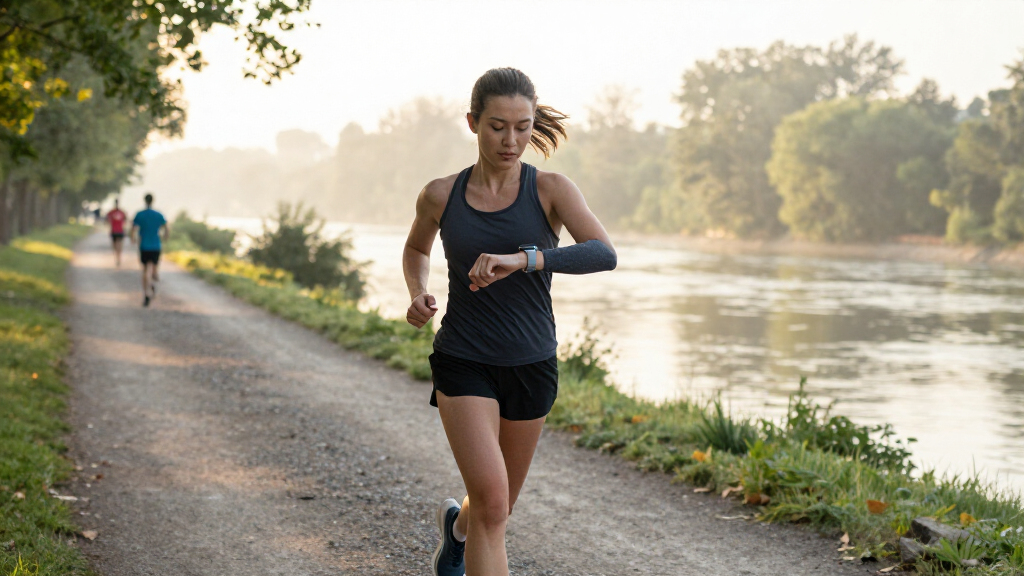
I ranked these 15 products by the factors that actually change a buying decision: sensor accuracy, battery life, display quality, GPS, and ecosystem polish. Sensor accuracy carried the most weight because a tracker that misreads heart rate or sleep defeats its own purpose — devices from established brands (Garmin, Fitbit, Amazfit) were judged against their track record for consistent readings, while unbranded models were evaluated on hardware design and stated capabilities. GPS mattered for runners and cyclists, which is why watches with built-in GPS sit above phone-tethered alternatives regardless of price.
From there, I weighed everyday usability: how the watch feels on a small wrist, how readable the display is outdoors, how well the companion app organizes health data, and how often you’ll be charging it. Value was assessed relative to each product’s tier — a budget band wasn’t penalized for lacking GPS, but it was held to standards of comfort, app quality, and honest feature claims. The final order reflects a simple question: if two products cost similar money, which one would I point a specific buyer toward, and why?
Factors to Consider When Choosing Fitness Trackers And Smartwatches
Before settling on a specific model, it helps to understand the broader landscape of fitness trackers and smartwatches — the category has blurred considerably, and buying the wrong type of device is the most common mistake I see.Tracker or Smartwatch: Which Format Fits You?
A slim band-style tracker like the Fitbit Inspire 3 disappears on your wrist, runs for well over a week per charge, and focuses purely on health metrics — but notifications are cramped and there’s no voice calling. A full smartwatch with a 1.8-inch display handles calls, apps, and rich watch faces, at the cost of charging every few days and a bulkier presence. Buyers who abandon fitness tracking usually do so because they bought more watch than they wanted, not less. If you mainly want steps, sleep, and heart rate, resist the pull of big screens. If you’d genuinely take calls from your wrist, a band will frustrate you within a week.
GPS: Built-In Versus Phone-Tethered
This is the single biggest performance dividing line in the category. Watches with built-in GPS — the Garmin vívoactive 5 and Amazfit Bip 6 here — record pace, distance, and routes accurately without your phone. Everything else in this lineup borrows your phone’s GPS, which means carrying it on every run and accepting less precise distance data. Casual walkers and gym-goers lose nothing by skipping GPS, but anyone training for a race or hiking unfamiliar trails should treat built-in GPS as non-negotiable. Don’t assume a watch that shows a route map after your run actually tracked it itself — many budget models quietly pull location data from your phone.
Heart Rate and Sleep Accuracy
Chest straps remain the gold standard, but wrist optical sensors have improved dramatically at the brand-name level. The practical difference shows up during interval training, where cheap sensors lag several seconds behind rapid heart-rate changes and can misreport calorie burn by a wide margin. Sleep tracking quality depends just as much on the algorithm as the sensor — a watch can detect movement perfectly yet still misclassify light sleep as deep sleep. If health data drives your purchase, prioritize devices from companies that maintain and update their software. Also treat blood-pressure readings on budget trackers as trend indicators only, never clinical measurements.
Battery Life and Charging Habits
Real-world battery life rarely matches the marketing figure, which is usually measured with brightness low, GPS off, and notifications minimal. Expect large AMOLED displays with always-on mode and Bluetooth calling to need charging every two to four days, while slim trackers comfortably exceed a week. The hidden cost of short battery life is data gaps — a watch dead on the nightstand records no sleep, and sleep tracking is often the feature people value most over time. Think honestly about whether you’ll charge a watch every few days. If that sounds like a chore, the slim-band tier is where you belong.
App Ecosystem and Data Ownership
The watch is only half the product; the companion app determines whether your health data is usable long-term. Established platforms like Garmin Connect, Fitbit, and Zepp offer trends, coaching insights, and data export, while generic apps from unbranded watches often serve ads, lock your history behind subscriptions, or disappear after app-store policy changes. Before buying, check whether the app supports your phone’s OS version and whether historical data can be exported. A cheap watch with a poorly maintained app can strand years of health history. This is the most underestimated factor in the whole category.
Wrist Size, Style, and Everyday Comfort
Display size should match your wrist: a 1.97-inch watch can overwhelm smaller arms, which is why slimmer options like the 1.32-inch AEAC AMOLED model and the Fitbit Inspire 3 exist. Band quality matters more than buyers expect — a stiff or non-standard band attachment means you’re stuck with the stock strap forever, while standard quick-release pins open up endless aftermarket options. Water resistance of IP67 handles sweat and rain, but only IP68 or a 5 ATM rating should be trusted for swimming. Finally, weight: a heavy watch you remove every evening stops being a sleep tracker.
Frequently Asked Questions
Are cheap smartwatches with Bluetooth calling actually worth buying?
They can be, as long as your expectations are calibrated. Models like the T7 and KEEPONFIT handle calls, notifications, and step counting competently, and for casual users that covers 90% of daily use. Where they fall short is sensor precision, software polish, and longevity — the companion apps are rarely updated, heart-rate readings drift during workouts, and resale value is essentially zero. If accurate health data is why you’re buying, spend more on a Garmin, Fitbit, or Amazfit. If you want a convenient wrist communicator that also counts steps, the budget tier delivers real value.
Do I need built-in GPS if my phone already has it?
Only if you sometimes exercise without your phone. Phone-tethered GPS works fine when you run with your handset in a pocket or armband, and it saves you money and battery. The moment you want to track a run, ride, or hike carrying nothing, built-in GPS becomes the feature that justifies the price jump — and it also produces cleaner route data since it samples continuously rather than intermittently. In this lineup, the Garmin vívoactive 5 and Amazfit Bip 6 are the models that free you from your phone. Everyone else can safely skip GPS and put that budget toward a better display or battery life.
Is a fitness tracker or a smartwatch better for sleep tracking?
Trackers generally win on sleep because their slim, lightweight design is comfortable enough to wear all night, every night — consistency is what makes sleep data meaningful. A large watch that gets removed at bedtime produces gaps that ruin your trends within the first month. Among these picks, the Fitbit Inspire 3 is the strongest dedicated sleep tracker thanks to its light band format and mature sleep-staging algorithm. Full smartwatches like the Garmin vívoactive 5 can track sleep well too, but only if you accept charging discipline: topping up during your morning shower instead of overnight.
Can I trust the blood pressure and blood oxygen readings on these devices?
Treat them as directional indicators, never medical measurements. Blood oxygen (SpO2) readings from brand-name devices are reasonably consistent for spotting personal trends, though altitude, fit, and temperature all introduce error. Blood pressure on wrist wearables is the weakest claim in the category — most budget trackers estimate it from pulse data rather than measuring it directly, and the numbers can swing noticeably between readings taken minutes apart. If blood pressure is a genuine health concern, a validated cuff monitor remains the only trustworthy option. The watch can still help by flagging patterns worth discussing with a doctor.
Will a fitness tracker or smartwatch work with both iPhone and Android?
Basic pairing works across both platforms for every model here, but the depth of features varies by ecosystem. Text replies from the wrist are typically Android-only, iPhone users get more limited notification interaction on most watches, and some budget apps behave worse on one platform than the other. Garmin, Fitbit, and Amazfit maintain genuinely cross-platform apps with equal core features, which is one reason they rank higher. Before buying any calling-enabled watch, confirm the companion app supports your specific phone OS version — this is a common frustration with unbranded models. iPhone owners who want maximum integration should weigh whether a closed-ecosystem watch outside this list serves them better.
Conclusion
For most buyers, the Garmin vívoactive 5 is the best overall choice — accurate GPS, dependable sensors, and a mature app platform make it the safest long-term investment in this lineup. The Amazfit Bip 6 takes the best value slot for anyone who wants GPS and a bright AMOLED display without paying premium prices. For beginners and minimalists, the Fitbit Inspire 3 is the easiest entry point into health tracking, with week-plus battery life and the friendliest sleep insights. Best budget smartwatch goes to the T7 or Cillso for adding Bluetooth calling and Alexa at an entry-level price, while the AEAC 1.32-inch AMOLED stands out for smaller wrists that big displays overwhelm. Whichever direction you take, match the device to how you’ll actually use it — a tracker you forget to charge or a watch too bulky to sleep in will end up in a drawer, no matter how good its spec sheet looks.
Halloween Picks
halloween
As an affiliate, we earn on qualifying purchases.