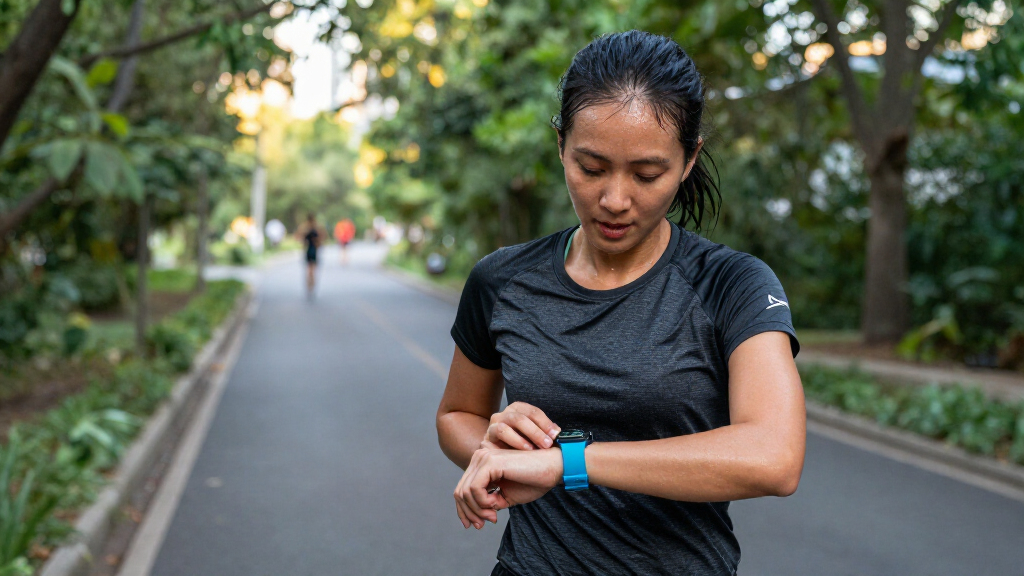

The best smart fitness watches for runners balance dependable GPS and useful training data with a fit you can comfortably wear every day. I rank the Garmin Forerunner 265 as the best overall for runners who want deeper training guidance, while the Forerunner 165 offers a simpler route into Garmin’s running tools and the Polar Pacer keeps its focus on run training. The main tradeoff is between dedicated running features and broader smartwatch extras such as calling, music storage, and a larger display. Battery expectations, wrist comfort, and how much data you will actually use also separate these options. Read on for the full breakdown and a guide to choosing the right watch for your running routine.

Get workout gear delivered free with Prime
- Fast, free delivery on millions of items
- Prime Video, Amazon Music and more included
- Member-only deals all year
Complete the kit



Key Takeaways
- The Forerunner 265 earns the overall lead for runners who want a more developed training feature set than the general-purpose vívoactive 5.
- The Forerunner 165 is the more approachable Garmin running pick, while the Forerunner 55 suits buyers who want a simpler entry-level training watch.
- Polar Pacer is the focused alternative for runners who prefer a run-centered watch over a broad collection of smartwatch functions.
- Amazfit and CMF options emphasize display and everyday features, but buyers should weigh those extras against the needs of structured run training.
- Fit and intended use matter as much as feature count: the compact Active 3 Premium and larger-display Bip 6 serve different preferences than the 46 mm Forerunner 265.
| Garmin vívoactive 5 GPS Smartwatch, 42 mm, Black |  | Best for Everyday Fitness and Running | Display: AMOLED touchscreen | Case size: 42 mm | GPS: Built-in | VIEW LATEST PRICE | See Our Full Breakdown |
| Garmin Forerunner 265 GPS Running Smartwatch, 46 mm, Black/Powder Gray |  | Best for Structured Run Training | Display: 1.3-inch AMOLED touchscreen | Case size: 46 mm | Navigation: GPS and multi-band GNSS with SatIQ | VIEW LATEST PRICE | See Our Full Breakdown |
| Amazfit Bip 6 Smartwatch with 1.97-Inch AMOLED Display |  | Best for Budget-Minded Runners Who Want Navigation | Display: 1.97-inch AMOLED | Case material: Aluminum | GPS: Built-in; supports BeiDou, GLONASS, GPS, and Galileo | VIEW LATEST PRICE | See Our Full Breakdown |
| Polar Pacer GPS Running Smartwatch, Black | 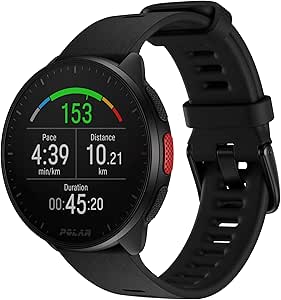 | Best for Lightweight, Screen-Always-Visible Running | Display: Always-on MIP color display | Weight: 40 g | Battery life: Up to 35 hours in training mode; up to 100 hours in power-save mode | VIEW LATEST PRICE | See Our Full Breakdown |
| Amazfit Active Max Smartwatch, 1.5-Inch AMOLED Display, GPS, 4GB Storage |  | Best for Long Battery Life and Offline Maps | Display: 1.5-inch AMOLED, up to 3,000 nits | Battery life: Up to 25 days | Storage: 4 GB | VIEW LATEST PRICE | See Our Full Breakdown |
| Garmin Forerunner 165 GPS Running Smartwatch, 43 mm, Black |  | Best Overall for Everyday Runners | Display: AMOLED touchscreen | Case size: 43 mm | GPS battery life: Up to 19 hours | VIEW LATEST PRICE | See Our Full Breakdown |
| Amazfit Active 3 Premium GPS Smartwatch with 1.32-Inch AMOLED Display |  | Best for Route-Focused Training | Display: 1.32-inch AMOLED, 390 x 390 resolution | Maximum brightness: 3,000 nits | Case and glass: Stainless steel with scratch-resistant sapphire glass | VIEW LATEST PRICE | See Our Full Breakdown |
| CMF by Nothing Watch 3 Pro Smartwatch with Bluetooth Calling, AMOLED Display, GPS, and 130+ Sport Modes, Dark Grey |  | Best for Multi-Service App Sync | Display: 1.43-inch AMOLED | GPS: L1+L5 dual-band | Sport modes: More than 130 | VIEW LATEST PRICE | See Our Full Breakdown |
| Garmin Forerunner 55 GPS Running Smartwatch, Black |  | Best for Beginner Race Training | Display: 1.04 inches | Satellite systems: GPS, GLONASS, Galileo | Activity profiles: 17 | VIEW LATEST PRICE | See Our Full Breakdown |
| smart fitness watches for runner | Display | Water resistance | Battery life | GPS |
|---|---|---|---|---|
| Garmin vívoactive 5 GPS Smartw | AMOLED touchscreen | — | Up to 11 days in smartwatch mode | Built-in |
| Garmin Forerunner 265 GPS Runn | 1.3-inch AMOLED touchscreen | 50 meters | Up to 13 days in smartwatch mode; up to 20 hours in GPS mode | — |
| Amazfit Bip 6 Smartwatch with | 1.97-inch AMOLED | 50 meters | Up to 14 days | Built-in; supports BeiDou, GLONASS, GPS, and Galileo |
| Polar Pacer GPS Running Smartw | Always-on MIP color display | Product data lists both 50 meters and IP65+ | Up to 35 hours in training mode; up to 100 hours in power-save mode | — |
| Amazfit Active Max Smartwatch | 1.5-inch AMOLED, up to 3,000 nits | 50 meters | Up to 25 days | Built-in; GPS, BeiDou, GLONASS, Galileo |
| Garmin Forerunner 165 GPS Runn | AMOLED touchscreen | 50 meters | — | — |
| Amazfit Active 3 Premium GPS S | 1.32-inch AMOLED, 390 x 390 resolution | 50 meters | — | Built-in; supports six satellite systems |
| CMF by Nothing Watch 3 Pro Sma | 1.43-inch AMOLED | IP68 | Up to 13 days with normal daily use | L1+L5 dual-band |
| Garmin Forerunner 55 GPS Runni | 1.04 inches | 50 meters | — | — |
More Details on Our Top Picks
Garmin vívoactive 5 GPS Smartwatch, 42 mm, Black
The Garmin vívoactive 5 suits runners who want reliable built-in GPS alongside a watch that also handles everyday health tracking, sleep coaching, and music storage. Its up to 11-day smartwatch battery means less frequent charging between runs, while more than 30 sports apps give it range beyond running. Compared with the more training-focused Garmin Forerunner 265, it puts less emphasis on advanced running readiness and multi-band positioning, but its 42 mm case and broad wellness features make it a more balanced daily companion. The tradeoff is that its health metrics are estimates, and listening to stored music without a phone requires wireless headphones. Choose it for a versatile fitness watch, not for the most detailed run-training toolkit.
Pros:- Built-in GPS and more than 30 sports apps support running and other workouts
- Up to 11 days of battery life in smartwatch mode reduces routine charging
- Sleep coaching, nap detection, and health tracking add useful recovery context
- Music storage, smart notifications, and Garmin Pay broaden its everyday use
Cons:- Does not offer the Forerunner 265’s stated multi-band GNSS and training-readiness feature set
- Health metrics are estimates rather than medical measurements
- Phone-free music listening requires wireless headphones
Best for: Runners who want built-in GPS, wellness and sleep tracking, and everyday smartwatch features in a 42 mm case
Not ideal for: Runners who prioritize multi-band GPS, detailed training-readiness insights, or dedicated running tools over general wellness features
- Display:AMOLED touchscreen
- Case size:42 mm
- GPS:Built-in
- Sports apps:More than 30
- Battery life:Up to 11 days in smartwatch mode
- Connectivity:Bluetooth, USB, Wi-Fi
- Weight:1.31 ounces
Our verdict“Choose the vívoactive 5 if you want a capable running watch that gives everyday wellness and smartwatch features equal weight.”
Garmin Forerunner 265 GPS Running Smartwatch, 46 mm, Black/Powder Gray
For runners who want training guidance to shape their next workout, the Garmin Forerunner 265 is the most running-focused pick here. Its training readiness, recovery, sleep, and HRV insights help put effort and rest into context, while multi-band GNSS with SatIQ is designed to balance positioning and battery use. Compared with the more general-purpose Garmin vívoactive 5, the 265 gives runners a clearer set of training tools; compared with the Polar Pacer, it adds an AMOLED touchscreen and more stated training insights. The compromise is its larger 46 mm case and a marked difference between smartwatch and GPS battery life: up to 13 days in smartwatch mode, but up to 20 hours in GPS mode. Safety and tracking features also depend on a compatible paired phone and network coverage.
Pros:- Multi-band GNSS with SatIQ supports positioning and battery optimization
- Training readiness, recovery, sleep, and HRV insights help guide workout effort
- AMOLED touchscreen is paired with traditional button controls
- More than 30 activity profiles support workouts beyond running
Cons:- GPS-mode battery life is up to 20 hours, well below its smartwatch-mode figure
- The 46 mm case may feel large to runners who prefer a compact fit
- Safety and tracking features require a compatible paired smartphone and network coverage
Best for: Runners following structured plans who want GPS accuracy options and training and recovery guidance on their wrist
Not ideal for: Runners seeking a smaller watch, very long GPS-session battery life, or safety features that work without a connected phone
- Display:1.3-inch AMOLED touchscreen
- Case size:46 mm
- Navigation:GPS and multi-band GNSS with SatIQ
- Activity profiles:More than 30
- Battery life:Up to 13 days in smartwatch mode; up to 20 hours in GPS mode
- Water resistance:50 meters
- Compatibility:Android and Apple smartphones
Our verdict“Pick the Forerunner 265 if training and recovery guidance matter more to you than a smaller case or longer GPS-mode runtime.”
Amazfit Bip 6 Smartwatch with 1.97-Inch AMOLED Display
The Amazfit Bip 6 brings route guidance and a wide range of workout tracking to runners who want more than basic pace and distance. Its built-in GPS, downloadable maps, and turn-by-turn directions give it a navigation angle that the Polar Pacer does not list, while support for more than 140 workout types makes it useful for mixed training. The large 1.97-inch AMOLED display is designed for clear viewing, and battery life is listed at up to 14 days. That screen size is also a compromise: runners who favor a smaller, less prominent watch may prefer the 42 mm Garmin vívoactive 5. The Bip 6 also depends on a sufficiently recent phone operating system for full compatibility. It makes the most sense when maps and broad activity coverage matter more than a dedicated running-watch identity.
Pros:- Built-in GPS, downloadable maps, and turn-by-turn directions support route following
- More than 140 workout modes cover activities beyond running
- Up to 14 days of battery life helps limit charging
- 50-meter water resistance supports use in wet conditions
Cons:- The 1.97-inch display may feel oversized compared with the 42 mm Garmin vívoactive 5
- Full compatibility requires Android 7.0 or later or iOS 14.0 or later
- The listed silicone band may not suit buyers seeking a different band material
Best for: Runners who want built-in route navigation, a large display, and many workout modes in a general-purpose fitness watch
Not ideal for: Runners who prefer a compact watch or need compatibility with older Android or iOS phone software
- Display:1.97-inch AMOLED
- Case material:Aluminum
- GPS:Built-in; supports BeiDou, GLONASS, GPS, and Galileo
- Workout modes:More than 140
- Battery life:Up to 14 days
- Water resistance:50 meters
- Compatibility:Android 7.0+ and iOS 14.0+
Our verdict“Choose the Bip 6 if route guidance and broad workout coverage are more useful to you than a compact, running-first design.”
Polar Pacer GPS Running Smartwatch, Black
The Polar Pacer keeps its focus on core running feedback: time, pace, distance, laps, heart rate, and training and recovery tools. At 40 g, it is a straightforward choice for runners who want a lighter watch rather than the larger AMOLED displays on the Garmin Forerunner 265 and Amazfit Bip 6. Its always-on MIP color screen keeps run data visible without relying on a touchscreen-led interaction, and the listed training battery life reaches up to 35 hours. Compared with the 265, the Pacer offers fewer stated advanced positioning and training features, but its simpler running emphasis may suit buyers who value essentials. One caveat: the supplied product data gives conflicting water-resistance descriptions—50 meters and IP65+—so I would not rely on that listing alone to judge water protection.
Pros:- 40 g weight supports a lighter feel during runs
- Always-on MIP color display keeps workout data visible
- Tracks running time, pace, distance, and laps with GPS
- Training-mode battery life is listed at up to 35 hours, with up to 100 hours in power-save mode
Cons:- The listed specs conflict between 50-meter water resistance and an IP65+ rating
- Its stated feature set is less training- and navigation-focused than the Garmin Forerunner 265
- MIP display lacks the AMOLED presentation offered by the Forerunner 265 and Bip 6
Best for: Runners who want a lightweight watch with an always-on display for pace, distance, laps, and heart-rate tracking
Not ideal for: Runners seeking AMOLED visuals, multi-band GPS, or unambiguous water-resistance specifications
- Display:Always-on MIP color display
- Weight:40 g
- Battery life:Up to 35 hours in training mode; up to 100 hours in power-save mode
- Features:GPS, activity tracking, optical heart-rate monitoring, training and recovery tools
- Controls:Push buttons
- Connectivity:Bluetooth
- Water resistance:Product data lists both 50 meters and IP65+
Our verdict“Pick the Polar Pacer if low weight and an always-on screen matter more to you than an AMOLED display or advanced GPS features.”
Amazfit Active Max Smartwatch, 1.5-Inch AMOLED Display, GPS, 4GB Storage
The Amazfit Active Max is the strongest fit here for runners who want long stretches between charges without giving up route tools. Its up to 25 days of battery life exceeds the Bip 6’s listed up-to-14-day figure, and offline maps plus multi-satellite positioning add navigation support for unfamiliar routes. The 1.5-inch AMOLED display is listed at up to 3,000 nits, which is aimed at outdoor readability, while 170-plus workout modes and Zepp Coach plans broaden its training use. Compared with the running-specialist Garmin Forerunner 265, the Active Max emphasizes battery life, maps, and general fitness features rather than the same stated training-readiness and HRV insights. Its 50-meter water resistance is clearly specified, but hands-free message replies require an Android phone, limiting that feature for iPhone users.
Pros:- Up to 25 days of battery life is the longest listed among these five watches
- Offline maps and multi-satellite GPS support route navigation
- 1.5-inch AMOLED display is listed at up to 3,000 nits for outdoor readability
- More than 170 workout modes and Zepp Coach plans support varied training
Cons:- Hands-free message replies require an Android phone
- Its listed feature set emphasizes general fitness and navigation rather than the Forerunner 265’s stated training-readiness and HRV insights
- Silicone band and 50-meter water-resistance rating may not match every runner’s preferences or requirements
Best for: Runners who want offline maps, long battery life, and a bright display for outdoor workouts and travel
Not ideal for: iPhone runners who want hands-free message replies or runners seeking Garmin-style training-readiness and HRV insights
- Display:1.5-inch AMOLED, up to 3,000 nits
- Battery life:Up to 25 days
- Storage:4 GB
- GPS:Built-in; GPS, BeiDou, GLONASS, Galileo
- Workout modes:More than 170
- Water resistance:50 meters
- Compatibility:Android and iOS smartphones
Our verdict“Choose the Active Max if long battery life and offline maps outrank advanced running-specific training analysis for you.”
Garmin Forerunner 165 GPS Running Smartwatch, 43 mm, Black
The Forerunner 165 is the most balanced choice here for runners who want training guidance without stepping up to a more advanced model. Its built-in GPS, wrist-based heart rate, adaptive plans, and recovery insights connect run tracking with decisions about what to do next. The AMOLED touchscreen is easier to read at a glance than the Forerunner 55’s small 1.04-inch display, while physical buttons give you another way to operate it during a run. Battery life reaches up to 19 hours in GPS mode, with up to 11 days in smartwatch mode. Compared with the feature-rich Amazfit Active 3 Premium, the Garmin has a more running-focused identity; the tradeoff is fewer listed workout modes and no offline maps. Safety features also rely on a compatible phone and network coverage.
Pros:- Built-in GPS and wrist-based heart rate cover core run tracking needs.
- Adaptive workout plans and recovery insights help guide training choices.
- AMOLED touchscreen plus physical buttons offer flexible controls.
- Up to 19 hours of GPS use and up to 11 days in smartwatch mode.
Cons:- Continuous GPS battery life is shorter than smartwatch-mode battery life, so frequent long sessions require charging.
- Incident detection and assistance depend on a paired compatible smartphone and network coverage.
- Garmin Pay works only in supported countries and with compatible payment networks.
Best for: Runners who want clear run tracking, adaptive training guidance, recovery information, and a bright screen for everyday use.
Not ideal for: Runners who need offline maps or extended continuous GPS sessions, or who want incident assistance without carrying a compatible phone.
- Display:AMOLED touchscreen
- Case size:43 mm
- GPS battery life:Up to 19 hours
- Smartwatch battery life:Up to 11 days
- Water resistance:50 meters
- Activity profiles:More than 25
- Connectivity:Bluetooth, USB, Wi-Fi
- Compatibility:Android devices and iPhone
Our verdict“Choose the Forerunner 165 if you want a runner-oriented Garmin with training guidance and a modern display, but do not need offline maps.”
Amazfit Active 3 Premium GPS Smartwatch with 1.32-Inch AMOLED Display
For runners who want route guidance as well as workout tracking, the Amazfit Active 3 Premium brings a useful feature the Forerunner 165 does not list: offline maps with automatic rerouting. That can help when exploring unfamiliar roads or trails without relying on a phone screen. Its sapphire glass and stainless steel frame also give it a more durable, polished build than the lighter, fiber-reinforced Forerunner 165. The Active 3 Premium adds over 170 workout modes, training plans, and health tracking, but that broad menu is less specifically running-centered than Garmin’s Forerunner lineup. Battery life is up to 24 hours of continuous GPS, compared with the Forerunner 165’s stated 19 hours. The tradeoff is that typical-use battery claims do not describe GPS-heavy weeks, and Bluetooth calling still requires a connected phone.
Pros:- Offline maps and automatic rerouting support route changes without depending on a phone map.
- Sapphire glass and a stainless steel frame provide a more premium, scratch-resistant build.
- Over 170 workout modes accommodate running and other activities.
- Up to 24 hours of continuous GPS use.
Cons:- At 2.82 ounces, it is heavier than a lightweight running-focused option such as the Forerunner 165.
- Bluetooth calling and messaging features require a connected phone.
- The listed 12-day typical-use battery life can shrink to up to 7 days with heavy use.
Best for: Runners who regularly explore unfamiliar routes and want offline maps, rerouting, and broad activity tracking in a metal-and-sapphire watch.
Not ideal for: Runners who prefer a dedicated running-watch focus or want to use calling and messaging features away from a connected phone.
- Display:1.32-inch AMOLED, 390 x 390 resolution
- Maximum brightness:3,000 nits
- Case and glass:Stainless steel with scratch-resistant sapphire glass
- GPS:Built-in; supports six satellite systems
- Continuous GPS battery life:Up to 24 hours
- Typical-use battery life:Up to 12 days
- Workout modes:More than 170
- Water resistance:50 meters
- Weight:2.82 ounces
Our verdict“Pick the Active 3 Premium if offline route guidance and a durable finish matter more to you than a narrowly running-focused feature set.”
CMF by Nothing Watch 3 Pro Smartwatch with Bluetooth Calling, AMOLED Display, GPS, and 130+ Sport Modes, Dark Grey
The CMF by Nothing Watch 3 Pro suits runners who want GPS and health tracking alongside connections to several popular fitness services. Its L1+L5 dual-band GPS supports more detailed positioning than a basic single-band setup, and syncing with Apple Health, Google Health Connect, and Strava can fit runners who already keep their activity across apps. The 1.43-inch AMOLED screen is larger than the Forerunner 165’s display, while Bluetooth calling adds phone-style convenience at the wrist. This is a broader smartwatch choice, though, not as training-led as the Forerunner 165 with its adaptive plans and recovery insights. Its up-to-13-day battery figure is for normal daily use, and GPS-heavy running will change the charging routine. IP68 water resistance is also a different stated rating from the 50-meter rating on the Garmin watches.
Pros:- L1+L5 dual-band GPS supports more precise positioning than a basic GPS setup.
- Syncs with Apple Health, Google Health Connect, and Strava.
- Bluetooth calling uses a built-in speaker and dual microphones.
- Tracks heart rate, blood oxygen, stress, sleep, and recovery.
Cons:- Up-to-13-day battery life is based on normal daily use, with no continuous GPS runtime specified.
- Some health and training insights depend on the companion app and connected services.
- IP68 water resistance is not expressed as a 50-meter rating like the Garmin Forerunner models.
Best for: Runners who want dual-band GPS, smartwatch calling, and activity syncing with Strava or their phone’s health platform.
Not ideal for: Runners who prioritize clearly stated GPS-session battery life, water resistance specified in meters, or Garmin-style adaptive run plans.
- Display:1.43-inch AMOLED
- GPS:L1+L5 dual-band
- Sport modes:More than 130
- Battery life:Up to 13 days with normal daily use
- Water resistance:IP68
- Connectivity:Bluetooth calling; compatible with Android and iOS
- Health tracking:Heart rate, blood oxygen, stress, sleep, and recovery
- Charging time:2.5 hours
Our verdict“Choose the Watch 3 Pro if app syncing and wrist-based calls matter alongside running GPS, but look to the Forerunner 165 for more explicit training guidance.”
Garmin Forerunner 55 GPS Running Smartwatch, Black
The Forerunner 55 keeps its focus on getting runners through a plan: it offers daily workout suggestions and free plans for 5K, 10K, and half-marathon distances. GPS, GLONASS, and Galileo support positioning across multiple satellite systems, while running metrics and daily activity tracking provide a useful starting point for building a routine. Compared with the Forerunner 165, its 1.04-inch display is much smaller and it relies on buttons rather than a touchscreen; it also lacks the 165’s listed AMOLED screen and adaptive training features. That simpler approach can suit runners who want a straightforward training watch, but the compact display gives less room for at-a-glance information. Its 50-meter water resistance adds flexibility beyond road running, though no battery-life figure is supplied in this product data.
Pros:- Free training plans cover 5K, 10K, and half-marathon goals.
- Daily workout suggestions provide a simple structure for regular training.
- GPS, GLONASS, and Galileo support satellite positioning.
- Tracks running metrics, heart rate, sleep, and other daily activity.
Cons:- The 1.04-inch display is smaller and less suited to quickly reading several metrics than the Forerunner 165’s AMOLED screen.
- Button-only controls may feel less direct to buyers who want touchscreen interaction.
- The listed 17 activity profiles are fewer than the Forerunner 165’s more than 25.
Best for: Newer runners following a structured 5K, 10K, or half-marathon plan who want GPS and workout suggestions without a large display.
Not ideal for: Runners who want a bright touchscreen, broader activity profiles, or the adaptive plans and recovery insights listed for the Forerunner 165.
- Display:1.04 inches
- Satellite systems:GPS, GLONASS, Galileo
- Activity profiles:17
- Water resistance:50 meters
- Band material:Silicone
- Case material:Resin
- Weight:37 g
- Connectivity:Bluetooth
Our verdict“Choose the Forerunner 55 if you want a straightforward watch with race-distance training plans, and skip it if a larger, brighter display is a priority.”
How We Picked
I ranked these watches around the needs of people who run regularly: GPS-based activity tracking, access to useful training information, ease of starting and reviewing a run, comfort for repeated wear, and a feature set that makes sense for the watch’s intended role. I also considered how well each model can serve outside workouts, since many buyers want one device for daily activity and notifications as well as running. Product specifications and positioning informed the comparison; I do not present these selections as the result of hands-on testing.
The order favors watches with a clear running purpose and tools that can support progression, while still accounting for ease of use and versatility. That puts the Forerunner 265 first for its stronger running orientation, with the Forerunner 165 and Polar Pacer as compelling alternatives for different priorities. General-purpose and feature-forward models rank lower when their extra smart functions are less directly useful to run training, while simpler watches remain sensible for newcomers who do not need advanced data.
| smart fitness watches for runner | GPS | Battery life | Connectivity |
|---|---|---|---|
| Garmin vívoactive 5 GPS Smartw | Built-in | Up to 11 days in smartwatch mode | Bluetooth, USB, Wi-Fi |
| Garmin Forerunner 265 GPS Runn | — | Up to 13 days in smartwatch mode; up to 20 hours in GPS mode | — |
| Amazfit Bip 6 Smartwatch with | Built-in; supports BeiDou, GLONASS, GPS, and Galileo | Up to 14 days | — |
| Polar Pacer GPS Running Smartw | — | Up to 35 hours in training mode; up to 100 hours in power-save mode | Bluetooth |
| Amazfit Active Max Smartwatch | Built-in; GPS, BeiDou, GLONASS, Galileo | Up to 25 days | — |
| Garmin Forerunner 165 GPS Runn | — | — | Bluetooth, USB, Wi-Fi |
| Amazfit Active 3 Premium GPS S | Built-in; supports six satellite systems | — | — |
| CMF by Nothing Watch 3 Pro Sma | L1+L5 dual-band | Up to 13 days with normal daily use | Bluetooth calling; compatible with Android and iOS |
| Garmin Forerunner 55 GPS Runni | — | — | Bluetooth |
Factors to Consider When Choosing Smart Fitness Watches For Runners
Choosing among running watches is less about collecting the longest feature list and more about matching the watch to your training habits. I would start with how you run now, then account for what you may want to track as your routine changes.
Choose Training Guidance You Will Actually Use
A watch can show many metrics without making your next run easier to plan. Before paying for advanced training tools, decide whether you want simple distance and pace records or a device that helps you interpret workouts and recovery. New runners often benefit more from clear summaries and dependable run logging than from a dense dashboard. More structured runners may value additional guidance if they review it consistently and adjust sessions accordingly. A common mistake is buying for a future training plan that never materializes. Match the feature depth to your current routine, with some room for realistic growth.
Think About GPS Needs Beyond the Route Map
GPS performance matters most when you rely on distance and pace to guide a workout, especially on unfamiliar routes. Consider where you run: open paths place different demands on tracking than streets bordered by tall buildings or tree cover. A route map is useful after a run, but live pace stability may matter more during intervals. Do not assume that every watch with GPS offers the same experience or the same level of running analysis. If you train by time and perceived effort, a simpler GPS setup may be enough. If exact splits shape your sessions, prioritize a running-focused model and check how it handles the routes you use.
Balance Screen Size Against Wrist Comfort
A larger display can make pace and workout prompts easier to read at a glance, but it may feel bulky during long runs or sleep tracking. Smaller watches can sit more comfortably on narrow wrists and move less during arm swing, yet their screens may show less information at once. Try to judge case size alongside the watch’s shape and strap, not by diameter alone. Buyers sometimes choose the biggest screen for readability and then find its weight distracting. If possible, compare dimensions with a watch you already wear. A comfortable fit helps keep tracking consistent because you are more likely to wear the device every day.
Separate Running Essentials From Smartwatch Extras
Bluetooth calling, broad sport menus, music storage, and phone notifications can make a watch more useful away from running. Those extras do not automatically improve GPS tracking or training decisions, so weigh them against your main goal. If you want a single device for everyday notifications and casual workouts, a more general-purpose watch may suit you better. If you mainly want to plan and review runs, prioritize dedicated running functions over features you may rarely use. Also check whether music storage means local playback or simply controls your phone. Paying for convenience makes sense only when the convenience fits your routine.
Match Battery Expectations to Your Training Pattern
Battery life can vary with GPS use, screen settings, notifications, and music playback, so a headline estimate may not reflect your habits. Think about your longest typical run, how often you charge devices, and whether you want sleep and recovery tracking between workouts. Frequent charging may be a minor nuisance for short daily runs but a bigger drawback for long outings or travel. A bright display and connected features can also affect how often a watch needs power. Check the maker’s stated figures for the modes you plan to use rather than relying on a single maximum estimate. Leave a margin for real-world settings and aging battery capacity.
Check the Phone and Data Experience Before Buying
A running watch is only part of the system: the companion app shapes how easily you can review routes, trends, and training history. Consider whether you prefer a simple activity log or detailed charts that invite regular analysis. Check compatibility with your phone and the services you already use before choosing a device. A feature may be technically available yet awkward to reach if it sits behind a confusing app or requires a separate account. Buyers who share runs or follow a coach should check export and sync options in advance. The most useful watch is one whose data you can access and understand without friction.
Frequently Asked Questions
Is the Garmin Forerunner 265 worth choosing over the Forerunner 165?
I would choose the Forerunner 265 if you expect to use its deeper running and training tools, or if you already follow a structured plan and want more information to guide it. The Forerunner 165 is a better fit when you want a dedicated running watch without making advanced analysis the center of your routine. The difference is less meaningful if your runs mainly involve tracking time, distance, and pace. Compare the screen size and case fit as well, since comfort can matter more than extra data. Choose the 265 for training depth; choose the 165 for a simpler running-focused setup.
Should I pick a running watch or a general-purpose smartwatch?
Pick a running-focused watch if your main goal is to track runs and use training information to guide future sessions. A general-purpose model makes more sense if you also care about everyday smartwatch functions, varied activities, and a broad daily-use experience. The vívoactive 5 and Amazfit and CMF models in this roundup lean toward broader utility, while the Forerunner and Polar options are more directly aimed at running. Do not assume that a longer list of sports modes means better run coaching. Start with the feature you will use most often, then treat other functions as bonuses.
Can I use an Amazfit or CMF watch for serious run training?
You can use the Amazfit and CMF models to record runs and access GPS and sport features, but the key question is whether their training tools match your approach. If you mainly want workout records, basic pace information, and a versatile smartwatch, these options may meet your needs. Runners following structured plans should compare the depth of training guidance and the way run data is reviewed with dedicated models such as the Forerunners or Polar Pacer. Also check which connected features depend on a phone. Choose by the quality of the run workflow, not by the size of the sport-mode count.
Do I need a watch with music storage or Bluetooth calling for running?
No; those features are convenience options rather than running requirements. Music storage can let you leave your phone behind if the watch supports the playback setup you want, while Bluetooth calling is useful only if you expect to answer calls from your wrist. Both can add complexity and may affect battery use, especially during GPS activities. If you already carry a phone or prefer running without audio, put fit, GPS, and training tools ahead of them. Pay for these extras only when they solve a problem you encounter often.
Which watch is the safer choice for a first-time running watch?
The Forerunner 165 is a strong starting point for someone who wants a watch built around running but would rather avoid an overly advanced setup. The Forerunner 55 is another straightforward option if basic run tracking is enough and you want to keep the feature set simple. A general-purpose watch may appeal more if you also want everyday smartwatch features, but it can offer a different balance of running guidance. Before choosing, decide whether you want coaching-style information or only a record of each run. A beginner does not need every metric; an easy-to-use watch that supports a consistent routine is often the better fit.
Conclusion
For most runners seeking a capable training companion, I recommend the Garmin Forerunner 265 as the best overall pick. The Forerunner 165 is my best value-style choice for a dedicated running watch with a more approachable feature set, while the Forerunner 265 also serves as the best premium option for buyers who will use its added training depth. Beginners who want to keep things simple should look at the Forerunner 55 or step up to the 165 if they want more room to grow. For a run-focused alternative, consider the Polar Pacer; for broader daily smartwatch use, compare the vívoactive 5, Amazfit models, and CMF Watch 3 Pro. Match your choice to the way you train, then give equal weight to comfort and the data you will genuinely use.