
TL;DR
Fit&Well reports that Pilates instructor Ashleigh Doyle recommends five beginner-friendly moves: pelvic curls, knee folds, swan dive prep, side-lying leg lifts and cat stretch. The exercises introduce controlled movement, core and pelvic stability, hip strength and spinal mobility; the source does not provide medical evidence or a tailored safety assessment.
Pilates instructor Ashleigh Doyle recommends five introductory exercises for people starting Pilates at home: pelvic curls, knee folds, swan dive prep, side-lying leg lifts and cat stretch. Fit&Well’s guide presents the moves as a way to practise controlled movement and basic stability before trying a longer routine.

Get workout gear delivered free with Prime
- Fast, free delivery on millions of items
- Prime Video, Amazon Music and more included
- Member-only deals all year
The sequence begins on the back with a pelvic curl, performed for eight to 10 repetitions. Doyle describes it as an introduction to moving the spine and pelvis with control. The guide says it also begins to work the glutes, hamstrings and abdominal muscles. Practitioners bend their knees, press their lower back gently toward the mat, lift their spine gradually into a bridge and lower it one section at a time. The guide advises keeping the knees pointed forward and resting weight on the shoulders, not the neck.
Knee folds are done for eight to 10 repetitions on each side. From the same bent-knee position, a practitioner lifts one foot until the shin is parallel to the floor, then lowers it before switching sides. Doyle says the exercise introduces core stability by asking the pelvis and trunk to stay controlled while a leg moves. Fit&Well advises making the lift smaller if the lower back arches or the pelvis rocks.
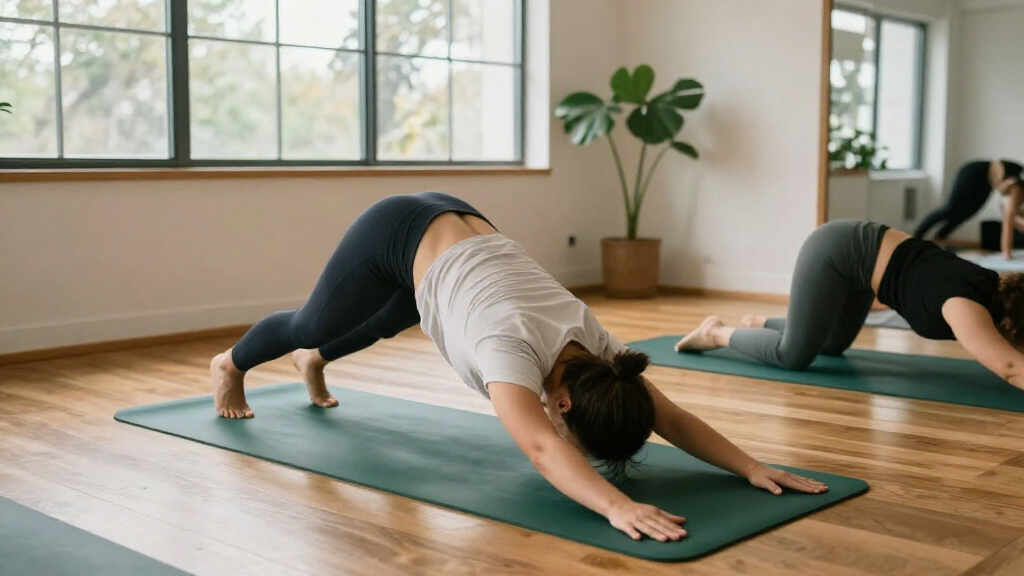
The remaining exercises change position. For swan dive prep, the practitioner lies face down and raises the head and upper chest slightly, with eight to 10 repetitions suggested. Side-lying leg lifts are also done eight to 10 times on each side, with the pelvis kept steady. The sequence ends with cat stretch, on hands and knees: round the spine while exhaling, then return to neutral while inhaling. The guide suggests eight to 10 repetitions for both moves and emphasizes keeping the movement controlled rather than forcing range.
Five Moves Build Pilates Basics
The routine offers beginners a short, equipment-free starting point they can practise at home, with instructions focused on pace and alignment rather than speed. Across the five exercises, users practise keeping the pelvis and trunk steady while moving their legs, coordinating movement with breathing and noticing how the spine moves.
That matters for readers who may find a full class or longer workout difficult to follow at first. Doyle’s explanations, as reported by Fit&Well, make clear that the aim is not simply to complete a repetition: the quality and control of the movement are part of the practice. The article does not establish that these exercises produce particular health outcomes, and it should be read as an instructor’s beginner sequence rather than a clinical programme.
Readers can use the specific form cues to make the exercises more manageable, such as reducing a knee fold if the pelvis shifts. At-home practice still requires attention to comfort and individual needs. The source does not assess readers’ injuries, medical conditions or experience, so it cannot determine whether every movement is suitable for every person.
Products Worth Considering

Garmin Forerunner 970 GPS Running and Triathlon Smartwatch, 47 mm, Titanium, Whitestone/Amp Yellow

Levoit Core 600S-P Smart Air Purifier for Large Rooms up to 2933 ft²

Levoit Core 400S-P Smart Air Purifier for Large Rooms
As an affiliate, we earn on qualifying purchases.
How the Starter Sequence Fits
Fit&Well frames the moves for people who are new to exercise or returning after time away, arguing that a simple starting level is appropriate. Its report says Pilates uses precise, controlled movement and that instructors may slow exercises down so participants can focus on the muscles they are using. Doyle is identified as a Pilates instructor who often works with beginners.
The five exercises cover several introductory skills rather than one continuous workout: pelvic curls and knee folds are performed on the back; swan dive prep is done face down; leg lifts are done on the side; and cat stretch takes place on hands and knees. Fit&Well refers readers who have mastered the five moves to a separate, longer eight-move beginner routine. The source does not say how long to practise the five-move set before progressing.
“The pelvic curl is a brilliant introduction to Pilates because it encourages you to slow down and become aware of how your spine and pelvis are moving.”
— Ashleigh Doyle, Pilates instructor, as quoted by Fit&Well
What the Guide Does Not Assess
The report gives general exercise instructions, not individualized advice. It does not state whether a healthcare professional reviewed the routine, provide modifications for specific injuries or medical conditions, or explain how readers should judge whether a sensation is normal discomfort or a reason to stop. It also does not include evidence comparing the routine with other beginner programmes or report measured results from participants.
The guide gives repetition ranges but no prescribed weekly schedule, duration, progression plan or criteria for moving on to the longer routine. The source also does not specify its publication date. Readers should not treat the reported benefits, such as building strength or improving awareness, as guaranteed outcomes for every person.
Practise Before Progressing
Fit&Well’s stated next step is a separate eight-move beginner routine for readers who have mastered the five introductory exercises. The report does not set a timetable for that progression, so it leaves the decision to the practitioner rather than prescribing a number of sessions.
For home practice, follow the listed repetitions at a comfortable pace and use the form adjustments in the guide, including reducing the range of a knee fold if the lower back arches or the pelvis moves. Stop if an exercise causes pain or feels unsafe. Anyone with an existing injury, health condition or uncertainty about starting exercise should seek guidance from a qualified health professional or instructor before following the routine.
Key Questions
Which five Pilates moves does the instructor recommend?
Ashleigh Doyle recommends pelvic curls, knee folds, swan dive prep, side-lying leg lifts and cat stretch, according to Fit&Well. The guide presents them as introductory exercises to practise at home.
How many repetitions does the guide suggest?
Fit&Well lists eight to 10 repetitions for pelvic curls, swan dive prep, side-lying leg lifts and cat stretch. Knee folds are suggested for eight to 10 repetitions on each side.
Do beginners need Pilates equipment for these exercises?
The instructions describe the movements on a mat or floor and do not list special equipment. The source does not assess whether a particular surface or setup is suitable for every person.
What should I do if I cannot complete the full movement?
The guide advises making a knee fold smaller if the lower back arches or the pelvis rocks. More generally, work within a comfortable range and stop if movement causes pain. People with an injury or health condition should ask a qualified professional for individual guidance.
When should I move on to a longer routine?
Fit&Well points readers who have mastered the five moves to a separate eight-move beginner routine. It does not define mastery or prescribe how long to practise before progressing.
Source: fitandwell.com