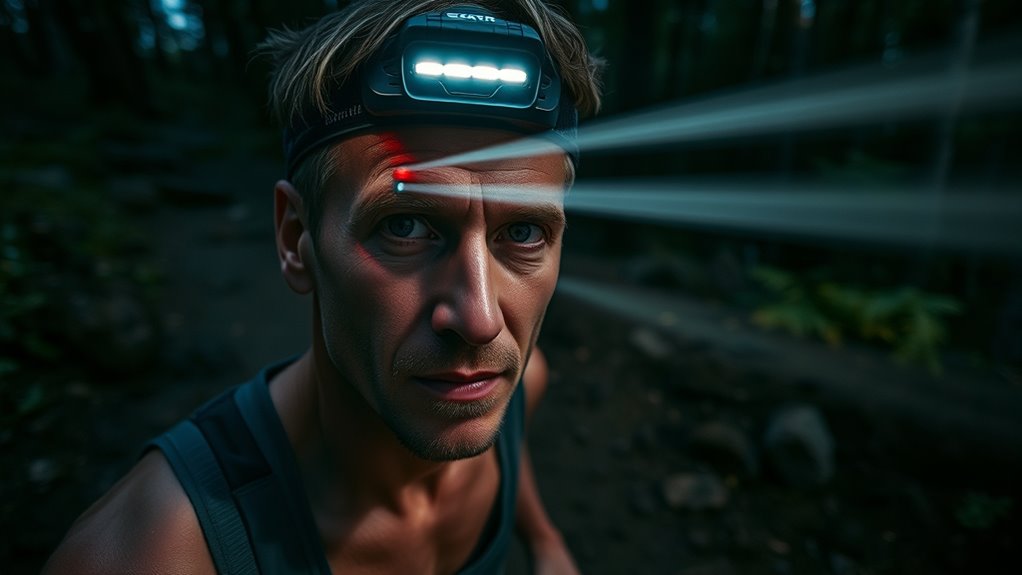

For runners comparing lightweight trail headlamps, the best overall balance here is the Nitecore NU27: it pairs a compact running-oriented design with more brightness and lighting options than the smaller NU25 UL. The Fenix HL32R-T is a strong alternative for runners who want a dual-beam setup, while the Fenix HM65R-T V2.0 suits buyers who put higher output ahead of minimal weight. The main tradeoffs are weight versus battery capacity, simple lighting versus multiple modes, and rechargeable convenience versus backup power options. Read on for how the nine models differ and which one best fits your routes and running habits.

Get workout gear delivered free with Prime
- Fast, free delivery on millions of items
- Prime Video, Amazon Music and more included
- Member-only deals all year
Complete the kit



Key Takeaways
- The NU25 UL favors minimal carry weight, while the NU27 offers more output and lighting choices for runners who want greater versatility.
- Dual-beam designs separate several Fenix options: they can serve different trail conditions, but the added capability may be more than a runner needs on familiar, well-lit routes.
- The HM65R-T V2.0 leads on stated maximum output at 1,600 lumens; that figure alone does not determine useful trail visibility or runtime.
- Power flexibility varies: the HL18R-T V2.0 accepts three AAA batteries as an alternative to USB-C charging, unlike the rechargeable-first options in this group.
- Foxelli’s two headlamps serve simpler needs, but the battery-powered model and rechargeable model call for different charging and replacement-battery plans.




| headlamps lightweight runners trail | Water resistance | Beam distance | Weight | Brightness |
|---|---|---|---|---|
| Nitecore NU25 UL 400 Lumens Ul | IP66 | 144 yards | 1.6 ounces | 400 lumens |
| Fenix HL18R-T V2.0 800 Lumen T | IP66 | 126 meters | 4 ounces | 800 lumens |
| Nitecore UT27 MCT Pro 800 Lume | IP66 | 183 yards | 2.61 ounces | 800 lumens |
| Foxelli USB-C Rechargeable LED | IPX5 | 300 feet | 2.4 ounces | 180 lumens |
| Fenix HM65R-T V2.0 Running Hea | IP68 waterproof | — | 4.96 ounces | 1600 lumens |
| Silva Trail Runner 4 Ultra Hea | — | — | — | — |
| Fenix HL32R-T Trail Running He | IP66 | — | — | — |
| Foxelli LED Headlamp for Adult | IPX5 | 165 ft | 3.2 oz | — |
| Nitecore NU27 600 Lumens Runni | — | 134 yards | — | — |
More Details on Our Top Picks
Nitecore NU25 UL 400 Lumens Ultra Lightweight Headlamp, USB-C Rechargeable for Camping, Running, and Hiking
The Nitecore NU25 UL is the most balanced choice here for runners who put low weight ahead of maximum output. At 1.6 ounces, it weighs far less than the 4-ounce Fenix HL18R-T V2.0, while its 400 lumens and 144-yard beam offer more reach than the Foxelli’s 180-lumen output. That makes it a sensible fit for familiar trails and regular evening runs, without carrying a heavier high-output unit.
Its USB-C charging, red-light mode, and IP66 rating add useful versatility for changing weather and camp stops. The tradeoff is less illumination headroom than the 800-lumen Nitecore UT27 MCT Pro, and the stated 45-hour maximum runtime does not describe how long it lasts at high brightness. I’d also favor a secure fit before committing to rough, fast descents, since the supplied details note that some runners may find the adjustment less secure.
Pros:- At 1.6 ounces, it adds less weight than the Fenix HL18R-T V2.0 or Fenix HM65R-T V2.0.
- 400 lumens and a 144-yard beam give it more reach than the Foxelli 180-lumen model.
- USB-C charging and a stated maximum runtime of up to 45 hours suit repeated outings.
- IP66 water resistance and red, SOS, and beacon modes support use beyond running.
Cons:- Its 400-lumen output offers less visibility headroom than the Nitecore UT27 MCT Pro and Fenix HL18R-T V2.0.
- The 45-hour figure is a maximum; runtime at high brightness may be much shorter.
- The headband adjustment may not feel secure enough for every runner on rough trails.
Best for: Runners who want a very light, rechargeable headlamp for regular routes, moderate trail speeds, and occasional hiking or camping.
Not ideal for: Fast runners on technical, unfamiliar trails who want 800-lumen-class output or the longer beam reach of the Nitecore UT27 MCT Pro.
- Brightness:400 lumens
- Beam distance:144 yards
- Weight:1.6 ounces
- Battery:Lithium polymer
- Maximum battery life:Up to 45 hours
- Water resistance:IP66
- Lighting modes:4 adjustable modes, SOS, beacon, and red light
- Charging:USB-C rechargeable
Our verdict“Choose the NU25 UL if low weight and practical everyday trail lighting matter more than maximum brightness.”
Fenix HL18R-T V2.0 800 Lumen Trail Running Headlamp, USB-C Rechargeable, White and Warm White Lights, Red Lights, Compatible with 3X AAA Batteries, Black
The Fenix HL18R-T V2.0 stands out for runners who want a dependable way to keep lighting available when charging is inconvenient. Its USB-C and AAA compatibility gives it an alternative the rechargeable-only Foxelli does not offer, and the 800-lumen maximum is a substantial step up from the Nitecore NU25 UL’s 400 lumens. White, warm-white, and red light modes let runners choose between strong forward visibility and a softer beam.
That flexibility comes with extra weight: at 4 ounces, it is notably heavier than the 1.6-ounce NU25 UL and 2.61-ounce Nitecore UT27 MCT Pro. The 126-meter beam is useful, though the UT27’s listed 183-yard reach is longer. Its IP66 rating and 1-meter impact resistance suit rough weather, but buyers should factor in carrying spare AAA batteries if they want the backup-power advantage.
Pros:- USB-C rechargeable power plus compatibility with three AAA batteries provides a backup option.
- 800-lumen maximum output is brighter than the Nitecore NU25 UL and Foxelli.
- White, warm-white, and red lighting modes offer choices for trail and camp use.
- IP66 water resistance and 1-meter impact resistance are suited to outdoor conditions.
Cons:- At 4 ounces, it weighs substantially more than the Nitecore NU25 UL and UT27 MCT Pro.
- Its 126-meter beam is shorter than the UT27’s listed 183-yard beam distance.
- Using the AAA backup requires carrying additional batteries.
Best for: Trail runners who travel, run away from charging access, or want the option to carry AAA batteries as a backup.
Not ideal for: Weight-conscious runners seeking a barely-there headlamp for routine runs, or those prioritizing the longest listed beam distance.
- Brightness:800 lumens
- Beam distance:126 meters
- Weight:4 ounces
- Power options:USB-C rechargeable lithium polymer battery or 3 AAA batteries
- Maximum runtime:Up to 160 hours
- Water resistance:IP66
- Impact resistance:1 meter
- Light colors:White, warm white, and red
- Charging time:3 hours
Our verdict“Pick the HL18R-T V2.0 if backup battery compatibility matters more to you than minimizing headlamp weight.”
Nitecore UT27 MCT Pro 800 Lumen Running Headlamp USB-C Rechargeable Dual Power with 3 Color Temperatures Red Light Lightweight Trail Hiking Camping Sticker (Black)
For runners who want more reach without moving up to the heavier Fenix HM65R-T V2.0, the Nitecore UT27 MCT Pro makes a strong case. It pairs an 800-lumen maximum with a listed 183-yard beam, while its 2.61-ounce weight is well below the Fenix HM65R-T V2.0’s 4.96 ounces. Three color temperatures and steady or flashing red light offer more lighting choice than the simpler Foxelli, which is limited to 180 lumens and five modes.
Its dual-power setup adds practical backup options: the included rechargeable batteries can be supplemented by three AAA batteries. IP66 water resistance and 1-meter impact resistance are useful safeguards on exposed trails. The tradeoff is that battery-life details are not provided, making it harder to plan long outings than with the NU25 UL, which lists up to 45 hours. The broader feature set may also take more time to learn.
Pros:- The listed 183-yard beam reaches farther than the Fenix HL18R-T V2.0’s 126-meter beam.
- At 2.61 ounces, it is lighter than both Fenix models in this selection.
- Three color temperatures and red-light modes offer more lighting control than the Foxelli.
- USB-C rechargeable batteries and AAA compatibility provide two power paths.
Cons:- Battery runtime is not specified, so planning around long outings is less straightforward than with the NU25 UL.
- Its feature set may take more learning than the simpler Foxelli.
- The 800-lumen maximum still falls short of the Fenix HM65R-T V2.0’s 1600 lumens.
Best for: Runners who regularly tackle dark, open, or unfamiliar trails and want long beam reach in a lighter package than a high-output Fenix.
Not ideal for: Buyers who need a clearly specified runtime or prefer a simple, low-output lamp for short, familiar routes.
- Brightness:800 lumens
- Beam distance:183 yards
- Weight:2.61 ounces
- Power options:USB-C rechargeable batteries or 3 AAA batteries
- Lighting modes:3 color temperatures; steady and flashing red light
- Water resistance:IP66
- Impact resistance:1 meter
- Included components:Backup battery, headband, USB-C charging cable, and sticker
Our verdict“Choose the UT27 MCT Pro if long beam reach and multiple lighting options matter more than a published runtime figure.”
Foxelli USB-C Rechargeable LED Headlamp – Lightweight, Bright, Waterproof, 5 Modes
The Foxelli USB-C Rechargeable LED Headlamp suits runners who want a straightforward, light option for familiar paths rather than a powerful beam for technical terrain. At 2.4 ounces, it is lighter than the Fenix HL18R-T V2.0, and its USB-C charging avoids carrying disposable batteries. Five modes, including red light and SOS strobe, cover basic running and camp needs without the color-temperature choices found on the Nitecore UT27 MCT Pro.
The key compromise is its 180-lumen output: that is less than half the Nitecore NU25 UL’s 400 lumens and a fraction of the Fenix HM65R-T V2.0’s 1600. Its listed 300-foot beam and up-to-40-hour battery life may suit slower outings and backup use, but this is not the one I’d choose for speed on dark, uneven trails. IPX5 protection is also below the IP66 ratings on the Nitecore and Fenix models.
Pros:- At 2.4 ounces, it is lighter than the Fenix HL18R-T V2.0.
- USB-C charging removes the need to rely on disposable batteries.
- Five modes include red light and SOS strobe for basic trail and camp use.
- The listed maximum runtime is up to 40 hours.
Cons:- Its 180-lumen output is substantially lower than the Nitecore NU25 UL’s 400 lumens and the 800-lumen models.
- IPX5 water resistance is below the IP66 rating on the Nitecore UT27 MCT Pro and Fenix HL18R-T V2.0.
- Red light may be less visible in bright conditions.
Best for: New or casual trail runners on familiar, relatively even routes who want a lightweight USB-C light with simple modes.
Not ideal for: Runners moving quickly on technical trails, or anyone who needs high output, stronger listed water resistance, or extended visibility.
- Brightness:180 lumens
- Beam distance:300 feet
- Weight:2.4 ounces
- Maximum battery life:Up to 40 hours
- Lighting modes:5
- Charging:USB-C rechargeable
- Water resistance:IPX5
Our verdict“Pick the Foxelli for simple lighting on familiar routes, but choose a brighter model for fast or technical trail running.”
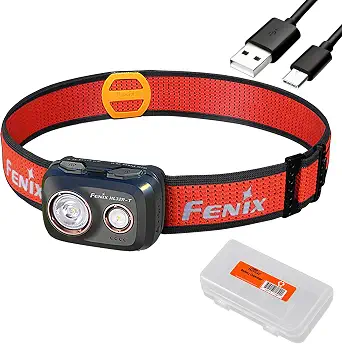
Fenix HM65R-T V2.0 Running Headlamp, 1600 Lumens, Dual Beams, USB-C Rechargeable, Lightweight for Trail Running
The Fenix HM65R-T V2.0 is the high-output choice for runners who need broad visibility on demanding trails and accept extra weight to get it. Its 1600-lumen maximum is twice the output of the Nitecore UT27 MCT Pro and HL18R-T V2.0, and the dual white and warm-white beams offer more flexibility than the single 180-lumen Foxelli. The magnesium-alloy body and IP68 waterproof rating also make it the most ruggedly specified option in this group.
That capability comes at a clear weight cost: 4.96 ounces is over three times the NU25 UL’s 1.6 ounces and noticeably more than either 800-lumen alternative. The listed 600-hour battery life should not be read as maximum-brightness runtime; the product data notes only about three hours at maximum output. I’d reserve this model for serious night running, not routine outings where the lighter Nitecore UT27 MCT Pro is easier to carry.
Pros:- 1600-lumen maximum output exceeds every other headlamp in this selection.
- White and warm-white dual beams provide more lighting flexibility than the Foxelli’s 180-lumen setup.
- Magnesium-alloy construction and IP68 waterproofing suit rugged outdoor use.
- USB-C charging supports recharging without replacing disposable batteries.
Cons:- At 4.96 ounces, it is much heavier than the Nitecore NU25 UL and UT27 MCT Pro.
- Maximum-brightness runtime is listed at about 3 hours, far below the 600-hour maximum-runtime figure.
- Its high output may be unnecessary weight and complexity for familiar, moderate-pace runs.
Best for: Experienced runners tackling technical, dark trails who want high maximum output, dual beams, and a rugged waterproof body.
Not ideal for: Runners who prioritize minimal head weight, run short familiar routes, or expect the longest runtime while using maximum brightness.
- Brightness:1600 lumens
- Light path distance:185 yards
- Weight:4.96 ounces
- Battery:Lithium polymer
- Maximum battery life:Up to 600 hours
- Maximum-brightness runtime:About 3 hours
- Water resistance:IP68 waterproof
- Material:Magnesium alloy
- Charging:USB-C rechargeable
Our verdict“Choose the HM65R-T V2.0 for demanding night trails where maximum light and rugged protection outweigh carrying less weight.”
Silva Trail Runner 4 Ultra Headlamp
The Silva Trail Runner 4 Ultra suits runners who value flexible power and long low-mode runtimes more than headline brightness. Its 350-lumen output and 75-meter beam cover familiar trails, while the listed runtimes stretch to 40 hours at 50 lumens and 90 hours in its longest-running setting. The choice of a rechargeable Li-Po battery or three AAA batteries is its clearest advantage over the USB-C-only Nitecore NU27: on a long outing, spare AAA cells can be easier to carry than arranging a recharge. The tradeoff is a four-hour recharge time and less peak output than the Fenix HL32R-T’s 800 lumens. I’d choose Silva for steady, lower-output use and backup-power flexibility, not for runners who want a very bright beam or fast charging.
Pros:- Rechargeable Li-Po battery or three-AAA power option offers useful flexibility
- Long listed runtimes, including 40 hours at 50 lumens
- 75-meter beam distance reaches beyond the immediate path
Cons:- 350-lumen maximum is lower than the Fenix HL32R-T and Nitecore NU27
- Four-hour recharge time can be inconvenient between runs
Best for: Trail runners who spend long stretches away from outlets and want the option to carry spare AAA batteries.
Not ideal for: Runners who need a powerful high-output beam or want to recharge quickly between outings; its maximum is 350 lumens and a full recharge takes four hours.
- Maximum output:350 lumens
- Maximum beam distance:75 m
- Burn time:25 h at 150 lm; 40 h at 50 lm; up to 90 h
- Power source:1 Li-Po 2.4 Ah battery or 3 AAA batteries
- Recharge time:4 h
Our verdict“Choose the Silva if long low-output runtimes and AAA backup power matter more than maximum brightness or quick recharging.”
Fenix HL32R-T Trail Running Headlamp, 800 Lumen, USB-C Rechargeable, Lightweight, Dual Beam
For runners who need to read both the near trail and the route ahead, the Fenix HL32R-T’s spotlight-and-floodlight setup is more useful than a single-beam design. It can reach 800 lumens, giving it more peak output than the Silva Trail Runner 4 Ultra, while USB-C recharging and AAA compatibility give it two ways to stay powered. The magnesium-alloy housing is described as 32% lighter than aluminum, and the IP66 rating and two-meter impact resistance suit rough, wet outings. Those protections and beam options make it a stronger technical-trail pick than the simpler Foxelli LED Headlamp. There’s a real runtime compromise: high mode lasts up to three hours, so sustained maximum output calls for power planning. I’d pick it for varied terrain, but not for runners who prioritize extended high-mode use.
Pros:- Dual spotlight and floodlight modes serve both distance and close-up trail visibility
- 800-lumen maximum output exceeds the Silva Trail Runner 4 Ultra
- USB-C charging and compatibility with three AAA batteries offer power flexibility
- IP66 water resistance and two-meter impact resistance suit demanding conditions
Cons:- Up to three hours of runtime on high limits sustained maximum-output use
- USB-C cable may not be included with every package
Best for: Trail runners on technical, changeable routes who want both a focused distance beam and a wider flood, plus weather and impact protection.
Not ideal for: Runners who expect to stay at maximum brightness for long outings; high mode is listed for up to three hours.
- Maximum brightness:800 lumens
- Beam type:Dual spotlight and floodlight
- Runtime:Up to 3 h on high; up to 20 h on low
- Recharge:USB-C
- Battery:ARB-LP1900; also runs on three AAA batteries
- Water resistance:IP66
- Impact resistance:2 m
- Temperature range:-35°C to 45°C
- Housing:Magnesium alloy; described as 32% lighter than aluminum
Our verdict“Pick the HL32R-T for technical routes where dual-beam control and ruggedness matter more than extended high-mode runtime.”
Foxelli LED Headlamp for Adults & Kids, Waterproof, Lightweight, 3 AAA Batteries Included
The Foxelli is the straightforward choice for runners who want a light they can use without planning around charging: three AAA batteries are included, and the listed runtime reaches up to 45 hours. Its 3.2-ounce weight, adjustable band, tilting body, and white and red modes make it easy to adapt for a short run or camp setup. Compared with the rechargeable Nitecore NU27, this Foxelli avoids USB-C charging but gives up higher stated output and more varied lighting options. Its 165-foot beam distance is useful for general paths, though the product data does not give a lumen figure, so brightness is harder to compare directly with the Silva Trail Runner 4 Ultra or Fenix HL32R-T. IPX5 handles water exposure, but it is not a choice for submersion. I’d favor it for casual routes, not demanding night trails.
Pros:- 3.2-ounce weight supports comfortable wear on casual outings
- Three AAA batteries are included, so it can be used without charging
- White and red modes cover basic path lighting and lower-impact illumination
- 45-degree tilt helps aim the beam toward the path
Cons:- IPX5 water resistance does not make it suitable for submersion
- No lumen figure is provided, making brightness comparison difficult
- AAA batteries require replacement rather than USB-C recharging
Best for: New runners and families seeking a light, simple headlamp for casual evening paths, with replaceable batteries ready to use.
Not ideal for: Runners tackling technical trails who need a clearly specified lumen output, advanced beam control, or protection beyond IPX5.
- Beam distance:165 ft
- Light modes:White and red
- Water resistance:IPX5
- Weight:3.2 oz
- Batteries:3 AAA batteries included
- Tilt angle:45°
- Listed runtime:Up to 45 h
Our verdict“Choose the Foxelli for casual runs and family use when simple AAA power matters more than high output or advanced trail lighting.”
Nitecore NU27 600 Lumens Running Camping Headlamp, USB-C Rechargeable with Multiple White and Red Light Options
The Nitecore NU27 stands out for runners who want to tune light color to the setting, not just choose between bright and dim. Its warm, neutral, and cool white LEDs offer more choice than the Foxelli’s white-and-red setup, while the red light, SOS, and beacon modes add options for stops or emergencies. At 600 lumens and a stated 134-yard beam distance, it sits between the Silva Trail Runner 4 Ultra and the 800-lumen Fenix HL32R-T on peak output. USB-C charging keeps routine power simple, and the listed runtime reaches up to 57 hours, though actual battery life varies with brightness. The tradeoff is fit: some runners may find the headband uncomfortable over longer wear, and the product data does not specify water-resistance level. I’d choose it for lighting flexibility, not if verified weather protection is a priority.
Pros:- Warm, neutral, and cool white LEDs let runners adapt light color to conditions
- Red, SOS, and beacon modes add useful options beyond standard illumination
- 600-lumen output and 134-yard beam distance suit varied outdoor use
- USB-C charging and up to 57 hours of listed runtime reduce battery handling
Cons:- Some users may find the headband uncomfortable during extended wear
- Runtime varies with brightness, and the listed maximum does not specify the mode
- Water-resistance level is not stated in the provided product data
Best for: Runners who want several white-light color options, red light, and signaling modes in a USB-C rechargeable headlamp.
Not ideal for: Runners who need a stated water-resistance rating or are sensitive to headband comfort on long outings.
- Maximum output:600 lumens
- Beam distance:134 yards
- Light colors:Warm, neutral, cool white, and red
- Battery life:Up to 57 h
- Recharge:USB-C
- Additional modes:SOS and beacon
- Impact resistance:1 m
Our verdict“Choose the NU27 if adjustable white-light color and signal modes matter more than a specified weather rating or guaranteed long-wear comfort.”

How We Picked
I ranked these headlamps around the demands of trail running: keeping the lamp secure while moving, carrying as little unnecessary weight as practical, and having a beam and controls that make sense on uneven ground. I also compared stated output, beam options, charging or battery flexibility, and the range of lighting modes. A large lumen figure can be useful, but it does not tell the whole story; beam shape, runtime, and how the light is worn all affect whether a lamp works well for a runner.
The order reflects the balance of those factors, rather than brightness alone. Compact rechargeable models score well for routine runs, while dual-beam and higher-output headlamps move up for runners who need more lighting range or flexibility. Options with simpler feature sets can still suit beginners and occasional users, but they rank lower for trail-specific adaptability. The product details provided do not establish comparative weights, runtimes, or independent performance results, so I avoid treating any unstated specification as proven.
| headlamps lightweight runners trail | Water resistance |
|---|---|
| Nitecore NU25 UL 400 Lumens Ul | IP66 |
| Fenix HL18R-T V2.0 800 Lumen T | IP66 |
| Nitecore UT27 MCT Pro 800 Lume | IP66 |
| Foxelli USB-C Rechargeable LED | IPX5 |
| Fenix HM65R-T V2.0 Running Hea | IP68 waterproof |
| Silva Trail Runner 4 Ultra Hea | — |
| Fenix HL32R-T Trail Running He | IP66 |
| Foxelli LED Headlamp for Adult | IPX5 |
| Nitecore NU27 600 Lumens Runni | — |
Factors to Consider When Choosing Headlamps Lightweight Runners Trail
Choosing a running headlamp is not just a contest in lumen numbers. I would match the lamp to the route, the length of the outing, and whether I value a stable, light setup or extra lighting and power options.
Match Beam Shape to the Trail
On a smooth path, a broad pool of light can be more comfortable than a narrow beam aimed far ahead. Technical trails call for a balance: enough reach to spot turns and obstacles, plus nearby light to place each foot. A high maximum output does not guarantee that the beam illuminates the places you need at once. If a lamp offers separate beams or color temperatures, think about whether you will use those controls while running or leave the light on one setting. Avoid choosing by lumens alone; look for clear information about beam pattern and usable runtime at the settings you expect to use.
Treat Fit and Bounce as Performance Features
A lamp that shifts with each stride can distract you even if its light is powerful. Headband adjustment, how the lamp sits on your forehead, and compatibility with a hat or hood all affect comfort on longer runs. A light build helps, but a well-secured lamp may matter more than shaving off a small amount of weight. Try adjusting the band before a run, and check whether controls are easy to reach with gloves if you run in cold weather. Do not assume that a product described as lightweight will fit every head or stay equally stable for every runner.
Plan for Runtime, Cold, and the Return Trip
Maximum brightness is often the least useful setting for estimating how long a headlamp will last. Compare runtime at the brightness you would actually use, then leave room for slower-than-expected pace, breaks, and a delayed return. Cold weather can make battery planning less forgiving, so runners heading out for long or remote routes should think through how they will manage a low charge. Rechargeable USB-C models suit regular use when charging is easy, while replaceable batteries can offer a practical backup if you carry spares. A low-battery warning or a reliable reserve setting may matter more than a brief burst of peak output.
Choose Power Around Your Running Routine
USB-C charging keeps a routine headlamp simple to recharge between outings, especially if the cable already travels with your other gear. A model that accepts replaceable batteries can be useful on trips where charging access is limited, though it adds the task of carrying and disposing of batteries responsibly. Check whether a headlamp works while charging only if that feature is confirmed for the specific model; do not assume every rechargeable lamp supports it. For frequent short runs, ease of charging may win. For long events or travel, a fallback power plan can be worth more than a smaller housing.
Keep Controls Simple Enough to Use on the Move
Multiple modes can help tailor light to climbs, descents, and shared routes, but a crowded control scheme can slow you down when you need to change settings quickly. Red light may be useful for preserving night vision or handling a brief task at camp, though it is not a substitute for a suitable forward beam on a dark trail. Before buying, check how the lamp cycles through modes and whether it remembers the last setting, when that information is available. Beginners often benefit from a clear low-to-high sequence more than a long list of modes. Pay for extra lighting options when you have a specific use for them, not just because a feature list is longer.
Buy for Your Route, Not Someone Else’s Lumen Target
Runners on lit urban paths, familiar loops, and occasional evening outings often have different needs from those on unlit technical trails. A compact lamp may be enough for predictable terrain, while remote routes make backup power, beam reach, and spare-light planning more relevant. Think about whether you run alone, how quickly you move, and how much ambient light the route provides. A brighter model can add capability, but it may also add bulk or complexity you rarely use. Set your priorities before comparing specifications so the choice reflects your actual routes rather than a headline number.
Frequently Asked Questions
Is a 400-lumen headlamp enough for trail running?
It can suit familiar routes with some ambient light, slower running, or use as a compact backup, but the lumen figure does not describe beam reach or how evenly the path is lit. On a dark, technical trail, a runner may prefer more output or a beam designed to show both nearby footing and obstacles farther ahead. Runtime at the chosen setting matters too: a lamp that starts bright but cannot sustain a useful level may be a poor match for a long run. Compare the maker’s runtime and beam information for the setting you expect to use. If those details are unavailable, avoid treating the maximum lumen rating as a guarantee of trail performance.
Should I choose rechargeable power or a headlamp that takes AAA batteries?
Rechargeable USB-C power is convenient for runners who use their lamp regularly and can charge it between outings. Replaceable batteries can make more sense when charging access is limited or when you want to carry a backup supply on a long trip. The tradeoff is routine: rechargeable models need charge checks, while battery models need spare cells and responsible disposal. Some headlamps offer both power types, which can reduce the risk of being caught without a way to power the light. Decide based on your route and charging habits, not on the assumption that one power system is always lighter or more reliable.
Do I need dual beams for running on trails?
Not every runner does. A single beam can be simpler and sufficient for regular routes where you know the surface and need only a straightforward view ahead. Dual-beam designs can give more flexibility when the route shifts between nearby footing and longer sightlines, but they may add controls or features you do not use. Think about how often you run on unfamiliar, uneven, or unlit trails and whether changing beam modes while moving would help. If you will keep one setting on all outing, a simpler lamp may be the better fit.
What should I prioritize for a long night run or race?
Start with runtime at a practical brightness, a secure fit, and a plan for what happens if the battery runs low. Check event rules as well: some races require a backup light or spare batteries, and requirements can vary. A charging option or replaceable-battery support may help, but only if you know how you will use it during the outing. Pack a backup that is easy to access rather than relying on a maximum-output setting for the full route. Test your setup on a run of similar length before race day so the fit and controls are familiar.
Can one headlamp work for both trail running and camping?
Yes, if the headlamp’s beam modes and power plan suit both activities. Running favors a stable fit and a useful forward beam; camp tasks may benefit from lower output or a red-light option. A versatile model can cover both, but extra modes do not replace a comfortable running fit or adequate runtime. If camping is occasional, a compact running lamp may be enough, while frequent camp use could make a broader set of modes more valuable. Check whether the light is comfortable to wear for a long time and whether you can recharge it during the trip.
Conclusion
Best overall: I would start with the Nitecore NU27 for a compact running-oriented mix of output and lighting options. Best for minimal carry: choose the Nitecore NU25 UL if keeping the setup light matters more than having the NU27’s higher stated output. Best premium-style performance pick: the Fenix HM65R-T V2.0 is the choice for runners drawn to a much higher maximum output and dual beams, though that capability may be unnecessary on easier routes. Best for beginners and simpler use: the Foxelli USB-C Rechargeable LED Headlamp offers a straightforward rechargeable alternative, while the AAA-powered Foxelli suits buyers who prefer replaceable batteries. For added power flexibility, look at the Fenix HL18R-T V2.0; for runners seeking multiple color temperatures, compare the Nitecore UT27 MCT Pro. Match the final choice to your route, fit, and power plan—not the brightest number on the box.
Halloween Picks
halloween
As an affiliate, we earn on qualifying purchases.