Among high-end home theater projectors, I rank the JVC DLA-NZ500 as the best overall pick for dedicated movie rooms, where its native 4K image and strong contrast suit dark-room viewing. The Sony VPL-XW5000ES is another standout for buyers seeking native 4K laser projection, while the AWOL VISION LTV-3000 Pro appeals to viewers who want an ultra-short-throw setup near a large screen. The main tradeoffs are black-level performance versus brightness, native 4K versus pixel-shifting approaches, and theater-focused components versus built-in streaming and flexible placement. Room lighting, screen size, throw distance, and installation needs can matter as much as headline resolution. Continue reading for my full breakdown of all 13 options and guidance on choosing the right projector for your room.

Get workout gear delivered free with Prime
- Fast, free delivery on millions of items
- Prime Video, Amazon Music and more included
- Member-only deals all year
Complete the kit



Key Takeaways
- Dark-room contrast separates the cinema-focused leaders: the JVC DLA-NZ500 and Sony VPL-XW5000ES emphasize native 4K laser projection, while high-lumen models such as the ViewSonic LS740-4K better suit rooms with more ambient light.
- Brightness is not a substitute for black levels: a bright projector can make a large image easier to see, but it will not recreate the darker scene depth buyers seek in a light-controlled theater.
- Native 4K and pixel-shifted 4K are different buying propositions: the JVC and Sony use native 4K panels, while several Epson options use 4K PRO-UHD processing to balance image detail with different performance priorities.
- Placement changes the shortlist: the AWOL VISION LTV-3000 Pro is built for ultra-short-throw use, while traditional projectors need suitable throw distance and mounting positions.
- Convenience features can outweigh theater specifications for some households: smart platforms on models such as the BenQ W2720i and XGIMI Horizon 20 reduce reliance on external streaming devices, but room fit and image characteristics still deserve priority.
| JVC DLANZ500 Native 4K Laser Projector, 2000lm, 40,000:1 Contrast |  | Best for Native 4K Contrast | Native resolution: 4096 x 2160 | Brightness: 2,000 lumens | Native contrast ratio: 40,000:1 | VIEW ON AMAZON | See Our Full Breakdown |
| Sony VPL-XW5000ES 4K HDR Laser Home Theater Projector with Native 4K SXRD Panel, Black |  | Best Compact Native-4K Pick | Native resolution: 3840 x 2160 | Display technology: LCoS / SXRD | Brightness: 2,000 lumens | VIEW ON AMAZON | See Our Full Breakdown |
| Epson Home Cinema 2350 4K PRO-UHD Smart Streaming Projector with Android TV | 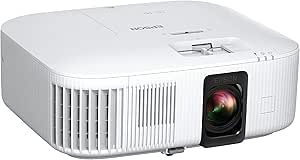 | Best for Built-In Streaming | Maximum display resolution: 3840 x 2160 pixels | Display technology: LCD / 3LCD | Brightness: 2,800 lumens | VIEW ON AMAZON | See Our Full Breakdown |
| Epson Home Cinema LS6000 4K HDR Laser Projector |  | Best Overall for Bright, Flexible Theaters | Brightness: 3,400 lumens | Contrast ratio: 800,000:1 | Projection size: Up to 300 inches | VIEW ON AMAZON | See Our Full Breakdown |
| ViewSonic LS740-4K 4K UHD Laser Projector, 5000 Lumens, Home Theater, HDMI |  | Best for Bright Multipurpose Rooms | Display resolution: 3840 x 2160 pixels | Brightness: 5,000 lumens | Contrast ratio: 3,000,000:1 | VIEW ON AMAZON | See Our Full Breakdown |
| Epson Home Cinema 5050UB 4K PRO-UHD 3-Chip LCD Projector with HDR |  | Best for Flexible Dedicated Theaters | Display type: 3-chip LCD | Listed native resolution: 4096 x 2160 pixels | Maximum display resolution: 1920 x 1080p | VIEW ON AMAZON | See Our Full Breakdown |
| BenQ W2720i 4K Smart AI Home Theater Projector 2500 Lumens with Android TV |  | Best for Built-In Streaming and Color Control | Native resolution: 3840 x 2160 | Display type: LED | Brightness: 2,500 lumens | VIEW ON AMAZON | See Our Full Breakdown |
| JMGO N1S Ultimate Triple Laser 4K Projector with Google TV |  | Best for Flexible Indoor-Outdoor Viewing | Native resolution: 3840 x 2160 | Display type: Laser | Brightness: 3,300 ISO lumens | VIEW ON AMAZON | See Our Full Breakdown |
| Optoma UHZ36 4K UHD Laser HDR Home Theater Projector – Black |  | Best for Bright 4K Laser Viewing | Native resolution: 3840 x 2160 | Display type: DLP | Brightness: 3,500 lumens | VIEW ON AMAZON | See Our Full Breakdown |
| ViewSonic LS740HD 1080P Laser Projector, 5500 Lumens, Full HD Home Theater |  | Best for Bright Rooms and Large Screens | Native resolution: 1920 x 1080 | Display type: Laser | Brightness: 5,500 lumens | VIEW ON AMAZON | See Our Full Breakdown |
| Epson Home Cinema 3800 4K PRO-UHD 3-Chip 3LCD Projector with HDR Technology |  | Best for Bright, Flexible Movie Rooms | Native resolution: 3840 x 2160 | Display type: LCD | Brightness: 3,000 lumens | VIEW ON AMAZON | See Our Full Breakdown |
| AWOL VISION LTV-3000 Pro 4K 3D Ultra Short Throw Triple Laser Projector, Dolby Vision & Atmos, HDR10+, 150″ UST Laser TV Home Theater |  | Best Premium Ultra-Short-Throw Setup | Native resolution: 3840 x 2160 | Light source: Triple laser | Brightness: 2,000 lm brightness; 3,000 ANSI lumens white brightness | VIEW ON AMAZON | See Our Full Breakdown |
| XGIMI Horizon 20 4K RGB Triple Laser Home Projector, 3200 Lumens |  | Best All-in-One Laser Projector | Native resolution: 3840 x 2160 | Light source: RGB triple laser | Brightness: 3,200 lumens | VIEW ON AMAZON | See Our Full Breakdown |
| highend home theater projector | Brightness | Contrast ratio | Native resolution | Connectivity |
|---|---|---|---|---|
| JVC DLANZ500 Native 4K Laser P | 2,000 lumens | — | 4096 x 2160 | — |
| Sony VPL-XW5000ES 4K HDR Laser | 2,000 lumens | — | 3840 x 2160 | — |
| Epson Home Cinema 2350 4K PRO- | 2,800 lumens | 35:1 | — | HDMI, Wi-Fi |
| Epson Home Cinema LS6000 4K HD | 3,400 lumens | 800,000:1 | — | Dual HDMI, eARC |
| ViewSonic LS740-4K 4K UHD Lase | 5,000 lumens | 3,000,000:1 | — | HDMI, USB, 3.5 mm jack |
| Epson Home Cinema 5050UB 4K PR | 2,600 lumens | Up to 1,000,000:1 | — | — |
| BenQ W2720i 4K Smart AI Home T | 2,500 lumens | 2,000,000:1 | 3840 x 2160 | HDMI |
| JMGO N1S Ultimate Triple Laser | 3,300 ISO lumens | 1,600:1 | 3840 x 2160 | — |
| Optoma UHZ36 4K UHD Laser HDR | 3,500 lumens | 1,500,000:1 | 3840 x 2160 | HDMI, USB, RCA |
| ViewSonic LS740HD 1080P Laser | 5,500 lumens | 3,000,000:1 | 1920 x 1080 | HDMI, USB 2.0 Type A, 3.5mm jack |
| Epson Home Cinema 3800 4K PRO- | 3,000 lumens | 100,000:1 | 3840 x 2160 | HDMI, Bluetooth |
| AWOL VISION LTV-3000 Pro 4K 3D | 2,000 lm brightness; 3,000 ANSI lumens white brightness | 2,500:1 | 3840 x 2160 | — |
| XGIMI Horizon 20 4K RGB Triple | 3,200 lumens | 100,000:1 | 3840 x 2160 | — |
More Details on Our Top Picks
JVC DLANZ500 Native 4K Laser Projector, 2000lm, 40,000:1 Contrast
The JVC DLANZ500 is the most natural fit here for a dedicated theater where shadow detail and native 4K resolution matter more than brute-force brightness. Its 40,000:1 native contrast and 4096 x 2160 resolution favor dark-room films, while motorized zoom, focus, and lens shift make precise placement easier than on a simpler fixed installation. It also supports HDR10, HDR10+, and HLG, giving it broader HDR format coverage than the Epson Home Cinema 2350, whose main advantage is higher stated brightness and built-in streaming. The tradeoff is its 2,000-lumen output: it is less suited to rooms with substantial ambient light than the 3,400-lumen Epson LS6000 or 5,000-lumen ViewSonic LS740-4K. Buyers should also confirm the listed projection-distance figures with the seller before planning a room around them.
Pros:- 4096 x 2160 native resolution for detailed large-screen images
- 40,000:1 native contrast suited to dark-room viewing
- Motorized zoom, focus, and lens shift simplify image alignment
- HDR10, HDR10+, and HLG support
Cons:- 2,000 lumens is a weaker fit for rooms with significant ambient light
- No built-in streaming interface is specified
- Supplied projection-distance information should be verified before installation
Best for: Dedicated-theater owners prioritizing native 4K detail, dark-scene contrast, and motorized installation adjustments.
Not ideal for: Viewers who watch with lights on or need an all-in-one streaming projector; its 2,000-lumen output and unspecified smart platform make those needs a better match for brighter or connected models.
- Native resolution:4096 x 2160
- Brightness:2,000 lumens
- Native contrast ratio:40,000:1
- Display technology:Laser phosphor
- Light-source life:20,000 hours
- HDR support:HDR10, HDR10+, HLG
- Lens:Motorized zoom, shift, and focus
Our verdict“Choose the JVC for a light-controlled theater where native 4K detail and contrast take priority over high brightness and built-in streaming.”
Sony VPL-XW5000ES 4K HDR Laser Home Theater Projector with Native 4K SXRD Panel, Black
The Sony VPL-XW5000ES brings native 3840 x 2160 imaging and a 2,000-lumen laser engine in a compact stationary design, making it a strong choice when a high-end theater projector needs to fit a tighter installation. Its SXRD imaging, wide-gamut color, and image processing distinguish it from the more flexible, higher-output Epson LS6000, which is the stronger option for brighter rooms and high-refresh-rate gaming. Against the JVC DLANZ500, Sony offers a similarly native-4K approach but lists contrast only as “High,” while JVC provides a specific 40,000:1 native figure and motorized lens adjustments. The Sony’s 20,000-hour laser life reduces lamp-replacement concerns, though its 2,000 lumens still favor controlled lighting. Its stated input lag may also leave competitive gamers wanting a more gaming-focused model.
Pros:- Native 3840 x 2160 SXRD resolution
- Laser light source rated for 20,000 hours
- Compact design for a stationary installation
- Wide-gamut color and advanced image processing
Cons:- 2,000-lumen brightness is less suited to ambient-light viewing
- Contrast is described only as “High,” without a specific ratio
- Input lag under 21 ms may not satisfy competitive gamers
Best for: Home-cinema buyers who want a compact native-4K laser projector for a fixed, light-controlled room and value Sony’s SXRD image approach.
Not ideal for: Competitive gamers or owners of bright multipurpose rooms; the listed input lag is under 21 ms, and 2,000 lumens trails the Epson LS6000 and ViewSonic LS740-4K.
- Native resolution:3840 x 2160
- Display technology:LCoS / SXRD
- Brightness:2,000 lumens
- Contrast:High (specific ratio not provided)
- Light-source life:20,000 hours
- Power consumption:310 watts
- Mounting type:Ceiling mount
Our verdict“Pick the Sony for compact native-4K cinema in a controlled-light room, but favor the Epson LS6000 if brightness, lens flexibility, or high-refresh gaming matters more.”
Epson Home Cinema 2350 4K PRO-UHD Smart Streaming Projector with Android TV
The Epson Home Cinema 2350 is the easiest choice in this group for buyers who want streaming built into the projector rather than a separate player. Its Android TV interface, built-in speaker, tabletop form, and Bluetooth audio make everyday setup less demanding than the ceiling-mounted JVC DLANZ500 or Sony VPL-XW5000ES. The 2,800-lumen rating also gives it more headroom for casual viewing than those 2,000-lumen models. That convenience comes with a clear cinema tradeoff: the listed 35:1 contrast ratio is far below the specified figures for the JVC DLANZ500 and Epson LS6000, so buyers focused on deep blacks in a dark theater should look elsewhere. Its 4K PRO-UHD labeling should also not be confused with the native 4K panels in the JVC and Sony models. A reliable wireless network is needed for streaming.
Pros:- Android TV provides built-in access to streaming services
- 2,800-lumen brightness rating exceeds the JVC and Sony models
- Tabletop form and vertical lens shift support flexible placement
- Bluetooth audio and a built-in speaker reduce setup requirements
Cons:- Listed 35:1 contrast is a weak fit for dark-scene cinema
- 4K PRO-UHD is not specified as native 4K panel resolution
- Streaming depends on a wireless network
Best for: Households wanting a tabletop projector with Android TV, built-in audio, and flexible casual use without a separate streaming device.
Not ideal for: Dedicated-theater viewers prioritizing deep blacks or native 4K imaging; its listed contrast is low, and 4K PRO-UHD is not the same as a native 4K panel.
- Maximum display resolution:3840 x 2160 pixels
- Display technology:LCD / 3LCD
- Brightness:2,800 lumens
- Contrast ratio:35:1
- HDR support:HDR10
- Connectivity:HDMI, Wi-Fi
- Mounting type:Tabletop
- Input lag:Under 20 ms
Our verdict“Choose the Epson 2350 for convenient streaming and flexible everyday use, not for a theater setup where contrast and native 4K take priority.”
Epson Home Cinema LS6000 4K HDR Laser Projector
The Epson Home Cinema LS6000 earns the lead for buyers who want one projector to cover cinematic viewing and gaming without giving up installation flexibility. Its 3,400-lumen brightness, listed 800,000:1 contrast, and lens shift give it a broader placement and room-lighting range than the 2,000-lumen JVC DLANZ500 and Sony VPL-XW5000ES. For gaming, up to 120Hz refresh and input lag below 20 ms make it a more compelling fit than Sony’s listed under-21-ms figure. The ViewSonic LS740-4K pushes brightness higher at 5,000 lumens, but the Epson’s combination of high refresh, lens shift, and stated contrast is more theater-oriented. There are limits: it has only two HDMI ports, and its full potential is best enjoyed with controlled lighting. The supplied data also does not specify native resolution.
Pros:- 3,400-lumen brightness for more room-light flexibility than the JVC and Sony
- Listed 800,000:1 contrast ratio
- Up to 120Hz refresh and input lag below 20 ms suit gaming
- Horizontal and vertical lens shift ease installation
Cons:- Only two HDMI ports are specified
- A darkened room remains preferable for best cinematic viewing
- Native resolution is not specified in the supplied product data
Best for: Home-theater owners who watch films and play games, and need a brighter image plus lens shift for a flexible fixed installation.
Not ideal for: Buyers who require a stated native-resolution specification, many HDMI connections, or a projector for bright rooms where maximum light output matters most.
- Brightness:3,400 lumens
- Contrast ratio:800,000:1
- Projection size:Up to 300 inches
- Lens shift:±21% horizontal, ±59% vertical
- HDR support:HDR10, HLG
- Refresh rate:Up to 120Hz
- Input lag:Below 20 ms
- Connectivity:Dual HDMI, eARC
Our verdict“Choose the LS6000 as the most balanced listed option for mixed film and gaming use, provided its two HDMI ports and unspecified native resolution fit your needs.”
ViewSonic LS740-4K 4K UHD Laser Projector, 5000 Lumens, Home Theater, HDMI
The ViewSonic LS740-4K stands apart through sheer output: its 5,000-lumen rating makes it the strongest listed fit for a theater that also serves as a family or multipurpose room. It can handle more ambient light than the 3,400-lumen Epson LS6000 and the 2,000-lumen JVC DLANZ500, while its 1.6x optical zoom and 360-degree projection give installers more positioning options. Those strengths come from a model also aimed at classrooms and corporate spaces, so its feature set is less specifically cinema-led than the Epson’s high-refresh gaming support or the JVC’s native-4K and HDR10+ emphasis. The supplied specifications identify 3840 x 2160 display resolution, but do not state a native 4K panel. Its ceiling-mount orientation, mount compatibility limits, and missing HDR-format details are worth checking before a theater installation.
Pros:- 5,000-lumen brightness is the highest listed in this group
- 3840 x 2160 display resolution for detailed UHD images
- 1.6x optical zoom and 360-degree projection broaden installation options
- Laser light source supports long operating life
Cons:- Ceiling mounting and specified mount compatibility may limit installation choices
- Native resolution is not confirmed in the supplied specifications
- HDR support is not listed, limiting clarity about cinema-format compatibility
Best for: Owners of bright multipurpose rooms who need a high-output laser projector for large images and flexible installation orientations.
Not ideal for: Dedicated-theater buyers who prioritize confirmed native 4K imaging, deep-black performance, or detailed HDR-format support over brightness.
- Display resolution:3840 x 2160 pixels
- Brightness:5,000 lumens
- Contrast ratio:3,000,000:1
- Light-source life:20,000 hours (listed)
- Maximum image size:300 inches
- Optical zoom:1.6x
- Projection modes:360-degree, portrait
- Connectivity:HDMI, USB, 3.5 mm jack
Our verdict“Choose the ViewSonic for a bright, flexible multipurpose room, but pick the Epson LS6000 or JVC DLANZ500 for a more explicitly theater-focused feature set.”
Epson Home Cinema 5050UB 4K PRO-UHD 3-Chip LCD Projector with HDR
The Epson Home Cinema 5050UB is a strong fit for a permanent theater where installation flexibility and color-rich images matter more than built-in streaming. Its 3LCD light engine and 2,600-lumen output suit a range of screen sizes, while lens and mounting flexibility can make it easier to adapt to an existing room than the portable JMGO N1S Ultimate. Epson’s 4K PRO-UHD processing enhances image detail, but the supplied specifications also list a maximum display resolution of 1920 x 1080p, so buyers should confirm how their source signal is handled rather than assume native 4K panels. Compared with the Optoma UHZ36, this Epson offers a different LCD approach and flexible setup, while the Optoma specifies a laser light source and higher brightness. The tradeoffs are a more involved setup and HDR results that depend on connected equipment.
Pros:- Three-chip 3LCD design supports vibrant color without relying on a single-chip color wheel.
- 2,600-lumen brightness gives room to support larger screens in controlled lighting.
- Flexible mounting options help accommodate different room layouts.
- 4K PRO-UHD processing enhances detail from compatible content.
Cons:- The listed maximum display resolution is 1920 x 1080p, which makes the 4K processing description worth verifying against the buyer’s source and expectations.
- Setup can be complex for first-time projector owners.
- HDR performance depends on compatibility with connected devices.
Best for: Home theater owners building a fixed, carefully positioned setup who value 3LCD color and flexible installation.
Not ideal for: Beginners seeking an all-in-one streaming projector or buyers who want a clearly specified native 4K panel and straightforward setup.
- Display type:3-chip LCD
- Listed native resolution:4096 x 2160 pixels
- Maximum display resolution:1920 x 1080p
- Brightness:2,600 lumens
- Contrast ratio:Up to 1,000,000:1
- Maximum image size:300 inches
- Throw distance:1.35–2.84 meters
- Image processing:4K PRO-UHD, Pixel-Shift Processor, Digital Imaging Processor
Our verdict“Choose the 5050UB for a planned, fixed theater that benefits from 3LCD color and installation flexibility, not for a simple plug-and-play setup.”
BenQ W2720i 4K Smart AI Home Theater Projector 2500 Lumens with Android TV
The BenQ W2720i combines 4K UHD resolution with built-in Android TV, so it can anchor a theater without requiring a separate streaming box for everyday viewing. Its AI color calibration and HDR10/HLG support make it a better match for viewers who want image adjustment and streaming in one unit than the installation-focused Epson Home Cinema 5050UB. The LED source is rated for 30,000 hours, reducing the need for routine lamp replacement, and the listed HDMI 2.1 connections help accommodate modern sources. At 2,500 lumens, though, this BenQ is aimed at dark or controlled-light rooms; the brighter Optoma UHZ36 is the more suitable pick when ambient light is harder to manage. The BenQ’s 21-pound weight also points toward a considered, relatively fixed installation rather than frequent moving.
Pros:- 3840 x 2160 display resolution delivers 4K UHD detail.
- Built-in Android TV provides streaming without a separate player.
- AI color calibration and HDR10/HLG support offer image-tuning options.
- LED light source is rated for 30,000 hours.
Cons:- Its 2,500-lumen output is better suited to dark or controlled-light rooms than bright spaces.
- At 21 pounds, it is not an especially convenient choice for frequent relocation.
Best for: Movie fans who want 4K, built-in streaming, and color-adjustment features in a dedicated room with controllable lighting.
Not ideal for: Buyers projecting in bright multipurpose rooms or anyone who needs a lightweight projector to move between spaces.
- Native resolution:3840 x 2160
- Display type:LED
- Brightness:2,500 lumens
- Contrast ratio:2,000,000:1
- Light source life:30,000 hours
- Connectivity:HDMI
- Built-in speaker:Yes
- Warranty:3 years
Our verdict“Pick the W2720i if built-in streaming and image-control features matter more than the Optoma UHZ36’s greater stated brightness.”
JMGO N1S Ultimate Triple Laser 4K Projector with Google TV
The JMGO N1S Ultimate is the lineup’s most adaptable choice for buyers who want a projector that can move from a living room to an outdoor screening. Its triple-laser light source, 3,300 ISO lumens, and 110% BT.2020 gamut put color and brightness at the center of its appeal; auto keystone and autofocus reduce the fuss of changing projection positions. Built-in Google TV and 20W audio also make it more self-contained than the Epson Home Cinema 5050UB, which is better suited to a fixed theater installation. That convenience has a cinema tradeoff: the stated 1,600:1 contrast ratio is much lower than the 5050UB’s listed figure, so dark-scene depth may not satisfy buyers focused on a dedicated, light-controlled room. It still needs a power source and sensible placement despite its portable design.
Pros:- Triple-laser 4K system and 110% BT.2020 color gamut support a broad, vivid image.
- 3,300 ISO lumens suit more varied viewing conditions than lower-brightness theater models.
- Auto keystone and autofocus simplify setup when the projector is moved.
- Google TV and 20W built-in audio reduce the need for extra equipment.
Cons:- The listed 1,600:1 contrast ratio is modest beside the Epson Home Cinema 5050UB’s stated contrast figure.
- Portable positioning still requires nearby power and a stable placement surface.
- Its feature-rich portable design may be more than buyers need for a fixed theater.
Best for: Households that want one 4K projector for flexible rooms, occasional outdoor viewing, and streaming without separate audio or streaming gear.
Not ideal for: Dedicated dark-room cinema buyers who prioritize deep contrast over portability and automatic setup features.
- Native resolution:3840 x 2160
- Display type:Laser
- Brightness:3,300 ISO lumens
- Contrast ratio:1,600:1
- Color gamut:110% BT.2020
- Color accuracy:ΔE < 1
- Maximum image size:300 inches
- Built-in audio:20W Dolby Digital Plus, DTS-HD
- Light source life:30,000 hours
Our verdict“Choose the N1S Ultimate for flexible placement and self-contained viewing, but favor the Epson 5050UB if dark-scene contrast is your priority.”
Optoma UHZ36 4K UHD Laser HDR Home Theater Projector – Black
The Optoma UHZ36 suits buyers who need 4K resolution and strong stated brightness in a conventional home theater projector. Its 3,500-lumen laser output gives it a brightness advantage over the BenQ W2720i’s 2,500 lumens, making the Optoma a more plausible fit when the room cannot be kept fully dark. Filmmaker Mode is a useful option for viewers who want a picture mode intended to preserve a film’s original presentation, while the DuraCore laser is rated for up to 30,000 hours. Unlike the JMGO N1S Ultimate, the UHZ36 does not list built-in streaming or automatic focus and keystone features, so it is less self-contained and adaptable for casual relocation. Its 10.4-pound weight is manageable for installation, but the one-year warranty and limited software-update information leave fewer long-term assurances in the supplied data.
Pros:- 3840 x 2160 resolution supports 4K UHD sources.
- 3,500-lumen brightness exceeds the BenQ W2720i’s stated output.
- DuraCore laser light source is rated for up to 30,000 hours.
- Filmmaker Mode offers a viewing mode aimed at preserving source presentation.
Cons:- No built-in streaming platform is listed, so an external source may be needed.
- The one-year warranty is limited compared with the BenQ W2720i’s listed three-year warranty.
- Software update details are limited in the supplied product information.
Best for: Movie and sports viewers who want a bright 4K laser image and expect to connect their own streaming or playback devices.
Not ideal for: Buyers wanting a portable all-in-one unit with built-in streaming, or those who need a longer stated warranty.
- Native resolution:3840 x 2160
- Display type:DLP
- Brightness:3,500 lumens
- Contrast ratio:1,500,000:1
- Light source:DuraCore laser
- Light source life:Up to 30,000 hours
- Maximum image size:300 inches
- Connectivity:HDMI, USB, RCA
- Warranty:1 year limited parts and labor; light source 1 year or 20,000 hours
Our verdict“The UHZ36 is a sensible match for buyers who want brighter 4K laser projection than the BenQ W2720i and already have their source devices.”
ViewSonic LS740HD 1080P Laser Projector, 5500 Lumens, Full HD Home Theater
The ViewSonic LS740HD takes a different route from the 4K models here: it gives up resolution to deliver 5,500 lumens for rooms where ambient light or a very large image would challenge a dimmer projector. That makes it more suited to sports, shared viewing spaces, and presentation-style use than the BenQ W2720i, whose 4K detail is a stronger fit for close, dark-room movie watching. The LS740HD supports images up to 300 inches and offers keystone, four-corner adjustment, and 360-degree projection features for installation flexibility. But Full HD is a meaningful limit in a roundup focused on high-end home theater, especially when the JMGO N1S Ultimate and Optoma UHZ36 both specify 4K. It is also a stationary, ceiling-mount-oriented model with no listed built-in speaker.
Pros:- 5,500-lumen output is the highest stated brightness in this group.
- Supports images up to 300 inches.
- Keystone, four-corner adjustment, and 360-degree projection aid varied installation layouts.
- Laser light source is rated for 20,000 hours.
Cons:- 1920 x 1080 resolution falls short of the 4K detail specified by the JMGO N1S Ultimate and Optoma UHZ36.
- Stationary, ceiling-mount-oriented design is less convenient for portable use.
- No built-in speaker with high audio output is listed.
Best for: Owners of bright multipurpose rooms who prioritize image visibility and large-screen flexibility over 4K movie detail.
Not ideal for: Dedicated cinema viewers who sit close to the screen and want 4K resolution, or buyers seeking a portable projector with built-in audio.
- Native resolution:1920 x 1080
- Display type:Laser
- Brightness:5,500 lumens
- Contrast ratio:3,000,000:1
- Maximum image size:300 inches
- Throw distance:1–8 meters
- Light source life:20,000 hours
- Connectivity:HDMI, USB 2.0 Type A, 3.5mm jack
- Mounting type:Ceiling mount
Our verdict“Choose the LS740HD when bright-room visibility and a very large image matter more than the 4K detail offered by the other theater-focused picks.”
Epson Home Cinema 3800 4K PRO-UHD 3-Chip 3LCD Projector with HDR Technology
The Epson Home Cinema 3800 is a sensible pick for buyers who want a bright, color-rich 4K-style image without committing to an ultra-short-throw setup. Its 3,000-lumen output gives it more flexibility in rooms with some ambient light than the AWOL VISION LTV-3000 Pro, which is best suited to a dark room or a compatible ambient-light-rejecting screen. Epson’s 3-chip LCD design and HDR support make it a versatile choice for films, sports, and gaming, while Bluetooth and HDMI simplify connections to external gear.
The tradeoff is that this is a conventional projector, not a smart TV replacement: streaming apps require an external device, and its size and throw requirements call for a planned installation. I’d choose the XGIMI Horizon 20 instead for built-in Google TV and a laser light source; the Epson makes more sense if brightness and familiar 3LCD color are the priority.
Pros:- 3,000-lumen brightness suits rooms that are not fully dark.
- 3-chip LCD design supports vivid color without a color wheel.
- HDMI and Bluetooth provide useful connections for consoles and audio gear.
- Supports HDR and 4K 60 fps gaming according to the supplied product details.
Cons:- No built-in streaming apps, so smart features require an external device.
- Conventional placement and throw needs can limit room and cabinet layouts.
- Larger body is less convenient to move than a compact projector.
Best for: Movie and gaming fans setting up a fixed projection room who need bright output and already use a streaming box or console.
Not ideal for: Buyers who need a compact, all-in-one streaming projector or a short-throw unit that can sit close to the screen.
- Native resolution:3840 x 2160
- Display type:LCD
- Brightness:3,000 lumens
- Contrast ratio:100,000:1
- Maximum image size:300 inches
- Connectivity:HDMI, Bluetooth
- Supported video formats:H.264, H.265 (HEVC), VP9
Our verdict“Choose the Epson Home Cinema 3800 if you want a bright, versatile projector for a planned room and are happy to supply your own streaming device.”
AWOL VISION LTV-3000 Pro 4K 3D Ultra Short Throw Triple Laser Projector, Dolby Vision & Atmos, HDR10+, 150″ UST Laser TV Home Theater
The AWOL VISION LTV-3000 Pro is the most installation-specific choice here: its 0.25:1 ultra-short-throw ratio can produce a large screen from a projector placed near the wall, avoiding a ceiling mount or a long room. Triple-laser illumination and support for Dolby Vision and HDR10+ target buyers building a dedicated, high-end viewing setup, while the built-in center-channel speaker can make dialogue easier to hear without immediately adding a separate center speaker. PJ Link IP control and Control4 compatibility also suit integrated home theaters.
That convenience does not make it universally easy to place. Cabinet depth and precise screen alignment still matter, and the supplied details recommend a dark room or an AWOL ALR screen for daytime viewing. Compared with the Epson Home Cinema 3800, it takes up less projection distance but offers less flexibility for buyers who want to move the projector between rooms. Its 80-inch minimum image size also rules it out for smaller-screen needs.
Pros:- 0.25:1 throw ratio creates a large image from close to the screen.
- Triple-laser light source supports a wide color presentation and long stated operating life.
- Dolby Vision and HDR10+ support suit buyers with compatible high-dynamic-range sources.
- Built-in center-channel speaker and Control4 compatibility add theater and automation options.
Cons:- Daytime viewing may call for a compatible ALR screen.
- Cabinet depth and exact placement can complicate installation.
- The 80-inch minimum image size is restrictive for smaller rooms or screens.
Best for: Home theater owners who want a large image in a room without space for a conventional projector throw and plan a fixed UST installation.
Not ideal for: Buyers with a shallow media cabinet, a small target screen, or a bright room who do not plan to use an ALR screen.
- Native resolution:3840 x 2160
- Light source:Triple laser
- Brightness:2,000 lm brightness; 3,000 ANSI lumens white brightness
- Throw ratio:0.25:1
- Image size range:80 to 150 inches
- Contrast ratio:2,500:1
- Light source life:25,000 hours
- Connectivity and control:HDMI, PJ Link IP, app, remote, voice control; Control4 compatible
Our verdict“Pick the AWOL VISION LTV-3000 Pro for a fixed, large-screen UST theater when you can accommodate careful placement and suitable room lighting.”
XGIMI Horizon 20 4K RGB Triple Laser Home Projector, 3200 Lumens
The XGIMI Horizon 20 is the most self-contained option in this group. Its built-in Google TV, including Netflix, cuts down on extra boxes and cables, while RGB triple-laser illumination and support for Dolby Vision, HDR10+ and IMAX Enhanced give it a feature-rich picture toolkit. Lens shift and optical zoom make placement less rigid than the AWOL VISION LTV-3000 Pro’s close-wall UST approach, and the stated 1ms input lag and 240Hz refresh rate give gamers a reason to look beyond movie playback.
The Epson Home Cinema 3800 offers a similar large-image ambition, but the XGIMI pairs its listed 3,200-lumen output with built-in streaming and a laser source rather than requiring an external streamer. Still, the supplied specs do not fully establish how portable it is, and its brightness may need adjustment in a dark room. Buyers should also verify power compatibility: the listed voltage is 220–240 volts.
Pros:- Google TV with Netflix provides built-in streaming without a separate media player.
- RGB triple-laser source and support for Dolby Vision, HDR10+, and IMAX Enhanced offer broad picture-format support.
- Flexible lens shift and optical zoom give more placement options than a fixed close-wall UST design.
- Listed 1ms input lag and 240Hz refresh rate target responsive gaming.
Cons:- High brightness may need reducing for comfortable viewing in a dark theater.
- Supplied product details give limited information about portability.
- Listed 220–240V voltage may not suit buyers with other power standards.
Best for: Buyers who want a feature-rich 4K projector with integrated streaming, flexible placement, and gaming-focused specifications.
Not ideal for: Shoppers who need a confirmed portable setup, use 100–120V power, or want a simpler projector without extensive HDR and gaming features.
- Native resolution:3840 x 2160
- Light source:RGB triple laser
- Brightness:3,200 lumens
- Contrast ratio:100,000:1
- Built-in media:Google TV
- HDR support:HDR10+, Dolby Vision, IMAX Enhanced
- Projection size:Up to 300 inches
- Gaming specifications:1ms input lag; 240Hz refresh rate
- Voltage:220–240 volts
Our verdict“Choose the XGIMI Horizon 20 if you want a laser projector with built-in Google TV, broad HDR support, and gaming features in one unit.”

How We Picked
I compared the 13 models by the factors that most affect a high-end home theater: image detail, contrast, brightness, and HDR support. I also weighed resolution technology, laser or lamp light source, setup flexibility, smart features, and whether the projector’s strengths match a dedicated dark room, a multipurpose living space, or an ultra-short-throw installation. Published specifications describe potential performance, not a guarantee of identical results across screens and rooms.
The ranking favors cinema performance and a clear use case over a single headline specification. The JVC DLA-NZ500 leads for its native 4K and contrast-oriented profile; the Sony is close behind for buyers prioritizing native 4K laser projection. Models with greater brightness, integrated streaming, or unusual placement flexibility earn their place when those benefits solve a real room or setup problem. I place more compromises lower when a model’s resolution, brightness, or theater-oriented features make it a less direct fit for high-end movie viewing.
Factors to Consider When Choosing Highend Home Theater Projectors
Choosing among high-end projectors starts with the room, not the spec sheet. I would settle the screen size, viewing distance, light control, and installation location before comparing processing or smart features. These broader checks help prevent a common mistake: buying impressive specifications that cannot deliver their intended benefit in the space available.
Match Brightness to Your Room and Screen
Brightness needs rise with screen size and ambient light, but more lumens alone do not make a better theater image. In a dark, light-controlled room, contrast and black levels often shape movie scenes more than extra brightness does. A multipurpose room with windows may call for a brighter model, blackout curtains, or a smaller screen rather than a projector chosen solely by its lumen figure. Screen material and gain also affect the result, so compare brightness claims with your planned screen and seating distance. Avoid assuming that a bright projector will overcome direct daylight without image compromises. If movies are mostly watched after dark, I would give contrast and accurate image control greater weight than maximum output.
Choose the Resolution Technology You Will Notice
Native 4K panels and pixel-shifting systems approach detail differently, and the difference matters most with large screens and close seating. Native 4K options such as the JVC DLA-NZ500 and Sony VPL-XW5000ES have a straightforward appeal for buyers focused on fine image detail. Epson’s 4K PRO-UHD models use a different approach, so compare the full image and feature set rather than treating the label as identical technology. Source quality also sets a ceiling: a sharp projector cannot restore detail missing from a low-resolution or heavily compressed stream. Think about your usual viewing distance before paying more for resolution distinctions that may be hard to see from your seats. For a large screen and close seating, detail deserves more weight; for farther seating, contrast and room fit may matter more.
Measure Throw Distance Before You Shop
Projectors vary in how far they need to sit from the screen, and this can decide whether a model fits your room at all. Measure the available lens-to-screen distance and the intended image width before choosing a traditional front projector. Ultra-short-throw models such as the AWOL VISION LTV-3000 Pro can sit close to the wall, but they still need a suitable screen and a carefully aligned, level surface. Ceiling mounts add their own constraints, including cable routing and access for adjustment. A frequent mistake is buying for resolution first and discovering later that the projector cannot produce the desired screen size from the available position. Check the manufacturer’s throw and installation guidance against your actual room dimensions.
Decide What HDR and Color Features Mean for Your Use
HDR support can improve the range of tones in compatible content, but the result depends on the projector’s brightness, contrast, processing, and room conditions. A format name on the box does not guarantee the same HDR impact you might see on a bright television. Look for controls that let you tune the image for your screen and viewing environment, especially if you watch both dark films and brighter sports or games. Laser light sources can offer a different ownership profile from lamp-based models, but buyers should still check rated light-source life and service details. Wide color claims are most useful when paired with content and settings that can take advantage of them. I would prioritize a balanced image in your room over a long list of format badges.
Weigh Built-In Streaming Against External Sources
Integrated smart platforms can simplify setup and reduce the number of devices and cables, as with models that include Android TV or Google TV. That convenience is useful in shared rooms and for buyers who want a simpler system, but software support and app availability can change over time. A separate streaming device is easy to replace and may offer a more familiar interface, while an external receiver or player can centralize a larger theater setup. Check the available HDMI connections and compatibility with your intended sources before assuming the projector can serve as the entire system. Built-in speakers, where available, can help with casual viewing, but a dedicated sound system is a better match for many high-end theaters. Choose convenience features according to how you watch, not as a substitute for image and room fit.
Budget for the Whole Projection System
The projector is only one part of the image: the screen, mount, cabling, sound system, and room treatment affect the finished setup. A premium projector paired with a poorly matched screen may deliver less benefit than expected, while a sensible screen and light control can improve a less costly system. Fixed installations also call for practical planning around ventilation, power, cable runs, and access for maintenance. Before spending more for a feature, ask whether it solves a real limitation in your room or viewing habits. The value choice is not always the least expensive model; it is the option that delivers the features you will use without forcing expensive workarounds. Leave room in the plan for the supporting equipment that makes the picture and sound work together.
Frequently Asked Questions
Is native 4K worth choosing over Epson 4K PRO-UHD for a home theater?
Native 4K is a clear fit for buyers who prioritize panel-level resolution, especially with a large screen or close seating. Epson 4K PRO-UHD takes a different route to displaying 4K content, and its value depends on the model’s overall image, installation options, and features. Your seating distance and viewing material affect how visible the distinction will be. Compare image performance alongside contrast, brightness, and lens flexibility rather than treating resolution technology as the only deciding factor. If your room is small or most viewing is streamed at lower bitrates, other differences may have greater practical impact.
Can a high-lumen projector replace blackout curtains in a living room?
A bright model can make an image more watchable in a room with some ambient light, but it cannot remove the effects of daylight on contrast and black levels. Direct light on the screen is especially difficult to overcome without washing out darker scenes. Curtains, shades, or a screen suited to the room can improve the image without pushing brightness to its limits. If daytime viewing is frequent, compare a brighter projector such as the ViewSonic LS740-4K with your room’s light conditions and screen plan. For film viewing at night, a darker room can often improve perceived image quality more than extra lumen output.
Should I choose an ultra-short-throw projector instead of a ceiling-mounted model?
An ultra-short-throw model makes sense when the projector needs to sit close to the screen, such as in a room where ceiling mounting is impractical. It also makes access and day-to-day use more convenient for some households. The tradeoff is that ultra-short-throw placement is sensitive to alignment and screen surface, so a flat, compatible screen matters. A traditional projector can be a better fit if you have a suitable throw distance and want more placement options through a ceiling mount. Compare the full installation, including furniture height, screen position, and cable routing, before choosing the form factor.
Do I need a laser projector for a dedicated home theater?
No; a laser light source is not a requirement for a strong theater setup. It can offer advantages in light-source longevity and operating convenience, but the right choice still depends on image quality, room fit, and service details. The Epson Home Cinema 5050UB and 3800 use different light-source approaches from several laser models in this lineup, showing why buyers should compare complete systems rather than the source alone. Check the manufacturer’s lamp or laser life guidance, replacement or service options, and your expected viewing hours. A well-matched projector matters more than choosing a light-source label by itself.
What should I prioritize if I watch movies and play games on the same projector?
Start by checking gaming-focused specifications and connection support alongside movie image quality, since a projector built mainly for film viewing may not suit fast gameplay as well. Confirm compatibility with your console or PC, including the video formats and refresh rates you plan to use. Then consider brightness and image flexibility if the room is also used for daytime viewing or varied screen sizes. Smart features can simplify streaming, but they do not replace the right external connections for gaming equipment. A multipurpose buyer should favor a balanced model and verify the specific capabilities they will use rather than choosing solely by native resolution or lumen output.
Conclusion
For a dedicated dark-room theater, I would choose the JVC DLA-NZ500 as best overall, with the Sony VPL-XW5000ES as the best premium alternative for buyers who want native 4K laser projection. The Epson Home Cinema 5050UB is my value pick for shoppers who want a theater-oriented feature set without making native 4K the deciding requirement. For a simpler setup with integrated streaming, the BenQ W2720i is my beginner-friendly choice among these options. Choose the AWOL VISION LTV-3000 Pro for ultra-short-throw placement, or look to the brighter ViewSonic models when room light and visibility matter more than dark-room contrast. Before deciding, match the projector to your screen, throw distance, and viewing conditions; those factors determine which strengths you will actually see.
Halloween Picks
halloween
As an affiliate, we earn on qualifying purchases.