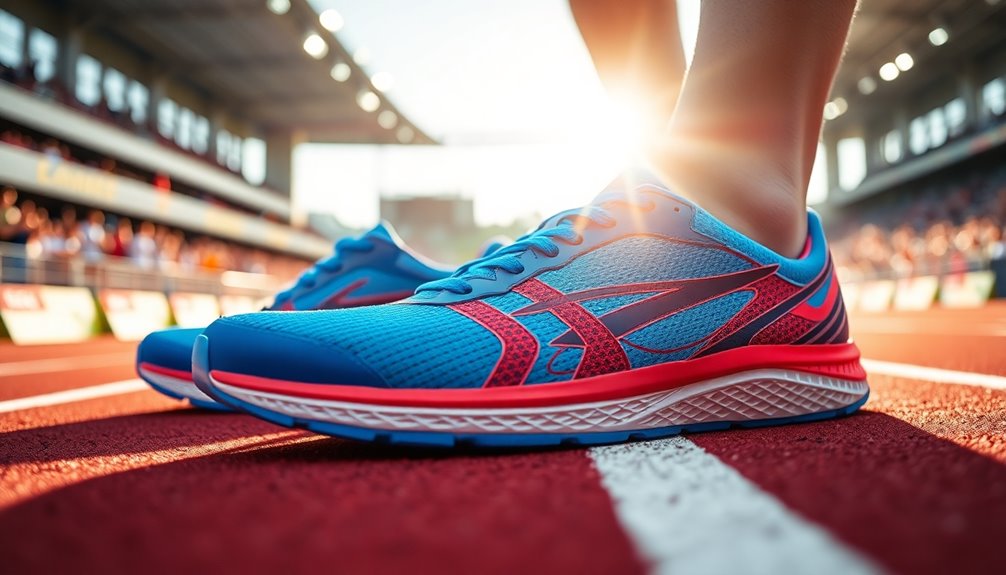

Runners searching for racing flats will find that these five choices are all built around cross-country rather than road racing. My lead pick is the Saucony Havok XC 3 for runners who want a removable six-pin spike setup and a lightweight EVA midsole; the Kilkenny XC 10 unisex is the more versatile choice if you prefer cushioning and a flat rubber outsole; and the Kilkenny XC9 is a straightforward option for grass, dirt, and mixed-course traction. Those differences matter more than a broad claim of speed: spikes suit soft, uneven courses, while rubber outsoles make more sense when a course or training plan does not call for metal cleats.

Get workout gear delivered free with Prime
- Fast, free delivery on millions of items
- Prime Video, Amazon Music and more included
- Member-only deals all year
I ranked these models by how clearly each serves a distinct racing need: traction, adaptability, cushioning, and fit. None is a general-purpose road shoe, and the spike models are particularly specialized. Before choosing, match the outsole to your usual course surface, then decide whether a low-profile spike or a cushioned, spikeless platform better suits your race-day preferences.
Complete the kit


Key Takeaways
- Best spike versatility: The men’s Havok XC 3 has removable cleats, making it the cleated option with the clearest maintenance and replacement path.
- Best spikeless racing flat: The unisex Kilkenny XC 10 pairs PWRRUN foam with a flat rubber outsole for runners who do not want a spike plate.
- Best straightforward XC spike: The Kilkenny XC9 offers six-pin traction and a breathable mesh upper without the cleat-tool details specified for the Havok.
- Best aggressive women’s spike pick: The women’s Havok XC3 emphasizes powerful takeoffs and a six-pin plate, but its aggressive design is less suitable for everyday wear.
- Best rubber-traction alternative: The Kilkenny XC 10 model with a traction-pattern outsole is designed for dirt, grass, and mud, but it is not described as waterproof.
| Saucony Men’s Havok XC 3 Cross-Country Spike Running Shoe |  | Best Overall for Removable Spike Versatility | Use: Cross-country racing | Spike plate: Six-pin, with removable cleats | Midsole: Super Lite EVA | VIEW ON AMAZON | See Our Full Breakdown |
| Saucony Kilkenny XC 10 Unisex Cross-Country Running Shoe |  | Best Spikeless Racing Flat | Use: Cross-country racing | Cushioning: PWRRUN foam with 7 mm more foam underfoot | Outsole: Flat rubber, no spikes | VIEW ON AMAZON | See Our Full Breakdown |
| Saucony Men’s Kilkenny XC9 Cross Country Spike Shoes |  | Best Straightforward Six-Pin XC Spike | Use: Cross-country meets and competitive running | Spike plate: 6-pin | Outer material: Mesh | VIEW ON AMAZON | See Our Full Breakdown |
| Saucony Women’s Havok XC3 Cross-Country Running Shoe |  | Best Aggressive Women’s Spike | Use: Cross-country | Plate: 6-pin | Outer material: Mesh | VIEW ON AMAZON | See Our Full Breakdown |
| Saucony Kilkenny XC 10 Cross-Country Running Shoe |  | Best for Rubber Grip Across Varied XC Ground | Use: Cross-country terrain | Cushioning: PWRRUN foam with 7 mm additional underfoot cushioning | Outsole: Rubber traction pattern | VIEW ON AMAZON | See Our Full Breakdown |
| racing flat | Use | Sole material | Outer material | Inner material |
|---|---|---|---|---|
| Saucony Men’s Havok XC 3 Cross | Cross-country racing | Rubber | Mesh | Mesh |
| Saucony Kilkenny XC 10 Unisex | Cross-country racing | Rubber | — | — |
| Saucony Men’s Kilkenny XC9 Cro | Cross-country meets and competitive running | Ethylene Vinyl Acetate | Mesh | — |
| Saucony Women’s Havok XC3 Cros | Cross-country | Synthetic rubber | Mesh | Mesh |
| Saucony Kilkenny XC 10 Cross-C | Cross-country terrain | Rubber | Mesh | Mesh |
More Details on Our Top Picks
Saucony Men’s Havok XC 3 Cross-Country Spike Running Shoe
I put the men’s Havok XC 3 first because it combines a six-pin cross-country plate with removable cleats, and the package includes a cleat tool. That makes it the most adaptable spike pick in this group: runners can replace cleats rather than treating the plate as a fixed, maintenance-free component. Its lightweight Super Lite EVA midsole is designed for rebound and durability, while the monomesh upper keeps the construction focused on ventilation rather than weather protection.
Compared with the Kilkenny XC9, the Havok has a clearer maintenance advantage, but both are specialized spike shoes intended for cross-country. Against the Kilkenny XC 10, the tradeoff is sharper: the Havok brings six-pin traction for soft terrain, while the XC 10’s flat rubber outsole avoids cleats and adds specified PWRRUN cushioning. I would choose the Havok when the course calls for spikes and skip it for road miles, everyday running, or a race on surfaces where cleats are not appropriate. Its hardware is useful, but it also means cleat checks and occasional replacement are part of ownership.
Pros:- Six-pin plate is designed for cross-country traction.
- Removable cleats allow replacement.
- Cleat tool is included.
- Super Lite EVA midsole is designed for rebound and durability.
Cons:- Its spike setup limits use beyond cross-country racing.
- Removable cleats require inspection and maintenance.
Best for: Cross-country runners who want six-pin traction and the option to replace cleats as they wear.
Not ideal for: Runners seeking one shoe for road running, daily training, or courses that do not suit spikes.
- Use:Cross-country racing
- Spike plate:Six-pin, with removable cleats
- Midsole:Super Lite EVA
- Outer material:Mesh
- Inner material:Mesh
- Closure:Lace-up
- Included:Cleat tool
- Sole material:Rubber
Our verdict“I recommend the men’s Havok XC 3 as the most adaptable spike choice here, provided your races call for cleats and you are willing to maintain them.”
Saucony Kilkenny XC 10 Unisex Cross-Country Running Shoe
The Kilkenny XC 10 unisex is my pick for runners who want an XC-oriented racing shoe without a spike plate. Its flat rubber outsole and breathable mesh upper keep the design simpler than the Havok’s six-pin setup, while PWRRUN foam adds specified cushioning. The product description notes seven millimeters more foam underfoot, a detail that makes this the clearest choice in the group for someone who values a more cushioned platform over aggressive cleat traction.
That does not make it a universal running shoe. The outsole is still described for cross-country terrain, and the shoe is explicitly not water-resistant. Compared with the spiked Kilkenny XC9, this model gives up pin-based bite in exchange for a flat, spikeless sole. Compared with the other XC 10 listing, it calls out a flat outsole and anatomical fit, while the other listing emphasizes a rubber traction pattern for dirt, grass, and mud. I would favor this version when spikes are unnecessary or prohibited; I would skip it for a course where you depend on cleats to grip soft ground.
Pros:- PWRRUN foam provides specified underfoot cushioning.
- Flat rubber outsole avoids a spike plate.
- Anatomical fit is designed to contour to the foot.
- Breathable mesh upper suits cross-country use.
Cons:- The outsole has no spikes for soft-course bite.
- The shoe is not water-resistant.
- Its stated use is cross-country rather than general road running.
Best for: Runners who want a cushioned, spikeless cross-country shoe with an anatomical fit.
Not ideal for: Athletes who need six-pin traction or a shoe intended for wet-weather protection.
- Use:Cross-country racing
- Cushioning:PWRRUN foam with 7 mm more foam underfoot
- Outsole:Flat rubber, no spikes
- Fit:Anatomical
- Upper:Mesh
- Closure:Lace-up
- Water resistance:Not water-resistant
- Sole material:Rubber
Our verdict“I would choose this Kilkenny XC 10 when a cushioned spikeless platform matters more than cleat traction.”
Saucony Men’s Kilkenny XC9 Cross Country Spike Shoes
The men’s Kilkenny XC9 earns its place as a no-frills spike option: it has a six-pin plate, a lightweight low-profile design, and a breathable mesh upper. Its lace-up closure is meant to keep the foot secure through turns, which fits the demands of cross-country racing better than a shoe designed around casual wear. For buyers who know they want a dedicated spike and do not need a cushioned spikeless outsole, the XC9 keeps the proposition direct.
Compared with the Havok XC 3, the XC9 has less stated hardware flexibility: the supplied details do not mention removable cleats or an included tool. The Havok is the stronger choice if replacing spikes is a priority. Compared with the Kilkenny XC 10, the XC9’s six-pin plate is aimed at traction on grass, dirt, and mixed terrain, while the XC 10 provides a flat rubber outsole and specifies PWRRUN cushioning. I would select the XC9 for a race where cleats fit the course; I would not buy it as a shoe for daily road running or for someone who wants one outsole to cover varied non-XC surfaces.
Pros:- Six-pin plate is designed for cross-country traction.
- Low-profile construction supports quick transitions.
- Breathable mesh upper promotes airflow.
- Lace-up fit helps secure the foot through turns.
Cons:- The shoe is specifically designed for cross-country running.
- Removable cleats are not specified in the supplied details.
- Its spike plate is intended for grass, dirt, and mixed terrain rather than general road use.
Best for: Runners looking for a lightweight, low-profile six-pin shoe for grass, dirt, and mixed cross-country terrain.
Not ideal for: Buyers who want removable cleats, a cushioned spikeless sole, or an everyday running shoe.
- Use:Cross-country meets and competitive running
- Spike plate:6-pin
- Outer material:Mesh
- Sole material:Ethylene Vinyl Acetate
- Closure:Lace-up
- Design:Lightweight, low-profile
- Terrain:Grass, dirt, and mixed terrain
- Origin:Made in the USA or imported
Our verdict“I recommend the Kilkenny XC9 for runners who want a simple six-pin cross-country spike and do not need the Havok’s stated cleat-replacement features.”
Saucony Women’s Havok XC3 Cross-Country Running Shoe
The women’s Havok XC3 is the most overtly aggressive option in the supplied descriptions. Its six-pin plate is built to support powerful takeoffs and fast cross-country running, with mesh on the upper and lining. That focus makes it a clear race-specific choice for runners who value a spike platform more than all-around wear. Compared with the men’s Havok XC 3, though, the details provided here do not list removable cleats or a cleat tool, so I would not assume the same replacement setup based on the shared model name.
It also differs from both Kilkenny XC 10 options: those shoes use rubber outsoles without the aggressive six-pin plate described here, and they specify PWRRUN cushioning. The women’s Havok instead puts the emphasis on spike-driven takeoffs. That can be a useful distinction on courses where cleats are appropriate, but it is a drawback for regular training, casual wear, or surfaces that do not call for spikes. I would pick this model over the spikeless Kilkenny only when the course and the runner’s race needs justify its specialized plate.
Pros:- Six-pin plate is designed to support powerful takeoffs.
- Built for fast cross-country running.
- Mesh outer material promotes ventilation.
- Mesh lining keeps the interior construction aligned with the breathable design.
Cons:- Aggressive spike design is less suited to everyday wear.
- Removable cleats are not specified in the supplied product details.
- The stated use is limited to cross-country.
Best for: Women seeking a race-focused six-pin cross-country shoe for fast running and forceful takeoffs.
Not ideal for: Runners who want an everyday shoe, a spikeless outsole, or specified removable cleats.
- Use:Cross-country
- Plate:6-pin
- Outer material:Mesh
- Inner material:Mesh
- Sole material:Synthetic rubber
- Origin:Imported
- Design focus:Powerful takeoffs and fast running
Our verdict“I would choose the women’s Havok XC3 for an aggressive spike feel on XC race day, not as a versatile running shoe.”
Saucony Kilkenny XC 10 Cross-Country Running Shoe
This Kilkenny XC 10 listing stands apart from its unisex counterpart by emphasizing a rubber traction pattern designed for dirt, grass, and mud. It combines that outsole with PWRRUN foam, seven millimeters of additional underfoot cushioning, and a wider base with a straighter medial edge. For a runner who wants a stable-feeling, cushioned XC shoe without a spike plate, those details make this a practical alternative to the Havok and Kilkenny XC9 spikes.
The distinction from the unisex XC 10 is worth checking: that listing specifies a flat, no-spike outsole and anatomical fit, while this one highlights the traction pattern and wider base. Both descriptions point to rubber rather than cleats, but they do not establish identical fit or outsole geometry. Compared with the Havok XC 3, this Kilkenny gives up removable six-pin traction in favor of rubber contact with the ground; compared with the XC9, it adds explicitly described PWRRUN cushioning. Its main limitation is weather protection: the listing does not specify waterproof construction. I would choose it for mixed dirt-and-grass training or racing where rubber traction is preferred, but not for courses where spikes are needed.
Pros:- PWRRUN foam is designed for a soft, responsive ride.
- Seven millimeters of additional underfoot cushioning is specified.
- Wider base and straighter medial edge support stability.
- Rubber traction pattern is designed for dirt, grass, and mud.
Cons:- Cross-country focus limits its stated versatility on other surfaces.
- Waterproof construction is not specified.
- Rubber traction does not provide the six-pin setup found on the Havok and XC9.
Best for: Runners who prefer rubber outsole traction and added cushioning for dirt, grass, and mud.
Not ideal for: Athletes who need a spike plate, waterproof construction, or a shoe for regular road running.
- Use:Cross-country terrain
- Cushioning:PWRRUN foam with 7 mm additional underfoot cushioning
- Outsole:Rubber traction pattern
- Fit:Anatomical shape designed to contour to the foot
- Platform:Wider base with a straighter medial edge
- Outer material:Mesh
- Inner material:Mesh
- Sole material:Rubber
Our verdict“I would choose this Kilkenny XC 10 when cushioned rubber grip and a wider platform suit your XC routes better than spikes.”
How We Picked
I treated “racing flats” as a performance category, not a promise that every shoe here is suitable for road racing. The supplied product details identify all five as cross-country shoes, so my comparisons focus on the conditions they are designed to handle: grass, dirt, mud, and mixed XC terrain. I did not infer road suitability, waterproofing, specific weight measurements, or fit characteristics beyond what each product description states.
The first ranking factor is underfoot traction and course fit. The Kilkenny XC9 and both Havok listings have six-pin spike plates, while the Kilkenny XC 10 listings are spikeless. That creates a practical split: a spike plate is the clearer match for a soft or demanding cross-country course, while rubber outsole options make sense when spikes are unnecessary or unwanted. I gave the men’s Havok the lead among spikes because its cleats are removable and the product includes a cleat tool; that is a concrete ownership advantage, not a claim that it suits every course better.
I also compared cushioning, upper construction, and intended use. The XC 10 models specify PWRRUN foam and additional underfoot cushioning, while the men’s Havok lists Super Lite EVA designed for rebound and durability. The XC9 has EVA listed as its sole material, but its description does not give the same cushioning detail. Breathable mesh appears across the lineup, so I treated it as a shared feature rather than a reason to rank one shoe above another. Finally, I separated the two XC 10 listings and the two Havok listings based on their supplied differences instead of treating similar names as interchangeable. My recommendations are about stated features and tradeoffs, not personal testing.
| racing flat | Use | Sole material |
|---|---|---|
| Saucony Men’s Havok XC 3 Cross | Cross-country racing | Rubber |
| Saucony Kilkenny XC 10 Unisex | Cross-country racing | Rubber |
| Saucony Men’s Kilkenny XC9 Cro | Cross-country meets and competitive running | Ethylene Vinyl Acetate |
| Saucony Women’s Havok XC3 Cros | Cross-country | Synthetic rubber |
| Saucony Kilkenny XC 10 Cross-C | Cross-country terrain | Rubber |
Factors to Consider When Choosing Racing Flats
With these five options, the first decision is not which shoe has the most features; it is whether your course calls for spikes or rubber traction. All five are described for cross-country, so I would use course conditions and the intended running surface to narrow the field before comparing cushioning or fit details.
Choose spikes for soft, demanding courses
The Havok XC 3 listings and the Kilkenny XC9 use six-pin plates. Those models are the clearest matches for runners who expect grass, dirt, or mixed cross-country terrain and want cleats underfoot. A spike plate is a specialized choice, not a shortcut to a faster shoe on every surface. Match the shoe to the course and race rules, and avoid treating these as road-running flats. Among the spike options, the men’s Havok has the stated advantage of removable cleats and an included tool; the other listings do not specify those details.
Choose rubber outsoles when you do not want cleats
The two Kilkenny XC 10 listings are the spikeless choices. One describes a flat rubber outsole with no spikes; the other highlights a traction pattern for dirt, grass, and mud. Both specify PWRRUN cushioning, while the unisex listing also calls out an anatomical fit and the other highlights a wider base and straighter medial edge. Those details make them more suitable than the six-pin shoes when you prefer rubber underfoot. They remain XC shoes, though, and the supplied information does not establish that they are built for road mileage.
Compare cushioning without assuming a shoe is soft or protective
The XC 10 models give the clearest cushioning information: PWRRUN foam and seven millimeters of additional underfoot foam. The men’s Havok lists Super Lite EVA, described as designed for rebound and durability, while the XC9 lists EVA as its sole material without a comparable cushioning claim. These descriptions help distinguish the models, but they do not provide a shared measurement or guarantee how each will feel to an individual runner. If cushioning is a deciding factor, I would start with the XC 10 listings and then check that their rubber outsole matches the course.
Treat fit and gender listings as separate buying details
The unisex Kilkenny XC 10 specifies an anatomical fit, and the other XC 10 listing describes an anatomical shape that contours to the foot. The XC9 and Havok descriptions emphasize lace-up security, while the women’s Havok listing focuses on its plate and upper materials. The supplied details do not include a sizing chart or width measurements, so I would confirm the seller’s size information rather than infer that two shoes with similar names fit alike. In particular, do not assume the men’s Havok’s removable-cleat features carry over to the women’s Havok listing.
Account for weather and maintenance
None of the options is presented as a waterproof cross-country shoe. The unisex Kilkenny XC 10 is explicitly listed as not water-resistant, and the other XC 10 listing does not specify waterproof construction. Mesh uppers favor breathability, but that is different from weather protection. Spike models also add an ownership task: inspect cleats and keep the included tool accessible if you choose the men’s Havok. The XC9 and women’s Havok details do not specify removable spikes, so I would not assume their cleats can be replaced in the same way.
Match the shoe to the job, not the label
“Racing flat” can refer to different running designs, but these products are explicitly cross-country shoes. For a soft course where spikes suit the terrain, start with the Havok XC 3 or Kilkenny XC9. For a race or training route where you want rubber contact rather than cleats, compare the two Kilkenny XC 10 listings. If your main goal is a road racing shoe or a daily trainer, this lineup does not provide enough evidence to recommend any model for that use. Choosing by course type is the clearest way to avoid buying a specialized shoe that does not suit your running.
Frequently Asked Questions
Are these racing flats suitable for road running?
I would not choose any of these as a road racing shoe based on the supplied descriptions. Every model is identified for cross-country, and three listings have six-pin spike plates designed for XC traction. The two Kilkenny XC 10 models have rubber outsoles, but they are still described for cross-country terrain rather than road use. For road racing, look for a product specifically described and built for pavement.
Which model has removable spikes?
The men’s Saucony Havok XC 3 is the only listing here that specifies removable cleats, and it says a cleat tool is included. That makes it the clearest choice if replaceable spikes matter to you. The Kilkenny XC9 and women’s Havok XC3 are both described with six-pin plates, but their supplied details do not say that the cleats are removable.
Which shoe should I choose if I do not want spikes?
I would compare the two Kilkenny XC 10 options. The unisex listing specifies a flat outsole with no spikes and an anatomical fit; the other listing highlights a rubber traction pattern for dirt, grass, and mud, plus a wider base. Both specify PWRRUN cushioning. Choose based on the outsole and fit details that best match your course, while remembering neither description makes a waterproof or road-running claim.
Are any of these shoes waterproof?
No waterproof option is identified in the supplied product information. The unisex Kilkenny XC 10 is explicitly described as not water-resistant, and the other Kilkenny XC 10 listing does not specify waterproof construction. The spike models use mesh uppers, but breathability does not establish water protection. If wet-weather coverage is a priority, check the full product specification for a stated waterproof membrane before buying.
Which racing flat is best for a beginner?
My recommendation depends on the beginner’s course rather than experience alone. If the course calls for spikes and you want a defined replacement setup, the men’s Havok XC 3 is the most clearly specified option because it includes removable cleats and a tool. If you want to avoid spikes, a Kilkenny XC 10 is the better starting point, with PWRRUN cushioning and a rubber outsole. A beginner should not buy a spike shoe simply because it is labeled a racing flat; the terrain has to suit it.
Conclusion
For a runner who needs six-pin traction and replaceable cleats, I would start with the men’s Havok XC 3. The Kilkenny XC9 makes more sense if you want a straightforward spike shoe and do not need the Havok’s stated maintenance features, while the women’s Havok XC3 is the aggressive, race-focused choice among the listed women’s options. If you prefer a spikeless XC racing shoe, choose between the Kilkenny XC 10 listings: the unisex version emphasizes a flat outsole and anatomical fit, while the other highlights rubber traction, a wider base, and PWRRUN cushioning.
My main advice is to choose for your course rather than the broad “racing flats” label. These are cross-country running shoes, not a lineup of road racers. Match spikes or rubber to the surfaces you run, check sizing details for the exact listing, and do not assume waterproofing or shared features that the product information does not state.