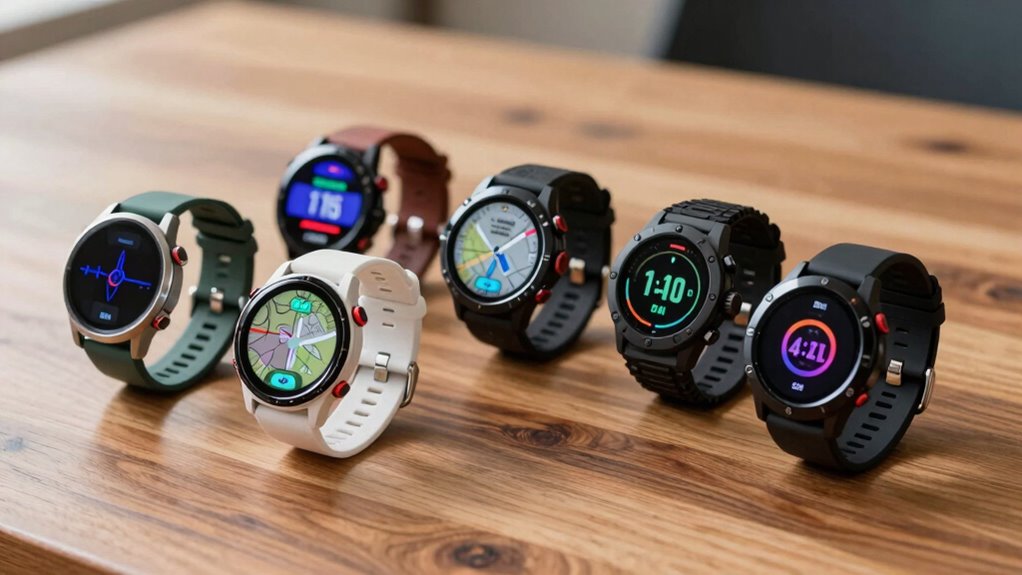

Finding the right running watch for triathlon training involves balancing advanced features with durability and battery life. The Garmin Forerunner 265 stands out as the best overall choice, thanks to its AMOLED display and multi-band GPS, which provide clear tracking and detailed metrics. The Wahoo ELEMNT RIVAL is a strong contender for multisport versatility, while the COROS PACE 4 offers impressive battery life and lightweight design for long training sessions. However, each option involves tradeoffs, such as screen quality versus battery longevity or multisport features versus simplicity. Continue reading to explore how these watches compare and which one best fits your training needs.

Get workout gear delivered free with Prime
- Fast, free delivery on millions of items
- Prime Video, Amazon Music and more included
- Member-only deals all year
Complete the kit



Key Takeaways
- The Garmin Forerunner 265 excels in display quality and detailed metrics, making it ideal for serious triathletes.
- Battery life remains a critical factor, with models like the COROS PACE 4 prioritizing long-lasting power for extended sessions.
- Multisport features are more comprehensive in watches like the Garmin Forerunner 970 and Wahoo ELEMNT RIVAL, but they can add complexity and cost.
- Lightweight and comfortable design, as seen in the COROS PACE 3 and 4, benefit long training days but may sacrifice some screen size or features.
- Pricing varies widely, with premium models offering extensive features and entry-level options providing solid value without all bells and whistles.
| Garmin Forerunner 265 Running Smartwatch, 46mm, AMOLED Display, Multi-Band GPS, Training & Recovery Metrics, Black and Powder Gray |  | Best Overall for Serious Triathletes | Display: 1.3 inch AMOLED touchscreen | Battery Life: Up to 13 days in smartwatch mode, 20 hours in GPS mode | Size: 46mm | VIEW ON AMAZON | See Our Full Breakdown |
| Garmin Forerunner 165 Running Smartwatch with AMOLED Display and GPS |  | Best for Budget-Conscious Enthusiasts | Display: AMOLED touchscreen | Size: 43 mm | Battery Life: Up to 11 days in smartwatch mode, 19 hours in GPS mode | VIEW ON AMAZON | See Our Full Breakdown |
| Wahoo ELEMNT RIVAL Running/Multisport GPS Smartwatch |  | Best for Multi-Discipline Athletes | Display Resolution: 240×240 | Display Type: LCD, 64-color | Screen Material: Gorilla Glass | VIEW ON AMAZON | See Our Full Breakdown |
| Garmin Forerunner 935 Running GPS Watch (Black) |  | Best for Performance-Focused Runners | Strap Material: Silicone | Water Resistance: Yes | Weight: 49 grams | VIEW ON AMAZON | See Our Full Breakdown |
| COROS PACE 3 GPS Sport Watch – Lightweight Running Watch with 17-Day Battery Life, Heart Rate Monitor, Navigation, Sleep Tracking, Black Silicone |  | Best for Long-Distance and Multi-Activity Training | Weight: 30g | Display: 1.2-inch Always-On Transflective Touchscreen | Battery Life: 38 hours GPS, 24 days daily use | VIEW ON AMAZON | See Our Full Breakdown |
| COROS PACE 4 Ultralight Sport GPS Watch, 1.2″ AMOLED Touchscreen, 19 Days Battery, Voice Features, Advanced Training Tools, Heart Rate Monitor |  | Best for Lightweight Comfort and Long Battery Life | Weight: 32g | Thickness: 11.8mm | Display: 1.2″ AMOLED touchscreen | VIEW ON AMAZON | See Our Full Breakdown |
| Garmin Forerunner 935 Running GPS Watch (Black) – Renewed |  | Best for Multisport Versatility and Performance Insights | Weight: 49 grams | Features: GPS, wrist-based HR, barometer, altimeter, electronic compass | VIEW ON AMAZON | See Our Full Breakdown | |
| Garmin Forerunner 965 Running Smartwatch, AMOLED Display, Training Metrics, Built-in Maps, Music Storage, Black and Powder Gray |  | Best for Advanced Training and Smart Features | Display: 1.4-inch AMOLED touchscreen | Battery Life: Up to 23 days in smartwatch mode | Materials: Titanium bezel | VIEW ON AMAZON | See Our Full Breakdown |
| Garmin Forerunner 970 Premium GPS Running and Triathlon Smartwatch |  | Best for Cutting-Edge Metrics and Durability | Display: 1.4-inch AMOLED touchscreen | Lens: Sapphire | Bezel: Titanium | VIEW ON AMAZON | See Our Full Breakdown |
| Garmin Forerunner 570 47mm Advanced GPS Running and Triathlon Smartwatch with AMOLED Display |  | Best for All-in-One Training and Safety Features | Display: AMOLED touchscreen | Size: 47mm | Battery Life: Up to 11 days in smartwatch mode | VIEW ON AMAZON | See Our Full Breakdown |
| running watch for triathlon training | Battery Life | Display |
|---|---|---|
| Garmin Forerunner 265 Running | Up to 13 days in smartwatch mode, 20 hours in GPS mode | 1.3 inch AMOLED touchscreen |
| Garmin Forerunner 165 Running | Up to 11 days in smartwatch mode, 19 hours in GPS mode | AMOLED touchscreen |
| Wahoo ELEMNT RIVAL Running/Mul | — | — |
| Garmin Forerunner 935 Running | Up to 24 hours in GPS mode | — |
| COROS PACE 3 GPS Sport Watch | 38 hours GPS, 24 days daily use | 1.2-inch Always-On Transflective Touchscreen |
| COROS PACE 4 Ultralight Sport | Up to 19 days | 1.2" AMOLED touchscreen |
| Garmin Forerunner 935 Running | — | — |
| Garmin Forerunner 965 Running | Up to 23 days in smartwatch mode | 1.4-inch AMOLED touchscreen |
| Garmin Forerunner 970 Premium | Up to 15 days in smartwatch mode | 1.4-inch AMOLED touchscreen |
| Garmin Forerunner 570 47mm Adv | Up to 11 days in smartwatch mode | AMOLED touchscreen |
More Details on Our Top Picks
Garmin Forerunner 265 Running Smartwatch, 46mm, AMOLED Display, Multi-Band GPS, Training & Recovery Metrics, Black and Powder Gray
The Garmin Forerunner 265 stands out for its vibrant AMOLED display and extensive training metrics, making it ideal for triathletes who want detailed insights without sacrificing style. Compared to the Garmin Forerunner 165, it offers a larger 1.3-inch screen and multi-band GPS, providing more precise tracking in challenging environments. Its long battery life—up to 13 days—supports extended training, but its complex features can be overwhelming for newcomers. The watch supports numerous activity profiles, including swimming and cycling, making it versatile for all triathlon disciplines. However, the array of features means a learning curve, and its premium price might deter casual users. For those committed to serious training and value a comprehensive, customizable experience, this model justifies its cost.
Pros:- Vibrant AMOLED display with touch and button controls
- Up to 13 days of battery life supports long sessions
- Extensive training and health metrics for personalized insights
- Supports multiple activity profiles including swimming and cycling
Cons:- Complex feature set may require time to master
- Requires smartphone for some safety and notification features
- Premium price may be prohibitive for casual athletes
Best for: Advanced triathletes and dedicated runners seeking detailed metrics and long battery life.
Not ideal for: Casual runners or beginners who need a simple, budget-friendly option without extensive features.
- Display:1.3 inch AMOLED touchscreen
- Battery Life:Up to 13 days in smartwatch mode, 20 hours in GPS mode
- Size:46mm
- Connectivity:Multi-band GNSS with SatIQ, smart notifications, Garmin Pay
- Activities:Over 30 profiles including triathlon, swimming, cycling
- Health Monitoring:Sleep, HRV, recovery, training readiness
Our verdict“This watch is best suited for committed triathletes who prioritize detailed data and long battery life over simplicity.”
Garmin Forerunner 165 Running Smartwatch with AMOLED Display and GPS
The Garmin Forerunner 165 offers a bright AMOLED display and built-in GPS at a more accessible price point compared to the Garmin Forerunner 265. Its 43 mm size makes it lighter and less bulky, perfect for those new to multisport tracking. While it supports over 25 activity profiles—including running, cycling, and HIIT—it lacks some of the advanced recovery metrics found on higher-end models. Battery life is respectable, with up to 11 days in smartwatch mode, but it’s limited to 50 meters water resistance, which isn’t ideal for deep-water swimming or diving. The watch’s interface is user-friendly, but some features require setup through the app, and it doesn’t have multi-band GPS, which might impact accuracy in dense urban areas. This model makes the most sense for entry-level triathletes who want solid features without a steep price.
Pros:- Bright AMOLED display with intuitive controls
- Long battery life supports extended training
- Multiple activity profiles for versatile workouts
- Lightweight and comfortable for daily wear
Cons:- Limited water resistance for deep water activities
- No multi-band GPS, affecting accuracy in urban areas
- Features require setup via smartphone app
Best for: Beginner triathletes or runners looking for a reliable, easy-to-use smartwatch with good battery life.
Not ideal for: Experienced athletes or those needing advanced recovery metrics and multi-band GPS for challenging environments.
- Display:AMOLED touchscreen
- Size:43 mm
- Battery Life:Up to 11 days in smartwatch mode, 19 hours in GPS mode
- Water Resistance:50 meters
- Built-in GPS:Yes
- Activities:Running, cycling, HIIT, strength
Our verdict“Ideal for beginner and intermediate triathletes seeking a straightforward, reliable GPS watch with good battery life.”
Wahoo ELEMNT RIVAL Running/Multisport GPS Smartwatch
The Wahoo ELEMNT RIVAL shines as a multisport-focused watch, especially appealing for athletes who train across various disciplines, including triathlon. Its automatic tracking of race segments and seamless data sharing with apps like TrainingPeaks provide a competitive edge. The 240×240 LCD display, with a Gorilla Glass cover, offers durability and good visibility in different lighting conditions. Unlike Garmin’s more feature-rich options, it has fewer pre-loaded workouts—only 12—but excels in multisport transitions, making it a favorite for race day. The lack of detailed recovery metrics and limited activity profiles could be drawbacks for serious data junkies. Furthermore, battery life isn’t specified, which could be a concern for extended sessions. This pick makes the most sense for multisport athletes who prioritize ease of use and durability.
Pros:- Automatic transition tracking for multisport events
- Bright, impact-resistant Gorilla Glass display
- Easy data sharing with compatible apps and sensors
- Durable and impact-resistant design
Cons:- Limited pre-loaded workouts beyond 12 sessions
- Battery life details are not specified, which may be a concern
- Less comprehensive recovery metrics than some competitors
Best for: Multi-discipline athletes seeking automatic tracking and seamless data sharing during training and races.
Not ideal for: Athletes who want extensive pre-loaded workouts or detailed recovery insights in a smartwatch.
- Display Resolution:240×240
- Display Type:LCD, 64-color
- Screen Material:Gorilla Glass
- Supported Activities:Running, swimming, cycling, multisport
- Connectivity:Wireless sensors, smartphone app
- Pre-loaded Workouts:12
Our verdict“Perfect for multisport athletes prioritizing durability and race-day features over extensive training analytics.”
Garmin Forerunner 935 Running GPS Watch (Black)
The Garmin Forerunner 935 remains a favorite among serious runners and triathletes due to its lightweight design and advanced multisport capabilities. Its wrist-based heart rate monitoring and elevation data support detailed performance analysis, comparable to newer models like the Forerunner 265 but with a simpler interface. While it lacks the color touchscreen of current models, its buttons provide reliable control in all conditions. The watch’s water resistance suits all-day wear and swimming, but the learning curve can be steep for those unfamiliar with Garmin’s ecosystem. It also requires a smartphone for full functionality, which may be inconvenient for some athletes. Overall, this model offers robust tracking at a lower price point, making it ideal for experienced athletes who prioritize performance data over the latest features.
Pros:- Lightweight and comfortable for all-day wear
- Advanced multisport and performance tracking
- Water-resistant and durable
- Long battery life in GPS mode
Cons:- Requires smartphone for full features
- No color touchscreen, which some may find less intuitive
- Older design compared to newer Garmin models
Best for: Experienced runners and triathletes who want detailed performance metrics without a touchscreen interface.
Not ideal for: Beginners or athletes seeking the latest smartwatch features and more intuitive controls.
- Strap Material:Silicone
- Water Resistance:Yes
- Weight:49 grams
- Features:Elevation data, multisport, training status
- Control Method:Buttons
- Battery Life:Up to 24 hours in GPS mode
Our verdict“Best suited for seasoned athletes who prefer detailed analytics and durability over modern touchscreen interfaces.”
COROS PACE 3 GPS Sport Watch – Lightweight Running Watch with 17-Day Battery Life, Heart Rate Monitor, Navigation, Sleep Tracking, Black Silicone
The COROS PACE 3 is tailored for athletes who prioritize battery longevity and versatility across multiple sports. Its 1.2-inch always-on transflective touchscreen is easy to read in bright sunlight, and the dual-frequency GPS ensures accurate tracking even in urban settings. Supporting a broad range of activities—running, cycling, swimming, skiing—it caters well to triathletes balancing multiple disciplines. With up to 38 hours of GPS use and 24 days on a single charge, it outperforms many competitors in endurance. Its lightweight design at only 30 grams adds comfort for long sessions. However, the limited color options and somewhat less responsive touchscreen in direct sunlight could be drawbacks for some users. This watch makes a compelling choice for those seeking endurance-focused, multi-sport tracking without the bulk.
Pros:- Lightweight and comfortable for all-day wear
- Exceptional battery life supporting ultra-distance training
- Accurate dual-frequency GPS in challenging environments
- Supports a wide variety of activities
Cons:- Limited color options, only available in black
- Touchscreen less responsive in very bright sunlight
- No built-in music storage or advanced smartwatch features
Best for: Endurance athletes and multi-sport enthusiasts needing extensive battery life and accurate GPS tracking.
Not ideal for: Casual athletes or those seeking a feature-rich touchscreen with music storage or extensive smartwatch features.
- Weight:30g
- Display:1.2-inch Always-On Transflective Touchscreen
- Battery Life:38 hours GPS, 24 days daily use
- GPS:Dual-Frequency Satellite
- Activity Modes:Run, trail run, bike, swim, strength, snowboard, ski, XC ski
- Connectivity:App sync for routes and navigation
Our verdict“Ideal for endurance-focused athletes who need reliable, multi-sport GPS with long-lasting battery life in a lightweight design.”
COROS PACE 4 Ultralight Sport GPS Watch, 1.2″ AMOLED Touchscreen, 19 Days Battery, Voice Features, Advanced Training Tools, Heart Rate Monitor
The COROS PACE 4 stands out for its ultralight design, making it ideal for athletes who prefer minimal bulk during long training sessions. Its vibrant 1.2″ AMOLED touchscreen provides clear visibility, even in bright conditions, and the impressive 19-day battery life supports extended training without frequent charging. Compared to the Garmin Forerunner 970, it offers a more comfortable fit for all-day wear but lacks some advanced multisport features like built-in maps. The touchscreen’s responsiveness may falter under intense activity, and it relies on a smartphone for full functionality. This pick makes the most sense for triathletes seeking a lightweight daily tracker with detailed metrics to refine recovery and performance.
Pros:- Ultra-lightweight and comfortable for all-day wear
- Vivid AMOLED display enhances visibility in various conditions
- Long battery life supports multi-day training cycles
- Includes advanced training and health metrics
Cons:- Limited color options may reduce personalization
- Touchscreen responsiveness can decline during high-intensity activities
- Requires smartphone for accessing full suite of features
Best for: Triathletes who prioritize comfort, extended battery life, and detailed health tracking.
Not ideal for: Athletes needing advanced multisport features like built-in maps or multi-sport auto-transition, as it lacks some of those capabilities.
- Weight:32g
- Thickness:11.8mm
- Display:1.2″ AMOLED touchscreen
- Battery Life:Up to 19 days
- GPS Usage:41 hours
- Heart Rate Monitor:Yes
Our verdict“This is a top choice for triathletes seeking a lightweight, long-lasting device for daily training and recovery insights.”
Garmin Forerunner 935 Running GPS Watch (Black) – Renewed
The Garmin Forerunner 935 excels in providing comprehensive multisport metrics, making it ideal for athletes who focus on running, cycling, and swimming. Its lightweight 49-gram frame ensures comfort for all-day wear, and features like wrist-based heart rate, barometric elevation, and an electronic compass give detailed insights unavailable in simpler models like the COROS Pace 4. However, being a renewed device, its condition can vary, and it lacks the bright display of newer models like the Garmin Forerunner 965. Its simpler interface and fewer smart features may be limiting for those looking for a more connected experience. This watch is best suited for serious multisport athletes who want detailed performance data at a reasonable price.
Pros:- Lightweight and comfortable for extended wear
- Advanced multisport tracking including elevation and navigation
- Wrist-based heart rate monitoring
- Reliable performance insights
Cons:- Refurbished condition may vary in reliability
- Limited color options reduce personalization
- Requires regular charging for continuous use
Best for: Multisport athletes who value detailed performance metrics and a lightweight design.
Not ideal for: Beginners or casual runners who prefer more straightforward displays and fewer features to manage.
- Weight:49 grams
- Features:GPS, wrist-based HR, barometer, altimeter, electronic compass
Our verdict“Ideal for multisport athletes wanting a feature-rich, lightweight GPS watch at a more accessible price point.”
Garmin Forerunner 965 Running Smartwatch, AMOLED Display, Training Metrics, Built-in Maps, Music Storage, Black and Powder Gray
The Garmin Forerunner 965 offers a vibrant 1.4-inch AMOLED touchscreen paired with extensive training tools like built-in maps, multi-sport profiles, and music storage. Its long 23-day battery life in smartwatch mode makes it suitable for marathon training and multi-week triathlon blocks. Compared to the Forerunner 970, it provides a more refined display and better overall user experience, although at a higher price. The interface can be complex, which might overwhelm beginners, and the premium features demand familiarity with Garmin’s ecosystem. This watch addresses the needs of dedicated triathletes and advanced runners seeking a comprehensive, connected device for detailed analytics and entertainment.
Pros:- Vivid AMOLED display with touch and physical buttons
- Long battery life for extended training
- Built-in maps and music storage enhance versatility
- Comprehensive training and recovery metrics
Cons:- Premium price point may be a barrier
- Features can be overwhelming for new users
- Heavy reliance on Garmin’s app ecosystem
Best for: Experienced triathletes and runners who want a high-performance, feature-packed smartwatch.
Not ideal for: Beginners or those on a tight budget, as its complexity and cost may be prohibitive.
- Display:1.4-inch AMOLED touchscreen
- Battery Life:Up to 23 days in smartwatch mode
- Materials:Titanium bezel
- Music Storage:Yes
Our verdict“Best suited for seasoned athletes who value a fully loaded smartwatch with advanced training, mapping, and entertainment features.”
Garmin Forerunner 970 Premium GPS Running and Triathlon Smartwatch
The Garmin Forerunner 970 combines a bright AMOLED display with a durable sapphire lens and lightweight titanium bezel, making it perfect for serious triathletes. Its advanced features include multi-band GPS, built-in maps, multiple multisport auto-transitions, and health tools like ECG and running dynamics—setting it apart from less advanced options like the Forerunner 935. Despite its high-end build and extensive capabilities, some features require additional sensors, and the price may be steep for casual athletes. Its long battery life of 15 days in smartwatch mode supports extended training cycles. This device is ideal for dedicated triathletes seeking a premium, highly capable tracker with durability and sophisticated metrics in mind.
Pros:- Bright AMOLED display with effortless controls
- Lightweight yet durable titanium and sapphire construction
- Multi-band GPS and full-color maps for precise navigation
- Advanced health metrics including ECG and running dynamics
Cons:- High price may be prohibitive for many users
- Some features depend on additional sensors or accessories
- Availability of ECG app varies by region
Best for: Elite triathletes and serious runners who need advanced metrics and durable hardware.
Not ideal for: Casual athletes or beginners who won’t utilize the high-end features or can’t justify the high cost.
- Display:1.4-inch AMOLED touchscreen
- Lens:Sapphire
- Bezel:Titanium
- Battery Life:Up to 15 days in smartwatch mode
- Features:Multi-band GPS, ECG, built-in maps, running dynamics
Our verdict“This is the ideal choice for elite athletes needing top-tier metrics, durability, and multisport versatility.”
Garmin Forerunner 570 47mm Advanced GPS Running and Triathlon Smartwatch with AMOLED Display
The Garmin Forerunner 570 offers a larger 47mm AMOLED display and comprehensive training tools, including personalized plans, health insights, incident detection, and Garmin Pay. Its extensive feature set makes it a strong contender for triathletes who want both performance data and safety features in one device. Compared to the Forerunner 965, its bigger display might be easier to read but adds bulk, making it less ideal for daily wear. The device’s smart features, like call handling, elevate its utility but can be overwhelming for newcomers. If safety, connectivity, and detailed training insights are priorities, this model makes a compelling choice.
Pros:- Bright AMOLED display with easy navigation
- Long-lasting battery for extended training
- Includes safety features like incident detection
- Personalized training plans and recovery metrics
Cons:- High price can be a barrier
- Size may be cumbersome for smaller wrists
- Feature-rich interface might be complex for beginners
Best for: Triathletes seeking a large, feature-rich device with safety and smart features combined.
Not ideal for: Athletes preferring a compact, lightweight device or those new to smartwatches, due to its size and complexity.
- Display:AMOLED touchscreen
- Size:47mm
- Battery Life:Up to 11 days in smartwatch mode
- Features:Training metrics, incident detection, Garmin Pay
Our verdict“This model is best suited for experienced triathletes who want safety, extensive training tools, and connectivity in one device.”

How We Picked
The watches in this roundup were selected based on their suitability for triathlon training, emphasizing performance, usability, and durability. We prioritized models with multisport capabilities, accurate GPS, and reliable battery life, since triathletes need to switch between swimming, cycling, and running seamlessly. Ease of use and the quality of display were also considered, as these impact training effectiveness and motivation. Finally, value for money played a role; we aimed to highlight options that balance features with affordability and longevity, ensuring there’s a recommendation for different budgets and experience levels.Factors to Consider When Choosing Running Watch For Triathlon Training
Choosing the right running watch for triathlon training requires assessing several key factors. It’s important to consider battery life, as triathlon sessions can last several hours, and a watch that runs out of juice mid-race can be a setback. Multisport functionality is essential for seamless transitioning between disciplines, but some watches handle this better than others. Display quality influences how easily you can read metrics during intense training or racing, especially in bright conditions. Additionally, durability and water resistance are critical since triathlons involve swimming and outdoor conditions. Finally, consider the overall ease of use and how well the watch integrates with other devices or training apps you rely on.Battery Life and Power Management
Battery life is arguably the most critical factor for long-distance triathlons or extended training days. Some watches, like the COROS PACE 4, offer up to 19 days of battery life in smartwatch mode, which is ideal for multi-day training or races. Others, like the Garmin Forerunner 265, provide around 24 hours in GPS mode, which might require backup plans or charging strategies. When choosing, consider how long your typical training sessions last, and whether the watch offers power-saving modes or quick charge features. Overestimating your needs can lead to disappointment if the device drains prematurely, so prioritize models with a proven long-lasting battery for your typical training volume.
Multisport and Transition Features
Triathlon training demands quick and accurate switching between swimming, cycling, and running modes. Watches like the Garmin Forerunner 970 and Wahoo ELEMNT RIVAL excel here, offering dedicated multisport modes with easy toggling and transition tracking. Some models automatically detect transitions, saving you time and effort during races. However, more advanced multisport features can add complexity and sometimes compromise battery life or user interface simplicity. Avoid models that require complicated setups or manual inputs unless you’re comfortable with detailed customization. The right device should streamline your transitions and reduce the cognitive load during a race.
Display Quality and Readability
Clear, bright displays help you monitor your data during training and races, especially in sunlight or high-intensity scenarios. AMOLED screens, like those on the Garmin Forerunner 265 and 965, provide vibrant visuals but tend to consume more power. Conversely, monochrome or transflective displays often extend battery life but may sacrifice visibility. Consider whether you prefer a touch screen or physical buttons for easier operation during activity, especially when wearing gloves or in wet conditions. A display that balances clarity with power efficiency will support better training decisions without draining your battery prematurely.
Durability and Water Resistance
Triathlons involve exposure to water and varying weather conditions, making durability and water resistance non-negotiable features. Look for watches with at least 5 ATM water resistance ratings, which allow safe swimming and rain exposure. Material quality also impacts longevity; rugged cases and flexible bands withstand sweat, salt, and rough handling better. Some models, like the Garmin Forerunner 935, are known for their robustness, but may lack newer features found in more recent models. Prioritize a device that can withstand your training environment without sacrificing comfort or functionality.
Ease of Use and Ecosystem Compatibility
Intuitive interfaces and seamless synchronization with training apps and devices improve the overall experience. Touchscreens can offer quick access to data, but physical buttons may be more reliable during vigorous activity. Compatibility with apps like Garmin Connect, Strava, or training platforms can enhance analysis and tracking. Consider whether the watch pairs well with your smartphone or other sensors, such as heart rate monitors or power meters. A user-friendly setup reduces frustration and allows you to focus on your training instead of wrestling with settings or connectivity issues.
Frequently Asked Questions
How long should a triathlon watch’s battery last?
For most triathlons, a battery life of at least 12-15 hours in GPS mode is recommended, ensuring the watch can cover the entire race without recharging. Many high-end models now offer 20+ hours, which is ideal for longer events or multi-day training. If you train extensively or participate in ultra-distance races, prioritize watches with longer battery endurance or quick charge features. Remember, battery performance can vary based on GPS accuracy, screen brightness, and usage of other features, so consider these factors when selecting a device.
Are multisport watches automatically switching between disciplines?
Many modern triathlon watches can automatically detect transitions and switch modes, reducing manual input during races. However, the accuracy of automatic detection varies—some models may require manual toggling or setup before the event. Automatic detection is convenient but can sometimes misfire if the sensors pick up unintended movements or water entries. If you prefer control over transitions, choose a watch with customizable manual modes. Ultimately, the best choice depends on your race style and whether you value convenience or precision.
Is a touchscreen necessary on a running watch?
Touchscreens can simplify navigation and data access, especially during training, but they may be less reliable in wet conditions or when wearing gloves. Physical buttons often provide more reliable control during high-intensity efforts or in rain. If you prioritize quick, one-handed operation and durability, a button-based interface might suit you better. However, if you prefer a modern, visually rich display, a touchscreen with glove-compatible features can enhance usability. Consider your training environment and personal preference when choosing between these input methods.
How important is GPS accuracy for triathlon training?
Precise GPS tracking is essential for evaluating your pace, distance, and route during training and races. Inaccurate GPS data can lead to misjudged performance metrics and training plans. Devices with multi-band GPS or dual-frequency support generally offer better accuracy, especially in challenging environments like dense forests or urban areas with tall buildings. While high accuracy often comes with increased power consumption, models like the Garmin Forerunner 265 strike a good balance. Accurate GPS helps you make meaningful improvements and monitor progress reliably.
Should I prioritize features or simplicity when choosing a triathlon watch?
Deciding between feature-rich and simple models depends on your experience level and training needs. Experienced triathletes often benefit from advanced metrics, multisport modes, and detailed analysis, justifying a more complex device. Beginners, however, may prefer a straightforward watch with core features like GPS, heart rate monitoring, and easy transition management. Overloading a watch with unnecessary features can lead to confusion or distraction during races, so choose a device that matches your familiarity and training intensity. A well-designed interface and reliable core functions often matter more than a long feature list.
Conclusion
For the dedicated triathlete seeking all-around performance, the Garmin Forerunner 265 offers a blend of advanced features, excellent display quality, and reliable GPS tracking—making it the best overall choice. Budget-conscious athletes or newcomers may find the Garmin Forerunner 165 or COROS PACE 3 provide strong value without sacrificing core functionality. For those prioritizing battery life and lightweight design, the COROS PACE 4 suits long training sessions and extended races. Serious competitors or those engaged in multi-day events should consider premium options like the Garmin Forerunner 970 for the most comprehensive multisport and training features. Ultimately, your choice should reflect your training volume, experience, and specific race needs.Halloween Picks
halloween
As an affiliate, we earn on qualifying purchases.