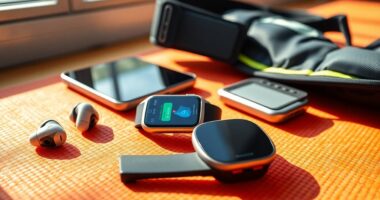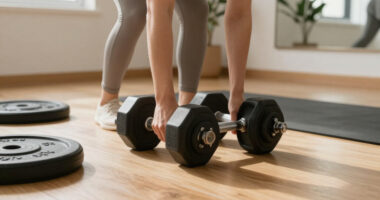
When it comes to improving flexibility and preventing injuries, the right stretching equipment can make a significant difference for runners. The best options provide targeted calf and leg stretches, are easy to use, and accommodate different flexibility levels. The TEMI Slant Board stands out as the overall top pick for its versatility and sturdy build, while the ProStretch Original Calf Stretcher excels in relieving plantar fasciitis. However, tradeoffs include price differences and setup complexity. Keep reading to see how these products compare and find the perfect fit for your running routine.

Get workout gear delivered free with Prime
- Fast, free delivery on millions of items
- Prime Video, Amazon Music and more included
- Member-only deals all year
Complete the kit


Key Takeaways
- The top picks balance adjustability with durability, ensuring they meet various runner needs.
- Items with additional features like resistance bands or training posters offer more comprehensive stretching routines.
- Folding or compact designs are better suited for those with limited space or who travel frequently.
- Price correlates with build quality and feature set, but the most expensive isn’t always the best for every runner.
- Most products excel at calf stretching but vary in their ability to target other lower-body muscles effectively.


| stretching equipment for runner | Material | Adjustable Angles |
|---|---|---|
| TEMI Slant Board for Calf-Stre | High-density wood | 20°, 25°, 30°, 40° |
| Slant Board for Calf Stretchin | Foam | 5 |
| Slant Board for Calf Stretchin | Wood, PVC, EVA | 5 |
| ProStretch Original Calf Stret | — | — |
| NArra Leg Stretcher Machine | High-quality steel | — |
| Adjustable Wooden Slant Board | Wood | — |
| Wooden Slant Board for Calf St | 11 layers of AA-grade poplar wood | 23°, 30°, 35°, 40°, 45° |
More Details on Our Top Picks
TEMI Slant Board for Calf-Stretching, Foot & Ankle Mobility, Portable Wooden Incline Wedge
The TEMI Slant Board stands out for its lightweight design and adjustable angles, making it ideal for runners who want a versatile tool for calf stretching, ankle mobility, and squat exercises. Compared with the NArra Leg Stretcher, which offers a deeper stretch range, the TEMI board is more portable and easier to store, though it sacrifices some of the extensive flexibility that the NArra provides. Its durable high-density wood and non-slip surface ensure safety during dynamic stretches, but the smaller size may not suit taller users or those needing larger support. This makes it a solid choice for runners seeking a compact, multi-use stretching aid for home or travel use.
Pros:- Lightweight and portable for easy transport and storage
- Durable high-density wooden construction with high weight capacity
- Adjustable incline angles for customized stretching and exercises
- Non-slip surface enhances safety during use
Cons:- Limited color options and aesthetics
- Requires proper setup to ensure stability during intense workouts
- May be too small for taller users or those needing larger support
Best for: Runners who need a lightweight, portable stretching solution that fits easily into their routine or travel kit
Not ideal for: Tall athletes or those requiring larger support surfaces, as its size may be limiting for taller users or certain exercises
- Weight:5 lbs
- Dimensions:11.8 x 15.7 x 1.2 inches
- Material:High-density wood
- Maximum Weight Capacity:500 lbs
- Adjustable Angles:20°, 25°, 30°, 40°
Our verdict“This pick is best for runners seeking a versatile, portable wedge that supports a variety of stretching and mobility exercises.”
Slant Board for Calf Stretching, Adjustable Angles, 480 lbs Capacity
This slant board emphasizes injury rehabilitation with its high weight capacity of 480 lbs and adjustable angles. It’s especially suited for physical therapy, helping recover from plantar fasciitis or Achilles issues, similar to the ProStretch Original. However, it’s made from foam, which may feel less stable under intense pressure, and lacks detailed non-slip features, so safety depends on careful use. While it excels in supporting heavier users, it might not offer the firm support some runners prefer for dynamic stretching. This makes it a solid option for those prioritizing injury recovery and adjustable support over firmness and advanced features.
Pros:- Adjustable angles for customized stretching
- Supports recovery from various foot and ankle injuries
- High weight capacity of 480 lbs
- Designed specifically for rehabilitative use
Cons:- May feel too soft or unstable for some users
- Limited information on non-slip features
- Design may not accommodate all foot sizes comfortably
Best for: Runners recovering from foot or ankle injuries needing a supportive, adjustable stretch aid
Not ideal for: Users seeking a firmer, more durable support surface for high-intensity stretching or dynamic exercises
- Weight Capacity:480 lbs
- Adjustable Angles:5
- Material:Foam
- Use:Calf stretch, physical therapy, exercise
Our verdict“Ideal for injured runners focused on gentle, adjustable stretches and recovery, though less suited for high-impact routines.”
Slant Board for Calf Stretching, Adjustable Portable Wooden Incline Board with Training Poster
The wooden slant board with included training poster offers a comprehensive package for runners looking to combine stretching with proper technique. Its adjustable angles and non-slip surface make it versatile for calf stretches, yoga, and physiotherapy, comparable to the Temi Slant Board. The inclusion of training materials helps ensure correct form, but the wooden construction may be less durable over time compared to plastic or metal alternatives, and it requires careful setup to prevent injury. This model is best suited for those who want guided routines and a portable, multi-use board for varied lower-leg exercises.
Pros:- Adjustable angles for diverse stretching and exercise options
- Includes training poster and instruction guide for proper technique
- Non-slip surface and base for safety
- Lightweight and portable for easy transport
Cons:- Wooden build may be less durable over time
- Limited to calf and lower leg exercises
- Requires careful setup to maximize safety
Best for: Runners who want a portable, instructional stretching setup for at-home or clinic use
Not ideal for: Advanced athletes seeking ultra-durable, high-impact support for vigorous routines
- Weight Capacity:300 lbs
- Material:Wood, PVC, EVA
- Adjustable Angles:5
- Includes:Training Poster, Instruction Guide
Our verdict“Best for beginners or those who prefer guided stretching routines with added instructional support.”
ProStretch Original Calf Stretcher for Plantar Fasciitis & Tight Calves
The ProStretch Original excels at providing targeted relief for heel and foot pain, especially for conditions like plantar fasciitis. Its unique rocker design mimics a natural gait motion, offering a deep, controlled stretch that’s physician-recommended. Compared to the simpler wooden slant boards, the ProStretch’s rocker gives a more dynamic stretch, but it requires wearing socks or shoes during use, which may be inconvenient for some. Its limited size—up to shoe size 12—and weight capacity of 250 lbs could exclude larger-footed or heavier users. This device is best suited for runners with specific foot pain issues seeking effective, deep calf and foot stretches.
Pros:- Effective in reducing heel and foot pain
- Physician-trusted and APMA accepted
- Slip-resistant for safe use
- Deep, targeted stretch for lower leg muscles
Cons:- Requires wearing socks or shoes during use
- Limited to shoe sizes up to 12
- Not suitable for users over 250 lbs
Best for: Runners with plantar fasciitis or tight calves needing targeted, deep stretching for pain relief
Not ideal for: Those looking for a versatile or multi-exercise stretching device, or larger-footed users
- Suitable Shoe Size:up to size 12
- Weight Limit:250 lbs
- Made in:U.S.A.
Our verdict“An excellent choice for runners with foot pain who need a deep, targeted stretch, though less suited for general flexibility or larger feet.”
NArra Leg Stretcher Machine, Adjustable Leg Stretch Training Machine, 330lbs Heavy Duty Leg Extension for Home Yoga Gym Fitness
The NArra Leg Stretcher Machine offers a sturdy, high-capacity option for deep leg stretches, supporting up to 330 lbs with an impressive 180° range. Its heavy-duty steel frame and comfortable padding make it suitable for rigorous use in home gyms or studios. Unlike the lightweight slant boards, this machine supports more intense stretching sessions, ideal for athletes aiming to improve flexibility significantly. However, its size and rigidity mean it’s less portable and unsuitable for use on carpets, requiring a smooth surface for operation. If space isn’t an issue, this device provides controlled, deep stretches for dedicated flexibility training.
Pros:- Durable, heavy-duty steel construction supports up to 330 lbs
- Adjustable stretching up to 180° for maximum flexibility
- Comfortable padding for extended use
- Easy to assemble with included tools
Cons:- Cannot be used on carpets or rugs
- Requires lubrication for smooth operation
- Large size may be impractical for small spaces
Best for: Serious runners or athletes seeking a durable, adjustable machine for intensive stretching routines at home or in gyms
Not ideal for: Users with limited space or those seeking a compact, portable stretch device for travel or light use
- Material:High-quality steel
- Max Weight Capacity:330 lbs
- Stretching Range:Up to 180°
- Padding Material:PU and foam
- Assembly:95% pre-assembled
Our verdict“Ideal for dedicated flexibility training in a home or gym setting, especially for users needing maximum stretch range and support.”
Adjustable Wooden Slant Board for Calf Stretching & Squats, 16″ x 12″, 5-Level Incline with Non-Slip Velour Surface & Resistance Bands
This adjustable wooden slant board stands out for its five incline levels, offering a tailored approach for calf stretching, mobility work, and squats. Compared with the Wooden Slant Board for Calf Stretching with Resistance Bands and Training Poster, it provides more incline options, making it suitable for users progressing in flexibility or strength. The sturdy wood construction combined with a non-slip velour surface ensures safety during intense sessions, but its size could be a drawback for those with limited space. While the included resistance bands add versatility, the lack of a detailed training guide might challenge beginners. Overall, this pick makes the most sense for runners who want a durable, multi-use tool that adapts to their evolving needs, especially if they value stability and customization.
Pros:- Multiple adjustable incline levels for personalized use
- Sturdy wooden construction with non-slip velour surface
- Versatile for stretching, squats, and mobility exercises
- Includes resistance bands for added workout options
Cons:- Size may be too large for small spaces
- Limited color options and aesthetic choices
Best for: Serious runners and rehab-focused users seeking a durable, adjustable board for both stretching and strength exercises
Not ideal for: Small apartment dwellers or those with limited storage space due to its size and bulk
- Dimensions:16″ x 12″
- Incline Levels:5
- Material:Wood
- Surface:Non-slip velour
- Includes:5 resistance bands
Our verdict“This board is best suited for dedicated runners who want a robust, adaptable tool for both flexibility and strength training in a spacious environment.”
Wooden Slant Board for Calf Stretching with Resistance Bands and Training Poster
This lightweight wooden slant board emphasizes portability and ease of use, making it ideal for recovery and light stretching routines. Its adjustable angles from 23° to 45° provide a range of stretching intensities, comparable to the Adjustable Wooden Slant Board for Calf Stretching & Squats, but with a focus on rehabilitation. The inclusion of resistance bands and a training poster adds value for users who prefer guided workouts or need targeted rehab exercises. While the board’s lightweight design (only 4.5 pounds) makes it easy to carry, its smaller surface area might limit its use for larger stretches or strength training. Proper guidance is recommended to prevent injury, especially for those unfamiliar with stretching techniques. Overall, this option is perfect for runners recovering from injury or those seeking a portable, beginner-friendly device.
Pros:- Adjustable angles for customizable stretching levels
- Includes resistance bands and a training poster for guided exercises
- Lightweight and portable for easy transport
- Supports recovery from foot and ankle injuries
Cons:- Requires proper guidance to avoid injury
- Limited to calf and foot rehabilitation, not suitable for full-body workouts
Best for: Rehabilitation-focused runners or users needing a portable, adjustable board for gentle stretching and foot recovery
Not ideal for: Advanced strength trainers or those seeking a device capable of supporting high-intensity workout routines
- Material:11 layers of AA-grade poplar wood
- Weight:4.5 pounds
- Weight Capacity:300 lbs
- Dimensions:11.77″ D x 15.55″ W x 1.38″ H
- Adjustable Angles:23°, 30°, 35°, 40°, 45°
- Resistance Bands:Yellow 0.5mm/15lbs, Red 0.6mm/25lbs
Our verdict“This board is an excellent choice for injury recovery and portability, especially for those new to stretching or in physiotherapy routines.”

How We Picked
Products were selected based on their build quality, adjustability, ease of use, and suitability for runners of different levels. We prioritized equipment that offers reliable stability and versatility, ensuring they can accommodate various stretching routines. The evaluation also considered user feedback on durability and comfort, with an emphasis on value for money. The ranking reflects a balance between performance, features, and affordability, aiming to help runners find equipment that enhances their flexibility without unnecessary complexity or expense.Factors to Consider When Choosing Stretching Equipment For Runners
Choosing the right stretching equipment for runners involves balancing several factors. First, consider adjustability—equipment that can be set to different angles or heights allows for a customized stretch suitable for your flexibility level. Durability is equally important; high-quality materials ensure safety and longevity, especially if you plan to use it frequently. Portability can be a game-changer for runners who travel or have limited space. Finally, additional features like resistance bands or instructional guides can offer more comprehensive routines, but they often come at a higher price. Understanding these factors helps you pick equipment that truly supports your running goals.Adjustability and Versatility
Look for equipment that offers multiple angles or heights, enabling you to target different muscle groups and progress as your flexibility improves. Adjustable boards or stretchers can adapt to your needs, making them suitable for beginners and advanced runners alike. Avoid products with fixed positions that limit your range of motion or require additional accessories for variation, as these can restrict your training potential and lead to plateaus.
Build Quality and Durability
Since you’ll be applying consistent pressure during stretches, investing in sturdy, well-made materials like solid wood or high-grade plastics is wise. Cheaper options may warp or break over time, especially with regular use. A stable base and non-slip surfaces not only improve safety but also ensure the equipment stays in place during intense stretching routines, reducing the risk of injury.
Portability and Storage
If you travel frequently or have limited space at home, consider foldable or lightweight options. Compact designs that can be stored easily help maintain consistency in your stretching routine without cluttering your area. However, keep in mind that lighter, portable models might compromise on stability and durability, so finding the right balance is key.
Additional Features and Accessories
Extras like resistance bands or training posters can enhance your stretching routines, providing guided exercises and extra resistance for strength building. These features are especially valuable for runners recovering from injuries or looking to improve overall flexibility. However, they typically increase the cost, so evaluate whether these additions align with your goals and budget.
Price and Value
While premium equipment often offers better durability and more features, there are affordable options that deliver good value for casual or beginner runners. Consider how often you’ll use the equipment and whether investing more upfront will save you money in the long run through durability and versatility. Be wary of very cheap products that might pose safety risks or fail quickly, undermining your training efforts.
Frequently Asked Questions
Can I use these stretching tools if I have existing injuries?
Yes, but with caution. Stretching equipment can be beneficial for recovery and injury prevention, but it’s important to consult with a healthcare professional before starting any new routines. Some tools may help alleviate tightness or improve mobility, but over-stretching or using improper techniques can worsen certain conditions. Always start slowly and follow guided exercises if available to avoid aggravating injuries.
Are adjustable slant boards suitable for beginners?
Absolutely. Adjustable slant boards are designed to accommodate various flexibility levels, making them accessible for beginners. Starting with low incline angles helps prevent overstretching, and as flexibility improves, you can increase the angle gradually. They are also straightforward to use, providing a safe way to develop lower-leg flexibility essential for runners.
What features should I prioritize if I want a multi-use stretching device?
If you’re looking for a multi-use device, focus on models that offer adjustable angles, resistance bands, and instructional guides. These features allow you to target different muscle groups and incorporate strength-building elements into your routine. Keep in mind that more features often mean higher cost and complexity, so choose a model that matches your current skill level and goals.
How important is portability for stretching equipment?
Portability can be vital if you travel frequently or have limited space at home. Compact, foldable, or lightweight designs make it easier to stay consistent with your stretching routine regardless of location. However, portability sometimes compromises stability or durability, so weigh your need for mobility against the quality and safety of the equipment.
Is it better to buy a dedicated calf stretcher or a multi-purpose board?
Choosing between a dedicated calf stretcher and a multi-purpose board depends on your specific needs. Dedicated calf stretchers usually excel at targeting that area alone, making them ideal for runners focusing on calf flexibility. Multi-purpose boards, however, can offer a broader range of stretches for various muscles, providing more value if you want an all-in-one solution. Consider your primary focus and space constraints when making the decision.
Conclusion
For runners seeking a versatile, durable, and easy-to-use solution, the TEMI Slant Board stands out as the best overall choice. Beginners or those on a budget may prefer the Adjustable Wooden Slant Board for its simplicity and affordability. Athletes dealing with specific issues like plantar fasciitis will find the ProStretch Original Calf Stretcher particularly effective. For those who want a comprehensive setup with resistance bands and training guides, investing in a model like the Wooden Slant Board with Resistance Bands can provide added value. Ultimately, your choice should align with your flexibility goals, space, and budget, ensuring your stretching routine supports consistent, injury-free running.
Halloween Picks
halloween
As an affiliate, we earn on qualifying purchases.