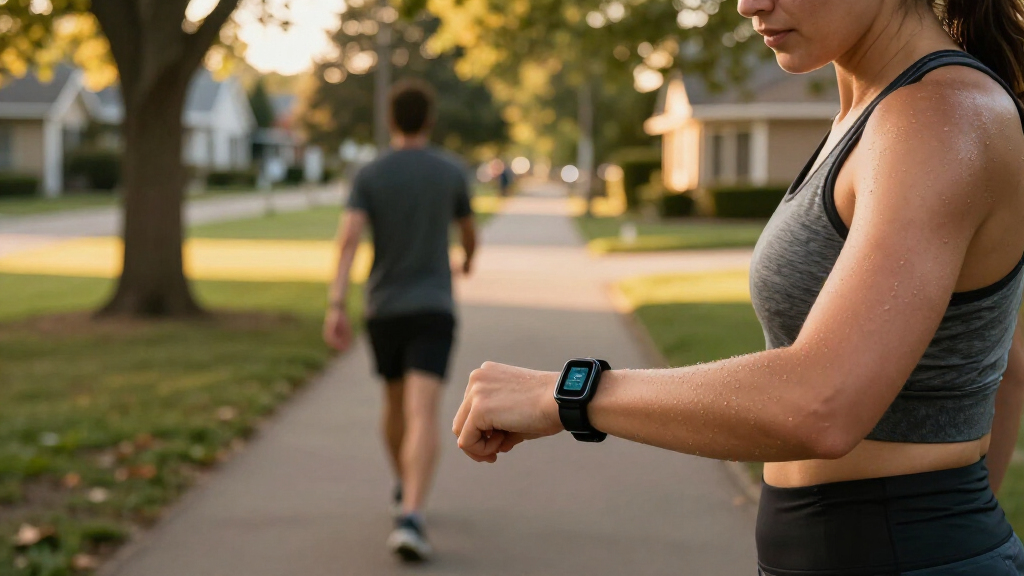

Zepp Health has carved out a distinct space in the wearable market by balancing affordability with serious athletic features. When I evaluate the current lineup, the Amazfit Bip Max emerges as the most versatile option for runners and outdoor enthusiasts who need standalone GPS and a large, bright display. For those prioritizing discreet health monitoring without the distraction of a screen, the Amazfit Helio Strap offers a unique screenless design that excels in sleep and recovery tracking. Meanwhile, the Amazfit Band 7 remains a compelling entry-level choice for users who want essential metrics on a budget. The main tradeoff across this range is between screen utility and battery longevity. A larger AMOLED display provides better data visibility but drains power faster, whereas minimalist trackers like the Helio Strap or Band 7 prioritize multi-day endurance and lightweight comfort. Choosing the right device depends entirely on whether you value interactive navigation and notifications or silent, unobtrusive health data collection.

Get workout gear delivered free with Prime
- Fast, free delivery on millions of items
- Prime Video, Amazon Music and more included
- Member-only deals all year
Complete the kit


Key Takeaways
- The Amazfit Bip Max offers the best standalone GPS performance and brightest display for outdoor athletes.
- The Amazfit Helio Strap is the only screenless option, ideal for sleep tracking and minimal distraction.
- The Amazfit Band 7 provides the most affordable entry point with solid basic health metrics.
- The Amazfit Bip 6 strikes a balance between smartwatch features and traditional fitness tracker lightweight design.
- Battery life ranges from 10 days on the Helio Strap to 20 days on the Bip Max, depending on usage intensity.
| Amazfit Bip Max Smartwatch with 2.07-Inch AMOLED Display and GPS |  | Best Overall for Outdoor Athletes | Display: 2.07-inch AMOLED | GPS: Built-in, 5 satellite systems | Battery Life: Up to 20 days | VIEW LATEST PRICE | See Our Full Breakdown |
| Amazfit Helio Strap Screenless Activity Tracker |  | Best for Sleep and Recovery Tracking | Display: None | GPS: No GPS | Battery Life: Up to 10 days | VIEW LATEST PRICE | See Our Full Breakdown |
| Amazfit Band 7 Fitness Tracker with 1.47-Inch AMOLED Display |  | Best Value for Beginners | Display: 1.47-inch AMOLED | GPS: Via smartphone | Battery Life: Up to 18 days | VIEW LATEST PRICE | See Our Full Breakdown |
| Amazfit Bip 6 Smartwatch with 1.97-Inch AMOLED Display |  | Best Balanced Smartwatch Tracker | Display: 1.97-inch AMOLED | GPS: Built-in, 4 satellite systems | Battery Life: Up to 14 days | VIEW LATEST PRICE | See Our Full Breakdown |
| Zepp Health fitness tracker | Display | GPS | Battery Life | Water Resistance |
|---|---|---|---|---|
| Amazfit Bip Max Smartwatch wit | 2.07-inch AMOLED | Built-in, 5 satellite systems | Up to 20 days | 50 meters |
| Amazfit Helio Strap Screenless | None | No GPS | Up to 10 days | 50 meters |
| Amazfit Band 7 Fitness Tracker | 1.47-inch AMOLED | Via smartphone | Up to 18 days | 50 meters |
| Amazfit Bip 6 Smartwatch with | 1.97-inch AMOLED | Built-in, 4 satellite systems | Up to 14 days | 50 meters |
More Details on Our Top Picks
Amazfit Bip Max Smartwatch with 2.07-Inch AMOLED Display and GPS
The Amazfit Bip Max stands out as the most capable all-around fitness tracker in this lineup, primarily due to its 2.07-inch AMOLED display. This screen is significantly larger than the Band 7 or the Helio Strap, offering a canvas that makes reading maps and workout stats effortless. The 3000-nit peak brightness ensures that visibility is not compromised even under direct sunlight, a feature that is often lacking in budget-focused trackers. Compared to the Amazfit Bip 6, the Bip Max offers a slightly larger display and more robust offline map capabilities, making it the superior choice for hikers and trail runners who need reliable navigation without a phone. The built-in GPS supports five satellite systems, providing faster lock times and greater accuracy in dense urban environments or deep forests. However, this capability comes with a tradeoff in size. The device is physically larger and heavier than the Band 7, which may feel cumbersome for users with smaller wrists or those who prefer a minimalist aesthetic. The aluminum alloy case adds durability but also weight, distinguishing it from the plastic-bodied Band 7. For those who prioritize data visibility and standalone functionality over compactness, this model is the definitive leader.
Pros:- Massive 2.07-inch AMOLED display with 3000-nit brightness for excellent outdoor visibility
- Standalone GPS with support for five satellite systems ensures accurate route tracking
- Up to 20 days of battery life supports long training cycles without frequent charging
- 4 GB of onboard storage allows for extensive music and map caching
Cons:- Larger physical footprint may feel bulky on smaller wrists
- The standard silicone band lacks premium texture compared to metal or leather alternatives
- Heavier than screenless or band-style alternatives
Best for: Runners, hikers, and cyclists who need accurate standalone GPS and a large, readable display for navigation.
Not ideal for: Users with small wrists or those who prefer a lightweight, discreet device for all-day wear.
- Display:2.07-inch AMOLED
- GPS:Built-in, 5 satellite systems
- Battery Life:Up to 20 days
- Water Resistance:50 meters
- Case Material:Aluminum alloy
- Weight:1.86 oz
- Storage:4 GB
- Sports Modes:150+
Our verdict“This is the go-to choice for athletes who view their tracker as a navigation tool as much as a health monitor.”
Amazfit Helio Strap Screenless Activity Tracker
The Amazfit Helio Strap takes a radically different approach by eliminating the screen entirely. This design choice is its greatest strength for users who find smartwatches intrusive during sleep or work. Without a display, the device focuses purely on sensor accuracy and comfort, utilizing a soft nylon band that is less likely to cause skin irritation than the silicone straps found on the Amazfit Bip Max or Bip 6. It is specifically optimized for recovery metrics, offering detailed insights into heart rate variability and sleep stages through the Zepp app. Compared to the Amazfit Band 7, the Helio Strap lacks visual feedback, meaning you cannot check your heart rate or time on the wrist instantly. You must rely on your phone for real-time data. This makes it less suitable for interval training where immediate feedback is crucial. However, for long-distance runners or strength athletes who want to track effort without distraction, it provides a seamless experience. The lack of GPS means it relies on your phone for location data, a limitation compared to the standalone GPS of the Bip Max. Yet, for indoor gym sessions and sleep monitoring, its lightweight form factor and 10-day battery life make it a compelling, low-maintenance option.
Pros:- Screenless design eliminates light pollution and distractions during sleep
- Lightweight nylon strap offers superior comfort for 24/7 wear
- Specialized metrics for strength training and HYROX Race mode
- Up to 10 days of battery life with minimal charging frequency
Cons:- No built-in GPS, requiring a smartphone for location tracking
- Lacks any visual display for immediate data feedback
- Requires a compatible phone for all app features and syncing
Best for: Users who prioritize sleep quality, recovery metrics, and a distraction-free experience without a screen.
Not ideal for: Runners who need standalone GPS or anyone who wants to view stats directly on their wrist.
- Display:None
- GPS:No GPS
- Battery Life:Up to 10 days
- Water Resistance:50 meters
- Band Material:Nylon
- Sports Modes:27
- Metrics Measured:Heart rate, sleep, stress
- Connectivity:Bluetooth
Our verdict“An excellent choice for data nerds and recovery-focused athletes who prefer a minimalist, screenless wearable.”
Amazfit Band 7 Fitness Tracker with 1.47-Inch AMOLED Display
The Amazfit Band 7 serves as the accessible entry point into the Zepp ecosystem, offering a surprising amount of functionality for its size. Its 1.47-inch AMOLED display is small but crisp, providing enough real estate for notifications and basic stats without the bulk of the Amazfit Bip Max. This model is ideal for beginners who want to track heart rate, sleep, and blood oxygen without committing to a larger, more expensive smartwatch. Compared to the screenless Helio Strap, the Band 7 offers immediate visual feedback, allowing you to check your pace or heart rate zone without pulling out your phone. However, it lacks built-in GPS, meaning you must carry your smartphone to track distance and route, a significant drawback for runners who prefer phone-free workouts. The plastic case construction feels less durable than the aluminum alloy of the Bip Max or Bip 6, but this also contributes to its lightweight profile. With up to 18 days of battery life, it offers competitive endurance. It is a pragmatic choice for casual walkers, gym-goers, and those new to fitness tracking who need reliable core metrics without advanced navigation features.
Pros:- Affordable price point with a high-quality AMOLED display
- Up to 18 days of battery life, or 28 days in battery-saver mode
- Includes built-in Amazon Alexa for voice control
- Lightweight and comfortable for all-day wear
Cons:- No built-in GPS; relies on smartphone for location tracking
- Plastic case material feels less premium than metal alternatives
- Smaller display may be difficult to read for some users
Best for: Budget-conscious buyers and beginners who want essential health metrics and basic notifications.
Not ideal for: Serious runners or hikers who need standalone GPS and advanced mapping capabilities.
- Display:1.47-inch AMOLED
- GPS:Via smartphone
- Battery Life:Up to 18 days
- Water Resistance:50 meters
- Case Material:Plastic
- Sports Modes:120
- Voice Assistant:Amazon Alexa
- Operating System:Zepp OS
Our verdict“A solid, no-frills tracker that delivers excellent value for users who don’t need advanced athletic features.”
Amazfit Bip 6 Smartwatch with 1.97-Inch AMOLED Display
The Amazfit Bip 6 occupies the sweet spot between the minimalist Band 7 and the feature-heavy Bip Max. It features a 1.97-inch AMOLED display, which is slightly smaller than the Bip Max but still large enough for clear readability and map viewing. This model is designed for users who want smartwatch functionality, including standalone GPS and downloadable maps, but prefer a lighter and more compact form factor. Compared to the Band 7, the Bip 6 offers significant advantages in navigation and connectivity, including built-in GPS and a more robust processor for smoother app interactions. However, it has a shorter battery life of up to 14 days, compared to the 18 days of the Band 7 and 20 days of the Bip Max. This reduction is likely due to the more active GPS usage and larger battery drain from the advanced features. The aluminum case provides a premium feel similar to the Bip Max, but the overall device is more manageable on the wrist. It is the best option for those who want a true smartwatch experience with fitness tracking, but find the Bip Max too large and the Band 7 too limited in scope.
Pros:- Bright 1.97-inch AMOLED display readable in sunlight
- Built-in GPS with downloadable maps and turn-by-turn directions
- Lightweight aluminum build offers a premium feel
- Up to 14 days of battery life supports weekly charging
Cons:- Requires Android 7.0+ or iOS 14.0+ for full functionality
- Some features depend on a connected smartphone
- Shorter battery life compared to the Bip Max and Band 7
Best for: Users who want a balance of smartwatch features, GPS, and a lightweight design without the bulk of the Bip Max.
Not ideal for: Those who need maximum battery life or the largest possible display for map navigation.
- Display:1.97-inch AMOLED
- GPS:Built-in, 4 satellite systems
- Battery Life:Up to 14 days
- Water Resistance:50 meters
- Case Material:Aluminum
- Weight:Lightweight
- Sports Modes:140+
- Compatibility:Android 7.0+ / iOS 14.0+
Our verdict“The most versatile choice for daily wearers who want GPS and smart features in a compact package.”
How We Picked
I selected these four devices based on their distinct roles within the Zepp Health ecosystem and their ability to serve different types of users. My primary criterion was the balance between hardware capability and practical usability. I looked for devices that offer clear differentiation in terms of display technology, GPS integration, and battery efficiency. The Amazfit Bip Max was chosen for its superior display brightness and standalone navigation features, which are critical for serious runners. The Amazfit Helio Strap made the list because it represents a growing trend toward screenless health monitoring, appealing to users who find smartwatches intrusive during sleep. The Amazfit Band 7 was included as a benchmark for value, offering essential metrics at a lower price point without sacrificing core accuracy. Finally, the Amazfit Bip 6 serves as the middle ground, providing smartwatch functionality without the bulk or cost of premium competitors. I excluded devices with outdated sensors or poor app support, ensuring that every recommendation reflects the current state of Zepp OS and sensor accuracy in 2027.
| Zepp Health fitness tracker | GPS | Battery Life | Case Material |
|---|---|---|---|
| Amazfit Bip Max Smartwatch wit | Built-in, 5 satellite systems | Up to 20 days | Aluminum alloy |
| Amazfit Helio Strap Screenless | No GPS | Up to 10 days | — |
| Amazfit Band 7 Fitness Tracker | Via smartphone | Up to 18 days | Plastic |
| Amazfit Bip 6 Smartwatch with | Built-in, 4 satellite systems | Up to 14 days | Aluminum |
Factors to Consider When Choosing Best Zepp Health Fitness Trackers
Selecting the right Zepp Health tracker requires understanding how you intend to use the device. The differences between these four models are not just about price, but about philosophy: screen vs. no screen, standalone GPS vs. phone-dependent, and lightweight vs. feature-rich.Display Technology and Visibility
The Amazfit Bip Max and Bip 6 utilize large AMOLED displays that offer vibrant colors and deep blacks. The 3000-nit brightness of the Bip Max is a standout feature, ensuring that maps and stats are legible even in harsh sunlight. In contrast, the Band 7 has a smaller screen that is adequate for notifications but less useful for detailed data analysis. The Helio Strap has no display at all, relying entirely on the Zepp app on your phone. If you value quick glances at your metrics, choose a device with a screen. If you prefer to avoid screen distractions, the Helio Strap is the only viable option in this group.
GPS and Navigation Capabilities
Built-in GPS is a major differentiator. The Bip Max and Bip 6 both feature standalone GPS, allowing you to leave your phone at home during runs or hikes. The Bip Max supports five satellite systems, offering slightly better accuracy in challenging environments compared to the Bip 6’s four. The Band 7 and Helio Strap require a connected smartphone to track distance and pace. For serious athletes who train in remote areas or prefer a phone-free experience, a model with built-in GPS is non-negotiable. For casual walkers who always carry their phone, the lack of GPS is a minor inconvenience that saves on battery and cost.
Battery Life and Charging Frequency
Battery endurance varies significantly across the lineup. The Bip Max leads with up to 20 days, followed by the Band 7 at 18 days, the Bip 6 at 14 days, and the Helio Strap at 10 days. These figures assume typical usage; intensive GPS tracking will reduce these times. The Helio Strap’s 10-day life is still respectable given its lightweight design, but the Bip Max’s ability to last three weeks on a single charge makes it ideal for long-distance travelers or those who dislike frequent charging routines. Consider how often you are willing to plug in your device when making your choice.
Comfort and Wearability
Comfort is subjective but heavily influenced by materials. The Helio Strap uses a soft nylon band that is breathable and less likely to cause sweat rash, making it superior for sleep and all-day wear. The Bip Max and Bip 6 use silicone bands and aluminum cases, which are durable but can feel heavier. The Band 7 is the lightest of the screen-equipped options due to its plastic case. Users with sensitive skin or small wrists may find the larger watches cumbersome, while those who prefer a substantial, premium feel will lean toward the aluminum models.
Frequently Asked Questions
Do I need a subscription to use these trackers?
No, Zepp Health does not require a paid subscription for basic tracking features. All core metrics such as heart rate, sleep, steps, and GPS tracking are available for free through the Zepp app. Unlike some competitors that lock advanced health insights behind a paywall, Zepp provides access to detailed data, including sleep stages and stress levels, without any recurring fees. This makes the ecosystem particularly attractive for users who want comprehensive data without ongoing costs.Can I use these trackers with both Android and iOS?
Yes, all four devices are compatible with both Android and iOS platforms. However, some specific features may vary slightly between operating systems due to platform restrictions. For example, notification mirroring and music control might work slightly differently on iOS compared to Android. The Amazfit Bip 6 and Bip Max require Android 7.0 or later and iOS 14.0 or later. It is always recommended to check the specific app requirements on your phone’s store before purchasing to ensure full compatibility.Is the Amazfit Helio Strap suitable for swimming?
Yes, the Amazfit Helio Strap is water-resistant up to 50 meters, which means it is safe for swimming in pools and shallow open water. It can track swim workouts and withstand splashes, rain, and showering. However, it is not designed for high-velocity water activities like water skiing or deep diving. The nylon band is also resistant to water damage, though it may take longer to dry completely compared to silicone bands after a swim.How accurate are the heart rate sensors on these devices?
The heart rate sensors on these Zepp devices use optical technology, which is generally accurate for steady-state activities like running and cycling. During high-intensity interval training or weightlifting, wrist-based sensors can sometimes lag or slip, affecting accuracy. The Helio Strap and Bip Max feature updated sensors that improve stability, but for the highest precision during intense workouts, a chest strap monitor paired with the tracker is still the gold standard. For daily monitoring and sleep, the wrist sensors are highly reliable.Can I change the bands on these trackers?
Most of these devices support standard band swaps, but the mechanism varies. The Amazfit Bip Max and Bip 6 use standard 22mm quick-release bands, allowing for easy customization with third-party options. The Band 7 also uses a standard attachment method compatible with many aftermarket straps. The Helio Strap is unique as it is a single piece of nylon with a hook-and-loop closure, meaning it is not designed for band swapping. If customization is important to you, the screen-based models offer more flexibility.Conclusion
Choosing the best Zepp Health tracker depends on your specific lifestyle and athletic goals. If you are a serious athlete who needs reliable navigation and a large screen for data, the Amazfit Bip Max is the clear winner due to its superior GPS and display brightness. For those who prioritize sleep quality and want to avoid screen distractions, the Amazfit Helio Strap offers a unique, screenless experience that excels in recovery tracking. If you are new to fitness tracking or need a budget-friendly option for daily health metrics, the Amazfit Band 7 provides excellent value with essential features. Finally, for users who want a balanced mix of smartwatch features and lightweight comfort, the Amazfit Bip 6 is the most versatile daily driver. Each device serves a distinct purpose, so align your choice with your primary use case to get the most out of your wearable.