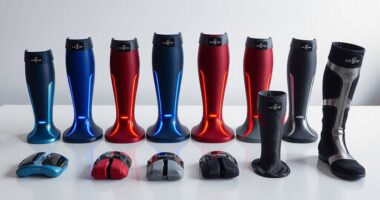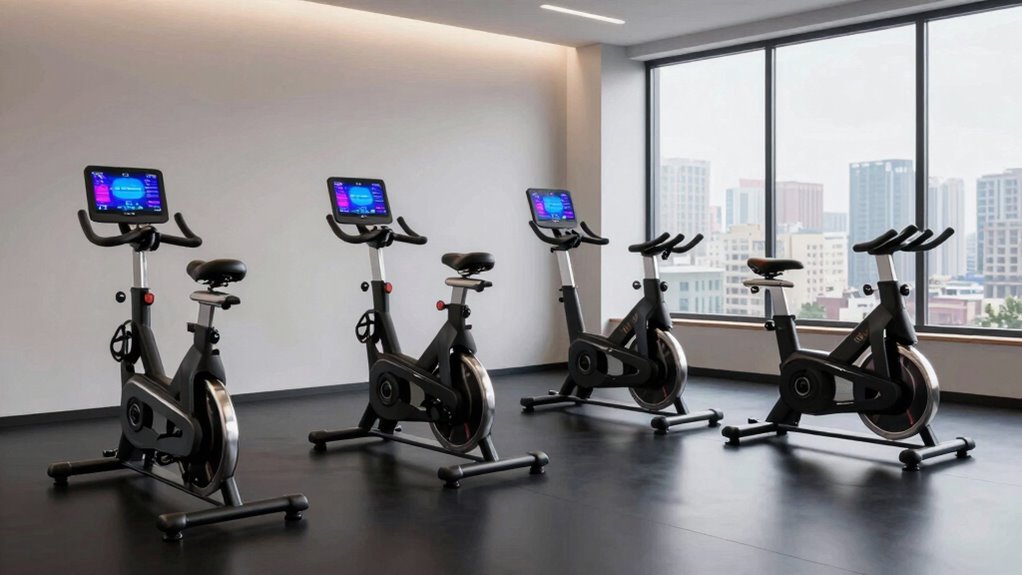

For a smart bike for indoor training, my best overall pick is the Wahoo KICKR CORE 2, which pairs a smart trainer with Zwift Cog and Click controls for a convenient virtual-riding setup. The Wahoo KICKR V6 is the premium choice for riders who want a higher-end trainer, while the NEWBULIG Exercise Bike suits buyers seeking a self-contained stationary bike with app connectivity. The main tradeoff is between a dedicated exercise bike’s simpler setup and a wheel-off trainer’s closer match to outdoor riding and structured cycling workouts. Noise, bike compatibility, storage, and whether you need automatic resistance matter just as much as headline power and gradient figures. Read on for how all 12 options compare and which type of setup fits your training.

Get workout gear delivered free with Prime
- Fast, free delivery on millions of items
- Prime Video, Amazon Music and more included
- Member-only deals all year
Complete the kit



Key Takeaways
- Trainer versus exercise bike is the biggest split: the Wahoo and ThinkRider models turn a compatible bicycle into a training setup, while the NEWBULIG, YESOUL, MERACH, YOSUDA, and Sunny Health & Fitness models are standalone bikes.
- The Wahoo KICKR CORE 2 is the strongest all-around fit for app-based cycling: Zwift Cog and Click controls simplify virtual shifting, while the KICKR V6 is the premium step-up in the trainer group.
- High stated power and gradient figures do not settle the choice: the CYCPLUS R200, ThinkRider X2Max, and ThinkRider XXPRO appeal to performance-minded buyers, but compatibility, ride feel, and setup still shape daily usefulness.
- Budget-conscious buyers face a feature tradeoff: the Saris Fluid2 Smart Equipped adds smart features to a fluid trainer format, while the Saris M2 offers electromagnetic resistance for riders prioritizing connected training.
- Standalone bikes favor convenience over bicycle-specific realism: app connectivity and adjustable resistance can make home workouts straightforward, but buyers should check fit, resistance control, and training-app support before choosing one.
| ThinkRider X2Max Smart Bike Trainer, 2000 W, Simulates 18% Slope, ANT+ and BLE |  | Best for Steep Virtual Climbs | Resistance: Electromagnetic | Maximum power: 2000 W | Power-meter error: ±2% | VIEW ON AMAZON | See Our Full Breakdown |
| CYCPLUS Smart Bike Trainer R200 2200W 19% Gradient Brushless Motor |  | Best for High-Power, Accurate Training | Resistance: Magnetic | Peak power: 2200 W | Maximum torque: 80 Nm | VIEW ON AMAZON | See Our Full Breakdown |
| NEWBULIG Exercise Bike with App Connectivity, Adjustable Resistance, and Low Noise |  | Best for Beginner App-Based Workouts | Resistance: Magnetic | Seat adjustment: 7-way | Handlebar adjustment: 5-way | VIEW ON AMAZON | See Our Full Breakdown |
| Wahoo Fitness KICKR CORE 2 Zwift Cog & Click – Orange Cog (3rd Generation) |  | Best for Plug-In Zwift Setup | Resistance: Electronic | Connectivity: Built-in Wi-Fi; Zwift Cog and Click system | Weight: 13.6 kg | VIEW ON AMAZON | See Our Full Breakdown |
| YESOUL S3 Exercise Bike, Magnetic Resistance Stationary Bike with App Training |  | Best for Heavier Riders and Manual Resistance Control | Resistance: 100-level magnetic resistance, adjusted by manual knob | Connectivity: Bluetooth; YESOUL FITNESS, Zwift, and Kinomap | Weight capacity: 350 lb | VIEW ON AMAZON | See Our Full Breakdown |
| Saris Fluid2 Smart Equipped Indoor Bike Trainer |  | Best Simple Wheel-On Pick | Resistance mechanism: Fluid | Noise level: 69 decibels at 20 mph | Item weight: 7.3 pounds | VIEW ON AMAZON | See Our Full Breakdown |
| Saris M2 Smart Indoor Electromagnetic Resistance Bike Trainer |  | Best Wheel-On Smart Control | Resistance mechanism: Electronic | Connectivity: ANT+ FE-C and Bluetooth | Power accuracy: ±5% | VIEW ON AMAZON | See Our Full Breakdown |
| MERACH S26 Magnetic Resistance Exercise Bike |  | Best for Quiet, App-Connected Home Riding | Model: S26B2 | Resistance: Adjustable magnetic resistance, 0–100% | Noise level: Under 25 dB | VIEW ON AMAZON | See Our Full Breakdown |
| Wahoo KICKR V6 Smart Indoor Trainer |  | Best Premium Precision Trainer | Resistance mechanism: Electromagnetic | Maximum resistance: 2,200 watts | Power accuracy: ±1% | VIEW ON AMAZON | See Our Full Breakdown |
| ThinkRider XXPRO Smart Bike Trainer |  | Best for Steep Virtual Climbs | Resistance mechanism: Electromagnetic | Maximum power: 2,500 W | Maximum simulated gradient: 25% | VIEW ON AMAZON | See Our Full Breakdown |
| YOSUDA Indoor Cycling Exercise Bike 002 with Magnetic Friction Resistance and App Training |  | Best for a Sturdier, Adjustable Home Ride | Model: Exercise Bike 002 | Flywheel: 25 lbs | Drive system: Belt-driven | VIEW ON AMAZON | See Our Full Breakdown |
| Sunny Health & Fitness Smart Indoor Cycling Bike for Home Cardio Exercise |  | Best for Beginners and Smaller Spaces | Flywheel: 18 lbs | Drive system: Belt drive | Resistance: Magnetic | VIEW ON AMAZON | See Our Full Breakdown |
| smart bike for indoor training | Connectivity | Resistance | Load capacity | Warranty |
|---|---|---|---|---|
| ThinkRider X2Max Smart Bike Tr | ANT+ and BLE | Electromagnetic | 240 lb | — |
| CYCPLUS Smart Bike Trainer R20 | BLE and ANT+ | Magnetic | 250 lb | — |
| NEWBULIG Exercise Bike with Ap | FITSHOW, KINOMAP, and Zwift | Magnetic | — | — |
| Wahoo Fitness KICKR CORE 2 Zwi | Built-in Wi-Fi; Zwift Cog and Click system | Electronic | 200 lb | — |
| YESOUL S3 Exercise Bike | Bluetooth; YESOUL FITNESS, Zwift, and Kinomap | 100-level magnetic resistance, adjusted by manual knob | — | 12 months free parts replacement |
| Saris Fluid2 Smart Equipped In | Zwift, Rouvy, and other indoor cycling apps | — | 300 pounds | Limited lifetime |
| Saris M2 Smart Indoor Electrom | ANT+ FE-C and Bluetooth | — | 300 pounds | Limited lifetime |
| MERACH S26 Magnetic Resistance | — | Adjustable magnetic resistance, 0–100% | — | 1 year |
| Wahoo KICKR V6 Smart Indoor Tr | 2.4 GHz Wi-Fi | — | — | 1 year |
| ThinkRider XXPRO Smart Bike Tr | Bluetooth, ANT+ | — | 242 pounds | 1 year |
| YOSUDA Indoor Cycling Exercise | — | Magnetic friction | — | — |
| Sunny Health & Fitness Smart I | — | Magnetic | — | — |
More Details on Our Top Picks
ThinkRider X2Max Smart Bike Trainer, 2000 W, Simulates 18% Slope, ANT+ and BLE
The ThinkRider X2Max suits riders who want a smart trainer for structured app-based rides without moving to a higher-power model. Its 18% gradient simulation and 2000 W ceiling provide room for demanding climbs and hard efforts, while ANT+ and BLE let it connect with platforms such as Zwift. Compared with the CYCPLUS R200, it gives up a little peak power, gradient range, and power accuracy, but its listed specs include a 26-inch wheel size and a stable iron frame. The tradeoff is a cassette sold separately, plus a 35.2-pound unit that is not especially convenient to shift around. I’d choose it for a dedicated training spot; riders seeking lighter setup or more precise power data may prefer another option.
Pros:- ANT+ and BLE support connection to cycling apps, including Zwift.
- 18% simulated slope supports challenging virtual climbs.
- Up to 2000 W output and stated ±2% power-meter error.
- Iron I-beam frame is designed for stable riding, with noise listed at about 58 dB at 30 km/h.
Cons:- Cassette is not included, adding a separate setup requirement.
- At 35.2 pounds, it is less convenient to move between rides.
- The CYCPLUS R200 offers higher peak power, a steeper stated gradient, and tighter stated power accuracy.
Best for: Road and mountain-bike riders setting up a mostly permanent indoor training station for Zwift climbs and interval sessions.
Not ideal for: Riders who need to move their trainer often, want a ready-to-ride cassette setup, or prioritize tighter stated power accuracy than ±2%.
- Resistance:Electromagnetic
- Maximum power:2000 W
- Power-meter error:±2%
- Maximum simulated slope:18%
- Connectivity:ANT+ and BLE
- Noise:About 58 dB at 30 km/h
- Weight:35.2 lb
- Load capacity:240 lb
- Cassette:Not included
Our verdict“Choose the X2Max if you want a stable, app-connected trainer for virtual climbs and can accommodate its weight and separate cassette purchase.”
CYCPLUS Smart Bike Trainer R200 2200W 19% Gradient Brushless Motor
The CYCPLUS R200 is the stronger fit for riders who care about measurable power and steep virtual terrain. Its stated ±1% power accuracy, 2200 W peak output, and 19% gradient simulation edge past the ThinkRider X2Max on the headline training figures. Dual BLE and ANT+ connectivity also suit riders using platforms such as Zwift or MyWhoosh, while the brushless motor is designed for quiet operation. Those advantages come with practical limits: the cassette is separate, and virtual shifting needs the optional BC2 shifter. It also does not support ERG mode, which can rule it out for riders whose workouts depend on automatically controlled target power. I’d favor it over the X2Max for power-focused climbing sessions, but not for ERG-based training.
Pros:- Stated ±1% power accuracy is tighter than the ThinkRider X2Max’s ±2%.
- 2200 W peak power and 80 Nm torque suit demanding efforts.
- Simulates gradients up to 19%.
- BLE and ANT+ connectivity, with a brushless motor designed for quiet operation.
Cons:- ERG training mode is not supported.
- Cassette is sold separately.
- Virtual shifting requires the optional BC2 shifter.
Best for: Experienced indoor cyclists who prioritize close power tracking, hard efforts, and steep virtual climbs on compatible apps.
Not ideal for: Riders who rely on ERG workouts, want virtual shifting included, or expect a cassette to come in the box.
- Resistance:Magnetic
- Peak power:2200 W
- Maximum torque:80 Nm
- Gradient simulation:Up to 19%
- Power accuracy:±1%
- Connectivity:BLE and ANT+
- Wheel size compatibility:29 inches
- Load capacity:250 lb
- ERG mode:Not supported
Our verdict“Pick the R200 for precise power-focused sessions and steep climbs, provided you do not need ERG mode or included virtual-shifting hardware.”
NEWBULIG Exercise Bike with App Connectivity, Adjustable Resistance, and Low Noise
The NEWBULIG Exercise Bike is a straightforward entry point for riders who want indoor sessions without fitting a separate trainer to a road or mountain bike. Its seven-way seat adjustment and five-way handlebar adjustment offer more room to tune the riding position than the fixed trainer setup implied by the ThinkRider X2Max. Magnetic resistance and low-noise operation suit shared homes, while FITSHOW, KINOMAP, and Zwift connectivity add app-based tracking. That app support is the main connection to virtual training; the listed specs do not give power accuracy, maximum wattage, or gradient simulation like the X2Max and CYCPLUS R200 do. A phone or tablet is needed to access app features, and the bike is limited to indoor use. I’d choose it for accessible, adjustable cardio rather than performance-focused cycling metrics.
Pros:- Seven-way seat and five-way handlebar adjustment help accommodate different riding positions.
- Magnetic resistance and low-noise operation suit home workouts.
- Connects with FITSHOW, KINOMAP, and Zwift.
- Supports riders up to 265 lb.
Cons:- App features require a smartphone or tablet.
- No power accuracy, maximum wattage, or gradient simulation is specified, unlike the ThinkRider X2Max.
- Designed for indoor use rather than as a trainer for an existing road or mountain bike.
Best for: New indoor cyclists who want an adjustable stationary bike, quiet magnetic resistance, and app-linked workout tracking without using their own bicycle.
Not ideal for: Data-focused cyclists seeking stated power accuracy, high-wattage efforts, or realistic virtual gradient control.
- Resistance:Magnetic
- Seat adjustment:7-way
- Handlebar adjustment:5-way
- Connectivity:FITSHOW, KINOMAP, and Zwift
- Noise:Low noise; exact level not specified
- Maximum user weight:265 lb
- Assembly time:Under 30 minutes
Our verdict“Choose the NEWBULIG for adjustable, quiet app-based indoor workouts, not for the detailed power and climb simulation offered by dedicated smart trainers.”
Wahoo Fitness KICKR CORE 2 Zwift Cog & Click – Orange Cog (3rd Generation)
The Wahoo KICKR CORE 2 Zwift Cog & Click is the most straightforward pick here for riders already committed to Zwift. Its included Cog and Click system supports Zwift shifting without a conventional cassette setup, while built-in Wi-Fi handles updates and helps simplify connectivity. The product also comes with an AC adapter and a range of axle adapters, making bike fit less of a parts hunt than the ThinkRider X2Max or CYCPLUS R200, both of which list a cassette as not included. The tradeoff is its close association with the Zwift setup: buyers wanting broad app flexibility should check their preferred platform’s compatibility. At 13.6 kg, it is also heavy to reposition, and it needs external power. I’d choose it for a stable, Zwift-centered training station rather than a portable setup.
Pros:- Includes Zwift Cog and Click for an integrated Zwift shifting setup.
- Built-in Wi-Fi supports updates and easier network connectivity.
- Includes an AC adapter and multiple QR and thru-axle adapters.
- Electronic resistance is designed to provide smooth, road-like riding.
Cons:- At 13.6 kg, it is cumbersome to move frequently.
- Requires an external AC power adapter.
- Its Zwift-specific Cog and Click setup may be less appealing to riders who do not train on Zwift.
Best for: Zwift riders who want an included Cog and Click setup, Wi-Fi updates, and adapters for common quick-release and thru-axle bikes.
Not ideal for: Riders seeking a lightweight trainer, a cordless setup, or a training option selected primarily for broad platform flexibility.
- Resistance:Electronic
- Connectivity:Built-in Wi-Fi; Zwift Cog and Click system
- Weight:13.6 kg
- Dimensions:20.4 × 23 × 18.5 in
- Load capacity:200 lb
- Included shifting components:Zwift Click and Cog
- Power:External AC adapter included
- Frame material:Alloy steel
Our verdict“Pick the KICKR CORE 2 for a stable, Zwift-focused station with included shifting hardware and adapters, as long as weight and mains power are not concerns.”
YESOUL S3 Exercise Bike, Magnetic Resistance Stationary Bike with App Training
The YESOUL S3 stands apart from the ThinkRider X2Max and Wahoo KICKR CORE 2 because it is a complete stationary bike, not a trainer that uses a rider’s own bicycle. Its 350 lb capacity, compact 4-by-2-foot footprint, adjustable seat and handlebars, and SPD clip pedals make it a more self-contained home setup. A manual knob controls 100 magnetic resistance levels; Bluetooth links the bike to YESOUL FITNESS, Zwift, and Kinomap for workout tracking. Unlike the CYCPLUS R200, the listed specs do not include measured power accuracy, gradient simulation, or automatic ERG resistance, so it suits general app-guided training better than precision workouts. The fit range is limited to riders from 5 feet to 6 feet 1 inch, and the heart-rate armband is sold separately.
Pros:- 350 lb weight capacity is higher than the listed capacities of the other products in this batch.
- 100 manual magnetic resistance levels give riders fine control over effort.
- Bluetooth works with YESOUL FITNESS, Zwift, and Kinomap.
- Includes SPD clip pedals and a 10-inch tablet mount.
Cons:- Heart-rate armband is sold separately.
- Stated fit range is limited to riders from 5 feet to 6 feet 1 inch.
- No power accuracy or gradient simulation is specified, unlike the dedicated smart trainers in this batch.
Best for: Home cyclists who want a sturdy standalone bike, manual magnetic resistance, SPD pedals, and app-linked classes or tracking.
Not ideal for: Riders outside the stated 5-foot to 6-foot-1-inch height range or cyclists who need precise power figures and simulated gradients.
- Resistance:100-level magnetic resistance, adjusted by manual knob
- Connectivity:Bluetooth; YESOUL FITNESS, Zwift, and Kinomap
- Weight capacity:350 lb
- Footprint:4 × 2 ft
- Rider height range:5 ft to 6 ft 1 in
- Pedals:SPD clip pedals
- Tablet mount:10 in
- Assembly:70% pre-assembled; about 30 minutes
- Warranty:12 months free parts replacement
Our verdict“Choose the YESOUL S3 for a sturdy, app-connected standalone bike with manual resistance, but choose a dedicated smart trainer for precision power and virtual climbs.”
Saris Fluid2 Smart Equipped Indoor Bike Trainer
The Saris Fluid2 suits riders who want to use their existing bike indoors without buying a complete stationary bike. Its progressive fluid resistance builds naturally as you pedal harder, while the included speed sensor connects it to Zwift, Rouvy, and other cycling apps. Compared with the Saris M2, it keeps the setup simpler by forgoing electronically controlled resistance; app connectivity does not make the Fluid2 a fully controlled smart trainer. The foldable frame and leveling block help with storage and setup, but its wheel-on design leaves your rear tire in contact with the roller, unlike direct-drive options such as the Wahoo KICKR V6. I’d pick it for straightforward indoor rides, not for riders who want precise power data or app-controlled terrain changes. Thru-axle users also need to buy an adapter separately.
Pros:- Progressive fluid resistance creates a road-like increase in effort as pedaling speed rises.
- Included speed sensor connects with Zwift, Rouvy, and other cycling apps.
- Foldable frame and leveling block simplify storage and setup.
- Cooling system supports resistance-unit operation during indoor sessions.
Cons:- Wheel-on design leaves the rear tire installed and in contact with the trainer roller.
- Thru-axle bikes require a separately sold adapter.
- Speed-sensor connectivity does not provide the electronic resistance control of the Saris M2.
Best for: Road-bike owners who want a foldable, app-connected trainer for steady indoor rides and already have a compatible quick-release setup.
Not ideal for: Riders who need electronically controlled resistance, direct-drive operation, or a thru-axle setup without buying an additional adapter.
- Resistance mechanism:Fluid
- Noise level:69 decibels at 20 mph
- Item weight:7.3 pounds
- Dimensions:21.25 x 20.25 x 7 inches
- Wheel size:27 inches
- Load capacity:300 pounds
- Connectivity:Zwift, Rouvy, and other indoor cycling apps
- Warranty:Limited lifetime
Our verdict“Choose the Fluid2 if you want a compact, app-connected wheel-on trainer with progressive resistance and can do without electronically controlled workouts.”
Saris M2 Smart Indoor Electromagnetic Resistance Bike Trainer
The Saris M2 is the better fit than the Fluid2 for riders who want app-connected workouts to adjust resistance, while keeping their bike’s rear wheel in place. Its electromagnetic resistance and ANT+ FE-C and Bluetooth connections make it a more actively controlled training option than the Fluid2, which relies on a speed sensor and progressive fluid resistance. The included steel quick-release skewer also makes setup more complete for compatible bikes, and a one-month Rouvy subscription is included. The tradeoff is that the M2 remains a wheel-on trainer: riders still need to account for tire contact, and its stated power accuracy is ±5%, less precise than the Wahoo KICKR V6’s ±1%. At 69 decibels at 20 mph, it is not silent, either. I’d choose it for accessible smart workouts, rather than close power-data tracking.
Pros:- ANT+ FE-C and Bluetooth connect the trainer to compatible cycling apps.
- Electromagnetic resistance supports app-controlled workout changes.
- Steel quick-release skewer is included.
- Zwift certification and a one-month Rouvy subscription provide clear app options.
Cons:- Specified power accuracy is ±5%, less precise than the Wahoo KICKR V6’s ±1%.
- Wheel-on operation keeps the bike’s rear tire against the trainer.
- Produces 69 decibels of noise at 20 mph.
Best for: Riders with a compatible quick-release bike who want app-controlled electromagnetic resistance without removing the rear wheel.
Not ideal for: Data-focused cyclists who want tighter stated power accuracy, or riders seeking a direct-drive setup that removes rear-tire contact.
- Resistance mechanism:Electronic
- Connectivity:ANT+ FE-C and Bluetooth
- Power accuracy:±5%
- Noise level:69 decibels at 20 mph
- Weight:20 pounds
- Dimensions:22 x 20 x 9 inches
- Load capacity:300 pounds
- Warranty:Limited lifetime
Our verdict“Pick the M2 if you want electronically controlled app workouts on your existing wheel-on bike and can accept its stated ±5% accuracy.”
MERACH S26 Magnetic Resistance Exercise Bike
The MERACH S26 is a complete exercise bike rather than a trainer that attaches to your road bike, making it a sensible choice for households that want a dedicated indoor setup. Its under-25 dB noise level and adjustable magnetic resistance suit home sessions where noise matters, while compatibility with MERACH, Kinomap, Zwift, Google Fit, and Apple Health gives it broader stated app options than the sensor-connected Saris Fluid2. The fit range—riders from 4’8″ to 6’2″—also makes it more shareable across riders than a bike-specific trainer. But the product details do not describe built-in workout courses, and app compatibility alone does not establish that resistance changes automatically with a virtual route. Compared with the Wahoo KICKR V6, the S26 is a self-contained bike with a lower stated noise level, but it lacks the Wahoo’s specified power accuracy and outdoor-bike compatibility.
Pros:- Magnetic resistance is specified at under 25 dB for quieter home sessions.
- Connects with MERACH, Kinomap, Zwift, Google Fit, and Apple Health.
- Seat and handlebars adjust for riders from 4’8″ to 6’2″.
- Includes a tablet holder, dumbbell rack, and dual water bottle holders.
Cons:- Requires assembly, despite being 80% pre-assembled.
- Product details do not describe built-in workout courses.
- Unlike the Wahoo KICKR V6, it has no stated power accuracy specification.
Best for: Households seeking a quiet dedicated exercise bike that can fit riders from 4’8″ to 6’2″ and connect with popular fitness apps.
Not ideal for: Cyclists who want to train on their own road bike, require specified power accuracy, or expect built-in workout courses.
- Model:S26B2
- Resistance:Adjustable magnetic resistance, 0–100%
- Noise level:Under 25 dB
- Rider height range:4’8″–6’2″
- Weight capacity:300 lb
- Frame material:Alloy steel
- App compatibility:MERACH, Kinomap, Zwift, Google Fit, Apple Health
- Warranty:1 year
Our verdict“Choose the S26 if you want a quiet, adjustable, app-connected exercise bike rather than a trainer for your own outdoor bike.”
Wahoo KICKR V6 Smart Indoor Trainer
The Wahoo KICKR V6 earns the premium precision role through its ±1% power accuracy, electromagnetic resistance, and maximum resistance of 2,200 watts. For riders who plan structured indoor training, more precise power data makes interval targets easier to follow than on the Saris M2, whose stated accuracy is ±5%. The high-inertia flywheel and AXIS feet add a more dynamic ride feel, while automatic calibration and 2.4 GHz Wi-Fi simplify data transfer to compatible devices. Unlike the MERACH S26, this is a trainer for a compatible road, mountain, or hybrid bike—not a standalone exercise bike. Its substantial 22 kg weight is a real drawback if you need to move or store it after each session, and the listed warranty is one year. I’d favor it for a dedicated training space and riders who value accuracy over easy portability.
Pros:- ±1% power accuracy supports precise structured workouts.
- Up to 2,200 watts of resistance suits demanding sessions.
- High-inertia flywheel and AXIS feet add a more dynamic ride feel.
- Automatic calibration and 2.4 GHz Wi-Fi support a streamlined connected setup.
Cons:- At 22 kg, it may be difficult to move between sessions.
- It requires a compatible road, mountain, or hybrid bike rather than providing a built-in riding position.
- The listed warranty is one year.
Best for: Structured-training cyclists with a compatible road, mountain, or hybrid bike who want precise power data and a stable, realistic-feeling trainer.
Not ideal for: Riders who need to move their equipment often, want a standalone exercise bike, or prefer a longer stated warranty.
- Resistance mechanism:Electromagnetic
- Maximum resistance:2,200 watts
- Power accuracy:±1%
- Connectivity:2.4 GHz Wi-Fi
- Item weight:22 kg
- Dimensions:71 × 44 × 51 in
- Compatible bike types:Hybrid, mountain, and road bikes
- Warranty:1 year
Our verdict“Choose the KICKR V6 for a fixed indoor training space where accurate power, strong resistance, and ride feel matter more than portability.”
ThinkRider XXPRO Smart Bike Trainer
The ThinkRider XXPRO stands out for riders who want steep simulated gradients and direct-drive training without a calibration routine. It specifies a 25% maximum simulated gradient and up to 2,500 watts, exceeding the Wahoo KICKR V6’s listed 2,200-watt maximum and making the XXPRO the stronger match on paper for virtual climbing demands. Its ±1% data accuracy, Bluetooth and ANT+ support, and compatibility with Zwift, PCs, and bike GPS devices make it a capable connected option. Self-powered operation is another distinctive feature, though a power adapter is still included. Compared with the Saris M2, direct-drive operation avoids the wheel-on setup; however, the XXPRO’s product details give limited guidance on which specific bike setups fit. Its one-year warranty and 242-pound load capacity may also steer some buyers toward other options.
Pros:- ±1% data accuracy with no calibration required.
- Simulates gradients up to 25% and lists maximum power of 2,500 W.
- Bluetooth and ANT+ connect with PCs, bike GPS devices, and Zwift.
- Self-powered operation is available.
Cons:- Specific compatibility details for bike setups are not provided.
- The 242-pound load capacity is lower than the 300-pound limits listed for the Saris trainers.
- The stated warranty is one year.
Best for: Riders seeking a direct-drive trainer for steep virtual climbs who use Bluetooth or ANT+ devices and can verify bike compatibility before buying.
Not ideal for: Cyclists who need clear compatibility guidance for an unusual bike setup, exceed the 242-pound load capacity, or want a longer stated warranty.
- Resistance mechanism:Electromagnetic
- Maximum power:2,500 W
- Maximum simulated gradient:25%
- Data accuracy:±1%
- Connectivity:Bluetooth, ANT+
- Compatible bike type:Road bike
- Load capacity:242 pounds
- Warranty:1 year
Our verdict“Pick the XXPRO if steep virtual climbs and direct-drive training are your priorities and your bike setup falls within its confirmed compatibility.”
YOSUDA Indoor Cycling Exercise Bike 002 with Magnetic Friction Resistance and App Training
The YOSUDA 002 is a strong fit for riders who want a conventional indoor bike with app connectivity, rather than a trainer that attaches to an existing road bike. Its 25 lb flywheel and belt drive suit steady home sessions, while Bluetooth app support adds interactive rides and competitions. Compared with the Sunny Health & Fitness Smart Indoor Cycling Bike, YOSUDA has a heavier flywheel and a stated 300 lb capacity, but Sunny accommodates riders up to 6’4″ and includes transport wheels for easier storage. The YOSUDA’s four-way seat and two-way handlebar adjustments give riders room to dial in fit, though its stated height range stops at 6’0″. The padded seat may also become uncomfortable on longer rides. I’d choose it for a more substantial-feeling setup, not for taller riders or anyone expecting a dedicated performance trainer.
Pros:- Belt drive is designed for a smooth, quiet ride at home.
- 25 lb flywheel gives it a heavier flywheel than the Sunny Health & Fitness Smart Indoor Cycling Bike.
- Four-way seat and two-way handlebar adjustments help tune the riding position.
- Bluetooth app support enables interactive riding scenarios and competitions.
Cons:- Stated rider height range ends at 6’0″, below the Sunny bike’s 6’4″ upper limit.
- Padded seat may be uncomfortable during longer rides.
- Magnetic friction resistance and app connectivity do not make it equivalent to the listed smart trainers that attach to a separate bike.
Best for: Home riders up to 6’0″ who want a sturdy-feeling stationary bike, adjustable fit, and Bluetooth app-based workouts.
Not ideal for: Riders over 6’0″ or people who prioritize long-ride seat comfort; the stated fit range excludes taller users, and the seat may bother some riders over extended sessions.
- Model:Exercise Bike 002
- Flywheel:25 lbs
- Drive system:Belt-driven
- Resistance:Magnetic friction
- Weight capacity:300 lbs
- Rider height range:4’8″–6’0″
- Display and connectivity:LCD display; Bluetooth smart app support
- Adjustments:Four-way adjustable padded seat; two-way adjustable handlebars
- Assembly:Approximately 30 minutes
Our verdict“Choose the YOSUDA if you want an adjustable, app-connected stationary bike with a heavier flywheel, but skip it if you are taller than 6’0" or need a more comfortable long-ride seat.”
Sunny Health & Fitness Smart Indoor Cycling Bike for Home Cardio Exercise
The Sunny Nova is the more accessible choice for riders starting indoor cardio or fitting a bike into a smaller home gym. Its belt drive and magnetic resistance are suited to quieter sessions, and the SunnyFit app adds trainer-led workouts, scenic rides, AI fitness plans, and progress tracking. Against the YOSUDA Indoor Cycling Exercise Bike 002, Sunny trades the heavier 25 lb flywheel for an 18 lb one, which may feel less substantial to riders who want a stronger, more demanding training sensation. In return, its stated fit range reaches 6’4″, and transport wheels make moving the bike less of a chore. That compact, beginner-friendly focus is useful for casual cardio, though advanced riders may outgrow the flywheel feel. I’d pick it for guided home workouts and easier storage, not for a highly immersive trainer setup.
Pros:- SunnyFit app includes trainer-led workouts, scenic rides, AI fitness plans, and progress tracking.
- Quiet magnetic resistance and belt drive suit home cardio sessions.
- Transport wheels help move the bike when it is not in use.
- Stated rider height range extends to 6’4″, taller than the YOSUDA 002’s listed limit.
Cons:- 18 lb flywheel may feel too light for advanced riders.
- The description emphasizes home cardio and guided workouts rather than the performance-focused trainer experience offered by products such as the Wahoo KICKR CORE 2.
- No weight capacity or display details are provided in the supplied product information.
Best for: Newer indoor-cycling riders who want guided app workouts, a compact bike for a small home gym, and fit for riders up to 6’4″.
Not ideal for: Experienced cyclists seeking a heavier flywheel feel or a dedicated smart trainer that simulates demanding cycling sessions.
- Flywheel:18 lbs
- Drive system:Belt drive
- Resistance:Magnetic
- Rider height range:5’–6’4″
- Rider inseam range:28–36.5 inches
- App connectivity:SunnyFit app
- App features:Trainer-led workouts, scenic rides, AI fitness plans, and progress tracking
- Mobility:Transportation wheels
Our verdict“Choose the Sunny Nova for guided beginner workouts and easier storage in a small space; pick the YOSUDA instead if a heavier flywheel matters more than portability.”

How We Picked
I compared these 12 options as tools for indoor cycling training, separating wheel-on and direct-drive trainers from standalone exercise bikes rather than treating them as interchangeable. I focused on the factors that change the riding experience: resistance control and stated performance, app and wireless connectivity, bike compatibility, setup demands, noise considerations, adjustability, and the range of training each format supports. A trainer can offer a more bicycle-like ride and work with virtual cycling platforms, but it requires a compatible bike; an exercise bike is more self-contained, though its fit and app ecosystem can be less flexible.
The ranking gives priority to training versatility and ease of use, then weighs build and connectivity against setup and compatibility demands. That places the KICKR CORE 2 first for balancing virtual-training convenience with a trainer-based ride, and the KICKR V6 higher for buyers seeking a premium trainer. The CYCPLUS and ThinkRider options stand out for stated power and gradient capability, while the Saris models offer distinct resistance formats. Standalone bikes rank according to their usefulness for accessible home workouts, not as direct substitutes for a bicycle-mounted smart trainer.
Factors to Consider When Choosing Smart Bike For Indoor Training
Before choosing, decide what you mean by a smart bike: a smart trainer for your existing bicycle or a self-contained stationary bike with app features. That choice sets the limits on compatibility, ride feel, setup, and the training platforms you can use.
Choose a trainer or a standalone exercise bike
A trainer uses your own bicycle, so your familiar saddle, handlebars, and riding position carry over to indoor sessions. That can make it the better fit for cyclists preparing for outdoor rides, but it adds work: you must confirm frame and drivetrain compatibility and make room for the bike. A standalone exercise bike is ready for home workouts without mounting a separate bicycle, which suits shared spaces or riders who do not own a road bike. The tradeoff is that its geometry and controls may not match your outdoor setup. Avoid choosing based on the word “smart” alone; check whether the product is a connected bike or a resistance unit for a bike you already own.
Check app support and resistance behavior
App connectivity can mean anything from basic workout tracking to resistance changes controlled by a virtual route or training session. If you want structured intervals, confirm the trainer or bike supports the specific apps and devices you plan to use. A product that pairs over ANT+ or Bluetooth may still offer a different experience depending on the app and the data it shares. Manual resistance can be enough for steady cardio, but automatic changes make simulated climbs and coached workouts more immersive. Do not assume that an app connection means automatic resistance or broad platform compatibility; look for both features in the product details.
Treat power and gradient figures as only part of performance
Maximum power and simulated gradient figures help show the kind of efforts a trainer is designed to handle, especially for riders who sprint or follow demanding virtual routes. They do not, on their own, tell you how smoothly resistance changes, how natural the ride feels, or how accurately the unit reports training data. Compare the stated capabilities with your actual sessions rather than buying the largest figures by default. For endurance rides and beginner workouts, ease of setup and comfortable fit may matter more than an extreme maximum. If performance data is central to your training, check the manufacturer’s accuracy specifications and the platform’s compatibility before deciding.
Confirm bicycle fit, drivetrain, and setup requirements
Trainer compatibility can hinge on details such as axle type, cassette or freehub needs, and the number of gears on your bicycle. A simplified shifting accessory may reduce drivetrain setup, but you should still verify that your bike can mount to the trainer as supplied or with available adapters. Wheel-on trainers also call for tire contact and pressure checks, while direct-drive designs require removing the rear wheel. These differences affect how quickly you can start a workout and what routine maintenance looks like. Check the manual and compatibility list before purchase; a powerful trainer is of little use if it does not fit your bike.
Account for noise, floor space, and household use
Noise depends on more than the trainer or bike itself: tire type, drivetrain condition, flooring, cadence, and the room can all affect what others hear. A mat can help protect the floor and reduce vibration, but it will not make every setup silent. Measure the space needed to mount and dismount safely, and remember that a trainer plus bicycle occupies more room than the resistance unit alone. A standalone bike may be easier to leave ready for use, though its footprint and adjustability still deserve a check. If you train early or in a shared home, prioritize a stable setup and realistic noise expectations over a claim of quiet operation.
Pay extra for features you will use repeatedly
A higher-end trainer can make sense if you ride indoors often, use virtual routes, or need resistance that responds to workouts. For occasional cardio, a simpler smart-equipped trainer or a connected exercise bike may cover the essentials without adding setup complexity. Think about the cost of the complete system, not just the main unit: your bicycle, adapters, mat, fan, and training app may all affect the final setup. A premium feature has little value if your preferred app cannot use it or if it makes mounting the bike inconvenient. Match the upgrade to a repeated need, such as smoother app-controlled training or broader use of your existing bicycle.
Frequently Asked Questions
Do I need to own a bicycle to use a smart trainer?
Yes, the ThinkRider, CYCPLUS, Wahoo, and Saris trainer options are designed to work with a separate bicycle, so check compatibility before choosing one. The exercise bikes in this roundup are standalone units and do not require your own bicycle. A trainer can be the better match if you want your outdoor bike’s fit and controls indoors. A standalone bike is usually more direct for household cardio or for someone without a compatible bicycle. Compare the full setup you will need, including any adapters or drivetrain parts.
Will a smart trainer automatically change resistance during a workout?
Not every connected trainer or bike offers the same kind of resistance control. Some setups can respond to a supported virtual route or structured workout, while others may connect for data and leave resistance changes to the rider. Check the product’s app compatibility and whether it supports controllable resistance, rather than relying on Bluetooth or ANT+ connectivity alone. Also confirm that your chosen app can use that feature with the specific trainer. If you mostly ride at a steady effort, manual resistance may be adequate.
Which setup makes more sense for Zwift: an exercise bike or a smart trainer?
A smart trainer is generally the more direct choice if you want to ride a virtual route using your own bicycle, and the KICKR CORE 2’s Zwift Cog and Click package is tailored to simplify that style of setup. A connected exercise bike may suit app-based workouts, but its support for virtual cycling features can vary. Check whether the bike sends the data and supports the controls your intended app requires. Also factor in whether you want your outdoor riding position or a dedicated indoor setup. App compatibility should be confirmed for the exact model, not inferred from a general connectivity claim.
Is a wheel-on trainer a better choice than a direct-drive trainer for home use?
It depends on how much setup simplicity matters compared with the riding experience and maintenance routine. A wheel-on design keeps the rear wheel on the bicycle, while a direct-drive unit requires removing it and fitting the bike to the trainer. Wheel-on options can be convenient for occasional sessions, but tire contact and pressure may affect use and noise. Direct-drive models often appeal to riders building a dedicated indoor training setup, though they require a compatible drivetrain connection. Check each model’s bike fit and setup requirements before weighing the formats.
Should I choose a standalone exercise bike if I am new to indoor cycling?
A standalone bike can be a practical start if you want a ready-to-ride setup without adapting a separate bicycle. Models such as the NEWBULIG, YESOUL, MERACH, YOSUDA, and Sunny Health & Fitness options focus on home exercise, but their adjustability and app features differ. If you already own a road bike and plan to follow virtual routes or structured cycling workouts, a smart trainer may serve you better as your training grows. Check seat and handlebar adjustment ranges, resistance controls, and app support before buying. The right beginner choice is the one that fits your body and the workouts you expect to do.
Conclusion
For most cyclists who want a versatile, app-friendly indoor setup, I recommend the Wahoo KICKR CORE 2 as the best overall pick. The Saris Fluid2 Smart Equipped is my best-value direction for buyers who want a simpler trainer format, while the Wahoo KICKR V6 is the best premium choice for riders prioritizing a higher-end smart trainer. Beginners who want a self-contained bike should look first at the NEWBULIG Exercise Bike; those who already own a compatible bicycle and want an accessible trainer setup can compare the Saris options. For high stated power and gradient capability, consider the CYCPLUS R200 or a ThinkRider model, but verify bike fit and app needs first. Choose a standalone bike for convenience, a trainer for bicycle-specific riding, and pay for premium features only when your regular workouts will use them.