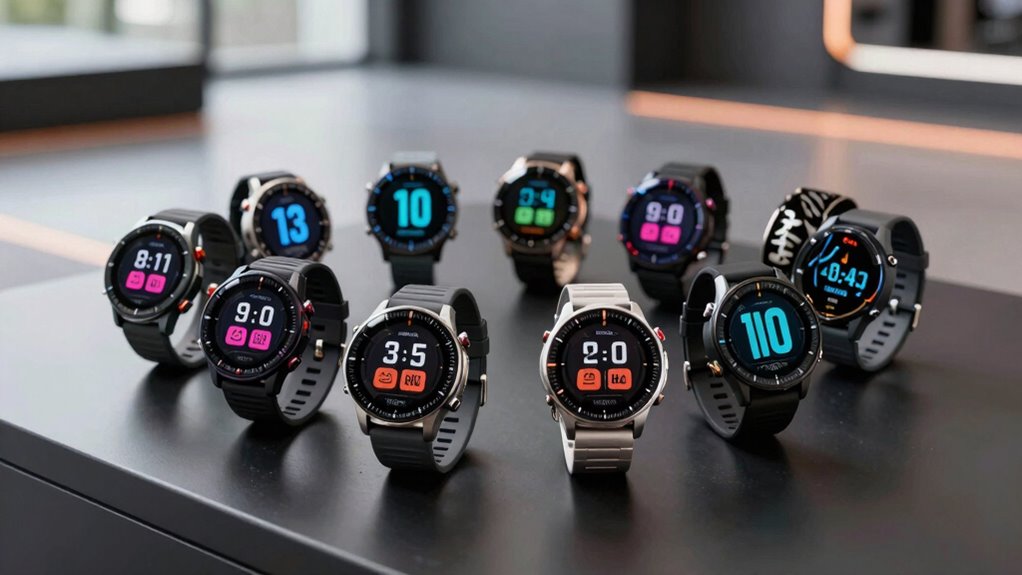

A running watch with dual-frequency GPS can improve location tracking on routes where buildings, trees, or terrain make satellite signals harder to read. My best overall pick is the COROS PACE 4 for runners prioritizing a lightweight, training-focused watch with dual-band GPS; the Mibro GS Active2 is a more feature-packed alternative, while the rugged Garmin Instinct 3 Solar suits outdoor use. The main tradeoffs are GPS capability, battery demands, training tools, durability, and whether a watch explicitly supports dual-frequency tracking. Not every GPS watch in this lineup does, so check the exact model’s satellite specifications rather than relying on “GPS” in its name. Read on for the full comparison and help matching each watch to your running habits.

Get workout gear delivered free with Prime
- Fast, free delivery on millions of items
- Prime Video, Amazon Music and more included
- Member-only deals all year
Complete the kit



Key Takeaways
- Dual-frequency support is not universal here: the Mibro GS Active2 and Jugeman explicitly advertise dual-band GPS, while several other listings identify GPS without confirming dual-frequency capability.
- The COROS PACE 4 leads for runners seeking a lightweight training watch, while the COROS APEX 4 is a more substantial choice for longer outdoor use and its stated 41-day battery life.
- Ruggedness and solar power change the buying equation: the Garmin Instinct 3 Solar favors outdoor durability, not a slim, running-first design.
- Entry-level Garmin options need closer spec checks: the Forerunner 55 and Forerunner 165 may suit basic training needs, but their listings do not establish dual-frequency GPS.
- Feature-heavy general smartwatches bring compromises: the Jugeman and rugged AMOLED watch list extras such as calling or outdoor sensors, but buyers should verify tracking details and prioritize running-specific tools if pace and training analysis matter most.
| Garmin Forerunner 165 Running Smartwatch, 43mm, Black |  | Best for AMOLED Training Features | Case size: 43 mm | Display: AMOLED touchscreen | GPS: Built-in GPS; dual-frequency support not specified | VIEW ON AMAZON | See Our Full Breakdown |
| COROS PACE 4 Ultralight Sport GPS Watch (Black Silicone, Standard) |  | Best for Long Training Blocks | Weight: 32 g | Thickness: 11.8 mm | Display: 1.2-inch AMOLED touchscreen | VIEW ON AMAZON | See Our Full Breakdown |
| COROS PACE 3 GPS Sport Watch, Lightweight Running Watch – Chalk Nylon |  | Best Overall for Dual-Frequency GPS | Weight: 30 g | Display: 1.2-inch transflective touchscreen | GPS: Built-in dual-frequency GPS | VIEW ON AMAZON | See Our Full Breakdown |
| Jugeman Military Smart Watch for Men with Dual-Band GPS, AMOLED Display, and Fitness Tracking |  | Best Rugged Outdoor Pick | Display: 1.43-inch AMOLED | GPS: Dual-band GPS with six satellite systems | Battery: 520 mAh; over 20 days standby and 5–7 days use | VIEW ON AMAZON | See Our Full Breakdown |
| Garmin Forerunner 55 GPS Running Watch with Daily Suggested Workouts, Up to 2 Weeks Battery Life, Black |  | Best for Beginner Runners | GPS: Built-in GPS; dual-frequency support not specified | Battery life: Up to 2 weeks in smartwatch mode; up to 20 hours in GPS mode | Heart-rate monitoring: Heart-rate monitor | VIEW ON AMAZON | See Our Full Breakdown |
| Garmin Instinct® 3 Solar Rugged GPS Smartwatch, 45mm, Black |  | Best for Rugged Outdoor Use | Case size: 45 mm | Display: 0.9 inches | GPS: Multi-band GPS | VIEW ON AMAZON | See Our Full Breakdown |
| Mibro GS Active2 GPS Running Smartwatch with Dual Band GPS, Lightweight | 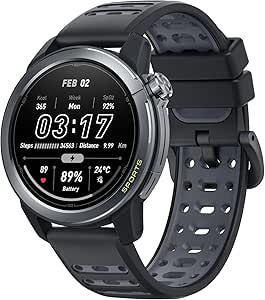 | Best Value-Style Multisport Pick | Display: 1.32 inches | GPS: Dual-band GPS | Battery life: Up to 15 days | VIEW ON AMAZON | See Our Full Breakdown |
| COROS APEX 4 (46mm) GPS Watch, 1.3″ MIP, 41 Days Battery Life – Black |  | Best for Technical Trail Navigation | Case size: 46 mm | Screen: 1.3-inch LCD | GPS: Dual-frequency GPS | VIEW ON AMAZON | See Our Full Breakdown |
| Smart Watch for Men with Built-in GPS, 1.43″ AMOLED Fitness Tracker with Bluetooth Calling, Dual LED Flashlight, Compass, Altimeter, Barometer, IP68 Rugged Outdoor Watch |  | Best for Everyday Outdoor Extras | Display: 1.43-inch AMOLED | GPS: Built-in GPS supporting five satellite systems | Case materials: Full-TPU protective body with aerospace-grade aluminum bezel | VIEW ON AMAZON | See Our Full Breakdown |
| running watch with dual frequency gp | GPS | Display | Battery life | Water resistance |
|---|---|---|---|---|
| Garmin Forerunner 165 Running | Built-in GPS; dual-frequency support not specified | AMOLED touchscreen | Up to 11 days in smartwatch mode; up to 19 hours in GPS mode | — |
| COROS PACE 4 Ultralight Sport | GPS watch; frequency details not specified in the supplied product data | 1.2-inch AMOLED touchscreen | Up to 41 hours GPS; up to 19 days daily use | — |
| COROS PACE 3 GPS Sport Watch | Built-in dual-frequency GPS | 1.2-inch transflective touchscreen | Up to 38 hours GPS; up to 24 days daily use | 50 meters |
| Jugeman Military Smart Watch f | Dual-band GPS with six satellite systems | 1.43-inch AMOLED | — | 5ATM |
| Garmin Forerunner 55 GPS Runni | Built-in GPS; dual-frequency support not specified | — | Up to 2 weeks in smartwatch mode; up to 20 hours in GPS mode | — |
| Garmin Instinct® 3 Solar Rugge | Multi-band GPS | 0.9 inches | — | 10 ATM |
| Mibro GS Active2 GPS Running S | Dual-band GPS | 1.32 inches | Up to 15 days | 5 ATM |
| COROS APEX 4 | Dual-frequency GPS | — | 65 hours listed in specifications; title states 41 days | — |
| Smart Watch for Men with Built | Built-in GPS supporting five satellite systems | 1.43-inch AMOLED | Up to 12 days stated; may vary with continuous GPS use | IP68, 3 ATM |
More Details on Our Top Picks
Garmin Forerunner 165 Running Smartwatch, 43mm, Black
The Forerunner 165 suits runners who want a bright, easy-to-read screen and structured training prompts more than advanced GPS reception. Its listed specs say built-in GPS but do not specify dual-frequency GPS, so I would not rank it ahead of the COROS PACE 3 for routes through dense buildings or tree cover where dual-frequency tracking is the priority. In return, the 165 pairs its AMOLED touchscreen with personalized workout suggestions, incident detection, and Garmin Pay, making it a more smartwatch-oriented pick than the simpler Forerunner 55. Battery life reaches 19 hours in GPS mode, which is useful for regular training but shorter than the long-use figures listed for both COROS watches. Choose it for display and daily convenience; skip it if dual-frequency positioning is a firm requirement.
Pros:- Bright 43 mm AMOLED touchscreen
- Personalized workout suggestions support structured training
- Incident detection and assistance add safety features
- Up to 11 days of battery life in smartwatch mode
Cons:- Dual-frequency GPS is not specified in the supplied product data
- The listed 19-hour GPS battery life is below the COROS PACE 3’s 38-hour figure
- Notifications and safety features require a smartphone
Best for: Road runners who prioritize an AMOLED display, guided workout suggestions, and smartwatch conveniences over confirmed dual-frequency GPS.
Not ideal for: Runners who need dual-frequency GPS for challenging routes, since the supplied specifications list built-in GPS without identifying dual-frequency support.
- Case size:43 mm
- Display:AMOLED touchscreen
- GPS:Built-in GPS; dual-frequency support not specified
- Battery life:Up to 11 days in smartwatch mode; up to 19 hours in GPS mode
- Heart-rate monitoring:Wrist-based
- Training features:Personalized workout suggestions and activity profiles
- Safety:Incident detection and assistance
- Smart features:Smart notifications and Garmin Pay
Our verdict“Choose the Forerunner 165 for Garmin training tools and an AMOLED screen, not as a confirmed dual-frequency GPS watch.”
COROS PACE 4 Ultralight Sport GPS Watch (Black Silicone, Standard)
The PACE 4 is the lineup’s endurance-minded choice for runners who want long GPS sessions without a heavy watch: it weighs 32 g and is rated for 41 hours of GPS use. Its AMOLED screen is more vivid than the PACE 3’s transflective display, while the PACE 3 has the clearer advantage for this roundup because its supplied specs explicitly confirm dual-frequency GPS. The PACE 4 description does not identify its GPS frequency, so I would verify that detail before buying if dual-frequency reception is non-negotiable. Recovery time, sleep stages, and HRV make it a stronger training-and-health companion than the basic Forerunner 55, but its touchscreen may be less cooperative during intense activity. This is a compelling long-session option, with GPS capability details that need checking.
Pros:- Lightweight 32 g design for running and all-day wear
- Up to 41 hours of GPS use
- AMOLED touchscreen with auto-brightness adjustment
- Recovery time, sleep-stage, and HRV tracking
Cons:- The supplied specifications do not confirm dual-frequency GPS
- Touchscreen responsiveness may be inconvenient during intense activity
- Only black silicone is listed
Best for: Runners building long training sessions who value low weight, extended GPS battery life, and recovery metrics, and can confirm the GPS mode they need.
Not ideal for: Buyers who require clearly specified dual-frequency GPS or prefer physical controls for making adjustments during hard workouts.
- Weight:32 g
- Thickness:11.8 mm
- Display:1.2-inch AMOLED touchscreen
- Battery life:Up to 41 hours GPS; up to 19 days daily use
- GPS:GPS watch; frequency details not specified in the supplied product data
- Training metrics:Recovery time and HRV
- Health tracking:Sleep stages and menstrual cycles
- Controls:Voice control and customizable action button
Our verdict“Pick the PACE 4 for extended GPS sessions and training metrics, but confirm its GPS frequency before relying on it for dual-band accuracy.”
COROS PACE 3 GPS Sport Watch, Lightweight Running Watch – Chalk Nylon
The PACE 3 is the clearest fit for this roundup because its specifications explicitly name dual-frequency GPS, rather than leaving the frequency unclear as the PACE 4 and Garmin Forerunner 165 listings do. At 30 g, it also keeps weight low for everyday training, and its 38-hour GPS rating gives it more room for long outings than the Forerunner 165’s listed 19 hours. The tradeoff is a transflective touchscreen instead of the PACE 4’s AMOLED panel, so buyers who prize a vivid screen may prefer its newer sibling. The PACE 3 also covers activities from running to swimming and skiing, with 50-meter water resistance. It is a focused sports watch rather than a feature-rich smartwatch, and its 3 GB of memory may limit storage flexibility.
Pros:- Dual-frequency GPS is explicitly listed
- Lightweight 30 g design
- Up to 38 hours of GPS tracking and 24 days of daily use
- 50-meter water resistance and broad activity support
Cons:- Transflective display is less vivid than the PACE 4’s AMOLED screen
- 3 GB of memory may restrict storage needs
- Offers fewer smartwatch features than display-and-convenience-focused options such as the Forerunner 165
Best for: Runners who want explicitly specified dual-frequency GPS in a lightweight watch for road, trail, and multisport training.
Not ideal for: Shoppers who put an AMOLED display, substantial music or file storage, or advanced smartwatch features ahead of GPS and sports tracking.
- Weight:30 g
- Display:1.2-inch transflective touchscreen
- GPS:Built-in dual-frequency GPS
- Battery life:Up to 38 hours GPS; up to 24 days daily use
- Water resistance:50 meters
- Supported activities:Run, trail run, bike, swim, strength, snowboard, ski, and cross-country ski
- Connectivity:Bluetooth
- Memory:3 GB
Our verdict“Choose the PACE 3 if confirmed dual-frequency GPS, low weight, and long GPS battery life matter more than an AMOLED display.”
Jugeman Military Smart Watch for Men with Dual-Band GPS, AMOLED Display, and Fitness Tracking
The Jugeman combines dual-band GPS with a rugged build, 5ATM water resistance, and outdoor instruments such as a compass, barometer, and altimeter. That makes it a different proposition from the COROS PACE 3: the PACE 3 is much lighter at 30 g and has explicitly listed dual-frequency GPS, while the Jugeman leans toward a larger outdoor smartwatch with a 1.43-inch AMOLED display and more than 160 sport modes. Its 520 mAh battery is described as lasting 5–7 days in use, so the supplied data does not match the long GPS-session figures listed for the COROS watches. The listed GPS detail also does not state GPS-mode battery life. I would favor this for rugged outdoor versatility, but its bulk and less specialized running focus make it a weaker fit for runners seeking a light, clearly documented training watch.
Pros:- Dual-band GPS with six satellite systems listed
- 5ATM water resistance and military-grade durability claims
- Compass, barometer, and altimeter for outdoor use
- AMOLED display and more than 160 sport modes
Cons:- Large design may feel bulky compared with the 30 g COROS PACE 3
- Stated 5–7 days of use is less compelling than the listed daily-use figures for the COROS watches
- GPS-mode battery life and detailed running-training metrics are not specified
Best for: Outdoor runners who want dual-band GPS alongside a rugged case, navigation instruments, and broad sport-mode coverage.
Not ideal for: Runners who want a lightweight fit, clearly stated long GPS-session endurance, or a watch focused mainly on running metrics.
- Display:1.43-inch AMOLED
- GPS:Dual-band GPS with six satellite systems
- Battery:520 mAh; over 20 days standby and 5–7 days use
- Water resistance:5ATM
- Sport modes:More than 160
- Durability:Military-grade, scratch-resistant, and drop-tested, as described
- Outdoor tools:Compass, barometer, and altimeter
- Health tracking:Heart rate, sleep, and SpO2 monitoring
Our verdict“Choose the Jugeman for rugged outdoor features and dual-band GPS, but opt for the PACE 3 if lightweight running-focused tracking is the priority.”
Garmin Forerunner 55 GPS Running Watch with Daily Suggested Workouts, Up to 2 Weeks Battery Life, Black
The Forerunner 55 is the straightforward entry point for runners who want GPS tracking and basic training guidance without needing an AMOLED screen or a broad set of advanced metrics. Its daily suggested workouts, race predictions, and up-to-20-hour GPS battery life make it more training-focused than a basic activity band. But the supplied data lists standard built-in GPS, not dual-frequency GPS, which puts it behind the COROS PACE 3 for buyers prioritizing signal tracking through difficult routes. Compared with the Forerunner 165, the 55 gives up the AMOLED touchscreen and listed incident-detection features, while retaining a longer stated smartwatch-mode battery life of up to two weeks. It makes sense as a simple first running watch; experienced runners or those requiring confirmed dual-frequency reception should look elsewhere.
Pros:- Easy-to-use GPS running features and heart-rate monitoring
- Daily suggested workouts and race predictions
- Up to two weeks of battery life in smartwatch mode
- Customizable watch faces and activity profiles
Cons:- Dual-frequency GPS is not specified in the supplied product data
- No on-device courses for the PacePro feature
- Lacks the AMOLED display and listed incident-detection features of the Forerunner 165
Best for: New runners who want simple GPS run tracking, suggested workouts, and race predictions without paying for a more feature-rich watch.
Not ideal for: Runners who need confirmed dual-frequency GPS, an AMOLED display, or on-watch course support for PacePro.
- GPS:Built-in GPS; dual-frequency support not specified
- Battery life:Up to 2 weeks in smartwatch mode; up to 20 hours in GPS mode
- Heart-rate monitoring:Heart-rate monitor
- Training features:Daily suggested workouts and race predictions
- Connectivity:Bluetooth
- Activity features:Activity profiles and wellness tracking
- Compatibility:Garmin Connect app and Connect IQ Store
- PacePro support:Not compatible with on-device courses for PacePro
Our verdict“Choose the Forerunner 55 as a simple first GPS running watch, not if dual-frequency tracking is a requirement.”
Garmin Instinct® 3 Solar Rugged GPS Smartwatch, 45mm, Black
The Instinct 3 Solar is the rugged pick for runners who need dual-frequency GPS alongside outdoor tools and a hard-wearing build. Its solar charging can support unlimited battery life under the stated conditions—three hours outdoors daily at 50,000 lux—so it suits long days outside better than a conventional running-first watch such as the Garmin Forerunner 165. The multi-band GPS, compass and barometric altimeter add useful navigation context on remote routes, while the flashlight is practical after dark. Its 10 ATM water resistance and MIL-STD-810 shock resistance also favor rough use. The tradeoff is a small 0.9-inch display and a rugged form that may feel oversized for everyday running. Solar performance depends on exposure, and safety features require a paired phone and network coverage.
Pros:- Multi-band GPS supports more reliable positioning in challenging outdoor settings.
- Solar charging can extend battery life substantially with sufficient sunlight.
- 10 ATM water resistance and MIL-STD-810 shock resistance suit demanding activities.
- Built-in flashlight, compass and barometric altimeter add practical outdoor utility.
Cons:- The 0.9-inch display is small compared with the Mibro GS Active2’s 1.32-inch screen.
- Solar battery claims depend on specific daily sunlight exposure.
- Incident detection and Assistance require a paired smartphone and network coverage.
Best for: Trail and outdoor runners who prioritize a rugged case, navigation tools and extended time between charges over a large display.
Not ideal for: Road runners seeking a compact, display-focused training watch or anyone who cannot regularly expose the watch to strong sunlight.
- Case size:45 mm
- Display:0.9 inches
- GPS:Multi-band GPS
- Battery:Solar charging; unlimited battery life under stated sunlight conditions
- Water resistance:10 ATM
- Shock resistance:MIL-STD-810
- Case material:Fiber-reinforced polymer with metal-reinforced bezel
- Outdoor features:LED flashlight, 3-axis compass and barometric altimeter
Our verdict“Choose the Instinct 3 Solar if rugged construction and outdoor navigation matter more than a larger screen or a running-first design.”
Mibro GS Active2 GPS Running Smartwatch with Dual Band GPS, Lightweight
The Mibro GS Active2 puts dual-band GPS, a broad activity selection and long stated battery life into a lightweight package. At 39 g, it is the more comfortable choice here for runners who dislike a heavy watch, and its 15-day battery claim is appealing for everyday tracking between charges. The 1.32-inch display is larger than the Garmin Instinct 3 Solar’s, while 150-plus sports modes make it more adaptable to mixed training. Route navigation and running metrics give it more outdoor focus than a basic fitness tracker. Its weaker point is the less established software picture: the supplied information gives little detail about update support, and the 5 ATM rating is below the Garmin’s 10 ATM. Choose it for lightness and versatility, not the toughest build or the clearest long-term software assurances.
Pros:- Dual-band GPS and route navigation serve runners who train outdoors.
- 39 g weight supports comfortable all-day wear.
- Stated battery life of up to 15 days reduces charging frequency.
- More than 150 sports modes cover activities beyond running.
Cons:- 5 ATM water resistance is lower than the Garmin Instinct 3 Solar’s 10 ATM rating.
- Product information provides limited detail about software updates.
- Hot springs and hot showers are not suitable use cases.
Best for: Runners who want dual-band GPS, many sport modes and a lightweight watch for mixed workouts and daily wear.
Not ideal for: Outdoor users who need a more rugged 10 ATM watch or buyers who place high importance on clearly documented software support.
- Display:1.32 inches
- GPS:Dual-band GPS
- Battery life:Up to 15 days
- Weight:39 g
- Water resistance:5 ATM
- Sports modes:150+
- Operating system:Mibro Galaxy OS 2.0
- Memory:1 GB
Our verdict“Pick the Active2 if you want a light dual-band GPS watch for varied training and can accept less rugged water protection.”
COROS APEX 4 (46mm) GPS Watch, 1.3″ MIP, 41 Days Battery Life – Black
The COROS APEX 4 is the specialist choice for runners who want dual-frequency positioning paired with serious route tools. Topographic maps, turn-by-turn navigation and voice pins make it better suited to complex trail days than the more general-purpose Mibro GS Active2. Its sapphire display and titanium construction are aimed at durability without making it a heavy wrist companion, though the stated weight is 64 g. Battery figures in the supplied details differ: the title cites 41 days, while the specifications list 65 hours, so buyers should check which usage mode each figure describes rather than assume either applies to continuous GPS. The interface may take time to learn, and its sports-mode selection is described as limited. This is a navigation-led endurance watch, not the simplest option for casual road runs.
Pros:- Dual-frequency GPS and topographic maps support route-focused outdoor use.
- Turn-by-turn navigation and voice pins add guidance and route note options.
- Sapphire display and titanium construction target durability with a lightweight design.
- Bluetooth connectivity supports hands-free calls and smartphone pairing.
Cons:- Battery claims vary across the supplied data: 41 days in the title and 65 hours in the specifications.
- The interface may require time to learn.
- The listed sports-mode range is limited compared with the Mibro GS Active2’s 150-plus modes.
Best for: Trail runners and endurance athletes who use maps, turn-by-turn guidance and dual-frequency GPS on long or unfamiliar routes.
Not ideal for: Casual runners who want a simple interface, a clearly stated single battery figure or a broad set of sport modes.
- Case size:46 mm
- Screen:1.3-inch LCD
- GPS:Dual-frequency GPS
- Battery life:65 hours listed in specifications; title states 41 days
- Weight:64 g
- Storage:32 GB
- Navigation:Topographic maps, turn-by-turn navigation and voice pins
- Display material:Sapphire
Our verdict“Choose the APEX 4 if trail navigation and dual-frequency GPS are your priorities and you are comfortable learning a more technical interface.”
Smart Watch for Men with Built-in GPS, 1.43″ AMOLED Fitness Tracker with Bluetooth Calling, Dual LED Flashlight, Compass, Altimeter, Barometer, IP68 Rugged Outdoor Watch
This rugged-style smartwatch is aimed at buyers who want a bright AMOLED display, calling and outdoor conveniences more than running-specific GPS detail. Its built-in GPS supports five satellite systems, but the product data does not identify dual-frequency reception, so I would not rank it ahead of the dual-frequency COROS APEX 4 or Mibro GS Active2 for accurate run tracking in difficult surroundings. The compass, altimeter, barometer and dual LED flashlight broaden its appeal for general outdoor use, while offline music and Bluetooth calling add everyday utility. The 700 mAh battery is listed alongside a claim of up to 12 days, but battery life may fall during continuous GPS use. IP68 and 3 ATM water resistance also make it a less convincing choice for swimming than the 5 ATM Mibro.
Pros:- Bright 1.43-inch AMOLED display offers a larger viewing area than the APEX 4’s 1.3-inch screen.
- Built-in GPS supports five satellite systems.
- Compass, altimeter, barometer and dual LED flashlight support general outdoor use.
- Bluetooth calling and offline music add smartwatch functions beyond exercise tracking.
Cons:- The supplied product data does not confirm dual-frequency GPS.
- Advanced running metrics are not specified.
- IP68 and 3 ATM water resistance offer less swimming-focused protection than the Mibro GS Active2’s 5 ATM rating.
Best for: Outdoor-minded smartwatch buyers who value AMOLED, calls, a flashlight and general GPS more than confirmed dual-frequency running accuracy.
Not ideal for: Runners specifically shopping for dual-frequency GPS, advanced running metrics or stronger water protection for regular swimming.
- Display:1.43-inch AMOLED
- GPS:Built-in GPS supporting five satellite systems
- Case materials:Full-TPU protective body with aerospace-grade aluminum bezel
- Glass:Third-generation Corning Gorilla Glass, 9H hardness
- Battery capacity:700 mAh
- Battery life:Up to 12 days stated; may vary with continuous GPS use
- Water resistance:IP68, 3 ATM
- Storage:2 GB
Our verdict“Choose this watch for its display and outdoor smartwatch extras, but skip it if confirmed dual-frequency GPS is a must-have.”

How We Picked
I ranked these watches by how well their stated capabilities match the specific request for dual-frequency GPS running, then weighed running usefulness, battery claims, comfort, durability, and everyday features. A product listing that says “GPS” alone does not confirm dual-frequency reception, so I treat that distinction as a meaningful limitation rather than assuming the feature is present. I also considered whether the watch appears oriented toward structured running, general fitness, or rugged outdoor use.
The order reflects the balance of those factors, not a claim that every model offers equivalent satellite tracking. Watches with explicitly advertised dual-band GPS get a clearer fit for this search, while established running-focused models can still make sense for buyers who do not require dual-frequency reception. Where the supplied product details leave a capability unclear, I call that out so readers can verify the exact variant before choosing.
Factors to Consider When Choosing Running Watch With Dual Frequency Gps
Choosing a watch for this search takes more than spotting “GPS” on a feature list. I would first verify that the exact model supports two satellite frequencies, then match that capability to the routes, training features, and battery behavior I actually need.
Verify Dual-Frequency Support on the Exact Model
“GPS” can mean basic satellite positioning, not dual-frequency reception. Check the manufacturer’s specifications for terms such as dual-band, multi-band, or reception across two GNSS frequencies, and confirm the feature applies to the exact size and variant. Retail listings can mix product names and specifications, so a broad claim in a title deserves verification. If your regular routes are open roads, the benefit may be less noticeable than in urban canyons or dense tree cover. For this roundup, that check separates explicitly advertised options like the Mibro GS Active2 from watches whose listings do not confirm the capability.
Match Satellite Accuracy to Your Routes
Dual-frequency tracking is most relevant when buildings, cliffs, or tree cover interfere with satellite signals. It is not a guarantee of perfect distance or pace: route conditions, satellite availability, watch placement, and software all play a part. A runner on open paths may get more practical value from comfortable fit and dependable workout controls than from an advanced GPS mode. If you race on measured courses, compare recorded route behavior with course markers rather than expecting any wrist-based device to replace official measurements. Think about where you run most often, not just the most challenging route you might take once.
Balance GPS Modes Against Battery Needs
More frequent location updates and additional satellite systems can draw more power than simpler tracking modes. Look for battery estimates that distinguish GPS workout time from everyday smartwatch use; a headline figure alone may refer to a different mode. Long runs and multi-day outings make this distinction especially relevant. Solar charging can help in suitable outdoor conditions, but it should not be treated as a substitute for checking workout battery performance. If you rarely run for long periods, a lighter watch with enough battery for your routine may be a better fit than a bulky model chosen only for a large headline number.
Choose Running Tools Before Lifestyle Extras
Calling, bright displays, flashlights, and outdoor sensors can be useful, but they do not automatically make a watch better for running. Decide whether you need structured workouts, pace and distance screens, training guidance, or route navigation before paying attention to add-on features. A dedicated running watch may make workout information easier to reach, while a general smartwatch may offer more daily conveniences. Check how clearly the watch presents data during exercise and whether the controls are practical when moving. Avoid paying for a long list of extras if the core running and GPS functions remain unclear.
Prioritize Fit and Readability for Your Routine
A watch that feels cumbersome can become a distraction on long runs, while a screen that is hard to read can make pace checks awkward. Case diameter is only part of fit; weight, strap material, and how the watch sits on your wrist also matter. AMOLED screens can look vivid, while MIP displays often appeal to buyers who prefer an always-visible, less screen-centric style. Think about whether you will wear the watch overnight or all day, since a running-only device and a daily smartwatch have different comfort demands. If possible, compare the listed dimensions and strap options before choosing a rugged or larger model.
Pay More for Capabilities You Will Use
A higher-end outdoor watch makes sense when durability, long outings, navigation, or extended battery life are regular needs—not just attractive specifications. For a beginner, clear workout basics and a comfortable fit may matter more than advanced metrics or rugged construction. A value-oriented watch can be a sensible choice if it supplies the tracking features you need, but unclear GPS specifications are a poor trade when dual-frequency reception is your main reason for buying. Compare the cost of feature complexity with the time you will spend using it. The right upgrade is the one that addresses a real limitation in your routine.
Frequently Asked Questions
Does every watch in this roundup have dual-frequency GPS?
No. Some product names explicitly mention dual-band GPS, while other listings say only GPS or built-in GPS. Those terms do not confirm two-frequency reception. Check the manufacturer’s technical specifications for the exact model and variant before buying. If dual-frequency tracking is a requirement rather than a bonus, do not assume it from a general GPS label.
Is dual-frequency GPS worth prioritizing for city running?
It can be useful on routes lined with tall buildings, where satellite signals may be blocked or reflected. The benefit depends on the route and the watch’s implementation, so it will not remove every tracking error. On open roads and tracks, fit, workout controls, and battery life may have a greater day-to-day effect. Choose dual-frequency support when difficult signal conditions are common on your usual runs.
Can I choose the Garmin Forerunner 55 or 165 if dual-frequency GPS is a must?
The product details supplied for those Forerunner listings do not confirm dual-frequency support. They may still suit runners who want a straightforward GPS training watch, but that is a different priority from explicitly requiring dual-band reception. Check Garmin’s specifications for the exact model before relying on either for this feature. If confirmation is unavailable, choose a watch whose manufacturer clearly lists dual-frequency or multi-band GNSS.
Should I choose the COROS APEX 4 or the COROS PACE 4 for longer outings?
The APEX 4 listing states up to 41 days of battery life, which makes it worth a closer look for buyers who value extended time between charges. That figure should not be read as GPS workout time; battery life varies by mode and use. The PACE 4 is positioned as an ultralight sport watch, which may appeal more if comfort during running is the priority. Compare GPS-mode battery specifications and fit before deciding, especially for long events.
Are rugged general-purpose watches a better buy than running-focused watches?
They can be, if you also need outdoor durability, sensors, or everyday features beyond training. A rugged build may add bulk, and a broad feature list does not confirm the quality of running metrics or dual-frequency tracking. Dedicated running models may make workout information and training tools easier to use. Choose a rugged smartwatch for mixed outdoor use; choose a running-first model when training workflow and fit lead your priorities.
Conclusion
For the best overall match to a lightweight, running-focused dual-band brief, I would start with the COROS PACE 4, while confirming the exact model’s satellite specifications before purchase. The Mibro GS Active2 is my value-oriented pick for buyers drawn to an explicitly advertised dual-band feature set, provided its running tools meet their needs. For a premium outdoor choice, consider the COROS APEX 4 for its stated long battery life, or the Garmin Instinct 3 Solar if ruggedness and solar charging matter more than a running-first feel. Beginners who want straightforward training features can look at the Forerunner 55 or Forerunner 165, but should not assume either has dual-frequency GPS without checking. For calling and general smartwatch extras, the Jugeman or rugged AMOLED option may fit better; for the specific need in this roundup, give verified GPS capabilities priority over a long feature list.