For runners seeking supportive trail running shoes, the Brooks Women’s Cascadia 19 is my best overall pick for its trail-focused stability and versatility, while the Brooks Caldera 8 suits runners who prioritize cushioning over a close-to-ground feel. The Altra Lone Peak 9 is a distinctive option for those who want a roomy toe box, though its zero-drop platform calls for a different fit and running feel. Across this lineup, the main tradeoff is between secure, structured support and softer cushioning or more natural foot movement. Fit, terrain, and how much guidance you prefer matter as much as the word “supportive” on a shoe’s label. Read on for the full comparison and recommendations by runner type.

Get workout gear delivered free with Prime
- Fast, free delivery on millions of items
- Prime Video, Amazon Music and more included
- Member-only deals all year
Complete the kit


Key Takeaways
- Brooks Cascadia 19 is my strongest all-around trail-support pick: it is the lineup’s clearest choice for runners who want trail-specific stability rather than only soft cushioning.
- Brooks Caldera 8 favors cushioning over a firm, guided ride: the women’s and men’s versions suit runners looking for comfort on longer outings, but may feel less direct than the Cascadia.
- Altra Lone Peak 9 stands apart on fit and geometry: its roomy toe box and zero-drop design appeal to runners seeking space and a natural-feeling platform, but not to everyone looking for conventional support.
- The Excursion and Dynasoft options are practical entry points: Saucony Excursion models and New Balance Tektrel, Nitrel, and 410 models offer simpler trail choices, while giving up some of the specialized feel of the Brooks trail shoes.
- Ghost Trail models and the Ghost Trail Off-Road listing are not the same support proposition as the Adrenaline GTS 24: the Adrenaline is the lineup’s road-oriented stability choice, so terrain and support needs should guide that decision.
| Saucony Excursion TR14 Women’s Trail Running Shoes |  | Best Overall Support Value | Category: Trail | Offset: 8mm (23/31) | Weight: 8.8 oz | VIEW ON AMAZON | See Our Full Breakdown |
| Saucony Men’s Excursion Tr14 Trail Running Shoes |  | Best for Trail-to-Hike Support | Sole material: Rubber | Outer material: Mesh | Inner material: Natural rubber | VIEW ON AMAZON | See Our Full Breakdown |
| Brooks Men’s Ghost Trail Off-Road Running Shoe |  | Best Responsive Cushioning | Midsole: Nitrogen-infused DNA LOFT v3 | Outsole: TrailTack Green rubber | Lug depth: 3mm | VIEW ON AMAZON | See Our Full Breakdown |
| New Balance Women’s Dynasoft Tektrel V1 Trail Running Shoes |  | Best Lightweight Road-to-Trail Pick | Weight: 249.3g | Sole material: Rubber | Outer material: Mesh | VIEW ON AMAZON | See Our Full Breakdown |
| Saucony Men’s Excursion TR15 | 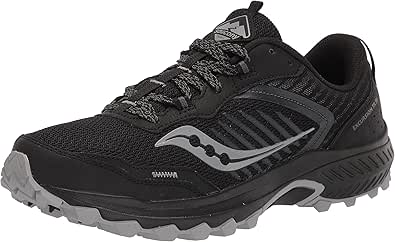 | Best Durable Protection | Fabric: Mesh | Sole material: Rubber | Outer material: Mesh | VIEW ON AMAZON | See Our Full Breakdown |
| New Balance Men’s Dynasoft Tektrel V1 Suede Trail Running Shoes |  | Best for Road-to-Trail Versatility | Midsole: DynaSoft | Sole material: Rubber | Outer material: Rubber, recycled material | VIEW ON AMAZON | See Our Full Breakdown |
| ALTRA Men’s Lone Peak 9 Trail Running Shoe |  | Best for Underfoot Protection | Outsole: MaxTrac | Underfoot protection: StoneGuard | Outer material: 100% RPET ripstop mesh | VIEW ON AMAZON | See Our Full Breakdown |
| Brooks Women’s Caldera 8 Ultra Trail Running Shoe |  | Best for Long-Distance Cushioning | Cushioning: DNA Loft v3 | Sole material: Rubber | Outer material: Nylon | VIEW ON AMAZON | See Our Full Breakdown |
| Brooks Women’s Cascadia 19 Mountain Trail Running Shoe |  | Best for Rugged-Trail Support | Outsole: TrailTack Green rubber | Stability system: Trail Adapt System | Outer material: Mesh | VIEW ON AMAZON | See Our Full Breakdown |
| Brooks Men’s Caldera 8 Ultra Trail Running Shoe |  | Best for Plush Support on Long Runs | Cushioning: DNA Loft v3 | Sole material: Rubber | Outer material: Mesh, rubber | VIEW ON AMAZON | See Our Full Breakdown |
| Adidas Womens Terrex Tracefinder Trail Running |  | Best for Higher-Drop Cushioning | Weight: 13.5 oz (size 7) | Midsole drop: 10 mm | Heel stack: 29 mm | VIEW ON AMAZON | See Our Full Breakdown |
| New Balance Women’s Dynasoft Nitrel V6 Trail Running Shoes |  | Best for Road-to-Trail Versatility | Midsole: DynaSoft | Drop: Approximately 6 mm | Outsole: AT Tread | VIEW ON AMAZON | See Our Full Breakdown |
| New Balance Men’s Fresh Foam 410 V9 Trail Running Shoe |  | Best for Cushioned Trail Comfort | Midsole: Bio Foam with Fresh Foam technology | Outsole: Versatile all-terrain design | Outer material: Mesh | VIEW ON AMAZON | See Our Full Breakdown |
| Brooks Women’s Adrenaline GTS 24 Supportive Running Shoe |  | Best for Guided Support on Mixed Surfaces | Support system: GuideRails | Cushioning: Nitrogen-infused DNA Loft v3 | Weather protection: DWR mesh upper | VIEW ON AMAZON | See Our Full Breakdown |
| Brooks Women’s Ghost Trail Off-Road Running Shoe for Rugged Terrain |  | Best for Rugged-Terrain Cushioning | Outsole: TrailTack Green rubber | Lug depth: 3 mm | Midsole: Nitrogen-infused DNA LOFT v3 | VIEW ON AMAZON | See Our Full Breakdown |
| supportive trail running shoe | Outer material | Outsole | Sole material | Origin |
|---|---|---|---|---|
| Saucony Excursion TR14 Women’s | — | Rubber with 6mm lugs | — | — |
| Saucony Men’s Excursion Tr14 T | Mesh | Rugged | Rubber | — |
| Brooks Men’s Ghost Trail Off-R | — | TrailTack Green rubber | Rubber | Imported |
| New Balance Women’s Dynasoft T | Mesh | Aggressive lug pattern | Rubber | Imported |
| Saucony Men’s Excursion TR15 | Mesh | Rugged, all-terrain | Rubber | Imported |
| New Balance Men’s Dynasoft Tek | Rubber, recycled material | — | Rubber | Imported |
| ALTRA Men’s Lone Peak 9 Trail | 100% RPET ripstop mesh | MaxTrac | — | Imported |
| Brooks Women’s Caldera 8 Ultra | Nylon | — | Rubber | Imported |
| Brooks Women’s Cascadia 19 Mou | Mesh | TrailTack Green rubber | — | Imported |
| Brooks Men’s Caldera 8 Ultra T | Mesh, rubber | — | Rubber | Imported |
| Adidas Womens Terrex Tracefind | — | Traxion rubber with multidirectional lugs | — | — |
| New Balance Women’s Dynasoft N | Rubber | AT Tread | Rubber | — |
| New Balance Men’s Fresh Foam 4 | Mesh | Versatile all-terrain design | Rubber | Imported |
| Brooks Women’s Adrenaline GTS | Rubber | — | Rubber | — |
| Brooks Women’s Ghost Trail Off | Nylon | TrailTack Green rubber | Rubber | — |
More Details on Our Top Picks
Saucony Excursion TR14 Women’s Trail Running Shoes
The Saucony Excursion TR14 is my lead pick for runners who want practical support on rough paths without moving to a more specialized shoe. Its supportive overlays help hold the foot in place, while 6mm lugs offer a more assertive bite than the 3mm lugs on the Brooks Ghost Trail. Versarun cushioning softens trail impacts, though it is less suited to long days when plush, high-volume cushioning is the priority. The 8.8-ounce listed weight and 8mm offset make it a straightforward option for everyday trail outings, rather than a minimal, nimble choice. Its tradeoffs are a basic design and limited information about advanced cushioning or protection. I’d choose it for dependable, budget-minded support, but not for ultradistance comfort.
Pros:- Supportive overlays help keep the foot secure
- 6mm outsole lugs provide useful grip on rugged terrain
- Versarun cushioning adds impact comfort for everyday outings
- Mesh upper offers a breathable construction
Cons:- Cushioning may feel limited on long-distance runs
- Basic styling and limited color options
- Less road-friendly than a versatile road-to-trail shoe
Best for: Women seeking a secure-fitting, moderately cushioned shoe for regular runs and hikes on uneven trails.
Not ideal for: Runners planning long-distance outings who want substantial cushioning, or buyers who need a highly protective technical shoe.
- Category:Trail
- Offset:8mm (23/31)
- Weight:8.8 oz
- Sizes:Women 5–12
- Cushioning:Versarun
- Outsole:Rubber with 6mm lugs
- Upper:Trail-specific mesh with supportive overlays
- Fabric:Synthetic and mesh
Our verdict“Choose the Excursion TR14 for secure, affordable everyday trail support, and look elsewhere if long-run cushioning is your main need.”
Saucony Men’s Excursion Tr14 Trail Running Shoes
For runners who split time between trail runs and longer hikes, the men’s Excursion TR14 pairs supportive overlays with Versarun cushioning and a rugged rubber outsole. That combination favors a stable, comfortable feel over the lighter, more stripped-back sensation some runners want for quick outings. Compared with the women’s Excursion TR14, the core appeal is much the same: practical support and traction for everyday off-road use, with no listed weight or offset here to help judge fit and ride precisely. Its mesh upper supports airflow, while the substantial tread is less at home on pavement. I’d put it ahead of the New Balance Women’s Dynasoft Tektrel V1 for buyers prioritizing a secure trail-oriented build, but the available details offer less evidence of specialized long-distance cushioning.
Pros:- Supportive overlays promote a secure fit
- Rugged rubber outsole is suited to off-road traction
- Versarun cushioning adds comfort on runs and hikes
- Breathable mesh upper balances airflow with trail use
Cons:- Tread and build are less suited to regular road running
- May feel heavier than minimalist trail shoes
- Listed specifications do not include weight or offset
Best for: Men who want a supportive trail shoe for mixed running and hiking on uneven, rugged routes.
Not ideal for: Road-focused runners or minimalist-shoe fans who prefer a lighter, less substantial feel.
- Sole material:Rubber
- Outer material:Mesh
- Inner material:Natural rubber
- Closure:Lace-up
- Cushioning:Versarun
- Outsole:Rugged
- Fit support:Supportive overlays
Our verdict“Pick this Excursion TR14 if you want a secure, cushioned shoe for trails and hikes rather than a light road-to-trail option.”
Brooks Men’s Ghost Trail Off-Road Running Shoe
The Brooks Ghost Trail is the pick here for runners who want a more responsive, cushioned ride with trail-specific grip. Its nitrogen-infused DNA LOFT v3 midsole is a clearer cushioning proposition than the Excursion TR14’s Versarun, while the 3mm TrailTack Green lugs favor varied trail surfaces over especially deep, loose terrain. Air mesh and 3D-printed overlays balance breathability with a secure upper, giving this model a more performance-focused feel than the straightforward Saucony Excursion TR14. The tradeoff is a potentially bulky fit, and the trail-oriented outsole is not an ideal match for regular pavement miles. I’d favor it when responsive cushioning matters more than deep lug bite, but the provided specs do not identify a dedicated stability system.
Pros:- Nitrogen-infused DNA LOFT v3 midsole supplies responsive cushioning
- TrailTack Green rubber outsole is specified for wet and dry grip
- Air mesh upper supports breathability
- 3D-printed overlays and adjustable lacing help secure the fit
Cons:- May feel bulky to runners who prefer a streamlined shoe
- 3mm lugs offer less depth than the Excursion TR14’s 6mm lugs
- Trail-specific design is less suited to road running
Best for: Men who want responsive cushioning and reliable grip for mixed-surface trail runs.
Not ideal for: Runners who need deep lugs for very loose terrain, prefer a compact shoe, or run mainly on roads.
- Midsole:Nitrogen-infused DNA LOFT v3
- Outsole:TrailTack Green rubber
- Lug depth:3mm
- Upper:Air mesh with 3D-printed overlays
- Closure:Lace-up
- Sole material:Rubber
- Origin:Imported
Our verdict“Choose the Ghost Trail for responsive cushioning and versatile trail grip, but favor the Excursion TR14 for deeper lugs.”
New Balance Women’s Dynasoft Tektrel V1 Trail Running Shoes
At a listed 249.3g, the women’s New Balance Dynasoft Tektrel V1 favors a lighter, more everyday feel over the enveloping support of the Excursion TR14. Its aggressive lug pattern is described as suitable for pavement and dirt, making it the more adaptable choice for runners whose routes move between surfaces. The impact-absorbing midsole adds comfort, but the product details do not identify supportive overlays or a stability system, and the shoe may lack support for long-distance runs. Compared with the Brooks Ghost Trail, it has a stronger stated road-and-dirt crossover, while the Brooks offers more specific cushioning and upper details. I’d choose this for shorter mixed-surface outings, not for technical terrain or runners who need substantial foot guidance.
Pros:- Listed weight of 249.3g supports a lighter everyday feel
- Aggressive lugs are described for pavement and dirt
- Impact-absorbing midsole adds comfort
- Mesh upper and lace-up closure offer a familiar fit
Cons:- May not provide enough support for long-distance runs
- Durability may take a back seat to lifestyle-inspired styling
- Product details do not specify an upper support system
Best for: Women who want a lightweight-feeling shoe for short runs on paths that alternate between pavement and dirt.
Not ideal for: Long-distance trail runners or buyers seeking clearly specified support features for technical, uneven routes.
- Weight:249.3g
- Sole material:Rubber
- Outer material:Mesh
- Closure:Lace-up
- Midsole:Impact-absorbing
- Outsole:Aggressive lug pattern
- Origin:Imported
Our verdict“Pick the Tektrel V1 for lighter, shorter pavement-to-dirt outings, not when long-run support is your priority.”
Saucony Men’s Excursion TR15
The Saucony Excursion TR15 suits runners who value a durable, protective build and supportive overlays more than a highly specified cushioning profile. Its rugged outsole targets all-terrain grip, while the mesh upper and recycled materials add practical construction details. Compared with the Excursion TR14, this listing emphasizes durable protection and an eco-friendly design but provides no lug depth, weight, or offset, so buyers have fewer details for comparing fit and ride. The TR14 is the more measurable choice for shoppers who want a stated lug depth and cushioning system; the TR15 is appealing when its protective overlays and all-terrain positioning are the priorities. It may feel bulky, so it is less compelling for runners seeking a nimble, lightweight shoe.
Pros:- Supportive overlays add a protective, secure-fit element
- Rugged outsole is intended for all-terrain grip
- Versatile cushioning is included for comfort
- Made with recycled materials
Cons:- May feel bulky to runners seeking a nimble ride
- No listed weight, offset, or lug depth for closer comparison
- Limited color options
Best for: Men who want a durable, supportive-overlaid trail shoe for general outdoor routes and value recycled materials.
Not ideal for: Runners who need published weight, offset, or lug-depth details to match a shoe to technical terrain or a specific fit preference.
- Fabric:Mesh
- Sole material:Rubber
- Outer material:Mesh
- Cushioning:Versatile cushioning
- Outsole:Rugged, all-terrain
- Upper features:Supportive overlays
- Materials:Includes recycled materials
- Origin:Imported
Our verdict“Choose the Excursion TR15 for durable, supportive protection and recycled materials, but favor the TR14 if precise traction specs matter.”
New Balance Men’s Dynasoft Tektrel V1 Suede Trail Running Shoes
For runners who split time between pavement and gentler trails, the DynaSoft midsole offers a more comfort-oriented ride than a shoe focused mainly on rough-terrain protection. Its rubber outsole is described as suitable for both on- and off-road use, giving it broader everyday appeal than the trail-specific Brooks Cascadia 19. That versatility is the main draw, but the supplied details do not establish dedicated underfoot protection or stability features, so I would not rank it ahead of more protective options for rocky, uneven routes. The lifestyle-inspired upper also makes it easier to wear beyond runs. The tradeoff is that aggressive lugs may feel less comfortable on smooth surfaces, while durability may vary on demanding terrain. Choose it for mixed routes, not maximum support on technical trails.
Pros:- Responsive DynaSoft midsole adds comfort for mixed-surface runs.
- Rubber outsole is described as versatile for on- and off-road use.
- Lifestyle-inspired design is less trail-specific in appearance.
- Includes recycled material in the listed construction.
Cons:- No dedicated underfoot protection or stability system is specified.
- Durability may be limited on demanding terrain.
- Aggressive lugs may feel uncomfortable on smooth surfaces.
Best for: Runners who alternate between paved paths and mild trails and want a cushioned shoe with a casual-looking design.
Not ideal for: Runners who need specified rock protection or added stability for long, technical routes; the product details do not identify those features.
- Midsole:DynaSoft
- Sole material:Rubber
- Outer material:Rubber, recycled material
- Inner material:Recycled material
- Origin:Imported
- Use:On- and off-road
Our verdict“Choose the Tektrel V1 for cushioned road-to-trail versatility, but pick the Cascadia 19 if rugged-terrain protection and stability matter more.”
ALTRA Men’s Lone Peak 9 Trail Running Shoe
The StoneGuard is the Lone Peak 9’s clearest advantage for runners who want a barrier between their feet and rough trail debris. Paired with the MaxTrac outsole, it prioritizes grip and underfoot protection more explicitly than the road-to-trail New Balance Dynasoft Tektrel V1. A breathable ripstop mesh upper helps keep the shoe suited to active trail use, while the supplied product details also cite an APMA Seal. That focus comes with a narrower remit: the Lone Peak 9 may feel heavier than minimalist shoes and is less suited to casual wear. The listing provides no specific stability system or cushioning details, so I would choose it for traction and protection rather than assume it is the most supportive option for every foot. It makes the most sense for trail runners who value protection over a lightweight, everyday feel.
Pros:- StoneGuard adds a stated layer of underfoot protection.
- MaxTrac outsole is designed for grip and durability across terrain.
- Breathable ripstop mesh upper supports ventilation.
- APMA Seal is cited in the product details.
Cons:- May feel heavier than minimalist trail shoes.
- Less suited to casual wear than the Dynasoft Tektrel V1.
- No specific stability system or cushioning construction is listed.
Best for: Trail runners who regularly encounter rough ground and prioritize outsole grip and a protective layer underfoot.
Not ideal for: Runners seeking a lightweight minimalist feel or a shoe that doubles easily as casual footwear.
- Outsole:MaxTrac
- Underfoot protection:StoneGuard
- Outer material:100% RPET ripstop mesh
- Inner material:Breathable mesh
- Origin:Imported
- Certification cited:APMA Seal
Our verdict“Pick the Lone Peak 9 if trail grip and StoneGuard protection are your priorities, and skip it if you want a light, casual all-rounder.”
Brooks Women’s Caldera 8 Ultra Trail Running Shoe
For long trail days, the DNA Loft v3 cushioning gives the women’s Caldera 8 a comfort-first role, while raised sidewalls and flex grooves add a stated measure of stability on rugged ground. That combination makes it a stronger fit for extended outings than the more mixed-surface New Balance Dynasoft Tektrel V1, which is positioned for both road and trail use. The Caldera 8 is purpose-built for trail running, though, and its listed details do not name a specific outsole compound or protective toe features like the Brooks Cascadia 19 does. Its breathable upper and carbon-neutral certification may appeal to runners who value ventilation and environmental credentials, but the shoe may feel heavier than a road model and is less suited to casual wear. I’d favor it for cushioned distance efforts over quick, lightweight runs.
Pros:- DNA Loft v3 cushioning is designed for comfort over long distances.
- Raised sidewalls and flex grooves add stated stability on uneven trails.
- Breathable upper supports ventilation during extended runs.
- Carbon-neutral certification is cited in the product details.
Cons:- May feel heavier than a road-running shoe.
- Trail-focused design is less suited to casual wear.
- The listed specs do not identify a specific outsole compound or reinforced toe cap.
Best for: Women trail runners seeking plush cushioning and added stability for long outings on rugged terrain.
Not ideal for: Runners prioritizing a lightweight road-to-trail shoe or a casual everyday option.
- Cushioning:DNA Loft v3
- Sole material:Rubber
- Outer material:Nylon
- Stability features:Raised sidewalls and flex grooves
- Upper:Breathable
- Certification:Carbon neutral
- Origin:Imported
Our verdict“Choose the women’s Caldera 8 for cushioned, stable-feeling long trail runs, but look to the Cascadia 19 for specified toe protection and outsole details.”
Brooks Women’s Cascadia 19 Mountain Trail Running Shoe
The Cascadia 19 makes the strongest case here for a protective, supportive feel on varied terrain: its Trail Adapt System is paired with a grippy TrailTack Green rubber outsole, while a reinforced toe cap and mudguard add protection around the foot. Those details give it a more explicitly rugged-trail setup than the women’s Brooks Caldera 8, which emphasizes plush cushioning and long-distance comfort. The Cascadia’s responsive cushioning still supports comfort, but the supplied information does not specify its cushioning compound or quantify the amount of support. Its mesh upper is breathable, and the protective build may suit rough routes, though it may feel heavier than road-running shoes. I’d choose it when trail security and protection outweigh a lighter, more flexible feel; for long-distance plushness, the Caldera is the clearer alternative.
Pros:- Trail Adapt System provides a named stability feature.
- TrailTack Green rubber outsole is designed for traction on varied terrain.
- Reinforced toe cap and mudguard add protective coverage.
- Breathable air mesh upper balances coverage with ventilation.
Cons:- May feel heavier than road-running shoes.
- Cushioning compound and support level are not specified in the supplied details.
- Its protective trail build is less suited to runners seeking a light, flexible shoe.
Best for: Women trail runners who want a protective, stability-oriented shoe for varied and rugged terrain.
Not ideal for: Runners who favor a lightweight road-running feel or want the Caldera 8’s specifically named DNA Loft v3 cushioning.
- Outsole:TrailTack Green rubber
- Stability system:Trail Adapt System
- Outer material:Mesh
- Upper:Breathable air mesh
- Toe protection:Reinforced toe cap
- Additional protection:Mudguard
- Shaft height:Ankle
- Origin:Imported
Our verdict“Choose the Cascadia 19 for a stability-focused, protective build on rugged trails; choose the Caldera 8 if plush long-distance cushioning is your priority.”
Brooks Men’s Caldera 8 Ultra Trail Running Shoe
The men’s Caldera 8 is the lineup’s plush long-distance option: DNA Loft v3 cushioning is designed to soften extended efforts, and raised sidewalls add stability on rugged terrain. Compared with the men’s ALTRA Lone Peak 9, which names StoneGuard underfoot protection and a MaxTrac outsole, the Caldera puts more emphasis on cushioning and a stable platform than on specified rock protection or outsole details. Its breathable mesh upper and carbon-neutral certification add practical and environmental appeal, but the tradeoff is a build that may feel heavier than lighter trail shoes and is less suited to casual wear. The product data does not specify a protective insert or toe cap, so runners facing frequent sharp rocks may prefer the Cascadia 19’s listed protective features. This is the stronger fit for comfort-led distance, not a minimal or highly technical feel.
Pros:- DNA Loft v3 cushioning targets comfort over long distances.
- Raised sidewalls add a stated stability feature for rugged terrain.
- Breathable mesh supports ventilation.
- Carbon-neutral certification is cited in the product details.
Cons:- May be heavier than lightweight trail shoes.
- Trail-specific design is less suitable for casual wear.
- No StoneGuard or reinforced toe cap is specified, unlike protection-focused alternatives.
Best for: Men trail runners looking for plush cushioning and added stability for long runs on rugged routes.
Not ideal for: Runners who need specified rock protection, a reinforced toe cap, or a lighter shoe for faster efforts.
- Cushioning:DNA Loft v3
- Sole material:Rubber
- Outer material:Mesh, rubber
- Inner material:Mesh
- Stability features:Raised sidewalls
- Upper:Breathable
- Certification:Carbon neutral
- Origin:Imported
Our verdict“Choose the men’s Caldera 8 for cushioned, stable-feeling long trail runs, but favor the Lone Peak 9 or Cascadia 19 if specified underfoot or toe protection matters more.”
Adidas Womens Terrex Tracefinder Trail Running
The Terrex Tracefinder is a sensible match for runners who want a straightforward trail shoe with a more pronounced heel-to-forefoot drop. Its 10 mm drop and LIGHTMOTION cushioning may feel familiar to road runners moving onto moderate trails, while the mesh-and-synthetic upper balances airflow with reinforcement. Compared with the New Balance Women’s Dynasoft Nitrel V6, it offers a higher stated drop and a rugged-terrain outsole; the Nitrel V6 instead has a lower, approximate 6 mm drop and an outsole described for both road and trail use. Traxion lugs are intended to grip in multiple directions, but the product details do not identify a dedicated stability system or protective plate. I’d choose it for general trail support, not for runners who need structured arch guidance or technical-terrain protection.
Pros:- 10 mm drop may suit runners accustomed to traditional road-shoe geometry.
- LIGHTMOTION cushioning keeps the stated design focused on a light step-in feel.
- Traxion lugs are designed for grip in multiple directions on rugged terrain.
- Mesh and synthetic upper combines breathability with added material reinforcement.
Cons:- No specific stability or motion-guidance system is listed.
- The 10 mm drop may not suit runners who prefer a lower, more level platform.
- At 13.5 ounces in size 7, it may feel heavy to runners prioritizing a light trail shoe.
Best for: Road runners moving onto moderate trails who prefer a higher drop, light cushioning, and multidirectional outsole grip.
Not ideal for: Runners who need a defined stability system, a rock plate, or detailed fit and protection information for technical routes.
- Weight:13.5 oz (size 7)
- Midsole drop:10 mm
- Heel stack:29 mm
- Forefoot stack:19 mm
- Cushioning:adidas LIGHTMOTION
- Outsole:Traxion rubber with multidirectional lugs
- Upper:Mesh and synthetic
- Closure:Lace-up
Our verdict“Choose the Terrex Tracefinder if you want a higher-drop trail shoe with multidirectional grip, but look elsewhere for explicit stability features.”
New Balance Women’s Dynasoft Nitrel V6 Trail Running Shoes
The Dynasoft Nitrel V6 suits runners whose routes mix pavement, packed dirt, and easy trails. Its DynaSoft midsole is described as both responsive and plush, while the AT Tread outsole is designed to work on- and off-road; that wider-use brief distinguishes it from the Adidas Terrex Tracefinder, whose Traxion outsole is aimed more directly at rugged terrain. The Nitrel’s approximate 6 mm drop also gives it a lower profile than the Adidas’s 10 mm drop, which may appeal to runners who prefer less heel rise. These details point to comfort and adaptable traction rather than specialized support: no stability system or rock protection is specified. I’d pick it for mixed routes, but not for demanding, rocky trails where more protection is a priority.
Pros:- DynaSoft midsole pairs responsive performance with plush comfort.
- AT Tread outsole is designed for both on-road and off-road traction.
- Approximate 6 mm drop offers a lower profile than the Adidas Terrex Tracefinder.
- No-sew overlays reduce the need for stitched upper panels.
Cons:- The product description does not specify a stability system or protective plate.
- Its mixed-surface outsole focus may be less suited to rugged trails than the Terrex Tracefinder’s stated Traxion design.
- The 6 mm drop is approximate, so the listed geometry may vary.
Best for: Women running a mix of pavement, park paths, and nontechnical trails who want cushioning and versatile traction.
Not ideal for: Runners tackling rocky technical routes or seeking a specified stability system, rock plate, or dedicated trail protection.
- Midsole:DynaSoft
- Drop:Approximately 6 mm
- Outsole:AT Tread
- Upper detail:No-sew overlays
- Insert:EVA foam
- Sole material:Rubber
- Outer material:Rubber
- Inner material:Cotton
Our verdict“Pick the Nitrel V6 for cushioned comfort across road and easy trail miles, not for specialized support on rough terrain.”
New Balance Men’s Fresh Foam 410 V9 Trail Running Shoe
The Fresh Foam 410 V9 centers its appeal on cushioning and a secure, breathable upper, making it a reasonable choice for runners who want comfort over longer outings on varied terrain. Its Fresh Foam cushioning is described as absorbing shock, while reinforced overlays add structure around the mesh upper. Compared with the Brooks Women’s Ghost Trail, which specifies TrailTack Green rubber and 3 mm lugs, the 410 V9 gives less detail about lug depth or outsole composition beyond its all-terrain grip. That makes the Brooks easier to judge for trail-specific traction, while the New Balance emphasizes cushioning and airflow. Neither description identifies a formal stability system, so I would not treat the 410 V9 as a corrective support shoe. Its trail-focused look may also be less appealing for everyday casual wear.
Pros:- Fresh Foam cushioning is described as providing comfort and shock absorption.
- All-terrain outsole is intended to provide grip across varied surfaces.
- Breathable mesh upper supports airflow on longer outings.
- Reinforced overlays and lace-up closure contribute to a secure fit.
Cons:- No formal stability or motion-control technology is listed.
- Outsole lug depth and rubber details are not provided.
- Its trail-specific styling may be less suited to casual wear.
Best for: Men who want shock-absorbing cushioning, a breathable upper, and a secure lace-up fit for trail runs and hikes.
Not ideal for: Runners who need a specified stability system, measurable lug details, or a shoe that doubles discreetly as casual footwear.
- Midsole:Bio Foam with Fresh Foam technology
- Outsole:Versatile all-terrain design
- Outer material:Mesh
- Sole material:Rubber
- Closure:Lace-up
- Upper construction:Breathable mesh with reinforced overlays
- Origin:Imported
Our verdict“Choose the Fresh Foam 410 V9 for cushioned comfort and a secure fit on varied trails, but not if you need clearly specified stability or lug performance.”
Brooks Women’s Adrenaline GTS 24 Supportive Running Shoe
Among these options, the Adrenaline GTS 24 provides the clearest support feature: GuideRails, designed to support natural motion. Its weatherized DWR mesh and all-weather wet/dry traction make it a better fit for changeable conditions than the New Balance Women’s Dynasoft Nitrel V6, which is explicitly framed for on- and off-road versatility but does not list a guidance system or weather protection. The nitrogen-infused DNA Loft v3 cushioning adds a comfort-focused element for longer runs. There is a key caveat for this roundup: the supplied description calls the Adrenaline a running shoe for varied surfaces, but does not specify trail lugs or a trail-specific outsole. I’d rank it for runners prioritizing support and weather resistance on mixed routes, not as my first choice for rugged, technical trails.
Pros:- GuideRails provide a specifically named support system.
- DWR mesh upper adds weather protection in wet conditions.
- Nitrogen-infused DNA Loft v3 foam is designed for cushioned comfort.
- Reflective elements and stated wet/dry traction suit changeable conditions.
Cons:- The supplied details do not specify trail lugs or a trail-specific outsole.
- Weatherized construction may feel heavier than minimalist running shoes.
- The description positions it for varied surfaces, leaving rugged-trail capability unclear.
Best for: Women who want GuideRails support and weather protection for runs that include wet paths and light, mixed-surface routes.
Not ideal for: Trail runners who need confirmed trail lugs, rugged-terrain outsole details, or a lightweight shoe for technical courses.
- Support system:GuideRails
- Cushioning:Nitrogen-infused DNA Loft v3
- Weather protection:DWR mesh upper
- Traction:All-weather wet/dry traction
- Visibility:Reflective elements
- Sole material:Rubber
- Outer material:Rubber
- Inner material:Nylon
Our verdict“Choose the Adrenaline GTS 24 if guided support and weather protection matter more than confirmed rugged-trail traction.”
Brooks Women’s Ghost Trail Off-Road Running Shoe for Rugged Terrain
The Brooks Women’s Ghost Trail is the most clearly trail-specific option here for runners facing rocky or technical ground: its TrailTack Green rubber outsole has 3 mm lugs, and the air mesh upper uses 3D-printed overlays. Those details give buyers a firmer basis for judging grip and upper reinforcement than the New Balance Men’s Fresh Foam 410 V9, whose description promises all-terrain traction without listing lug depth. Nitrogen-infused DNA LOFT v3 cushioning adds comfort for longer runs or hikes, but the supplied specs do not name a stability system. That distinction matters for this roundup: rugged grip and cushioning are not the same as motion guidance. The Ghost Trail may also feel bulky to runners who value a nimble, low-profile ride.
Pros:- TrailTack Green rubber outsole with 3 mm lugs provides specified trail-grip details.
- Nitrogen-infused DNA LOFT v3 midsole supports cushioned runs and hikes.
- Air mesh and 3D-printed overlays combine breathability with reinforcement.
- Outsole is described as gripping on wet and dry surfaces.
Cons:- The shoe may feel bulky to runners who prefer a nimble profile.
- No formal stability or motion-guidance system is listed.
- The supplied details do not include weight or heel-to-toe drop.
Best for: Women running or hiking on rocky, uneven trails who want specified lug dimensions, durable overlays, and cushioned underfoot comfort.
Not ideal for: Runners who want a lightweight, low-profile shoe or need a named stability system for motion guidance.
- Outsole:TrailTack Green rubber
- Lug depth:3 mm
- Midsole:Nitrogen-infused DNA LOFT v3
- Upper:Air mesh with 3D-printed overlays
- Outer material:Nylon
- Inner material:Breathable fabric
- Sole material:Rubber
- Lacing:Adjustable lacing
Our verdict“Choose the Ghost Trail for cushioned grip on rough ground, but look elsewhere if you need a lightweight shoe or explicit stability guidance.”

How We Picked
I ranked these shoes by how well their stated design and positioning address support on trails, not by treating cushioning as a synonym for stability. I weighed trail-relevant grip and protection, platform feel, cushioning, fit cues, and the range of terrain each model appears suited to handle. I also looked at how useful each shoe is for a particular buyer: a dependable everyday trail option, a more cushioned long-run choice, a roomy zero-drop fit, or an accessible entry point.
The order reflects differences in trail-specific support, versatility, and how clearly each model serves its intended runner. The Cascadia 19 leads because it is the most direct match for runners seeking a supportive trail shoe; the Caldera 8 and Lone Peak 9 rank highly for distinct needs rather than universal appeal. More basic trail options sit lower because they offer fewer clear reasons to choose them over the more specialized models. The Adrenaline GTS 24 is included as a stability-focused comparison, but its road-running orientation makes it a less natural pick for rugged trails.
Factors to Consider When Choosing Supportive Trail Running Shoes
Support is not one feature, and the right shoe depends on what you want it to do: steady your foot, cushion repeated impacts, hold your heel, or give your toes more room. I would start with the terrain and your preferred ride, then check whether the shoe’s shape and support feel right on your foot.
Separate Stability From Cushioning
A thick, soft midsole can feel comfortable without guiding the foot or creating a particularly stable platform. If you want support on uneven ground, look at how securely the shoe holds your heel and midfoot and whether its base feels predictable when you shift side to side. More cushioning can help on long, hard outings, but a very soft ride may feel less precise on narrow or technical trails. Conversely, a firmer shoe can feel controlled yet tiring if you want plush comfort. Decide which problem you are trying to solve before treating more foam as more support.
Match Traction and Protection to Your Trails
Trail shoes vary because dirt paths, wet roots, loose gravel, and rocky climbs ask for different kinds of grip and underfoot protection. A versatile shoe can work well on mixed routes, but it may not feel as secure as a more specialized option in mud or on jagged rock. Buyers often focus on the outsole name and overlook how the shoe feels when turning, braking downhill, or crossing uneven ground. If your regular route is mostly smooth park paths, an aggressive tread can add weight and feel awkward without solving a real need. Choose for the surfaces you run most often, not the most dramatic trail you might visit once.
Treat Fit as Part of Support
A shoe that fits poorly cannot provide dependable support, even if its design is stability-oriented. Check heel hold, midfoot security, toe room, and whether your foot slides forward on descents; a comfortable standing fit may change once your feet swell on a longer run. A roomy toe box, such as the kind associated with the Lone Peak 9, can suit runners who dislike pressure across the forefoot, but a broad shape is not automatically right for every foot. Avoid sizing up simply to create toe room if that leaves the heel loose. When possible, try shoes later in the day and with the socks you expect to run in.
Account for Heel-to-Toe Drop and Running Feel
Drop changes how a shoe places your foot and can affect which muscles and joints feel the work, so it is a fit decision as well as a comfort preference. The Lone Peak 9’s zero-drop geometry differs sharply from more conventional trail designs; runners used to a raised heel may need time to adapt. A sudden switch in geometry or cushioning can make a shoe feel less supportive even when it is stable underfoot. If you are changing drop, make the adjustment gradually rather than taking a new shoe straight onto a long or steep run. Choose the ride you can use consistently, not the one that sounds most natural in a description.
Know When a Road Stability Shoe Is the Wrong Tool
A road shoe with a stability system can be useful for paved approaches or smooth, well-maintained paths, but it may not offer the traction and protection needed for rough trails. The Adrenaline GTS 24 provides a helpful point of comparison in this roundup, yet its road focus sets it apart from the Cascadia and other trail-specific options. Buyers sometimes prioritize a familiar support feature and overlook outsole grip, upper security, and protection from uneven terrain. If your routes include loose surfaces or rocky descents, choose a trail-first design and confirm that its support matches your needs. For mostly pavement with occasional smooth dirt, a road-oriented stability shoe may be a reasonable compromise.
Pay More for a Clear Need, Not a Label
A more specialized shoe makes sense when its design solves a recurring problem: you need extra comfort for long outings, a more secure feel on technical routes, or a fit shape that works better for your foot. It is less useful to pay for features you will rarely notice on short, uncomplicated runs. The lineup’s accessible options can serve newer trail runners well if their terrain and fit needs are modest, while the more distinct Brooks and Altra models offer clearer reasons to choose them for particular priorities. Compare intended use, not just model names or the word “support” in a listing. If you are unsure, favor a comfortable, versatile fit over a dramatic change in geometry or ride.
Frequently Asked Questions
Which shoe in this lineup is the best starting point if I want trail-specific support?
I would start with the Brooks Women’s Cascadia 19 if you want a trail-focused option with a more stability-oriented role. It is a stronger match for that brief than the road-oriented Adrenaline GTS 24, and a more direct trail choice than treating plush cushioning alone as support. Your fit still decides whether it works: check heel hold and whether the platform feels steady on uneven ground. If you mainly run smooth paths and want a softer ride, the Caldera 8 may suit you better. Neither model can replace trying the shoe on your own foot and terrain.
Should I choose the Brooks Caldera 8 or Cascadia 19 for longer trail runs?
Choose between them by ride preference rather than distance alone. The Caldera 8 is the more cushioning-led option, which may appeal if comfort over extended outings is your main priority. The Cascadia 19 makes more sense if you want a clearer trail-support focus and a more controlled feel on uneven ground. A softer ride is not automatically more stable, and a firmer, more guided feel is not automatically more comfortable. Consider your usual terrain and whether you prefer cushioning or a more planted platform.
Is the Altra Lone Peak 9 a good choice if I need support?
It may be a good choice if your idea of support includes a roomy toe box and a zero-drop platform, rather than conventional stability guidance. That distinctive shape can suit runners who feel cramped in narrower shoes, but it will not suit everyone seeking a familiar heel-to-toe feel. Runners accustomed to a raised heel should account for the change in geometry and avoid making a long run their first outing. Fit and adaptation matter as much as the model’s trail credentials. If you specifically want a more guided ride, compare it with the Cascadia instead.
Can I use the Brooks Adrenaline GTS 24 on trails?
The Adrenaline GTS 24 can make sense on pavement, packed paths, or routes with only occasional smooth dirt, especially if you already prefer its road-oriented stability approach. It is not the clearest choice for rough or loose trails, where trail-specific traction and protection matter more. The Ghost Trail options and trail models in this roundup are better places to look if off-road running is the main purpose. Do not assume a stability label means a shoe is prepared for every surface. Match the outsole and overall design to the terrain you actually run.
How do I choose between the Saucony Excursion and New Balance entry-level trail options?
Start with fit, then choose based on which model feels secure and comfortable for your usual routes. The Excursion TR14 and TR15 and the New Balance Tektrel, Nitrel, and 410 options occupy a more accessible, everyday-trail part of this lineup than the more specialized Brooks trail picks. Differences between versions and men’s and women’s listings do not guarantee that one will fit your foot better. If you want stronger trail-specific support, compare these options directly with the Cascadia rather than assuming a basic trail shoe will provide the same feel. Keep expectations aligned with your terrain and the amount of stability you want.
Conclusion
For the clearest match to supportive trail running, I recommend the Brooks Women’s Cascadia 19 as best overall, particularly for runners who want trail-specific stability. The Saucony Excursion TR14 or TR15 is my best-value direction for straightforward, everyday trail use, while the Brooks Caldera 8 is my premium-style pick for runners who put cushioning and longer-run comfort first. For beginners, I would start with an Excursion or a New Balance Dynasoft trail model that fits securely, then step up to a more specialized shoe if their terrain demands it. For roomy forefoot fit and zero-drop geometry, the Altra Lone Peak 9 is the standout specific-needs choice; for mostly paved routes with occasional smooth paths, the Adrenaline GTS 24 is the road-stability alternative. Choose by fit and terrain first, then by the kind of support you want to feel.
Halloween Picks
halloween
As an affiliate, we earn on qualifying purchases.