My ultramarathon running gear picks favor the Ultimate Direction Race Vest 6L as the best overall choice for runners who want a purpose-built vest without the bulk of a larger pack. The Ultimate Direction Ultra Vest 12L suits longer routes with more carrying needs, while the CamelBak Ultra Running Hydration Belt offers a simpler, lower-profile way to carry water. The main tradeoff is between storage and stability: more capacity can help on remote courses, but extra gear may feel cumbersome when a small kit would do. Fit, access to fluids, and the items your race actually requires matter as much as capacity. Read on for the full breakdown and guidance on matching each pick to your distance and setup.

Get workout gear delivered free with Prime
- Fast, free delivery on millions of items
- Prime Video, Amazon Music and more included
- Member-only deals all year
Complete the kit

Key Takeaways
- The Race Vest 6L is the roundup’s most balanced pick: it occupies the middle ground between a minimal belt and the larger 10L–12L vests.
- The Ultra Vest 12L is the capacity choice: it makes more sense when a route calls for extra layers, food, or other mandatory kit than when carrying only the basics.
- The CamelBak belt and Fitletic pouch serve different minimal-carry needs: the belt is built around carrying a flask, while the pouch prioritizes a compact way to carry small essentials and gels.
- The Haimont 10L and Zelvot bladder vest represent different hydration setups: flask-based access and bladder-based carrying can change how a runner drinks and refills on course.
- The shorts and general-purpose pack broaden the lineup, but are less specialized: JWJ shorts address clothing needs, while the IX INOXTO pack spans several activities rather than focusing solely on ultrarunning.
| Ultimate Direction Race Vest 6L |  | Best Overall for Minimalist Race-Day Carry | Weight: 175g (6.2 oz) | Capacity: 6L | Exterior pockets: 9 | VIEW ON AMAZON | See Our Full Breakdown |
| Haimont 10L Trail Running Hydration Vest with Soft Flasks |  | Best Value-Style Capacity for Long Training Runs | Capacity: 10L | Weight: 10.56 ounces | Included soft flasks: 2 x 500ml | VIEW ON AMAZON | See Our Full Breakdown |
| Fitletic Ultimate II Running Pouch with Gel Loops | 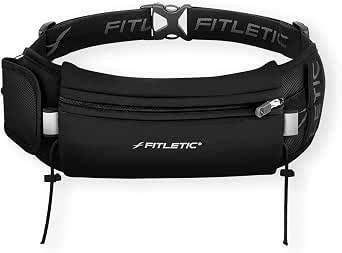 | Best Compact Option for Aid-Station Races | Pouch dimensions: 8 x 4 x 0.5 inches | Waist fit: Adjustable for 24–42 inches | Phone compatibility: Fits iPhone 15 Pro Max and similar phones | VIEW ON AMAZON | See Our Full Breakdown |
| CamelBak Ultra Running Hydration Belt with 17oz Quick Stow Flask |  | Best Hydration Belt for Pole-Carrying Runners | Included flask: 17oz Quick Stow Flask | Material: Breathable 3D mesh | Storage: Secure phone pocket | VIEW ON AMAZON | See Our Full Breakdown |
| Ultimate Direction Ultra Vest 12L |  | Best for Gear-Heavy and Self-Supported Ultras | Weight: 255g (7.9 oz) | Capacity: 12L | Exterior pockets: 11 | VIEW ON AMAZON | See Our Full Breakdown |
| Zelvot Running Vest with 1L Water Bladder for Men and Women |  | Best Entry-Level Hydration Vest | Water capacity: 1L | Material: Waterproof nylon and mesh | Chest fit range: 29–41 inches | VIEW ON AMAZON | See Our Full Breakdown |
| JWJ Men’s 2-in-1 Quick-Dry Running Shorts |  | Best Apparel Pick for Long Training Runs | Fabric: 90% polyester, 10% spandex | Closure: Drawstring | Construction: 2-in-1 with inner layer | VIEW ON AMAZON | See Our Full Breakdown |
| IX INOXTO Hydration Pack Backpack, Lightweight 2L Water Bladder for Running, Hiking, Cycling, Climbing |  | Best Higher-Capacity Hydration Pack | Pack capacity: 12L | Water bladder capacity: 2L | Weight: 0.97 lb | VIEW ON AMAZON | See Our Full Breakdown |
| ultramarathon running gear pick | Weight |
|---|---|
| Ultimate Direction Race Vest 6 | 175g (6.2 oz) |
| Haimont 10L Trail Running Hydr | 10.56 ounces |
| Fitletic Ultimate II Running P | — |
| CamelBak Ultra Running Hydrati | — |
| Ultimate Direction Ultra Vest | 255g (7.9 oz) |
| Zelvot Running Vest with 1L Wa | — |
| JWJ Men’s 2-in-1 Quick-Dry Run | — |
| IX INOXTO Hydration Pack Backp | 0.97 lb |
More Details on Our Top Picks
Ultimate Direction Race Vest 6L
The Race Vest 6L earns my lead spot for ultrarunners who want a close-fitting vest without carrying more than the course demands. Its 175g weight and two included 500ml flasks create a lighter, simpler setup than the more capacious Ultimate Direction Ultra Vest 12L. Nine exterior pockets give you ways to separate fuel and small essentials, while the 6L capacity suits runners who rely on aid stations rather than packing for every contingency. It can also take a 1.5L reservoir, but that reservoir is not included, so budget space and weight for one if you need it. Fit matters: the sizing chart deserves careful attention, and runners who need substantial layers or extra equipment will be better served by the 12L vest.
Pros:- Low 175g listed weight keeps the carried load modest
- Includes two 500ml soft flasks for front-access hydration
- Nine exterior pockets help separate fuel and small essentials
- Reservoir-compatible up to 1.5L for runners who want another hydration option
Cons:- The compatible reservoir is not included
- A 6L capacity may be restrictive for self-supported stretches or bulky gear
- Sizing requires careful chart reference for a secure fit
Best for: Ultrarunners who prioritize low weight, carry two soft flasks, and expect to replenish supplies at aid stations
Not ideal for: Runners carrying bulky layers or extensive mandatory gear, or anyone who needs a reservoir included
- Weight:175g (6.2 oz)
- Capacity:6L
- Exterior pockets:9
- Included hydration:2 x 500ml soft flasks
- Reservoir compatibility:Up to 1.5L; reservoir not included
- Fit:Unisex, body-hugging fit
Our verdict“Choose this vest for a light, organized race-day setup; pick the Ultra Vest 12L if your gear list needs more room.”
Haimont 10L Trail Running Hydration Vest with Soft Flasks
The Haimont 10L is the middle-ground choice for runners who want more packing room than a compact race vest without stepping up to the 12L Ultimate Direction Ultra Vest. Its stated 10.56-ounce weight and 10L capacity make space for fuel and extra gear while keeping the pack oriented toward running rather than general hiking. Two 500ml soft flasks are included, and the adjustable fit is intended to limit bounce as the load shifts. That combination suits long training days and mountain routes where carrying more than the bare essentials is useful. The tradeoff is bulk: for short outings or runners who pack lightly, the Race Vest 6L is a less cumbersome match. The listed Medium size may also limit fit options, and only a green color is specified.
Pros:- 10L capacity leaves room for fuel and additional trail gear
- Includes two 500ml soft flasks
- Adjustable fit is designed to help control bounce
- Listed 10.56-ounce weight keeps it relatively light for its capacity
Cons:- More vest than many runners need for short or casual outings
- Only Medium sizing and green color are specified in the supplied details
- Larger than the Race Vest 6L, making it less suited to minimalist race-day carry
Best for: Trail ultrarunners seeking a 10L vest with included front flasks for long training runs and gear-heavy routes
Not ideal for: Runners who carry only a phone and a little fuel, or buyers who need a clearly specified range of sizes and color options
- Capacity:10L
- Weight:10.56 ounces
- Included soft flasks:2 x 500ml
- Materials:Polyester, spandex, and nylon
- Listed size:Medium
- Listed color:Green
- Warranty:2 years
Our verdict“Pick the Haimont if you need more room than a 6L vest provides but do not need the Ultra Vest 12L’s full capacity.”
Fitletic Ultimate II Running Pouch with Gel Loops
For an ultrarunner who wants to carry a phone and a few gels rather than wear a vest, the Fitletic Ultimate II is the most compact option in this lineup. Its belt format avoids the larger footprint of the Haimont 10L and Ultimate Direction Race Vest 6L, while four gel loops keep quick-access fuel outside the pouch. The pocket fits an iPhone 15 Pro Max or similar phone, and integrated bib toggles are handy on race day. But this is not a hydration system: unlike the CamelBak belt, it has no included flask, and its pouch is not a substitute for vest capacity on long stretches between aid. Hand washing is also required. I would choose it for supported events and runners who prefer a minimal waist carry, not for self-supported ultras.
Pros:- Fits an iPhone 15 Pro Max and similar phones
- Four gel loops provide quick access to fuel
- Adjustable waist fit covers 24–42 inches
- Integrated bib toggles suit race-day use
Cons:- No flask or other hydration system is included
- Limited pouch capacity compared with the lineup’s running vests
- Hand wash only
Best for: Runners in well-supported ultras who carry a large phone, a few gels, and a race bib but prefer not to wear a vest
Not ideal for: Self-supported ultrarunners who need dedicated hydration, substantial gear capacity, or room for extra layers
- Pouch dimensions:8 x 4 x 0.5 inches
- Waist fit:Adjustable for 24–42 inches
- Phone compatibility:Fits iPhone 15 Pro Max and similar phones
- Gel loops:4
- Storage features:Exterior pouch and inner pocket
- Race features:Integrated bib toggles
- Care:Hand wash only
Our verdict“Choose this belt for phone-and-gel carry on supported courses; choose a hydration belt or vest when you need water and more storage.”
CamelBak Ultra Running Hydration Belt with 17oz Quick Stow Flask
The CamelBak Ultra Running Hydration Belt fills a useful niche between the compact Fitletic pouch and the larger vest systems: it carries water at the waist without asking you to wear a full pack. Its included 17oz Quick Stow Flask is collapsible, and breathable 3D mesh, reflective details, and a secure phone pocket address comfort and visibility on long runs. The integrated trekking-pole holder is its clearest advantage over the Fitletic Ultimate II, which is built around phone and gel carry rather than trail equipment. Capacity remains the limitation. One 17oz flask and restricted storage will not meet every runner’s needs between aid stations, and the Race Vest 6L is a better match when you need more fuel, clothing, or hydration. Treat this as a focused belt, not a vest replacement.
Pros:- Includes a collapsible 17oz Quick Stow Flask
- Breathable 3D mesh is suited to extended running
- Integrated trekking-pole holder adds trail utility
- Secure phone pocket and reflective details support practical race use
Cons:- 17oz flask capacity may be insufficient between aid stations
- Limited storage does not suit bulky gear or extra layers
- Carries less equipment than the Race Vest 6L
Best for: Ultrarunners who want waist-mounted hydration, secure phone storage, and a place to carry trekking poles
Not ideal for: Runners facing long unsupported sections or carrying extra layers, larger gear, or more water than one 17oz flask provides
- Included flask:17oz Quick Stow Flask
- Material:Breathable 3D mesh
- Storage:Secure phone pocket
- Trail feature:Integrated trekking-pole holder
- Visibility:Reflective details
- Included components:Belt and 17oz Quick Stow Flask
- Warranty:Got Your Bak Lifetime Warranty
Our verdict“Choose this belt for pole-friendly waist hydration on supported trail runs; choose a vest for longer gaps or a larger gear load.”
Ultimate Direction Ultra Vest 12L
When a race kit includes layers, extra fuel, and more than the basics, the Ultimate Direction Ultra Vest 12L gives those items room without moving to a generic hiking pack. Its 12L capacity and 11 exterior pockets make it the most storage-focused option here, while two included 500ml flasks cover front-access hydration. Compared with the lighter Race Vest 6L, this is built for longer or less-supported stretches, not minimal carry; the listed weight rises to 255g (7.9 oz). A compatible reservoir adds flexibility but is sold separately. The extra volume can become unnecessary bulk for aid-station-heavy races, and the supplied details do not remove the need to check sizing carefully. I would favor this vest when carrying capacity matters more than the lightest possible setup.
Pros:- 12L capacity provides the most listed storage in this lineup
- Eleven exterior pockets help organize gear and hydration
- Includes two 500ml soft flasks
- Reservoir-compatible design gives runners another hydration option
Cons:- Heavier than the Race Vest 6L at a listed 255g
- Reservoir is compatible but not included
- The larger capacity may be unnecessary for casual or short-distance runs
- Sizing chart reference is recommended for fit
Best for: Ultrarunners carrying mandatory layers, extra nutrition, and other gear on long or self-supported routes
Not ideal for: Runners on short, well-supported races who want a lighter, less capacious setup
- Weight:255g (7.9 oz)
- Capacity:12L
- Exterior pockets:11
- Included hydration:2 Body Bottle 500ml soft flasks
- Reservoir compatibility:Yes; reservoir not included
- Fit:Unisex
Our verdict“Choose the Ultra Vest 12L when your ultramarathon kit needs genuine carrying room; choose the Race Vest 6L when reducing load is the priority.”
Zelvot Running Vest with 1L Water Bladder for Men and Women
The Zelvot is a straightforward choice for ultramarathon runners who want a vest-style carry system without the larger load of a pack. Its included 1L bladder, waterproof pockets, and adjustable shoulder straps cover basic hydration and storage needs, while reflective strips add visibility for low-light starts or finishes. Compared with the IX INOXTO 12L Hydration Pack, the Zelvot holds less water and has no listed overall capacity, so it suits runners who plan frequent aid-station refills rather than those carrying substantial supplies between stops. It also offers less stated storage detail than the larger Ultimate Direction Ultra Vest 12L. The tradeoff is uncertainty: product weight and pocket dimensions are not provided, making it harder to judge long-distance comfort and what will fit before buying.
Pros:- Includes a 1L BPA-free bladder with a high-flow bite valve
- Waterproof pockets offer storage for small essentials
- Adjustable shoulder straps and waist belt allow fit adjustment
- Reflective strips support visibility in low-light conditions
Cons:- 1L water capacity may require frequent refills on long stretches
- No item weight or pocket dimensions are provided
- The listed chest fit range may not suit every runner
Best for: Ultrarunners who want a simple bladder-based vest for supported races with frequent aid stations and a chest fit within the listed range.
Not ideal for: Runners who need to carry substantial food or layers between aid stations, or who need a documented vest weight and detailed fit information before choosing.
- Water capacity:1L
- Material:Waterproof nylon and mesh
- Chest fit range:29–41 inches
- Shoulder straps:Adjustable
- Waist belt:Yes
- Reflective strips:Yes
- Included components:Running vest and water bladder
- Warranty:2 years
Our verdict“Choose the Zelvot for basic, adjustable vest hydration on supported ultras; pick a larger-capacity pack if you need longer stretches between refills.”
JWJ Men’s 2-in-1 Quick-Dry Running Shorts
The JWJ 2-in-1 shorts add a clothing option to a roundup otherwise focused on hydration and carry gear. Their quick-drying, breathable fabric and inner layer are aimed at runners who want coverage and a practical pocket layout for long training days. A rear zipper pocket gives small essentials a more secure place than an open side pocket, while the drawstring waist lets the wearer adjust the fit. Unlike the Zelvot running vest or IX INOXTO hydration pack, these shorts do not help carry meaningful water or race supplies, so they work as a complement to a hydration setup, not a substitute. There are also no stated inseam measurements, liner details, or fit guidance; runners sensitive to chafing or particular short lengths may prefer a model with more sizing information.
Pros:- Quick-drying, breathable fabric suits extended training sessions
- Inner layer adds coverage beneath the outer shorts
- Rear zipper pocket provides more secure small-item storage
- Drawstring closure allows waist adjustment
Cons:- No fit guidance or garment measurements are provided
- Pocket capacity is unspecified and is not a substitute for race storage
- No specific anti-chafe or long-distance comfort details are listed
Best for: Men seeking quick-drying training shorts with an inner layer and a zippered pocket for keys or other small essentials.
Not ideal for: Ultrarunners who need shorts with documented inseam and liner details, or anyone expecting apparel pockets to replace a vest or hydration pack.
- Fabric:90% polyester, 10% spandex
- Closure:Drawstring
- Construction:2-in-1 with inner layer
- Fabric features:Quick-drying, breathable, moisture-absorbing
- Pockets:Side pockets and rear zipper pocket
- Additional feature:Towel hook
- Care:Machine wash
- Suitable activities:Running, gym workouts, basketball, football, tennis, and cycling
Our verdict“Pick these shorts for versatile training wear and small-item storage, but pair them with a dedicated hydration system for an ultramarathon.”
IX INOXTO Hydration Pack Backpack, Lightweight 2L Water Bladder for Running, Hiking, Cycling, Climbing
For runners who prioritize carrying water and extra kit, the IX INOXTO pack offers the largest stated bladder in this batch: 2L, alongside a 12L pack capacity. That makes it a better fit for longer gaps between aid stations than the Zelvot’s 1L bladder, and its 0.97 lb listed weight gives buyers a concrete reference when comparing carry systems. The breathable back system, adjustable straps, reflective trim, and multiple pockets broaden its use beyond running. Its tradeoff is bulk: at nearly 17 inches tall, it may feel less streamlined than the Ultimate Direction Race Vest 6L, while the listed 12L capacity may still fall short for runners who need extensive mandatory gear or extra layers. Fit is another question, since the product information does not give a body-size range.
Pros:- 2L bladder provides more onboard water than the Zelvot’s 1L bladder
- 12L pack capacity offers room for more than hydration alone
- Listed weight of 0.97 lb helps buyers judge carry load
- Breathable back system, adjustable straps, and reflective trim support outdoor use
Cons:- Backpack-style dimensions may feel bulky compared with a compact race vest
- No body-size fit range is provided
- 12L capacity may not cover runners carrying extensive mandatory kit
Best for: Ultrarunners who want a 2L bladder and room for extra essentials on routes with longer water gaps, and who are comfortable with a backpack-style carry.
Not ideal for: Runners seeking a close-fitting, minimal race vest or those who need a stated body-size range before selecting a pack.
- Pack capacity:12L
- Water bladder capacity:2L
- Weight:0.97 lb
- Dimensions:16.92 × 8.66 × 7.87 inches
- Water temperature range:-20 to +50°C
- Back system:Breathable mesh
- Straps:Adjustable
- Visibility feature:Reflective safety trim
Our verdict“Choose the IX INOXTO when 2L of water and added pack space matter more than a minimal race-vest feel.”

How We Picked
I ranked these picks by how directly their design supports ultramarathon demands: secure fit over many hours, practical access to fluids and food, useful storage, and suitability for changing weather or mandatory equipment. I also weighed versatility and setup complexity. A hydration vest can carry more than a belt or pouch, but added capacity only helps if runners can keep the load stable and reach what they need without repeated stops.
The ranking favors the Race Vest 6L for its balanced role, then distinguishes the Ultra Vest 12L and Haimont 10L by their higher-capacity use cases. The CamelBak belt and Fitletic pouch rank as focused, lower-carry alternatives, while the bladder vest and multi-activity backpack suit runners who prefer those hydration formats. The running shorts are included as a clothing pick, but they do not replace a carrying system. I also treat listed capacities and included components as starting points—not proof of fit or all-day comfort, which depend on body shape, load, and personal preference.
Factors to Consider When Choosing Ultramarathon Running Gear Picks
Choosing ultramarathon gear is less about assembling the largest kit and more about matching each item to your course, support plan, and habits. These broader checks can help prevent overpacking, awkward refills, and purchases that solve a problem you do not have.
Match Carrying Capacity to the Course
Start with the race’s mandatory kit list, aid-station spacing, weather, and any stretches without support. A larger vest is useful when you need to carry a shell, food, or safety items between stations, but unused capacity can invite unnecessary weight. A belt or pouch may suit a supported course with frequent refills, yet it can leave too little room for required layers. Avoid choosing by liters alone; check whether the actual pockets fit the shape and size of your gear. If you run several kinds of events, a moderate-capacity setup may prove more adaptable than one built for a single extreme scenario.
Choose the Hydration Format You Will Use
Soft flasks, a quick-stow flask, and a water bladder each change how you drink while moving. Front-mounted flasks are often easier to reach and let you monitor remaining water, while a bladder can keep the load consolidated but may require more effort to check or refill. A single-flask belt keeps the upper body less loaded, though its capacity and storage may not suit long gaps between aid stations. Think about whether you prefer frequent small sips or larger drinks, and whether you will carry water or rely on course supplies. Before race day, practice refilling your chosen format and carrying it at the volume your route demands.
Prioritize Fit Under a Realistic Load
An unloaded vest can feel very different once it holds water, food, and a jacket. Fit affects bounce, rubbing, breathing comfort, and how easily you can reach pockets, so check adjustment options and sizing guidance rather than assuming one size will suit every build. Pay attention to movement around the shoulders, chest, and waist during running motions, not just while standing still. A pack that is slightly too loose may chafe over many hours; one tightened excessively can restrict comfortable movement. Test the intended setup on progressively longer runs and adjust what you carry before deciding it works for an event.
Plan for Access, Not Just Storage
Storage is useful only when you can reach the right item at the right time. Put frequently used gels, salt or other nutrition, and small essentials in accessible pockets, while reserving harder-to-reach space for backup layers or infrequently needed kit. A gel-loop pouch may simplify access to fuel, but it is not a substitute for carrying a full set of required equipment. Make sure closures and pockets keep items secure as you run, and check whether a phone or other personal item has a suitable place. A simple packing plan can prevent repeated stops and reduce the temptation to carry duplicates.
Treat Clothing and Carrying Gear as Separate Decisions
Running shorts and hydration systems address different needs, even when both appear in a gear roundup. Shorts should suit the expected temperature, movement, and personal preference for built-in storage; they should not be judged as a replacement for a vest or belt. For long events, test seams, liners, and pocket bounce on a run of meaningful duration rather than relying on a quick try-on. If the shorts already carry what you need for a short training outing, that still may not cover mandatory race equipment. Build a complete setup by assigning each item a job, then remove anything that duplicates another item without adding useful access or comfort.
Pay More Only for a Clear Use-Case Gain
A premium or higher-capacity design is worthwhile when it solves a specific problem, such as carrying more required gear or improving access to fluids during a long unsupported section. Extra pockets, capacity, and adjustable features can also add bulk and setup decisions. For a beginner, the best first purchase may be a simpler system that fits a regular training route and teaches what needs to be carried. Do not buy a large pack solely because the event distance sounds intimidating; course support and weather can change the actual load. Compare the complete kit you expect to carry, then favor the lightest arrangement that still meets the route’s practical and safety needs.
Frequently Asked Questions
Is a 6L vest enough for an ultramarathon?
It can be enough when aid stations are frequent and the mandatory kit list is short, but capacity alone cannot answer the question. Check the longest distance between reliable refills and account for food, weather layers, and safety items. If the route calls for more equipment, a larger pack such as a 10L or 12L option may be more suitable. Runners should test their complete load on training runs before relying on it during an event. The right capacity is the one that carries the required kit without leaving a large amount of unused space.
Should I choose a running vest with flasks or a bladder?
Choose based on how you prefer to drink and manage refills, not just on the listed water capacity. Front flasks are easy to see and reach, which can make it simpler to track how much remains. A bladder keeps water in a more consolidated setup, but checking its level and refilling it may take more effort. Either format can work for an ultramarathon if its capacity matches course support and it stays comfortable when full. Practice with the intended setup so you know whether access and refill time suit your race plan.
Can a hydration belt replace a vest for an ultramarathon?
Sometimes, particularly on a well-supported route where runners need only a small amount of water and a few essentials between stations. A belt can reduce upper-body bulk, but it usually offers less room for layers and mandatory equipment than a vest. Check the event rules and distance between refills before choosing a minimal setup. A belt may also feel different as it moves around the waist, so try it with the load you expect to carry. If it cannot hold required items securely, use it as part of a broader system rather than as a full replacement.
Do I need a separate running pouch if my vest has pockets?
Not necessarily. A pouch can make sense if you want quick access to gels or a small set of essentials without wearing a larger vest, or if your current pockets do not keep those items organized. Extra storage can also duplicate space and add another item to manage. Decide what needs to be reachable while running, then check whether your existing vest or shorts already handle those items securely. For a race with mandatory gear, do not let a compact pouch stand in for the capacity and coverage the rules require. Try the full arrangement on a run to catch bounce or awkward access.
What should a beginner buy first for ultramarathon training?
Start with the item that addresses the biggest practical gap in your current training setup, often a comfortable way to carry fluids and required essentials. A balanced vest such as the Race Vest 6L may be more useful across varied long runs than immediately choosing a larger pack. If your routes are supported and you carry very little, a belt may be enough to learn what you actually use. Build the load gradually and practice with the same bottles, food, and layers you expect to carry on race day. That approach can reveal whether you need more capacity before you spend on a more specialized setup.
Conclusion
For most runners choosing from this lineup, I would start with the Ultimate Direction Race Vest 6L as the best overall balance of carrying capacity and purpose-built race use. The Haimont 10L vest is the best value-style choice for runners who need more room, while the Ultimate Direction Ultra Vest 12L is the premium pick for routes or kit lists that call for greater capacity. Beginners with supported training routes may prefer the simpler CamelBak belt, and runners who mainly need compact fuel access can choose the Fitletic pouch. For bladder-preferring runners, the Zelvot vest or IX INOXTO pack offers an alternative format; choose the latter if you also want a pack suited to other activities. The JWJ shorts address clothing rather than hydration, so treat them as an addition to—not a substitute for—a carrying system.
Fall Picks
fall essentials
As an affiliate, we earn on qualifying purchases.