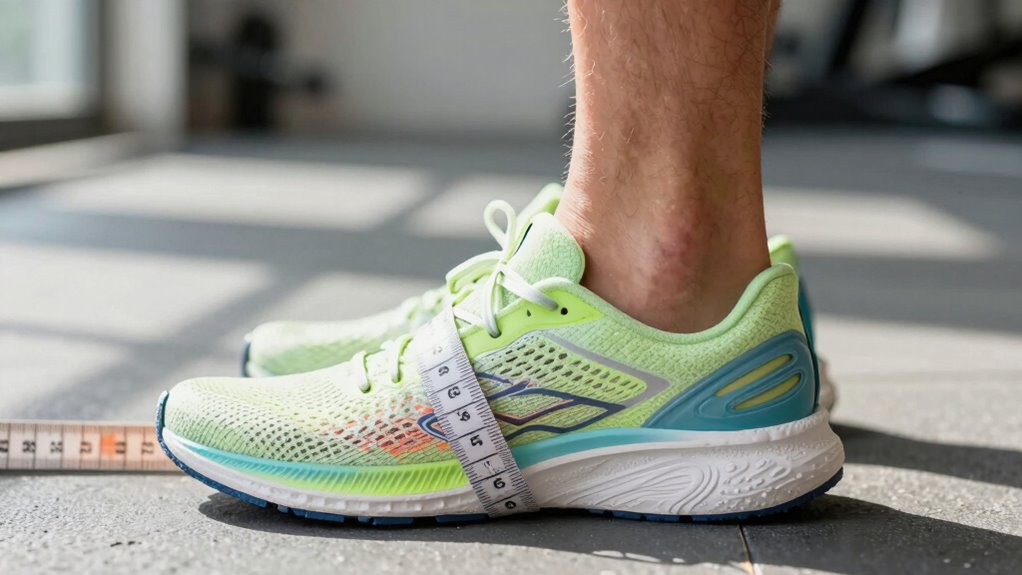

As your feet naturally change over time from aging or training, it’s important to regularly measure their size and shape before choosing running shoes for long distances. Make sure there’s about a thumb’s width of space at the toe box and check that your shoes fit snugly without tightness or excess movement. Monitoring these changes helps prevent discomfort and injuries. Keep an eye on your foot’s condition, and you’ll discover key tips for accurate sizing and support that boost your long-run performance.
Key Takeaways
- Measure your feet regularly, especially before training or races, to account for size changes over time.
- Ensure there is about a thumb’s width of space at the toe box for comfort during long runs.
- Check for proper fit by walking or running in shoes to feel for snugness without tightness or slipping.
- Consider your foot shape and arch type to select shoes that support natural movement and prevent discomfort.
- Replace running shoes once they show signs of wear or if your foot size or shape has changed.
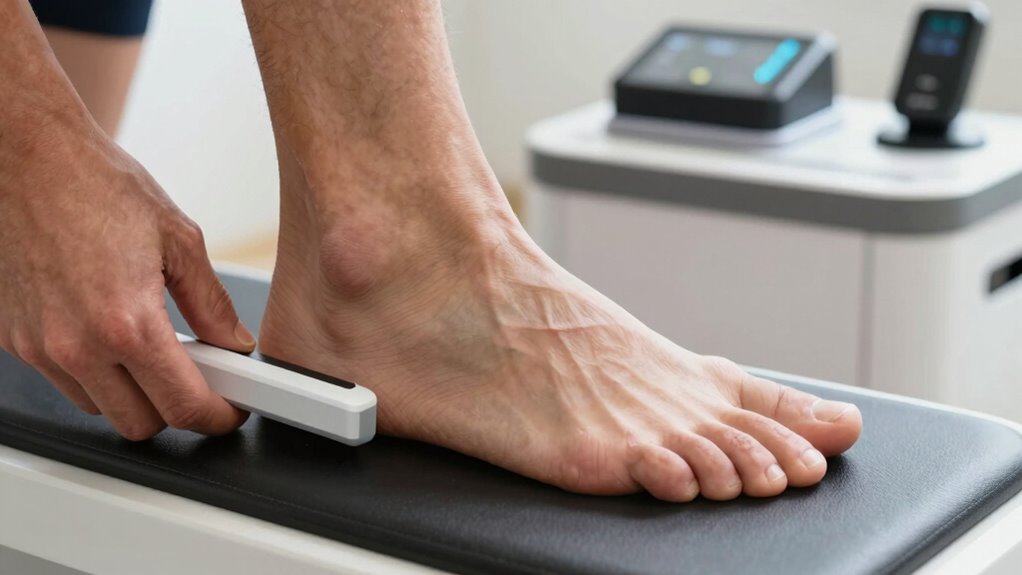
Choosing the right running shoe size is essential for long-distance runs because ill-fitting shoes can lead to discomfort, blisters, and even injury. As you prepare for your runs, it’s important to consider how your feet move and how your shoes support that movement. One key factor is foot pronation, which refers to the way your foot rolls inward or outward when you run. Some people overpronate, meaning their ankles roll inward excessively, while others underpronate, where their ankles don’t roll enough. Recognizing your pronation pattern helps you select shoes with the right level of stability or motion control. Proper fit isn’t just about length; it also involves width and overall shape to accommodate your foot’s natural motion.
Equally critical is providing adequate arch support. Your arch type—high, neutral, or flat—affects how your foot absorbs shock and maintains stability during long runs. If you have a high arch, you might need shoes with more cushioning and supportive insoles to prevent your foot from collapsing inward. Conversely, if you have flat feet, look for shoes that offer enhanced arch support to prevent overpronation and reduce strain on your ankles and knees. Shoes that match your arch type help distribute pressure evenly, reducing the risk of fatigue and injury over extended distances.
As your feet change over time—due to aging, training, or fluctuations in weight—your sizing needs can shift. It’s a good idea to measure your feet regularly, especially before big training phases or races. When trying on shoes, don’t just focus on length; walk or run a few steps in them to gauge fit and comfort. Your toes should have enough space to wiggle freely, with about a thumb’s width of room at the toe box. Tight shoes can cause blisters and black toenails, while too loose shoes may lead to instability and blisters from excessive movement. Additionally, understanding foot shape and how it influences shoe selection can significantly improve your comfort and performance over long distances.

Mishansha Women's Running Sneakers Air Cushion Lightweight Breathable Fitness Arch Support Sports Running Shoes Athletic Jogging Walking Rose 8
- Breathable Mesh Upper: Promotes airflow and keeps feet cool
- Lightweight and Comfortable: Reduces heat and enhances comfort during wear
- Removable Insoles: Allows for customized fit and support
As an affiliate, we earn on qualifying purchases.
As an affiliate, we earn on qualifying purchases.
Frequently Asked Questions
How Often Should I Reassess My Running Shoe Size?
You should reassess your running shoe size every 3 to 6 months, especially if your shoe material or sock thickness changes. As your feet adapt or swell during long runs, sizing needs may shift. Regularly check for snugness and comfort, ensuring enough space for thicker socks or different shoe materials. This helps prevent blisters and injuries, keeping your long runs safe and enjoyable.
Do Foot Swelling During Runs Affect Shoe Sizing?
Think of foot swelling as a tide that rises during your run, subtly altering your shoe fit. Yes, swelling affects your comfort and shoe sizing, making shoes feel tighter or looser. To keep pace with these changes, choose running shoes with a bit of wiggle room and consider sizing up slightly for long runs. This way, you stay comfortable as your feet swell and return to their normal size.
Can I Wear the Same Size Shoes for Different Terrains?
You can’t always wear the same size shoes across different terrains because terrain differences affect shoe fit consistency. For trails with uneven surfaces, you might prefer a slightly larger size for extra comfort and room for swelling, while pavement runs may require a snugger fit. Always try on shoes for each terrain type to guarantee proper support, preventing discomfort or injury during your runs.
How Do I Account for Orthotics When Sizing Shoes?
Did you know that about 25% of runners use orthotics? When sizing shoes, account for orthotics compatibility by trying on shoes with your orthotics inserted. This guarantees proper fit and comfort. You might need shoe fitting adjustments, like going a half size up, to accommodate the orthotics without squeezing your foot. Always test the fit with your orthotics inside to prevent discomfort during long runs.
Should I Size up for Wider or Narrower Feet?
If you have wider feet, you should size up slightly to guarantee proper width considerations and avoid tightness. For narrower feet, stick to your usual size but look for shoes with a snug fit that don’t pinch. Remember, shoe fit nuances like arch support and toe box space matter, so always try on shoes later in the day when your feet are more swollen to get an accurate fit.
Conclusion
Remember, proper sizing keeps your long runs light and comfortable. Don’t delay in determining the right fit—your feet will thank you! With careful consideration and consistent coddling, your shoes will serve you through every stride and stretch. So, stay savvy, size smart, and step confidently into every long run. Your feet, fitness, and future self will thank you for your thoughtful, thorough approach to shoe sizing. Happy running!