
You might find it funny that some race traditions, like wearing goofy socks or carrying lucky charms, started as lighthearted quirks but grew into serious rituals over time. Runners develop superstitions, whisper wishes to tokens, and touch landmarks for good energy—all to boost confidence and ease nerves. These rituals, shared among friends, make races memorable and meaningful. Curious about more fun traditions that turned into serious habits? Keep exploring to discover the full story.

Get workout gear delivered free with Prime
- Fast, free delivery on millions of items
- Prime Video, Amazon Music and more included
- Member-only deals all year
Key Takeaways
- Humorous pre-race rituals, like wearing mismatched socks, evolved into essential good luck charms for many runners.
- Playful touching of landmarks or quirky gestures became serious superstitions believed to boost performance.
- Lighthearted traditions, such as costume runs, turned into cherished community events over time.
- Runners’ humorous superstitions, like whispering to lucky charms, now serve as mental confidence boosters.
- Funny race rituals, initially meant to entertain, are now integral routines that help runners focus and prepare mentally.
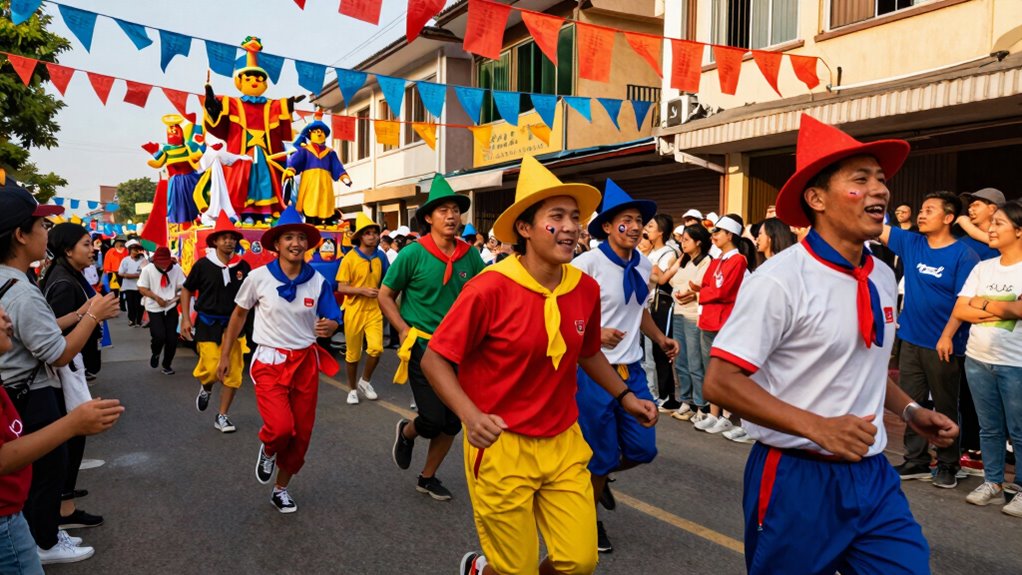
Many race traditions that once started as lighthearted fun have now become cherished rituals that bring communities together year after year. You’ve probably seen or even participated in some of these practices, which have evolved from quirky habits into serious customs. Take marathon superstitions, for example. Runners often develop their own unique beliefs to bring good luck or ward off bad omens. Some might wear a particular pair of socks, carry a lucky charm, or avoid shaving their legs before race day. These superstitions aren’t just about superstition—they serve as mental anchors, boosting confidence and focus. Over time, they become an essential part of the race experience, shared among friends and fellow runners. You might find yourself whispering a good luck wish to your lucky bracelet or touching a specific landmark before heading to the starting line. Lab equipment and chemical safety are also crucial in maintaining a safe environment during these events, especially in organized races with complex setups. Additionally, many runners believe that pre-race rituals can help set a positive tone and create a sense of routine that eases pre-race nerves. Establishing these pre-race routines often involves intentional steps that help runners mentally prepare for the challenge ahead. Incorporating safety protocols into race planning can further ensure a smooth and secure experience for all participants. Ensuring proper event safety measures are in place is vital for protecting both participants and spectators.
Products Worth Considering

Garmin Forerunner 165 GPS Running Smartwatch, 43 mm, Black

Garmin Forerunner 265 GPS Running Smartwatch, 46 mm, Black/Powder Gray

Garmin Venu 4 GPS Fitness Smartwatch, 45 mm, Slate with Black Silicone Band
As an affiliate, we earn on qualifying purchases.
Frequently Asked Questions
How Did These Traditions Originate Historically?
You might find that these traditions originated as spontaneous, humorous acts among early communities, quickly gaining popularity. The historical origins often stem from local customs or superstitions, which over time gained cultural significance as they evolved into formal race rituals. People embraced these quirky practices because they fostered community spirit and identity, making them more than just funny traditions—they became meaningful symbols, preserving cultural heritage and adding a layer of seriousness to seemingly playful events.
Are There Specific Regions Known for Unique Race Rituals?
Think of regions as vibrant tapestries, each woven with unique race rituals. You’ll find Scotland’s Highland games, where traditional tug-of-war and caber tossing reflect cultural symbolism rooted in local legends. In Spain, the Running of the Bulls mixes adrenaline with history, echoing local legends and community pride. These rituals are deeply embedded, turning playful traditions into serious cultural symbols that define regional identities and preserve ancient stories.
How Do Participants Prepare for These Traditions?
You prepare for these traditions by embracing costume creativity, often designing vibrant, humorous outfits that reflect local culture or humor. You also pay attention to superstition significance, following customs or rituals believed to bring good luck or ward off bad luck during the race. Practicing your race strategies and understanding the tradition’s history help you participate with confidence, ensuring you’re fully immersed and respectful of the cultural importance behind each event.
Have Any Traditions Caused Safety Concerns?
Some traditions have raised safety concerns, especially when participants push limits or use risky props. These incidents sometimes threaten cultural preservation, as safety issues can lead to bans or restrictions. You should always prioritize safety, respecting the cultural significance behind these rituals. When traditions evolve, balancing safety concerns with preserving their authenticity helps make certain they continue for future generations without risking harm to participants.
Do These Rituals Influence Race Outcomes?
Like a pebble causing ripples, superstitious practices and ritualistic symbolism definitely influence race outcomes. You might think these traditions are just for fun, but they can boost confidence or reduce anxiety, impacting performance. Athletes often rely on these rituals to create a mental edge, making their influence more real than it seems. So, yes, these rituals play a subtle but significant role in shaping race results.
Conclusion
You see, what starts as a silly race tradition can easily become a cherished ritual that brings communities closer. Imagine a small town’s annual mud run, where newcomers and locals alike plunge into the chaos, forging lasting bonds. Over time, that playful event might evolve into a symbol of unity and resilience, proving that even the funniest traditions can shape meaningful, serious moments in our lives. So, embrace the quirks—they often hold the deepest significance.