Creating a small space home gym for running involves smart organization and key equipment like resistance bands, foam rollers, and a foldable treadmill. Use non-slip mats for stretching, add mirrors for monitoring form, and keep gear tidy with wall-mounted storage. Incorporate mobility exercises and proper nutrition planning to maximize recovery and performance. With these essentials in place, your training becomes more consistent and efficient—keep exploring to discover how to optimize your space even further.
Key Takeaways
- Utilize non-slip surfaces and dedicated corners with foam rollers, resistance bands, and mirrors for effective stretching and mobility in small spaces.
- Incorporate foldable or compact equipment like jump ropes and resistance bands to target strength, endurance, and speed.
- Organize gear with wall-mounted storage and shelves to maintain a clutter-free, safe environment conducive to consistent training.
- Stock nutrition essentials such as protein powders, healthy snacks, and hydration options to support recovery and performance.
- Leverage the Free Floating principles to create an adaptable, versatile workout space that maximizes small area functionality.
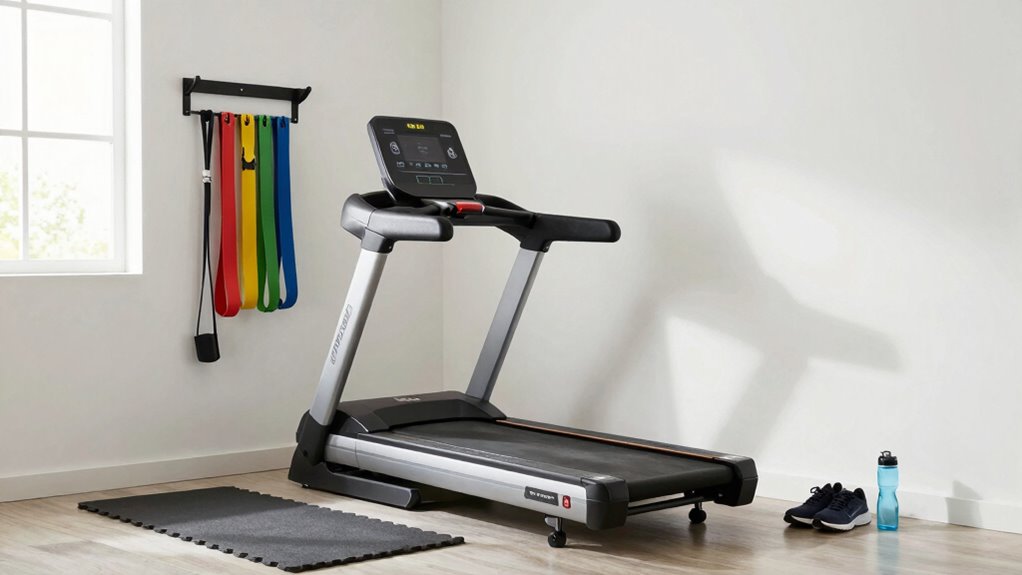
Creating a home gym tailored for runners can substantially boost your training consistency and performance. When you set up a dedicated space, you eliminate the hassle of commuting to a gym or outdoor workouts caught in bad weather. Instead, you can focus on optimizing every minute of your training. To truly maximize your efforts, it’s essential to incorporate well-rounded stretching routines and effective nutrition plans into your routine. These elements not only prevent injuries but also help you recover faster and run stronger.
Your small space can be versatile enough to support a variety of activities. Start with a comfortable, non-slip surface for stretching routines. Dedicate a corner for foam rollers, resistance bands, and mats, so you can easily perform dynamic stretches and mobility exercises. Incorporate foam rolling into your warm-up or cool-down to loosen tight muscles, improve flexibility, and reduce soreness. These stretching routines are indispensable for maintaining your range of motion and preventing injuries over time. Keep a mirror nearby if possible, so you can monitor your form during stretches and exercises, ensuring you’re performing movements correctly. Additionally, understanding Free Floating principles can help you create a more adaptable and efficient workout space without clutter or excessive equipment.
Create a versatile space with a non-slip surface, dedicated storage, and a mirror to enhance your stretching and mobility routines.
Nutrition plans are equally essential, even in a small home gym. Stock your space with essentials like protein powders, healthy snacks, and hydration options to fuel your runs and aid recovery. Planning your meals ahead of time ensures you get the right balance of carbs, proteins, and fats to sustain your energy levels. A well-structured nutrition plan complements your training, allowing you to push harder and run longer without feeling drained. You might also consider setting up a small refrigerator or storage bin for fresh ingredients, so you always have nutritious options close at hand.
In addition to stretching routines and nutrition, your small space can accommodate compact equipment like a jump rope, resistance bands, or a foldable treadmill. These tools add variety and help you target different aspects of your running fitness, such as strength, endurance, and speed. Make sure your setup is organized and clutter-free to avoid distraction and injury. Use wall-mounted storage or shelves to keep your gear accessible and tidy.
Ultimately, a well-planned home gym in a small space empowers you to stay consistent with your running goals. Incorporating effective stretching routines and a solid nutrition plan enhances your performance while minimizing injury risk. By carefully selecting versatile equipment and maintaining an organized environment, you create a dedicated space that supports your progress, no matter how limited it may seem. Staying committed to your routine in this optimized environment makes it easier to reach new personal bests and enjoy running even more.
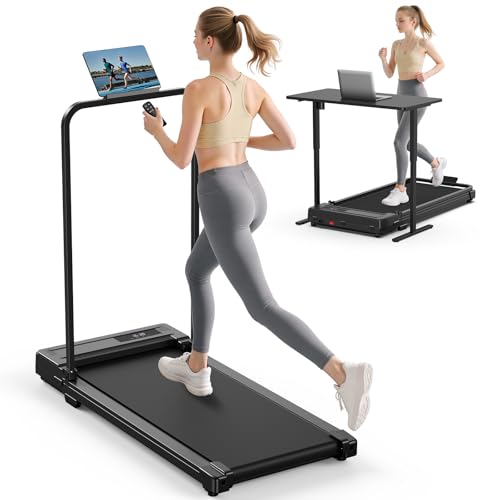
Walking Pad Treadmill for Home – Folding Treadmills with Handle Bar Portable Compact Fold up Indoor Foldable Handles Electric Walk Pads Small Spaces Mini Running Quiet Under Bed Office
- Foldable with Handle Bar: Three speed modes and compact design
- Powerful Quiet Motor: Supports up to 264lb, 440W motor
- LED Display & Remote: Tracks time, speed, calories, distance
As an affiliate, we earn on qualifying purchases.
As an affiliate, we earn on qualifying purchases.
Frequently Asked Questions
What Is the Ideal Size for a Small Runner’s Home Gym?
You should aim for a small gym space of about 50 to 100 square feet. This size allows you to optimize space and include versatile equipment like a foldable treadmill, resistance bands, and compact weights. Focus on space optimization by choosing multi-use items, so you can perform a variety of workouts without clutter. This setup keeps your running-focused gym functional, efficient, and easy to maintain in a limited area.
Can I Create a Comprehensive Workout With Minimal Equipment?
Can you create a complete workout with minimal equipment? Absolutely. With just bodyweight exercises and cardio routines, you can target strength, endurance, and flexibility. Think push-ups, squats, lunges, and planks—each building your running power. Add high knees, burpees, or jumping jacks for cardio. This simple yet effective approach keeps you versatile, motivated, and progressing, proving that even a small space can deliver a full, satisfying workout.
How Do I Prevent Noise Issues in My Small Space?
To prevent noise issues in your small space, start by using soundproofing solutions like acoustic panels or foam tiles to absorb sound. Place noise reducing mats on the floor to minimize impact noise from running or jumping. Keep equipment away from shared walls and consider adding rugs or curtains to further dampen sound. These strategies help you enjoy your workouts without disturbing others nearby.
What Are Budget-Friendly Options for Home Gym Equipment?
Imagine you’re just starting your home gym and need budget-friendly options. Space-saving equipment like resistance bands and foldable mats are perfect choices. These inexpensive tools provide effective workouts without cluttering your small space. For example, a runner used resistance bands for strength training, saving money and space. You can easily incorporate these budget-friendly options into your routine, making your small home gym both affordable and functional.
How Often Should I Update or Replace Gym Gear?
You should update or replace your gym gear based on gear maintenance and equipment lifespan. Regularly inspect your equipment for wear and tear, and follow manufacturer guidelines for maintenance. Typically, you might need to substitute items like running shoes every 300-500 miles or every 6-8 months, while durable equipment like mats or weights can last several years with proper care. Staying attentive ensures your gear stays safe and effective for your workouts.
Conclusion
Your home gym for runners proves that small space doesn’t mean limited. It’s a compact hub of strength and recovery, just like a busy city street packed with purpose. While your living room might seem unlikely for serious training, it becomes your personal track, full of possibilities. Embrace this blend of intimacy and intensity, where every squat and stretch reminds you that great gains don’t need vast space—they need your dedication. Your small space, your big progress.