
After your workout, spend a few minutes doing gentle stretching focusing on the muscles you used. Hold each stretch for about 15-30 seconds, avoiding bouncing or overstretching. Incorporate light activity like walking or foam rolling to boost blood flow and reduce stiffness. Stay hydrated with water or electrolyte drinks to support muscle recovery. These simple cool-down techniques help prevent soreness and injury, and staying engaged will reveal more tips to optimize your recovery process.

Get workout gear delivered free — and shop member deals
- Fast, free delivery on millions of items
- Access to Prime Big Deal Days deals on October 6–7
- Prime Video, Amazon Music and more included
Key Takeaways
- Perform gentle stretching targeting muscles used, holding each stretch for 15-30 seconds to enhance flexibility and reduce stiffness.
- Incorporate foam rolling or light active recovery to improve blood flow and help remove metabolic waste.
- Rehydrate with water and electrolyte drinks to replenish fluids and support muscle function.
- Engage in slow, controlled movements to gradually lower heart rate and prevent dizziness or fatigue.
- Use deep breathing exercises to relax muscles, reduce stress, and promote overall recovery.
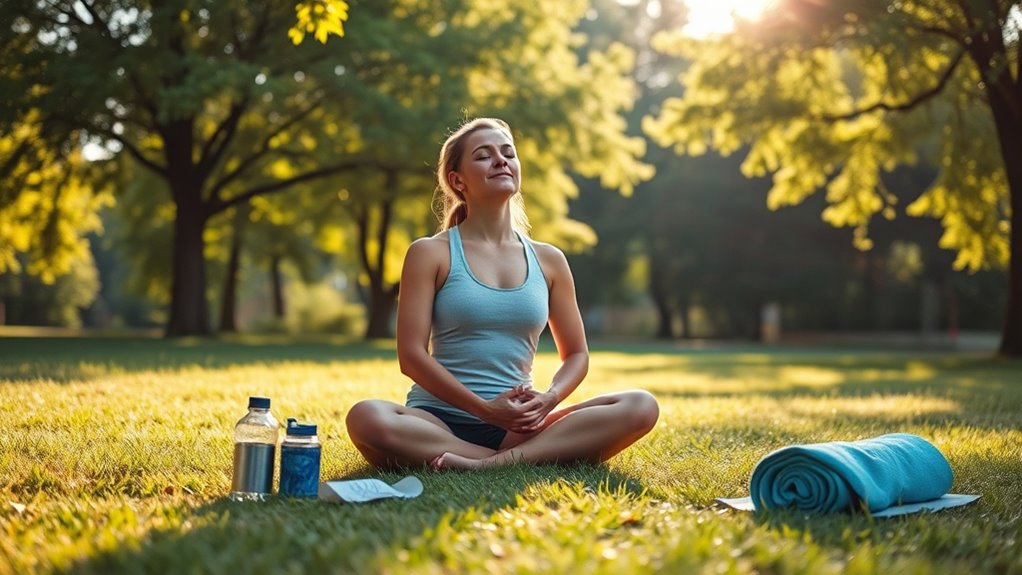
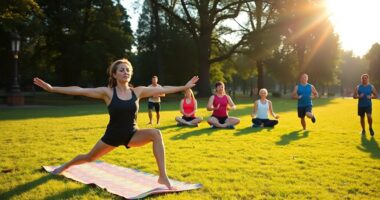
After an intense workout, taking a few simple cool-down steps can considerably speed up your recovery. One of the most effective ways to do this is through post exercise stretching. When you finish your session, spend a few minutes gently stretching the muscles you’ve worked. Focus on slow, controlled movements that elongate your muscles without bouncing or forcing any stretch. This helps reduce muscle tension and prevents stiffness later on. For example, if you’ve been running, stretch your hamstrings, calves, and quadriceps. If you’ve done weightlifting, target your chest, back, and arms. The goal is to improve flexibility and promote blood flow, which aids in flushing out metabolic waste products like lactic acid. It’s important to hold each stretch for about 15-30 seconds and avoid overstretching, as this can cause injury or soreness. Additionally, incorporating proper recovery techniques such as active recovery or foam rolling can further enhance muscle repair and reduce soreness.
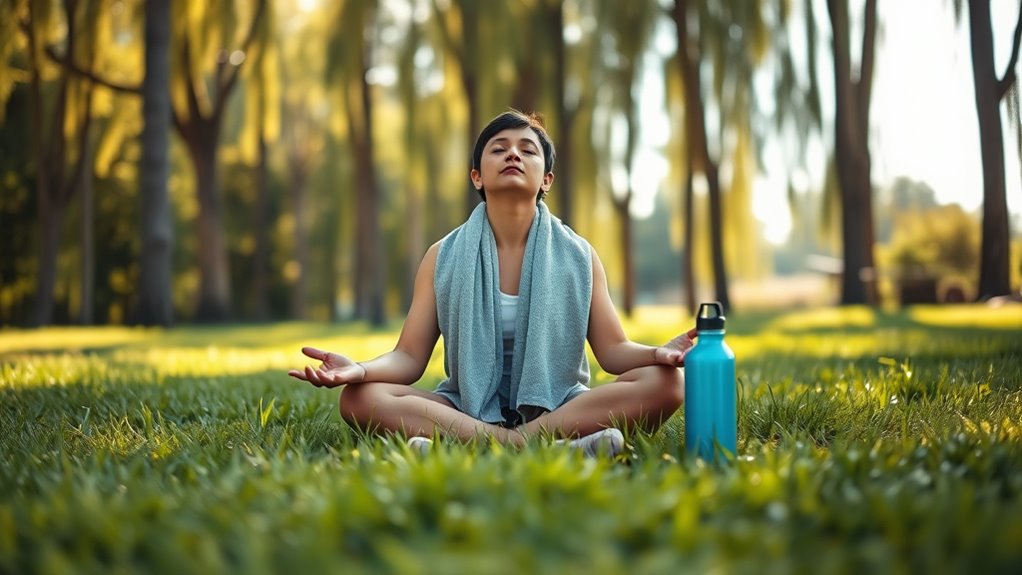
Along with post exercise stretching, paying attention to hydration strategies is essential. During intense exercise, your body loses fluids through sweat, and replenishing these is indispensable for recovery. Drinking water immediately after your workout helps restore lost fluids and keeps your muscles hydrated, preventing cramps and reducing soreness. For longer or more intense sessions, consider adding a beverage that contains electrolytes, such as sodium, potassium, and magnesium. These minerals help balance your body’s fluid levels and support muscle function. Proper hydration also flushes out toxins that accumulate during exercise, speeding up the recovery process. Keep a water bottle handy and take small, consistent sips after your workout, rather than gulping large amounts at once. This guarantees your body absorbs the fluids efficiently.
Incorporating these simple cool-down steps—post exercise stretching and hydration strategies—can make a noticeable difference in how quickly you recover and how you feel afterward. Stretching not only prevents stiffness but also enhances your flexibility over time, reducing injury risk during future workouts. Meanwhile, staying well-hydrated ensures your muscles operate efficiently, and your body can repair itself more effectively. Remember, recovery isn’t just about resting; it’s about actively supporting your body’s natural healing processes. By dedicating a few minutes to gentle stretching and rehydration, you set yourself up for better performance in your next workout and reduce the likelihood of lingering soreness or injury. These small, mindful actions can transform your post-exercise routine into an effective recovery system, helping you stay consistent and injury-free in the long run.
As an affiliate, we earn on qualifying purchases.
Frequently Asked Questions
How Long Should a Typical Cool-Down Last?
A typical cool-down should last about 5 to 10 minutes. During this time, you can focus on post-exercise hydration by drinking water or electrolyte drinks to replenish lost fluids. Incorporate mental relaxation techniques like deep breathing or stretching to help your body shift to rest. Staying active at a low intensity helps reduce muscle stiffness and promotes recovery, making your cool-down effective and beneficial.
Can Cool-Downs Prevent Muscle Soreness Effectively?
Yes, cool-downs can help prevent muscle soreness by promoting post-exercise hydration and reducing muscle tension. When you incorporate gentle stretching and deep breathing, you enhance blood flow and facilitate muscle recovery. Using mental relaxation techniques during your cool-down can also lower stress levels, aiding overall recovery. These practices work together to minimize soreness, helping you feel better and recover faster after your workout.
Are There Specific Cool-Down Exercises for Different Sports?
Yes, there are specific cool-down exercises for different sports. You should incorporate dynamic stretching and sport-specific routines tailored to your activity. For example, runners benefit from leg swings and light jogging, while swimmers might focus on arm circles and shoulder stretches. These targeted cool-downs help your muscles relax and recover faster, reducing soreness and stiffness. Adjust your routine based on your sport to maximize recovery and prevent injuries.
Is Stretching Necessary During Cool-Downs?
Stretching isn’t just helpful; it’s necessary during cool-downs. Studies show that 80% of athletes find stretching improves flexibility and reduces soreness. You should include stretching because it promotes hydration importance for muscle recovery and encourages mental relaxation after intense activity. Incorporate gentle stretches to prevent stiffness, support circulation, and ease your mind, making sure your body shifts smoothly from exercise to rest.
How Soon After Exercise Should I Start Cooling Down?
You should start cooling down immediately after your workout, ideally within five to ten minutes. This helps gradually lower your heart rate and prevents dizziness. During this time, focus on hydration strategies like drinking water or electrolyte drinks, and practice mental relaxation techniques such as deep breathing. These steps promote recovery, reduce muscle tension, and help your body shift seamlessly from exercise to rest.
Conclusion
Incorporating simple cool-downs into your routine can markedly enhance recovery and prevent injuries. Did you know that properly cooling down can reduce muscle soreness by up to 50%? By taking just a few minutes to stretch and gradually lower your heart rate, you give your body the chance to heal faster and perform better next time. So, make cool-downs a non-negotiable part of your workout—your muscles will thank you!
Fall Picks
fall essentials
As an affiliate, we earn on qualifying purchases.