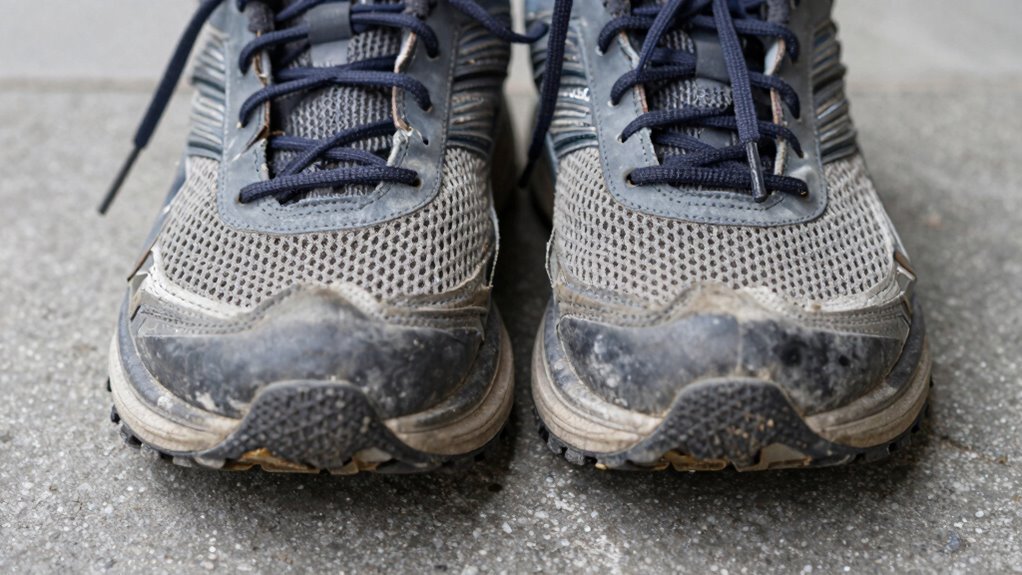

You should replace your running shoes when you notice signs like less cushioning, increased foot fatigue, or discomfort during runs. Check for worn outsole tread, bald spots, or loss of grip, especially in high-impact areas. Even if shoes look fine externally, internal cushioning can deteriorate early. Typically, shoes last between 300 to 500 miles, but pay attention to how they feel. Keep these indicators in mind to avoid injuries and improve performance as you continue exploring more insights.

Get workout gear delivered free — and shop member deals
- Fast, free delivery on millions of items
- Access to Prime Big Deal Days deals on October 6–7
- Prime Video, Amazon Music and more included
Key Takeaways
- Look for decreased cushioning, support, and responsiveness during runs, even if external shoes appear intact.
- Inspect the outsole for smooth tread, thinning rubber, or uneven wear, indicating need for replacement.
- Monitor for increased foot or joint discomfort and reduced shock absorption after running.
- Track mileage; most shoes should be replaced between 300-500 miles or when signs of wear emerge.
- Notice internal degradation signs like less springiness or internal cushioning breakdown, regardless of external appearance.
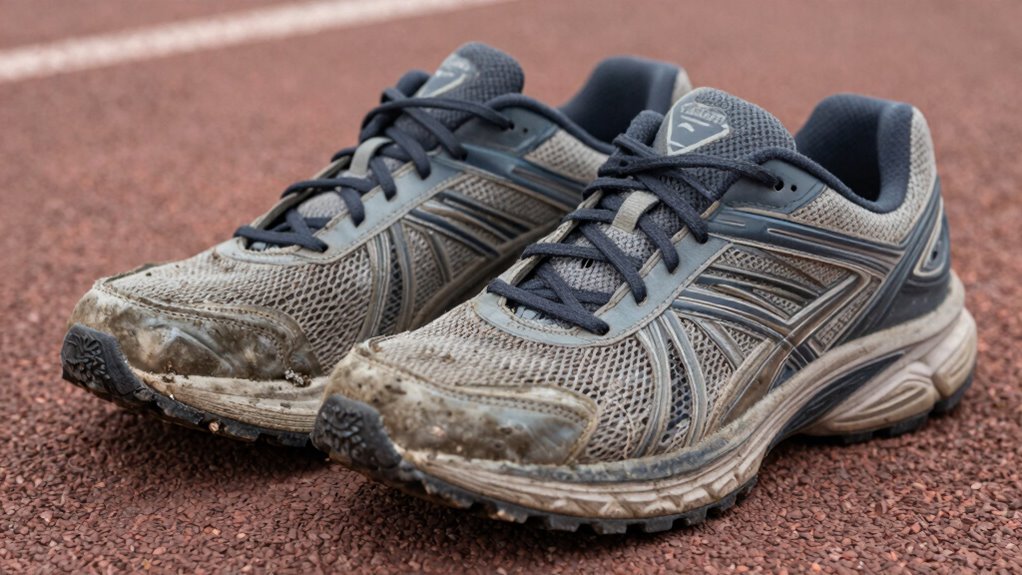
Your running shoes don’t last forever, and knowing when to replace them can prevent injuries and improve your performance. Over time, the cushioning that absorbs shock begins to break down, leading to cushion degradation. When this happens, your feet no longer get the support they need, increasing the risk of stress fractures, joint pain, and other injuries. You might notice your shoes feel less springy or that your usual comfort level has diminished. If you find yourself repeatedly adjusting your stride or feeling more fatigued after runs, it’s a clear sign that your shoes’ internal cushioning has worn out.
Worn-out cushioning in running shoes reduces support and increases injury risk.
Another key indicator is outsole wear. The outsole is the bottom part of your shoe that contacts the ground, and it’s designed to provide traction and durability. As you run, the outsole gradually wears down, especially in high-impact areas like the heel and forefoot. When the tread pattern becomes smooth or the rubber starts to thin, your shoes lose grip and stability. This not only compromises your performance but also raises your risk of slipping or twisting an ankle. If you notice uneven wear or bald spots on the outsole, it’s time to think about a replacement.
Beyond physical signs, pay attention to how your shoes feel during your runs. When they feel less responsive or if you experience more discomfort than usual, it’s often because the internal structure is compromised. Running shoes are engineered to absorb impact and support your foot, but after many miles, the materials break down. Even if the outsole looks fine externally, the cushioning inside may have degraded considerably, leading to less shock absorption. That can translate to sore knees, sore hips, or plantar fasciitis over time.
It’s advisable to track your mileage, but don’t rely on mileage alone. For most runners, shoes last between 300 to 500 miles, but this can vary based on running style, body weight, and shoe quality. Regularly inspecting your shoes for signs of cushion degradation and outsole wear is essential. If you start noticing these signs, replace your shoes promptly. Continuing to run in worn-out shoes not only hampers your performance but also puts you at greater risk of injury. Staying vigilant about these indicators ensures you get the most out of your running gear and keeps you safe on every run.
Additionally, consider that high-quality materials used in running shoes tend to wear down more slowly, extending their lifespan and maintaining better performance over time.
running shoe replacement insoles
As an affiliate, we earn on qualifying purchases.
As an affiliate, we earn on qualifying purchases.
Frequently Asked Questions
Can Running Shoes Last Longer With Different Surfaces?
Running shoes can last longer with different surfaces because surface impact and terrain variation affect wear and tear. Softer surfaces like grass or trails reduce impact, helping shoes stay in good shape longer. Hard surfaces like concrete cause more stress, leading to quicker deterioration. By switching between various terrains, you distribute the wear, potentially extending your shoes’ lifespan and delaying the need for replacement.
How Do Body Weight and Running Style Affect Shoe Lifespan?
Imagine your body as a car, where your weight and running style shape how quickly your shoes wear out. Heavier runners often see faster sole breakdown, while those with a forefoot or heel strike may experience uneven wear. To gauge your shoes’ lifespan, do a foot strike analysis and consider gait modification if needed. Regularly inspecting your shoes helps you know when it’s time for a fresh pair before discomfort hits.
Are There Specific Brands That Wear Out Faster or Slower?
Certain brands are known for their durability, but it really depends on material quality. You’ll find that brands like Brooks and Asics often offer shoes with better material quality and longer-lasting durability, while some budget brands may wear out faster. Keep in mind that individual factors like your running style and weight also influence shoe lifespan. Choose brands that prioritize durability and high-quality materials to get the most mileage from your shoes.
What Role Does Shoe Storage Play in Longevity?
Proper shoe storage considerably impacts their longevity. You should keep your shoes in a cool, dry place to prevent shoe odor and material breakdown caused by heat and humidity. Avoid storing them in direct sunlight or hot areas, as high storage temperatures accelerate wear. Well-maintained storage helps preserve cushioning, support, and overall structure, ensuring your running shoes stay comfortable and durable for longer periods.
Can Insoles Extend the Life of Running Shoes?
An ounce of prevention is worth a pound of cure. Replacing insoles can help extend your running shoes’ life, especially if insole durability diminishes or cushioning decay becomes noticeable. Fresh insoles restore comfort and support, postponing the need for shoe replacement. Keep an eye on signs of wear, and swap out insoles when they lose their cushion, so your shoes stay supportive and comfortable mile after mile.
Conclusion
Knowing when to replace your running shoes is essential to prevent injury and maintain performance. Pay attention to signs like worn-out soles, decreased cushioning, or discomfort during runs—these are your body’s way of signaling it’s time for new shoes. Think of your shoes as the foundation of a house; if they start to weaken, everything else suffers. Stay proactive, listen to your body, and replace your shoes before they give out completely.
Fall Picks
fall essentials
As an affiliate, we earn on qualifying purchases.