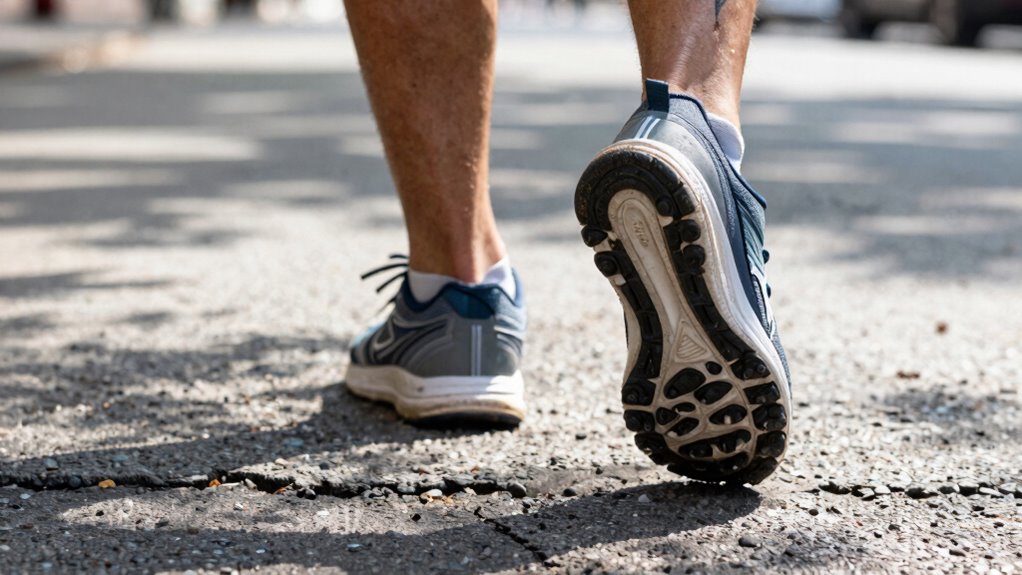

To run smoothly on uneven pavement, focus on a midfoot strike to absorb shocks and stay responsive. Keep your steps quick, light, and adapt your stride to the terrain, avoiding over-striding. Engage your core and maintain proper posture with a slight forward lean from the ankles. Use your arms naturally for balance and stay aware of your surroundings, adjusting your pace and foot placement as needed. For more tips on mastering uneven runs, keep exploring strategies to improve your technique.

Get workout gear delivered free — and shop member deals
- Fast, free delivery on millions of items
- Access to Prime Big Deal Days deals on October 6–7
- Prime Video, Amazon Music and more included
Key Takeaways
- Focus on midfoot strikes and quick, light steps to adapt smoothly to uneven surfaces.
- Maintain a slight forward lean from the ankles to improve balance and responsiveness.
- Keep your gaze ahead, identifying stable landing spots and avoiding loose or unstable terrain.
- Engage your core and stay relaxed to enhance stability and quick adjustment to terrain changes.
- Practice on varied terrains regularly to develop terrain-specific running techniques and proprioception.
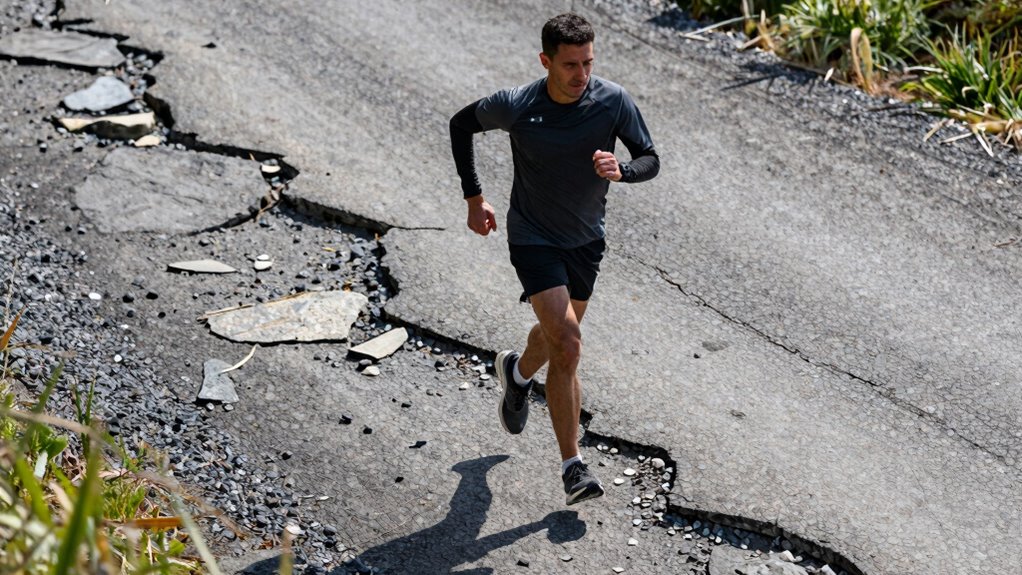
Running on uneven pavement can be challenging, but with the right approach, you can maintain your rhythm and reduce the risk of injury. One of the most important aspects to focus on is your running technique. When you adapt your form to handle inconsistent surfaces, you become more agile and better prepared for sudden changes in terrain. Start by paying close attention to your foot strike pattern. A proper foot strike helps absorb shock, maintain balance, and prevent unnecessary strain on your joints. Ideally, aim for a midfoot strike, where your middle foot lands directly beneath your hips. This position offers a natural shock absorption and allows for quicker adjustments when you encounter uneven patches.
Focus on midfoot strikes to improve stability and adapt quickly on uneven terrain.
As you run on rough terrain, avoid over-striding, which can cause your foot to land too far in front of your body, increasing impact and decreasing stability. Instead, keep your steps quick and light, focusing on shorter strides. This way, your feet are more responsive to the terrain, helping you adapt smoothly to sudden dips or rises. Engage your core muscles to stabilize your pelvis and torso, which in turn helps you maintain proper alignment and balance even when the ground beneath you shifts unexpectedly. Developing proprioception through practice enhances your ability to sense your body’s position and movement, making adjustments more instinctive. Incorporating body awareness exercises can further improve this skill. Improving your kinesthetic sense can also contribute significantly to adapting efficiently to uneven surfaces. Additionally, training your muscles to respond quickly will improve your overall stability on challenging terrain.
Your running technique should also include a slight forward lean from your ankles, not your waist. This posture encourages a natural, forward motion that makes it easier to stay balanced and reduces unnecessary braking forces that can slow you down on uneven surfaces. Keep your arms relaxed and bent at about a 90-degree angle, swinging them naturally to help maintain momentum and balance.
When approaching uneven patches, focus on your foot placement. Look ahead and identify the most stable spots for landing, avoiding loose gravel, large rocks, or uneven patches that could cause you to trip. Let your feet adapt to the terrain rather than fighting against it. This means you might need to lift your knees slightly higher or adjust your stride length depending on the surface. Listening to your body and making small, conscious adjustments ensures your running technique remains efficient and safe. Consistent practice on diverse terrains will also help reinforce these adjustments, making them more instinctive over time.
Lastly, practice makes perfect. Incorporate trail running into your routine to develop a more refined foot strike pattern and better overall running technique. Over time, your body will instinctively adapt to uneven terrain, allowing you to run smoothly, confidently, and injury-free across all kinds of surfaces. Focusing on training on varied terrains can accelerate this process and improve your overall resilience.
running shoes for uneven terrain
As an affiliate, we earn on qualifying purchases.
As an affiliate, we earn on qualifying purchases.
Frequently Asked Questions
What Type of Running Shoes Are Best for Uneven Surfaces?
For uneven surfaces, you should choose trail running shoes with good shoe cushioning and stability features. Look for models designed specifically for trail running, as they offer better grip and support on rough terrain. The shoe cushioning helps absorb shocks from uneven ground, reducing fatigue and injury risk. Prioritize shoes with a sturdy outsole and responsive midsoles to keep your footing secure and comfortable during challenging runs.
How Can I Prevent Ankle Injuries on Uneven Pavement?
Think of your ankles as the foundation of a house—if they’re weak, everything’s at risk. To prevent injuries on uneven pavement, focus on ankle strengthening exercises and incorporate balance training into your routine. Strengthening your ankles helps stabilize your steps, while balance drills improve coordination, reducing the risk of twists and sprains. Be mindful of your footing, and always wear supportive shoes to keep your ankles safe.
Should I Adjust My Running Stride on Rough Terrain?
Yes, you should adjust your running stride on rough terrain. Focus on stride adaptation by shortening your steps to improve balance and control. Maintain terrain awareness, watching for uneven patches and obstacles, so you can react quickly. This proactive approach helps prevent injuries and keeps you steady. By adapting your stride and staying alert, you’ll navigate uneven pavement more safely and comfortably, maintaining your momentum without risking slips or twists.
How Often Should I Check My Footwear for Wear and Tear?
Ever wonder how often you should check your footwear for wear and tear? Regular footwear maintenance is key to ensuring shoe durability and peak performance. You should inspect your shoes every 300-500 miles or after rough runs, looking for worn-out soles or compromised cushioning. By staying attentive to your shoes’ condition, you prevent injuries and maintain a smooth stride, especially on uneven terrain. Don’t wait for visible damage—proactive care keeps you running strong.
What Warm-Up Exercises Are Recommended for Uneven Terrain Running?
For uneven terrain running, start with dynamic warm-up exercises like leg swings, hip circles, and ankle rolls to prepare your muscles. Incorporate muscle stretching routines to improve flexibility. Focus on proper breathing techniques—inhale deeply through your nose and exhale through your mouth—to maintain oxygen flow and reduce fatigue. These warm-ups activate your muscles, enhance stability, and help you stay balanced on uneven surfaces, reducing injury risk.
Conclusion
So, next time you hit that uneven pavement, remember these tips and stay confident. Keep your strides steady, lift your knees slightly, and stay alert to the terrain. With practice, you’ll glide over cracks and bumps just like a pro. Don’t you want to feel that effortless rhythm, as if the ground itself is beneath your feet? Keep at it, and soon you’ll be running smoothly no matter what the path throws your way.
Fall Picks
fall essentials
As an affiliate, we earn on qualifying purchases.