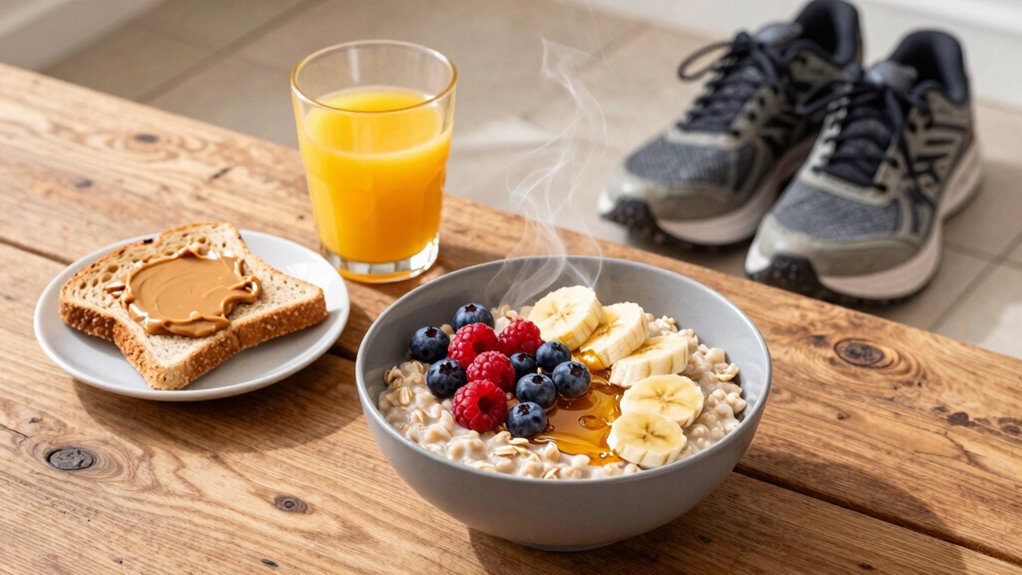

Start your morning with a glass of water, maybe with lemon or sea salt to boost electrolytes. Have a simple snack like a banana with peanut butter or whole-grain toast with avocado and boiled egg for quick energy. After your run, focus on rehydrating and refueling with something rich in carbs and protein, like yogurt with berries or a smoothie. Sticking to a routine makes your mornings smoother and your runs more effective—find out how to optimize it further.

Get workout gear delivered free with Prime
- Fast, free delivery on millions of items
- Prime Video, Amazon Music and more included
- Member-only deals all year
Key Takeaways
- Opt for quick, balanced breakfasts combining carbs and protein, like banana with peanut butter or whole-grain toast with avocado.
- Prepare simple, portable options such as energy bars, dried fruit, or nuts for easy consumption before running.
- Hydrate with a glass of water, adding lemon or sea salt for electrolytes, to boost hydration and energy levels.
- Eat breakfast within 30 minutes of waking to fuel your run and support muscle recovery afterward.
- Incorporate routine hydration and nutritious snacks into mornings for sustained energy and improved performance.

Starting your morning run energized and ready to go doesn’t have to be complicated, especially when you have a simple breakfast formula. The key is to focus on hydration strategies and quick, nutritious post run snacks. When you wake up, your body is naturally dehydrated after hours of sleep, so starting with a glass of water is crucial. Drinking water before you head out helps maintain hydration, improves your performance, and reduces the risk of cramping. If you’re looking to elevate your hydration strategies, adding a splash of lemon or a pinch of sea salt can help replenish electrolytes lost during your run.
Once you’re hydrated, you want to fuel your body without feeling weighed down. A small, balanced breakfast that combines carbs and protein works best. Think of a banana with a spoonful of peanut butter, or a slice of whole-grain toast topped with avocado and a boiled egg. These options provide quick energy and sustain you through your run. If you prefer something lighter, a handful of dried fruit or a few dates can give you a natural sugar boost without feeling heavy.
Fuel your run with a small, balanced meal—carbs and protein for quick energy and sustained performance.
After your run, your focus should shift to replenishing lost nutrients and rehydrating. This is where your post run snacks come into play. Opt for snacks rich in carbs and protein to support muscle recovery and restore glycogen levels. Greek yogurt with berries, a smoothie with protein powder and banana, or a small turkey wrap are excellent choices. These snacks are easy to prepare in advance and can be eaten quickly, helping you recover faster and get back to your day. Incorporating proper nutrition into your routine ensures your body gets the necessary nutrients for optimal recovery. Additionally, paying attention to nutrient timing can maximize the benefits of your post-run intake. Using digital tools such as meal planning apps or nutrition trackers can help you stay consistent and make smarter choices.
Remember, consistency is key with both hydration strategies and your post run snacks. Drinking water throughout the day, especially after your run, maintains your hydration levels and prevents fatigue. As for snacks, aim to eat within 30 to 60 minutes after running to optimize recovery. Keep a stash of simple, portable options like nuts, fruit, or energy bars so you’re never caught unprepared.
Incorporating these habits into your routine makes your mornings smoother and your runs more effective. You won’t need complicated recipes or extensive planning—just a glass of water, a quick snack before heading out, and a nutritious post run treat. This simple breakfast formula supports your performance, speeds recovery, and keeps you energized for the rest of your day. Incorporating hydration strategies into your routine can significantly improve your overall running experience.
portable energy bars for runners
As an affiliate, we earn on qualifying purchases.
As an affiliate, we earn on qualifying purchases.
Frequently Asked Questions
How Long Before Running Should I Eat My Breakfast?
You should eat your breakfast about 1.5 to 2 hours before running, allowing enough time for proper meal timing. This window helps your digestion speed stay efficient, preventing discomfort or cramping during your workout. If your meal is lighter or easier to digest, you can eat closer to your run, around 30 to 60 minutes. Listen to your body and adjust based on how quickly you digest your food.
Can I Drink Coffee With My Breakfast?
Yes, you can drink coffee with your breakfast. Coffee benefits include boosting alertness and providing a gentle energy lift, which can enhance your morning run. Just consider breakfast timing—wait at least 30 minutes after drinking coffee to avoid stomach discomfort. Combining coffee with a nutritious breakfast can energize you without causing issues. Just listen to your body and adjust based on how you feel during your run.
What if I Have Food Allergies or Sensitivities?
If you have food allergies or sensitivities, you can still enjoy breakfast by choosing allergy-friendly options like gluten-free oats, dairy-free yogurt, or nut-free spreads. To ease a sensitive stomach, opt for gentle ingredients and avoid common irritants like processed foods or added sugars. Always read labels carefully, and consider preparing homemade meals to control ingredients, ensuring your breakfast fuels your run safely and comfortably.
Is It Okay to Skip Breakfast on Some Days?
Yes, it’s okay to skip breakfast sometimes. If you practice intermittent fasting or prefer meal skipping on certain days, listen to your body’s signals. Just make sure you maintain balanced nutrition overall. Skipping breakfast occasionally won’t harm your energy levels or performance, especially if you’re used to it. However, be mindful of how your body responds, and don’t make it a regular habit if it affects your hunger or workouts.
How Do I Adjust the Formula for Different Energy Needs?
To adjust the formula for different energy needs, focus on meal timing and nutrient balance. If you need more energy, eat a larger breakfast with more carbs and protein, timing it about an hour before your run. For lighter needs, opt for smaller portions or a snack. Keep your nutrient balance consistent—carbohydrates for quick energy, protein for recovery, and healthy fats for sustained fuel—tailoring portions to match your activity level.
Conclusion
So, there you have it—your foolproof, ultra-simple breakfast formula that’ll turn you into a morning running superstar. No need for complicated recipes or gourmet ingredients; just grab your quick carbs and protein, and hit the pavement. Who knew fueling up could be so effortless? Now go ahead, conquer that morning run with a breakfast so easy, even a sleep-deprived zombie could do it. Because, really, who has time for anything more complicated?
Fall Picks
fall essentials
As an affiliate, we earn on qualifying purchases.