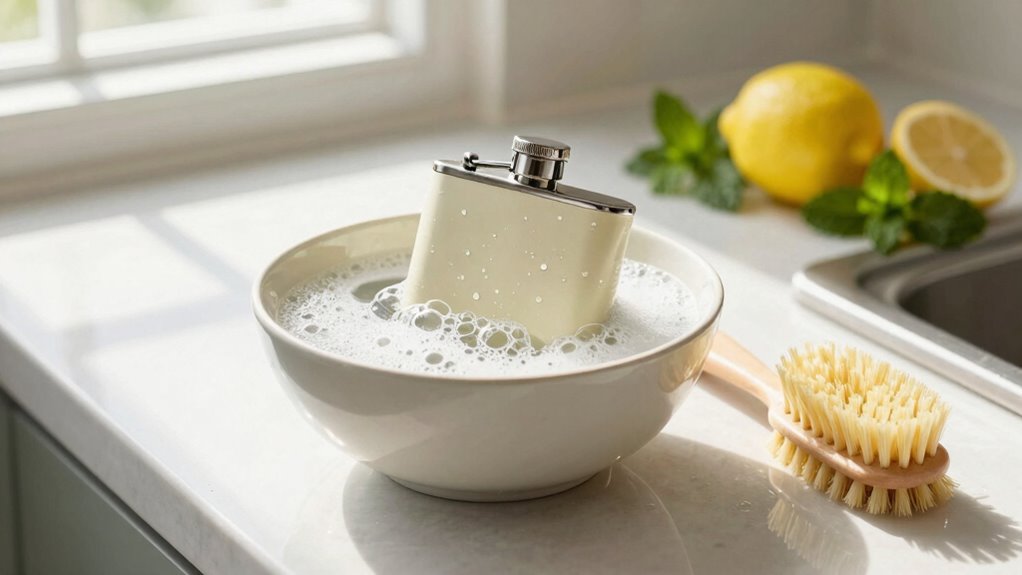

To keep your soft flasks smelling fresh, clean them after every use—especially with flavored liquids. Rinse with warm water right away to prevent residue build-up. Use a mild soap solution or specialized cleaner, and disassemble parts like the cap and bite valve for a thorough wash. Soak in a vinegar-water mix for extra sanitation, and always air dry before reassembling. Regular maintenance can extend your flask’s lifespan and prevent unwanted odors, plus you’ll discover more tips to enhance your hydration experience.
Key Takeaways
- Rinse your soft flask with warm water immediately after use to prevent residue build-up and odors.
- Clean thoroughly with a mild soap solution or specialized cleaner after each use, especially with flavored liquids.
- Disassemble the flask parts, like the cap and bite valve, for a more effective cleaning process.
- Soak the flask in a vinegar and water mixture weekly for extra sanitation and to eliminate smells.
- Ensure the flask is completely air-dried before reassembling to prevent moisture-related issues.
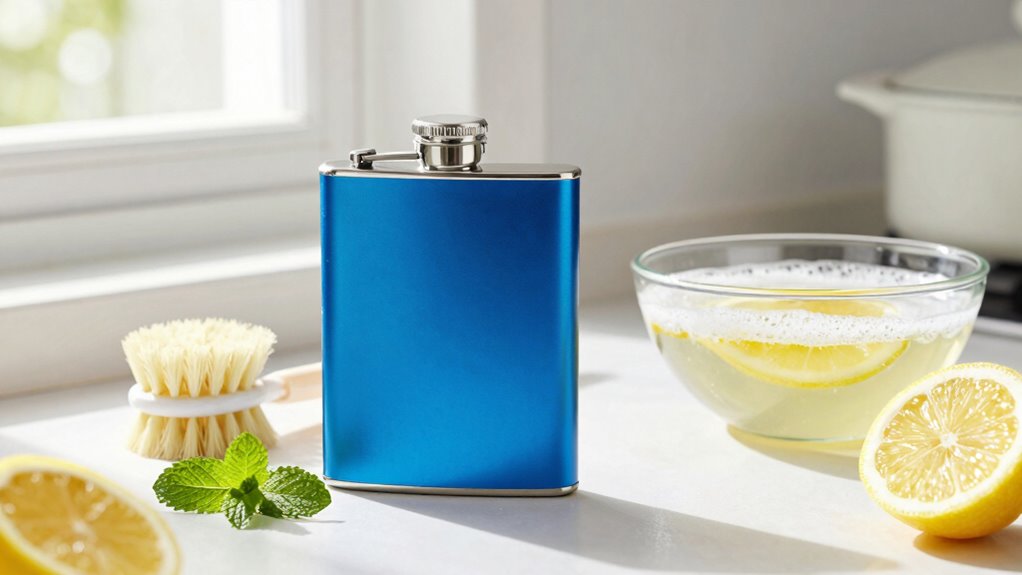
Cleaning your soft flasks is vital to keep them fresh and free from bacteria. If you’ve been using your flasks regularly, you might notice an unpleasant odor or a strange taste. This is often a sign that it’s time to give them a thorough cleaning. The materials used in soft flasks can harbor bacteria and mold if they’re not cleaned properly. Whether your flask is made from silicone, plastic, or another material, understanding how to care for it will extend its lifespan and guarantee your hydration remains safe.
You should aim to clean your soft flasks after every use, especially if you’ve filled them with flavored liquids. Rinsing them with warm water right away can help prevent residue build-up. If you’re frequently using your flasks for water, you might get away with a more relaxed cleaning frequency, but a deep clean once a week is still a good practice. When you’re ready for a more thorough cleaning, you can use a mild soap solution or a specialized flask cleaner. Just avoid harsh chemicals, as they can degrade the materials of your flask.
To clean, start by disassembling any parts, like the cap or bite valve. These areas can trap moisture and bacteria, so it’s important to give them extra attention. A small brush can help you reach those hard-to-clean spots. If your flask is dishwasher-safe, that’s a convenient option, but make sure to check the manufacturer’s guidelines regarding the materials. Some flasks may warp or degrade in high heat. Regularly inspecting your flask for signs of wear can help prevent potential leaks or contamination. Proper disassembly techniques can also make cleaning more effective and prevent damage. Additionally, using a proper cleaning method can ensure that all residues and bacteria are thoroughly removed. Incorporating routine maintenance into your cleaning regimen will further help prevent odors and buildup.
Once you’ve scrubbed everything, rinse thoroughly to remove any soap residue. For extra sanitation, consider soaking your flask in a mixture of vinegar and water. This natural solution helps eliminate odors and disinfects without leaving harmful residues. Proper cleaning routines are essential to prevent bacteria and mold from developing inside your flask. After rinsing, let your flask air dry completely before reassembling it. Storing it while still damp can invite mold and mildew, which you definitely want to avoid.
If you notice persistent odors even after cleaning, it might signal that it’s time for a replacement. Regular maintenance and proper cleaning frequency can make a huge difference in keeping your soft flasks in top shape. Keeping your flask dry and clean is part of home maintenance, which can extend the lifespan of your gear. By taking these steps, you’ll enjoy fresh, clean hydration every time you reach for your flask, whether you’re hitting the trails or just heading to the gym.

HydraPak Flask Cleaning Kit Bristle Brush and Drying Stand
- Includes Bottle Brush and Drying Stand: Cleans water bottles, SoftFlasks, mugs
- Bristle Brush for Hard-to-Reach Areas: Flexible handle cleans corners and caps
- Dual-Function Handle: Provides grip and pivots for drying
As an affiliate, we earn on qualifying purchases.
As an affiliate, we earn on qualifying purchases.
Frequently Asked Questions
Can I Put My Soft Flask in the Dishwasher?
You shouldn’t put your soft flask in the dishwasher, as it may not be dishwasher safe. The high heat and strong water pressure can damage the material, leading to leaks or warping. Instead, stick to hand washing with warm soapy water for effective cleaning. Rinse thoroughly and let it air dry. If you want to keep it fresh, use some baking soda or vinegar as cleaning tips for stubborn odors.
What Materials Are Soft Flasks Typically Made From?
Soft flasks are typically made from materials like thermoplastic elastomer (TPE) or polyethylene, which offer excellent material durability. These types of soft flasks are designed to be lightweight and flexible, making them ideal for hydration during activities. Some may also feature silicone components for added flexibility. When choosing a soft flask, consider the material’s durability and how it fits your needs, whether for running, hiking, or other outdoor adventures.
How Often Should I Clean My Soft Flask?
Isn’t it better to prevent a problem than to solve one? You should clean your soft flask after every use to maintain its freshness and avoid unwanted odors. Regularly rinsing it with warm, soapy water is one of the best flask maintenance tips. For deeper cleaning, consider using baking soda or vinegar once a week. These odor prevention strategies can keep your flask in top shape, ensuring it’s always ready for your next adventure.
Are There Specific Cleaning Products I Should Avoid?
You should avoid bleach and harsh chemicals when cleaning your soft flask. These can damage the material and create lingering odors. Instead, stick to mild dish soap or specific cleaning products designed for hydration gear. Regular cleaning methods, like using a mixture of vinegar and water, help with odor prevention. Make sure to rinse thoroughly to keep your flask fresh and free of any unwanted smells.
Can I Use Vinegar to Clean My Soft Flask?
Yes, you can use vinegar to clean your soft flask. Its natural acidity helps eliminate odors and bacteria, making it a great cleaning alternative. Just mix equal parts vinegar and water, then let it soak for a few hours. Rinse thoroughly afterward to remove any vinegar smell. However, if you prefer other cleaning alternatives, consider baking soda or specialized sports bottle cleaners for effective results without the vinegar scent lingering.
Conclusion
Cleaning your soft flasks regularly is as essential as watering a plant to keep it thriving. By rinsing them out after each use and using a gentle brush or a vinegar solution weekly, you’ll prevent odors and bacteria from taking hold. Just like a fresh breeze clears away stale air, maintaining your flasks keeps them fresh and ready for your next adventure. So, don’t wait—give them the care they deserve and enjoy every sip!