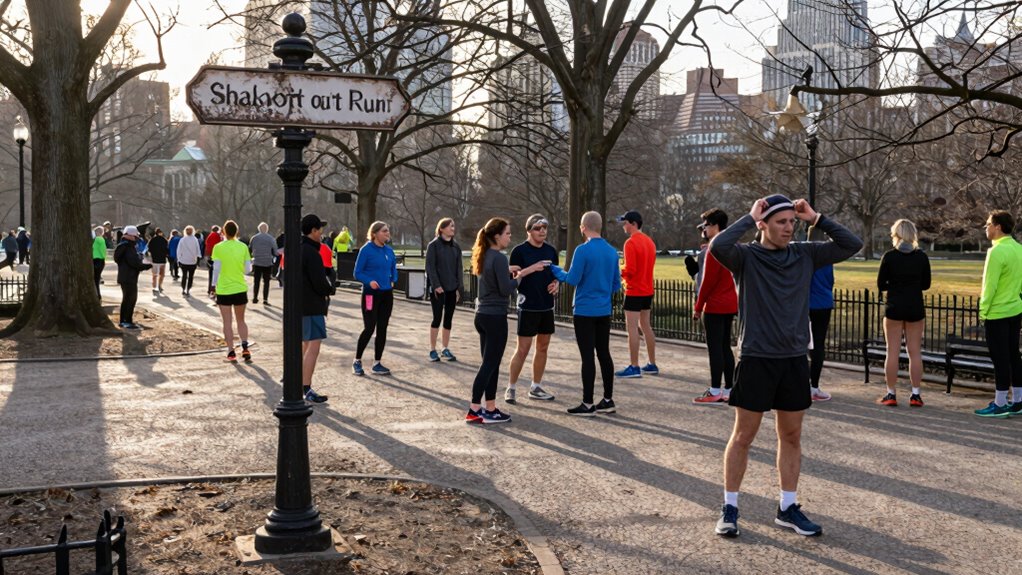
The shakeout run started as a simple warm-up for runners to loosen muscles and prevent injuries before a race. It evolved from practical safety drills into a community tradition, helping runners feel prepared and confident. Over time, it gained popularity in major marathons and fitness events, becoming a key part of race day routines. If you keep exploring, you’ll discover how this safety practice became a beloved part of running culture.

Get workout gear delivered free with Prime
- Fast, free delivery on millions of items
- Prime Video, Amazon Music and more included
- Member-only deals all year
Key Takeaways
- The Shakeout Run originated as a practical warm-up to prepare runners physically and mentally before races.
- It evolved from safety drills to a social, community-building activity among marathon participants.
- Its simplicity and accessibility made it popular across all fitness levels, encouraging widespread adoption.
- Race organizers formalized the Shakeout Run as part of official pre-race routines to promote safety and camaraderie.
- The tradition stuck because it enhances race experience, reduces injury risk, and fosters a sense of unity among runners.
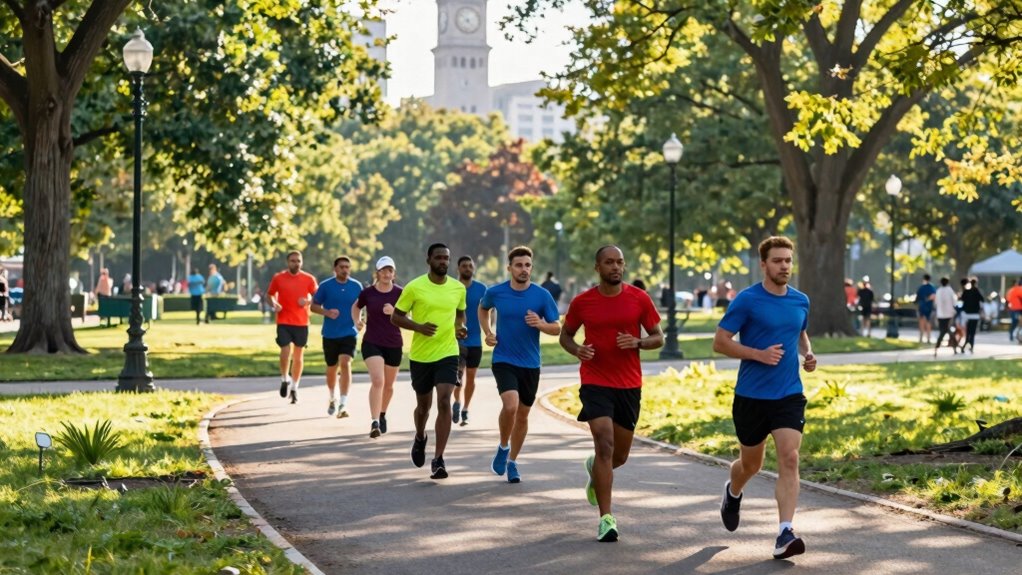
You might wonder where the shakeout run originated, and understanding its roots reveals much about its purpose. The practice began as a way to prepare marathon and race participants for the physical demands of their events. It’s more than just a light jog; it’s a strategic warm-up that helps runners loosen up, prevent injury, and mentally gear up for the main race. Over time, this simple idea has evolved into a widespread tradition, especially at major fitness events and marathons around the world. Its origins are rooted in practical safety drills, designed to make sure runners are ready and aware of their bodies before tackling a challenging course.
The concept of a shakeout run gained momentum in the early 2000s when race organizers started emphasizing the importance of pre-race routines. They realized that a brief, easy run the day before the event could help identify any potential issues, such as tight muscles or minor injuries, that might hinder performance or cause safety concerns during the race. This idea aligns with safety drills used in other contexts, where quick, controlled exercises are performed to ensure readiness and reduce risk. This approach made sense for large-scale fitness events, where the sheer number of participants increases the risk of injury or mishaps. The shakeout run became a way to mitigate those risks while also fostering a sense of community among runners.
What makes the shakeout run stick is its simplicity and effectiveness. It’s accessible to runners of all levels and doesn’t require special equipment or extensive planning. Participants often see it as a way to connect with fellow runners, exchange tips, and mentally prepare for the challenge ahead. The run also serves as a form of safety reassurance, allowing runners to assess their physical condition and adjust if needed. Incorporating a safe and controlled run prior to race day can help reduce anxiety and build confidence among participants. Additionally, understanding the practical safety drills that inspired it can deepen appreciation for this tradition. Many runners consider it an essential part of their race day routine. Its widespread adoption by major races further reinforces its importance in fostering a sense of community among participants. Over time, race organizers and running communities adopted the shakeout run as an official tradition, often including it in the schedule of major marathons and fitness events. Its role as a safety drill, combined with the social aspect of running, helped cement its place in race culture.
Today, the shakeout run continues to thrive because it addresses real needs—physical readiness, injury prevention, and community building. It’s become an integral part of race day routines worldwide, demonstrating how a simple safety drill can turn into a beloved tradition. The development of organized pre-race activities further contributed to its popularity and legitimacy. By understanding its origins, it’s clear that the shakeout run isn’t just about warming up; it’s about creating a safer, more connected experience for everyone involved. That’s why it’s stuck around and why it remains an essential part of the race day experience.
running hydration belt for marathon training
As an affiliate, we earn on qualifying purchases.
As an affiliate, we earn on qualifying purchases.
Frequently Asked Questions
How Did the Shakeout Run First Gain Popularity Worldwide?
You see the Shakeout Run gain popularity worldwide because it effectively promotes earthquake awareness and community engagement. People participate because it’s simple and impactful, encouraging everyone to prepare for emergencies. Organizations and local governments promote it through social media, events, and partnerships, making it a shared experience. As more communities join, the event spreads globally, reinforcing the importance of preparedness and fostering a sense of collective responsibility for safety during earthquakes.
What Organizations Are Primarily Responsible for Promoting the Shakeout Run?
You’ll find that organizations like the Great ShakeOut and local emergency management agencies are primarily responsible for promoting the ShakeOut Run. They focus on community engagement and emphasize safety standards, encouraging participants to practice earthquake preparedness through this event. These organizations coordinate efforts, spread awareness, and guarantee safety protocols are followed, making the Shakeout Run a trusted and widely adopted activity that promotes resilience and readiness in communities worldwide.
Are There Specific Safety Protocols Associated With the Shakeout Run?
During a shakeout run, you should follow specific safety guidelines to guarantee emergency preparedness. These include warming up properly, staying hydrated, and running at a comfortable pace. It’s also essential to be aware of your surroundings and avoid hazards. Adhering to safety guidelines helps prevent injuries and ensures everyone is prepared for an actual emergency. Always listen to organizers’ instructions and prioritize safety to make the shakeout run effective and safe for all participants.
How Has the Shakeout Run Evolved Over the Past Decade?
Over the past decade, you’ve seen the shakeout run evolve alongside urban planning and fitness trends. Cities now design more accessible routes, encouraging diverse participation. It’s become a community staple, blending safety with wellness, and adapting to modern fitness movements emphasizing mental health and inclusivity. You notice more organized events, tech integration, and eco-friendly initiatives, making the shakeout run a dynamic, essential part of urban fitness culture.
Can Communities Customize Their Shakeout Run Events?
Yes, you can customize your Shakeout Run to reflect your community’s spirit. Think of it as tailoring a suit—adding local landmarks, themes, or activities that boost community engagement. By personalizing the event, you strengthen connections and inspire participation. You’re the designer, blending tradition with local flavor, making the Shakeout Run truly your own. Customization turns a standard run into a meaningful celebration of your community’s resilience and unity.
Conclusion
As you finish your shakeout run, remember it’s more than just a warm-up; it’s a symbol of renewal. Like the dawn breaking after a long night, it clears your mind and prepares your body for the journey ahead. Embrace each step as a reminder that even the smallest effort can illuminate your path, transforming uncertainty into strength. The shakeout run isn’t just a tradition—it’s your quiet promise to keep moving forward, no matter what.
Halloween Picks
halloween
As an affiliate, we earn on qualifying purchases.