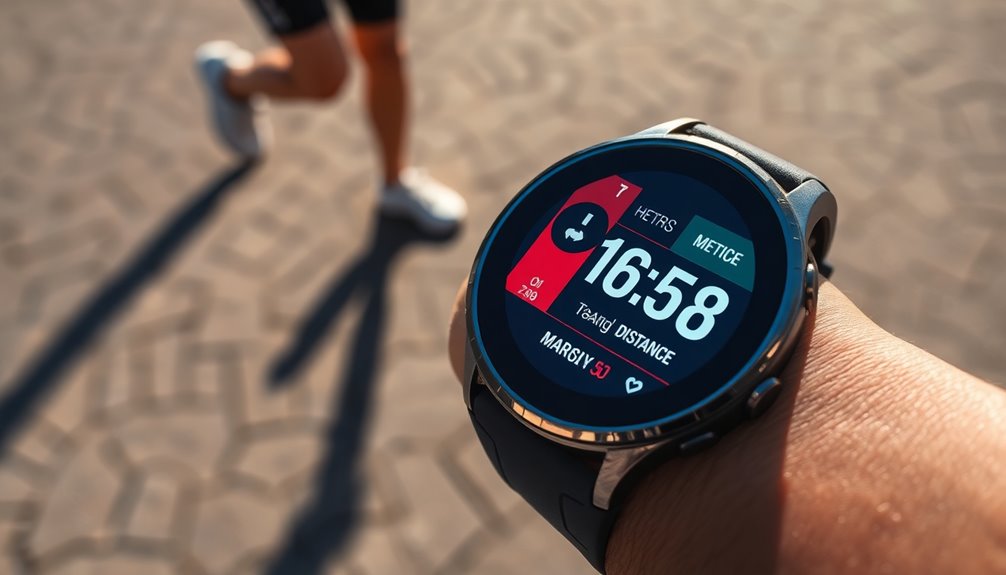

Your running watch might be misrepresenting your performance due to hidden algorithms that adjust how distance and pace are measured. While these algorithms aim to improve consistency, they can lag behind real-time data and distort your actual performance. Even slight inaccuracies can affect your pacing strategy and motivation. Understanding these limitations is crucial for serious runners who want accurate insights. Stick around to uncover more about enhancing your training and maximizing your potential.
Key Takeaways
- Running watches often use smoothing algorithms that can distort real-time pace data, leading to inaccurate performance insights.
- GPS inaccuracies can misrepresent distance, affecting pacing strategies and overall training effectiveness.
- Calibration on precise courses is essential to improve the reliability of distance measurements from running watches.
- Awareness of GPS sensor limitations helps runners make informed adjustments to their training approach.
- Hidden algorithms may cause overestimation or underestimation of speed, impacting motivation and perceived performance.
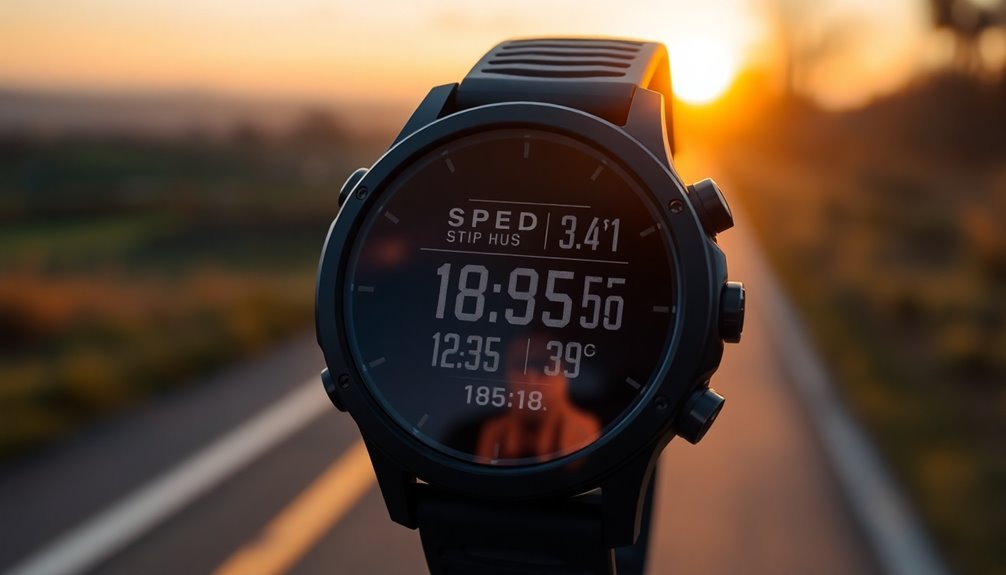
When you lace up your shoes and hit the pavement, the accuracy of your running watch can make a significant difference in your training and performance. You rely on that watch to provide precise distance measurements and track your progress, but there's a hidden truth lurking beneath the surface. Many consumer GPS sensors, used in these watches, struggle with accuracy due to their small size and battery constraints. This can lead to discrepancies between what your watch records and the actual distance you've covered.
Imagine you're gearing up for a half-marathon. The allowable error for that distance is only 21 meters (0.013 miles). Even a slight inaccuracy can affect your pacing strategy, training intensity, and ultimately your VO2 Max readings. If your watch inaccurately measures your distance, you might push yourself harder than necessary, thinking you're going faster when, in fact, you're lagging behind. Conversely, it could falsely tell you you're slower than you are, which can sap your motivation.
To address these inaccuracies, GPS watches often employ smoothing algorithms. These algorithms help mitigate the effect of signal scatter, ensuring your pace readings are more stable. However, they come with a downside: they can lag behind real-time data. What you perceive as a steady pace might actually be a misrepresentation of your performance due to this processing delay. You're left questioning whether you're truly improving or just getting caught in the algorithm's tricks.
To enhance running watch accuracy, it's recommended to calibrate your device on straight, accurately measured courses. This practice can significantly improve the reliability of your distance measurements, ensuring that you're training effectively and tracking your health and fitness accurately. If you're serious about your running, this step is crucial.
The next time you strap on your watch, remember that it mightn't be telling the whole truth. Your running experience could be shaped by the limitations of consumer GPS sensors and the hidden smoothing algorithms at play. By understanding these factors, you can adjust your training approach, making sure you're getting the most out of every run and truly pushing your limits. After all, knowledge is power when it comes to achieving your running goals.

Garmin Forerunner 55, GPS Running Watch with Daily Suggested Workouts, Up to 2 Weeks of Battery Life, Black – 010-02562-00
Easy-to-use running watch monitors heart rate (this is not a medical device) at the wrist and uses GPS…
As an affiliate, we earn on qualifying purchases.
As an affiliate, we earn on qualifying purchases.
Conclusion
In the end, your running watch might not be the reliable training partner you thought it was. This hidden algorithm reveals how it can skew your performance data, leaving you misinformed about your progress. While these devices offer valuable insights, it's essential to approach their readings with a healthy dose of skepticism. Trust your instincts, mix in some manual tracking, and remember that true improvement comes from consistent effort, not just the numbers on your wrist.

Ruitutedianzi Watch Timegrapher Tester Mechanical Watch Calibration Detection Watchmakers Repair Tools Watch Repair Tools
A high-precision calibration instrument specially designed for amateur users, Professional design! Compared with similar products, its performance accuracy…
As an affiliate, we earn on qualifying purchases.
As an affiliate, we earn on qualifying purchases.
Garmin Forerunner 55, GPS Running Watch with Daily Suggested Workouts, Up to 2 Weeks of Battery Life, Black – 010-02562-00
Easy-to-use running watch monitors heart rate (this is not a medical device) at the wrist and uses GPS…
As an affiliate, we earn on qualifying purchases.
As an affiliate, we earn on qualifying purchases.

moutarlier AMOLED GPS Running Smartwatch, 50m Waterproof, Tracks Steps Sleep Heart Rate Oxygen, Long Battery Life with Step & Calorie Counter for Swimming Runners Men Women (Black)
GPS Running Watch with Display: A GPS running watch for mens and womens suitable for running, walking, hiking,…
As an affiliate, we earn on qualifying purchases.
As an affiliate, we earn on qualifying purchases.