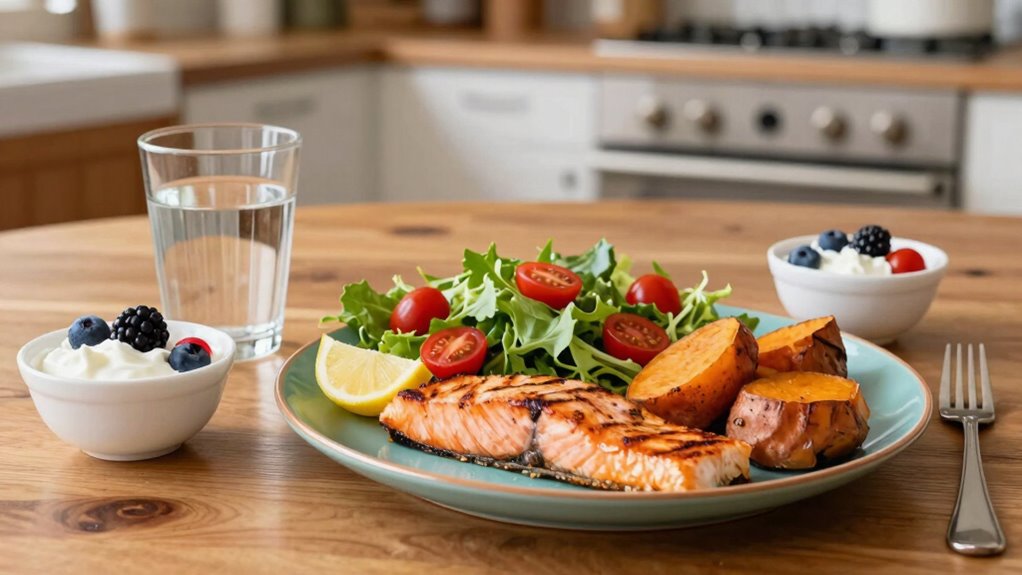

After an evening workout, eat a balanced snack within 30-60 minutes, focusing on lean proteins, healthy fats, and carbs like yogurt with fruit or a turkey sandwich. Stay hydrated with water or electrolyte drinks, sipping steadily to prevent dehydration. Keep portions moderate to avoid feeling sluggish or bloated, and choose light, nutrient-dense foods that support digestion and recovery. If you want to discover more tips to stay light and refreshed, keep exploring below.

Get workout gear delivered free with Prime
- Fast, free delivery on millions of items
- Prime Video, Amazon Music and more included
- Member-only deals all year
Key Takeaways
- Consume a light, balanced snack with protein and carbs within 30-60 minutes post-workout to avoid heaviness.
- Choose easily digestible foods like yogurt, fruit, or a small turkey sandwich for recovery.
- Hydrate steadily with water or electrolyte drinks to support digestion and prevent sluggishness.
- Avoid greasy, fried, or heavy foods late in the evening to promote better sleep and comfort.
- Keep portion sizes moderate and include fiber-rich fruits or vegetables for gentle digestion.
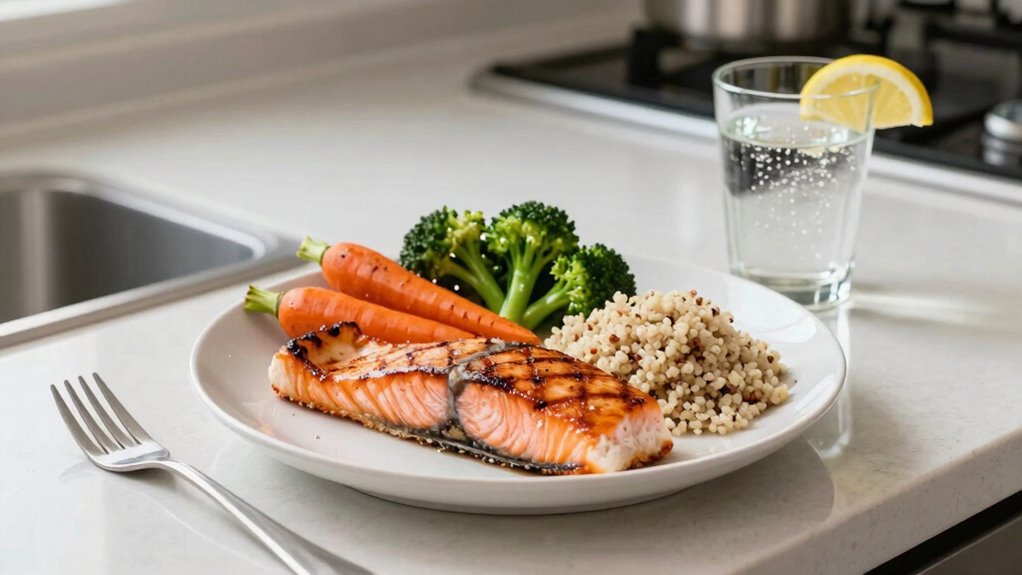
After an evening workout, your body needs the right nutrients to recover and prepare for the next day. How you time your meals and manage hydration makes a big difference in avoiding that sluggish, heavy feeling afterward. Meal timing is crucial—you want to eat enough to replenish energy stores and support muscle recovery without overloading your digestive system. Ideally, aim to have a balanced snack or small meal within 30 to 60 minutes of finishing your workout. This window helps your body absorb nutrients efficiently, promoting quicker recovery and preventing that bloated sensation. Focus on combining lean proteins, healthy fats, and some carbs—think Greek yogurt with fruit, a small turkey sandwich, or a protein shake with a banana. These options provide essential amino acids and glycogen restoration without feeling overly heavy.
Eat a balanced snack within 30-60 minutes post-workout to support recovery and prevent bloating.
Hydration strategies are equally important. After sweating during your workout, you lose electrolytes and fluids, so rehydration should be a priority. Drinking water is essential, but consider incorporating electrolyte-rich drinks if your workout was particularly intense or lasted over an hour. Proper hydration helps prevent dehydration-related fatigue and supports effective digestion, which is key to avoiding that uncomfortable fullness. Sip fluids steadily rather than gulping large amounts at once, giving your body time to absorb and utilize what you drink. If you’re hungry after your workout, sometimes thirst is mistaken for hunger, so staying well-hydrated can also curb unnecessary snacking. Additionally, maintaining proper hydration can aid in electrolyte balance and overall recovery. Consuming adequate fluids also supports nutrient timing principles, which can further enhance your post-workout nutrition. Incorporating hydration strategies effectively can significantly improve your recovery process and overall well-being.
Timing your meals right and staying on top of hydration can also influence your sleep quality and energy levels the next day. If you eat too late or indulge in heavy, greasy foods, you might wake up feeling sluggish or have trouble sleeping. Instead, choose light, nutrient-dense options that satisfy your hunger without weighing you down. Incorporate fruits and vegetables for fiber, which aids digestion, and lean proteins for muscle repair. Keep your portion sizes moderate—think small but satisfying—so you don’t wake up feeling overly full or uncomfortable.
Ultimately, listening to your body is key. If you feel hungry immediately after your workout, have a small, nutritious snack. If you’re not hungry, wait until you feel ready to eat, but don’t skip the recovery meal altogether. Pair your meal with plenty of fluids, and avoid sugary drinks or alcohol that can dehydrate you or disrupt your digestion. By managing meal timing and hydration strategies thoughtfully, you’ll support your recovery, feel lighter, and set yourself up for a good night’s sleep and a fresh start the next morning.
As an affiliate, we earn on qualifying purchases.
Frequently Asked Questions
Can I Eat Carbs Before My Evening Workout?
Yes, you can eat carbs before your evening workout. Opt for a light pre-workout snack rich in easily digestible carbohydrates, like a banana or a slice of toast with honey. Timing is key—consume your carbohydrate-rich snack about 30 to 60 minutes before exercise. This helps maximize your energy levels without feeling heavy. Proper carbohydrate timing guarantees you get the energy boost you need without any digestive discomfort.
Should I Avoid Fats After Exercising?
Think of your body as a well-tuned engine; after an evening workout, avoid heavy fats to keep it running smoothly. Fat intake right after exercise can slow recovery, like clogging a filter. Instead, focus on balanced meal timing with lean proteins and carbs. Small amounts of healthy fats are fine later, but immediate post-workout, prioritize nutrients that replenish and repair quickly, ensuring you stay energized without feeling weighed down.
What’s the Best Hydration Method Post-Workout?
After your workout, prioritize hydration strategies that include drinking water and an electrolyte-rich beverage, like a sports drink or coconut water. This helps replenish lost electrolytes and prevents dehydration. To optimize recovery, drink fluids gradually and consistently over the next hour. If you’re sweating heavily, electrolyte replenishment becomes especially important. Keep a water bottle handy, and choose drinks that restore both fluids and essential minerals to support your recovery process.
How Long Should I Wait to Eat After Exercising?
You should wait about 30 to 60 minutes after exercising to eat, as this allows your body to recover and prevents digestive discomfort. Proper meal timing helps optimize nutrient absorption and keeps you comfortable. If your workout was intense, lean towards the longer end of that range. Listening to your body is key; if you feel hungry sooner, choose a light, easily digestible snack to support your recovery without feeling heavy.
Are Protein Shakes Necessary After an Evening Workout?
Protein shakes aren’t strictly necessary after an evening workout if you can meet your nutrient balance through whole foods. Focus on proper meal timing by having a balanced snack or meal within two hours post-exercise to support recovery. If you prefer convenience or are short on time, a protein shake can be an effective option. Just make sure it complements your overall nutrient intake and doesn’t cause you to feel heavy or bloated.
Conclusion
Eating wisely after your evening workout helps you recover without feeling heavy or sluggish. Prioritize balanced meals with protein, healthy fats, and carbs, and avoid overeating. Remember, about 70% of people who exercise regularly report better sleep and digestion—so nourishing your body properly can boost your overall well-being. By making mindful choices, you’ll feel energized and ready for tomorrow’s challenges, turning your evening workouts into a sustainable part of your healthy routine.
Halloween Picks
halloween
As an affiliate, we earn on qualifying purchases.