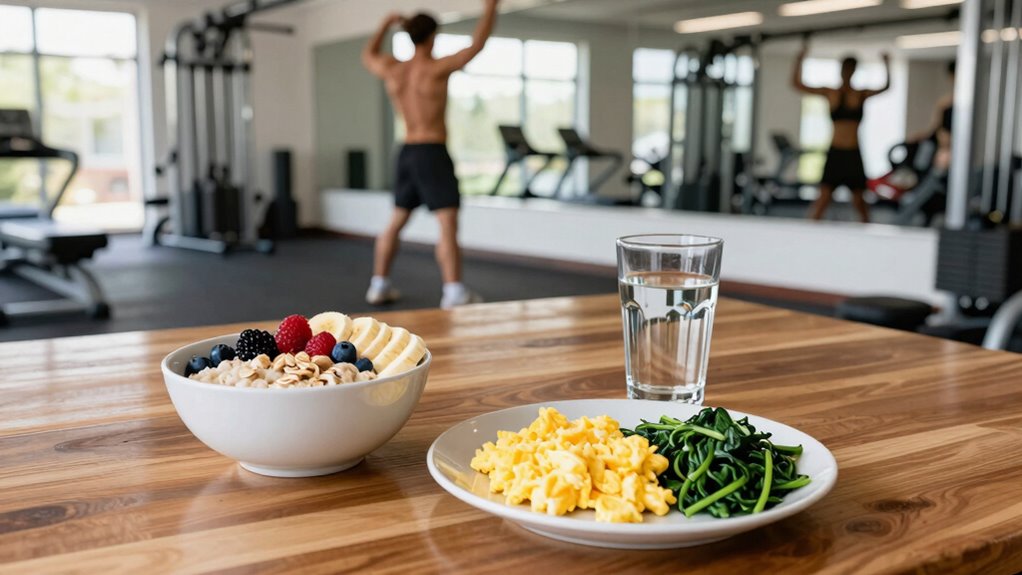

To fuel well for back-to-back training days, eat balanced meals 1-3 hours before each session, focusing on carbs for energy, protein for muscle repair, and healthy fats. Prioritize quick, replenishing snacks within 30-60 minutes post-exercise to support recovery. Stay consistently hydrated, sipping water and electrolyte drinks as needed, especially during long or sweaty sessions. Maintaining proper nutrition and hydration helps you stay energized and recover faster—there’s much more to optimize your performance if you keep going.

Get workout gear delivered free with Prime
- Fast, free delivery on millions of items
- Prime Video, Amazon Music and more included
- Member-only deals all year
Key Takeaways
- Prioritize balanced meals 1-3 hours before each workout with carbs, protein, and healthy fats for sustained energy.
- Consume quick-digesting carbs and protein within 30-60 minutes post-workout to enhance recovery.
- Maintain consistent hydration throughout the day, especially on consecutive training days, using water and electrolyte-rich foods.
- Replenish electrolytes and fluids regularly to prevent cramping and fatigue during back-to-back sessions.
- Adjust meal portions and timing based on workout intensity and duration to support performance and recovery.

When you have back-to-back training days, proper nutrition becomes essential to maintain energy, optimize recovery, and prevent fatigue. The way you time your meals can make a significant difference in how well you perform and recover during this demanding period. It’s crucial to plan your meal timing strategically to ensure your body has the nutrients it needs when it needs them most. Before your workouts, aim for a balanced meal containing carbs for energy, some protein for muscle support, and a little healthy fat. Eating approximately 1-3 hours beforehand helps sustain your energy levels and prevents hunger during exercise. After training, prioritize a quick-absorbing meal or snack rich in carbs and protein within 30 to 60 minutes to kickstart muscle repair and replenish glycogen stores.
Hydration strategies are equally vital. During intense or prolonged sessions, you lose fluids and electrolytes through sweat, which can impair performance and delay recovery if not replenished. Make it a point to hydrate consistently before, during, and after your workouts. Water is your best friend, but during extended or especially sweaty sessions, consider electrolyte drinks to restore sodium, potassium, and magnesium levels. Drinking small amounts frequently, rather than large gulps infrequently, helps your body absorb fluids more effectively. Post-exercise, continue hydrating to replace what you’ve lost, aiming for at least 16-20 ounces of water for every pound of weight lost during training. Additionally, maintaining proper hydration throughout the day supports overall performance and recovery. Your overall daily hydration should be maintained consistently, not just around workout times. This means sipping fluids throughout the day, especially if you’re training on consecutive days. Proper hydration supports digestion, keeps your joints lubricated, and helps your body process nutrients more efficiently. Drinking enough fluids can also help prevent dehydration, which can negatively impact your training and recovery. The importance of electrolyte balance in hydration is often overlooked but critical for muscle function and endurance. When combined with mindful meal timing, hydration strategies ensure your energy levels stay stable and your recovery is optimized. Incorporating electrolyte-rich foods into your diet can further enhance your hydration and support electrolyte balance, especially on active days. Remember, if you’re feeling sluggish or crampy, it’s often a sign you need to drink more water or adjust your electrolyte intake.
As an affiliate, we earn on qualifying purchases.
Frequently Asked Questions
Should I Increase My Calorie Intake on Back-To-Back Training Days?
Yes, you should increase your calorie intake on back-to-back training days. Focus on meal timing by eating more frequent, balanced meals to fuel your workouts and aid recovery. Incorporate nutrient-dense foods and consider supplement choices like protein shakes or carbs to replenish glycogen stores. Listening to your body’s hunger signals helps prevent fatigue, ensuring you stay energized and perform your best during consecutive training sessions.
What Are the Best Snacks for Quick Energy Recovery?
Pre-workout snacks like bananas or energy bars boost your quick energy, debunking the myth that only heavy meals work. Post-exercise recovery benefits from carbs and protein, like a smoothie or yogurt with fruit, to replenish glycogen and repair muscles. These snacks are convenient, fast-absorbing, and essential for maintaining energy levels during back-to-back training days, helping you recover faster and stay energized for your next workout.
How Much Protein Should I Consume After Each Workout?
You should aim for about 20-30 grams of protein after each workout to support muscle recovery and growth. Focus on meal timing within 30 to 60 minutes post-exercise for ideal benefits. Consider supplement options like whey protein or plant-based powders if you need a quick, convenient boost. Incorporate lean meats, dairy, or legumes into your meals to meet your protein needs and maximize recovery on back-to-back training days.
Is It Necessary to Carbo-Load Before Consecutive Training Sessions?
Carbo-loading before consecutive training sessions isn’t always necessary, but it can help optimize your performance. Focus on proper nutrient timing and meal timing by consuming carbohydrate-rich meals a few hours before your workouts. This guarantees your muscles are glycogen-loaded, providing the energy needed for sustained effort. If your sessions are intense or long, adding carbs to your meals can improve recovery and sustain energy levels across back-to-back days.
How Do Hydration Needs Change During Back-To-Back Workouts?
During back-to-back workouts, your hydration needs increase, and you should focus on hydration timing to stay ahead. Drink water regularly throughout the day and consider electrolyte-rich fluids to maintain electrolyte balance, especially if you sweat heavily. Post-workout, replenish lost fluids promptly. This approach helps prevent dehydration, supports performance, and speeds recovery, ensuring you’re ready for the next session. Stay proactive with hydration to optimize your training results.
Conclusion
Remember, fueling your body properly on back-to-back training days keeps you energized and helps prevent injury. Focus on balanced meals with carbs, protein, and healthy fats, and stay hydrated. Are you ready to optimize your performance and recovery? By paying attention to your nutrition, you’ll not only crush your workouts but also feel stronger and more motivated each day. So, why not start today and give your body the care it deserves?
Halloween Picks
halloween
As an affiliate, we earn on qualifying purchases.