To prevent and manage issues with your plantar fascia, wear supportive shoes with good arch support and cushioning, especially if you have flat feet or high arches. Avoid tight or worn-out footwear, and include gentle stretching for your calves and feet. Rest, ice, and low-impact activities like swimming can help reduce inflammation. If pain persists, consult a healthcare professional for proper treatment options. Keep exploring to learn more about maintaining healthy foot support and care.
Key Takeaways
- Wear supportive footwear with good arch support and cushioning to reduce strain on the plantar fascia.
- Incorporate regular stretching of calves and foot muscles to maintain flexibility and prevent inflammation.
- Avoid activities that cause heel pain, and opt for low-impact exercises like swimming or cycling.
- Use orthotics or insoles to distribute pressure evenly and support flat feet or high arches.
- Rest, apply ice, and seek medical advice if heel pain persists to prevent worsening of plantar fasciitis.
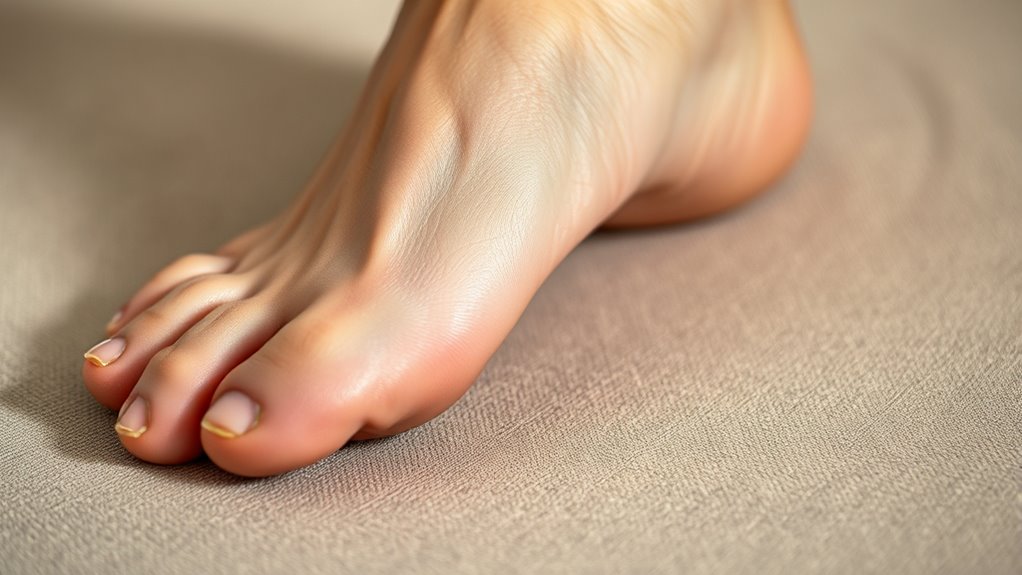
Have you ever wondered what the thick band of tissue under your foot is doing? That’s your plantar fascia, a strong ligament that runs from your heel to the toes, supporting the arch and helping you walk, run, and stand comfortably. When this tissue becomes inflamed or overstressed, it leads to heel pain, often most noticeable with the first steps in the morning or after long periods of rest. Understanding how the plantar fascia functions and what causes issues is key to effective prevention and management.
The plantar fascia supports your arch and helps you walk, run, and stand comfortably.
Heel pain is one of the most common symptoms of plantar fasciitis, an inflammation of the fascia. This pain can be sharp and stabbing, especially at the heel’s bottom, and it tends to worsen after activity or prolonged standing. One way to reduce strain on the plantar fascia is by ensuring proper arch support. Shoes that lack adequate arch support allow the fascia to stretch and strain more than it should, increasing your risk of developing pain and tightness. Using insoles or orthotics designed to support the arch can make a big difference, especially if you have flat feet or high arches. These support devices help distribute pressure evenly across your foot, reducing the load on the fascia and alleviating heel pain.
Improper footwear is a major contributor to plantar fascia problems. Shoes that are too tight, unsupportive, or worn out don’t provide the necessary stability, causing your foot to overcompensate and placing extra stress on the fascia. It is crucial to choose footwear that offers firm arch support and cushioning, especially if you’re on your feet for extended periods. Additionally, incorporating gentle stretching routines into your daily routine can keep the fascia flexible and less prone to injury. Stretching your calves and the bottom of your foot helps relieve tension and maintain healthy tissue. Regularly monitoring your foot health can also help identify early signs of overstress and prevent more serious issues.
Incorporating low-impact activities like swimming or cycling can help maintain your fitness without putting excessive strain on your plantar fascia. Resting your feet and applying ice to inflamed areas can also reduce heel pain and inflammation. If heel pain persists despite these measures, it’s wise to consult a healthcare professional. They might recommend physical therapy, custom orthotics, or other treatments to manage and prevent further damage. Recognizing the importance of arch support, choosing supportive footwear, and avoiding activities that aggravate your heel pain are vital steps toward keeping your plantar fascia healthy and pain-free.
Frequently Asked Questions
Can Plantar Fascia Issues Cause Knee Pain?
Yes, plantar fascia issues can cause knee pain. When your plantar fascia is strained or inflamed, you might develop gait alterations to reduce discomfort, leading to knee compensation. These changes in how you walk or stand put extra stress on your knees, causing pain or discomfort over time. Addressing plantar fascia problems early helps prevent these gait alterations and reduces the risk of knee pain developing as a consequence.
Are There Specific Footwear Recommendations for Plantar Fascia Health?
To support your plantar fascia, choose proper footwear with good arch support and cushioning. Look for shoes that fit well, provide stability, and avoid high heels or unsupportive sneakers. Supportive insoles can also help reduce strain on your fascia and improve comfort. Regularly replacing worn-out shoes is key to maintaining foot health. By making these adjustments, you can prevent issues and promote healthier plantar fascia function.
How Long Does It Typically Take to Recover From Plantar Fasciitis?
Recovery from plantar fasciitis varies, but typically, it takes about 6 to 12 weeks. You might see symptom relief within a few weeks, yet full recovery could take longer, especially if you ignore early signs. The key is to follow proper treatment, rest, and stretching routines. Patience is essential—your recovery timeline depends on how well you manage your symptoms and adhere to your healthcare provider’s advice.
Is Surgery Necessary for All Plantar Fascia Injuries?
Surgery isn’t necessary for all plantar fascia injuries; it depends on injury severity and your response to conservative treatments. You might explore surgical alternatives like physical therapy, stretching, orthotics, or anti-inflammatory measures first. If your pain persists or worsens despite these options, your doctor may recommend surgery. Remember, many cases improve with non-invasive methods, so surgery is usually a last resort after trying less invasive options.
Can I Prevent Plantar Fascia Problems Through Daily Stretching?
Yes, daily stretching can help prevent plantar fascia problems. By regularly stretching your calf muscles and foot fascia, you improve flexibility and reduce strain on the plantar fascia. Incorporate simple stretches like calf raises and toe stretches into your routine to support injury prevention. Staying consistent with these exercises makes a significant difference in maintaining foot health and minimizing the risk of plantar fascia issues.
Conclusion
By now, you see how caring for your plantar fascia can prevent pain and keep you moving like a well-oiled machine. Remember, don’t ignore those early signs—treat them like a knight would his armor. Stay proactive with stretches, proper footwear, and rest. With consistent effort, you’ll dodge the dreaded heel spurs and keep your feet happy. After all, even in a world full of tech, good foot health remains your trusty steed—no need to wait for a time machine!