
To prevent shin splints, wear supportive, well-fitting shoes that suit your gait and replace them regularly. Strengthen and stretch your lower leg muscles to improve shock absorption. Gradually increase your activity intensity to avoid sudden strain. Remember to warm up before workouts and include rest days to allow recovery. Paying attention to these basics will keep you injury-free, and if you continue, you’ll discover more effective ways to stay injury-proof.
Key Takeaways
- Wear supportive, well-fitting shoes that are replaced regularly to absorb shock effectively.
- Strengthen lower leg muscles with exercises like toe raises and calf stretches to improve shock absorption.
- Gradually increase activity intensity and volume to prevent overloading shin muscles.
- Incorporate proper warm-up and cool-down routines, including stretching, before and after exercise.
- Prioritize rest and recovery to allow muscles to heal and reduce inflammation risk.

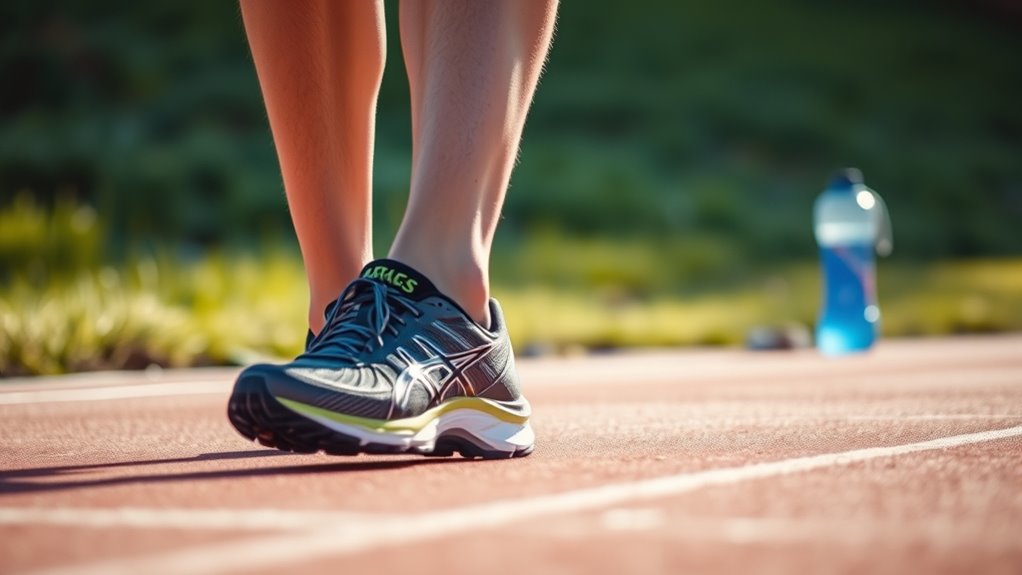
Shin splints, a common overuse injury, cause pain along the front or inside of your shinbone. If you’re active, especially in running or jumping sports, you’re at risk of developing this discomfort. The good news is that many cases can be prevented with simple strategies focused on proper preparation and care. One of the most important steps is choosing proper footwear. Worn-out shoes or those that don’t provide adequate support can increase the impact on your shins, leading to inflammation and pain. Make sure your shoes fit well, offer good arch support, and suit your activity type. Running shoes designed for your gait can help distribute forces evenly, reducing stress on your shinbones. Avoid the temptation to wear fashion sneakers or shoes with insufficient cushioning, as they won’t absorb shock effectively. Replacing your footwear regularly, typically every 300-500 miles or when you notice signs of wear, ensures consistent support and shock absorption.
Beyond footwear, muscle strengthening plays a critical role in preventing shin splints. Weak muscles in your lower legs can’t absorb the shock of impact adequately, leaving your bones and connective tissues to take the brunt. Incorporate targeted exercises such as toe raises, heel walks, and eccentric calf raises into your routine. Strengthening these muscles enhances their ability to handle repetitive stress, which is especially important if you’re increasing workout intensity or duration. Stretching the calves and Achilles tendons also helps maintain flexibility, reducing strain on your shins during activity. When your muscles are strong and flexible, they act as a natural shock absorber, decreasing the likelihood of inflammation and pain. Additionally, proper air quality in your workout environment can help reduce respiratory strain and improve overall exercise performance.
Consistency is key. Prioritize warming up properly before any activity, and cool down afterward with stretching. Gradually increase your training intensity and volume instead of jumping into high-impact workouts too quickly. Listening to your body is essential; if you start feeling shin pain, it’s a sign to slow down and rest. Ignoring early discomfort can lead to more severe injuries that require longer recovery times. Rest days are necessary for recovery and muscle rebuilding, especially if you’re experiencing discomfort. Remember, prevention is easier and less painful than treating a full-blown injury. By paying attention to proper footwear and strengthening your lower-leg muscles, you give yourself a solid foundation to stay active without the nagging pain of shin splints.

ANTA Men’s PG7 Running Shoes Cushioning Comfortable Breathable Athletic Workout Gym Cross Trainer Sports Sneakers, Black, 11
[Innovative Cushioning & Ultra-Soft Rebound] PG7 Running Shoe is innovative because it's the first running midsole to have…
As an affiliate, we earn on qualifying purchases.
As an affiliate, we earn on qualifying purchases.
Frequently Asked Questions
Can Shin Splints Be Completely Cured?
Yes, shin splints can be completely cured if you focus on muscle strengthening and stretching exercises. You should strengthen your lower leg muscles to support your shins better and stretch your calves and Achilles tendons regularly. Rest and proper footwear are essential, too. By consistently applying these strategies, you can heal existing shin splints and prevent future issues, allowing you to return to your activities pain-free.
How Long Does Recovery From Shin Splints Usually Take?
Think of your recovery as a gentle river finding its way back to the sea. Typically, the healing process takes about 2 to 6 weeks, depending on the severity. Your recovery timeline involves rest, proper care, and gradual return to activity. By respecting your body’s signals and avoiding overexertion, you help guarantee a smoother, faster recovery from shin splints, guiding you back to full strength with patience.
Are There Specific Shoes That Prevent Shin Splints?
Yes, choosing shoes with a proper fit helps prevent shin splints. Look for running shoes that offer good arch support and cushioning. Cushioned insoles can also absorb shock and reduce strain on your shins. Make sure your shoes aren’t too tight or too loose, as ill-fitting footwear increases injury risk. Investing in quality athletic shoes tailored to your foot type can substantially lower your chances of developing shin splints.
Can Shin Splints Lead to More Serious Injuries?
Yes, shin splints can lead to more serious injuries like stress fractures or muscle strains if left untreated. The ongoing bone stress and muscle strain weaken your shin area, increasing the risk of fractures or chronic pain. You should listen to your body, rest when needed, and seek medical advice if pain persists, to prevent these complications and promote proper healing.
Is It Safe to Run Through Shin Splints?
Running through shin splints isn’t safe because it can worsen your injury. You should focus on improving your running form and choosing proper footwear to reduce stress on your shins. Ignoring pain might lead to more serious issues, so rest and recover first. Pay attention to your body’s signals, and if pain persists, consult a healthcare professional before continuing your runs. Proper form and footwear are key to preventing further injury.

Slant Board for Calf Stretching, 5 Adjustable Angles Incline Board for Squat Wedge, 480 lbs Weight Capacity Calf Stretch Yoga Foam Wedge for Exercise, Squat, Ankle Mobility & Physical Therapy
[RECOMMENDED BY PHYSICAL THERAPISTS] USA Original Patent-Slant Board for Calf Stretch helps exercise stretches while also helping the…
As an affiliate, we earn on qualifying purchases.
As an affiliate, we earn on qualifying purchases.
Conclusion
By following these prevention tips, you can reduce your risk of shin splints and keep moving comfortably. Imagine Sarah, a marathon runner who adjusted her training schedule and strengthened her calves—she avoided shin splints and finished her race strong. Remember, listening to your body and gradually increasing activity are key. Stay proactive, stay mindful, and you’ll enjoy your workouts without the pain. Prevention is your best tool for staying active and injury-free.

Dr. Scholl’s Sport Insoles – Superior Shock Absorption and Arch Support to Reduce Muscle Fatigue and Stress on Lower Body Joints for Men Size 8-14
Protects and reduces stress on lower body joints
As an affiliate, we earn on qualifying purchases.
As an affiliate, we earn on qualifying purchases.

AmazeFan Tib Bar, Tibialis Trainer Leg Workout, Knees Over Toes Tibia Dorsi Calf Machine for Strength Training Calves/Shins/Ankles and Ripping Lower Leg Muscles, Fit 2" Weight Plates and All Shoe Size
【Exercise Stronger Tibialis Muscles】: Our Tibialis Trainer is designed to specifically target and strengthen your tibialis muscles, improving…
As an affiliate, we earn on qualifying purchases.
As an affiliate, we earn on qualifying purchases.