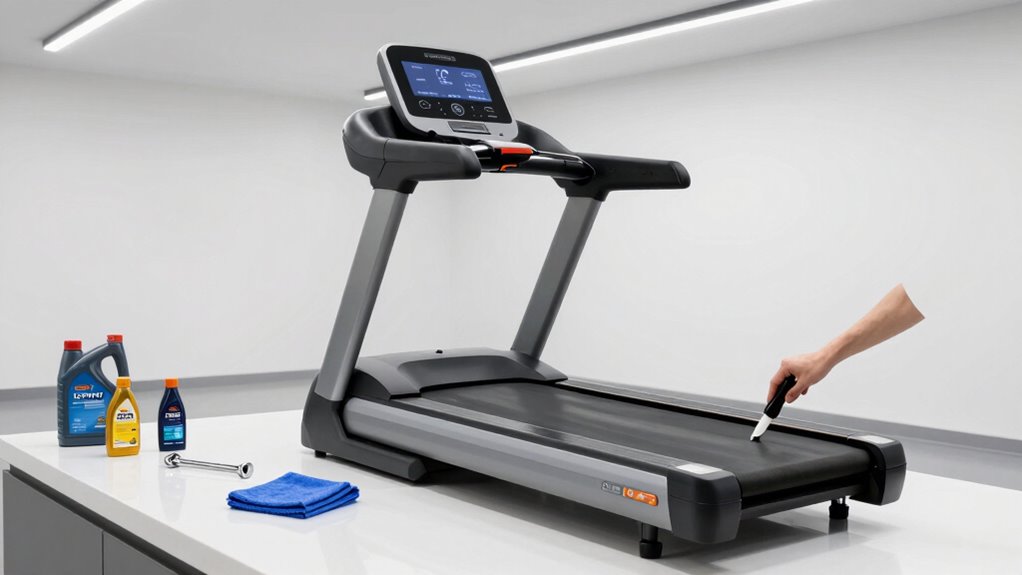

To keep your treadmill running smoothly and prevent breakdowns, dedicate 10 minutes for quick maintenance. First, power off the machine and inspect the belt alignment, adjusting the rear screws if needed to keep it centered. Then, apply a silicone-based lubricant evenly along the belt’s length to reduce friction. Wipe down the deck and rollers to remove dust and debris. Regularly check belt tension and adjust if it’s loose. Want more tips for easy, effective treadmill upkeep? Keep going.
Key Takeaways
- Power off the treadmill and clean the deck and rollers to remove dust and debris.
- Apply silicone-based lubricant evenly along the belt’s length to ensure smooth operation.
- Check and adjust belt alignment to keep it centered and prevent uneven wear.
- Inspect belt tension and tighten or loosen as needed for optimal fit.
- Perform a quick overall inspection of rollers, deck, and motor area for any signs of wear or damage.

Regular treadmill maintenance is essential to keep your equipment running smoothly and extend its lifespan. One of the most effective ways to do this is by sticking to a consistent lubrication schedule. Proper lubrication reduces friction between the belt and deck, preventing premature wear and avoiding costly repairs down the line. Check your treadmill’s manual to determine how often you should lubricate the belt—some models require monthly attention, while others might need it every few months. When you perform this task, ensure you use the recommended lubricant, typically a silicone-based spray, and apply it evenly along the belt’s length while the treadmill is powered off. This step keeps the belt moving smoothly and minimizes strain on the motor and other components. Additionally, maintaining luggage & bags storage in your home can help keep your treadmill area tidy and prevent dust buildup.
Regularly lubricate your treadmill to reduce wear and prolong its lifespan.
Belt alignment is another critical factor in maintaining your treadmill’s performance. Over time, the belt can shift out of position, leading to uneven wear, increased noise, or even belt slippage. Regularly inspecting the belt’s alignment should be part of your routine. To do this, turn off the treadmill and manually adjust the belt if necessary. Most models have adjustment screws on the rear end of the deck—turning these screws clockwise or counterclockwise helps center the belt. Keep an eye on the edges of the belt relative to the deck; it should stay aligned in the middle without rubbing against the sides. Proper belt alignment minimizes unnecessary tension and prevents the belt from slipping during your workout, which can cause damage and compromise safety.
Along with lubrication and belt alignment, taking a few minutes to check the treadmill’s deck and rollers can prevent more significant issues later. Ensure the deck is clean and free of dust or debris that can cause uneven wear. Wiping down the deck and rollers keeps everything moving smoothly and prolongs the lifespan of these parts. Also, periodically inspect the tension of the belt—if it feels loose or tight, it may need adjustment to avoid unnecessary strain on the motor. Regularly checking these components doesn’t require much time but offers significant benefits by catching problems early before they escalate into costly repairs.
Incorporating these simple maintenance steps into your routine ensures your treadmill stays in top shape. By adhering to a consistent lubrication schedule and ensuring proper belt alignment, you prevent common issues like excessive noise, uneven wear, and mechanical failure. These small, regular efforts are the key to avoiding breakdowns and keeping your treadmill running efficiently for many more workouts to come.

EAWONGEE Treadmill Belt Lubricant Spray, 7.2oz Silicone Oil with Applicator Tube, High Temperature Resistant for Fitness Equipment
Comprehensive Lubrication Solution:This 7.2oz bottle of silicone treadmill belt lubricant comes complete with a sealing cap for safe…
As an affiliate, we earn on qualifying purchases.
As an affiliate, we earn on qualifying purchases.
Frequently Asked Questions
How Often Should I Replace Treadmill Belts?
You should replace treadmill belts every 1,000 to 1,500 miles or about every 12 to 18 months, depending on usage. Regular belt replacement helps extend your treadmill’s lifespan and prevents breakdowns. Keep an eye on signs like fraying, uneven movement, or a slipping belt. Timely belt replacement guarantees smooth operation and avoids costly repairs, keeping your treadmill running efficiently for years to come.
What Signs Indicate a Motor Problem?
Your treadmill’s motor might be having issues if you notice loud motor noise or overheating issues. A sudden increase in noise signals internal problems, while persistent overheating can cause damage or shutdowns. If your treadmill’s motor sounds like a rocket taking off or runs unusually hot, it’s time to check for worn brushes, loose wiring, or lubrication needs. Addressing these signs early saves you from costly repairs later.
Can I Lubricate the Treadmill Myself?
Yes, you can do DIY lubrication on your treadmill, but follow your manufacturer’s instructions carefully. Start with thorough treadmill cleaning to remove dust and debris, then apply the recommended lubricant to the deck and belt. Avoid over-lubricating, as it can cause issues. Regular treadmill cleaning and proper lubrication help keep the machine running smoothly, extend its lifespan, and prevent costly breakdowns.
How Do I Troubleshoot Unexpected Error Messages?
When an error code flashes like a warning sign on your treadmill, don’t panic. Start troubleshooting by turning off the machine, then check the user manual for specific error code meanings. Follow troubleshooting steps, such as resetting the system or inspecting connections. Often, a quick restart clears the glitch. If issues persist, contact support—think of it as calling in a mechanic to get your treadmill back on track.
What Safety Precautions Should I Follow During Maintenance?
During maintenance, prioritize electrical safety by unplugging the treadmill before starting any work. Always wear protective gear like gloves and safety glasses to prevent injuries from sharp or moving parts. Avoid working near live electrical components, and confirm the area is dry to prevent shocks. Keep a fire extinguisher nearby and follow manufacturer instructions carefully. Staying cautious helps you perform maintenance safely and keeps your treadmill in top condition.

Treadmill Adjustment Tool, Universal Hex Allen Wrench, Black and Blue
UNIVERSAL COMPATIBILITY: Specially designed hex wrench tool that fits 99% of iFit treadmills for easy adjustments and maintenance….
As an affiliate, we earn on qualifying purchases.
As an affiliate, we earn on qualifying purchases.
Conclusion
By sticking to this quick, 10-minute maintenance routine, you’ll keep your treadmill running smoothly and avoid costly breakdowns. Regular care isn’t just about fixing issues; it’s about preventing them before they start. Remember, “An ounce of prevention is worth a pound of cure.” With consistent effort, your treadmill will serve you well for years to come. Stay proactive, and enjoy your workouts without interruptions or worries.

FreeMotion Epic Adjustment Washer 014127 Replacement Hardware for Treadmill Belt Tension Alignment Repair, Helps Secure Adjuster Bolts & Frame Fit, Durable Spacer
This adjustment washer is part number 014127 and is designed for compatible treadmill repairs, helping support proper spacing…
As an affiliate, we earn on qualifying purchases.
As an affiliate, we earn on qualifying purchases.

Clean-N-Walk Original Patented Treadmill Cleaning System Since 1998 and Official Partner for Major Manufacturers Made in USA (6 Month Supply)
MANUFACTURERS RECOMMENDED TREADMILL CLEANING SYSTEM – Made in the USA since 1998, Clean-N-Walk is recommended by leading treadmill…
As an affiliate, we earn on qualifying purchases.
As an affiliate, we earn on qualifying purchases.