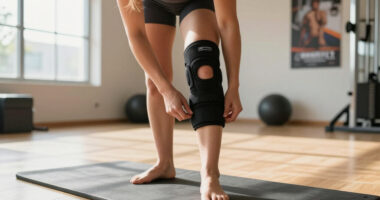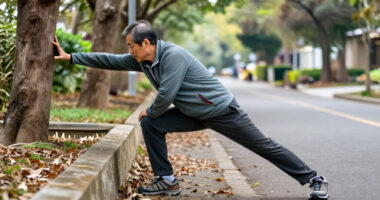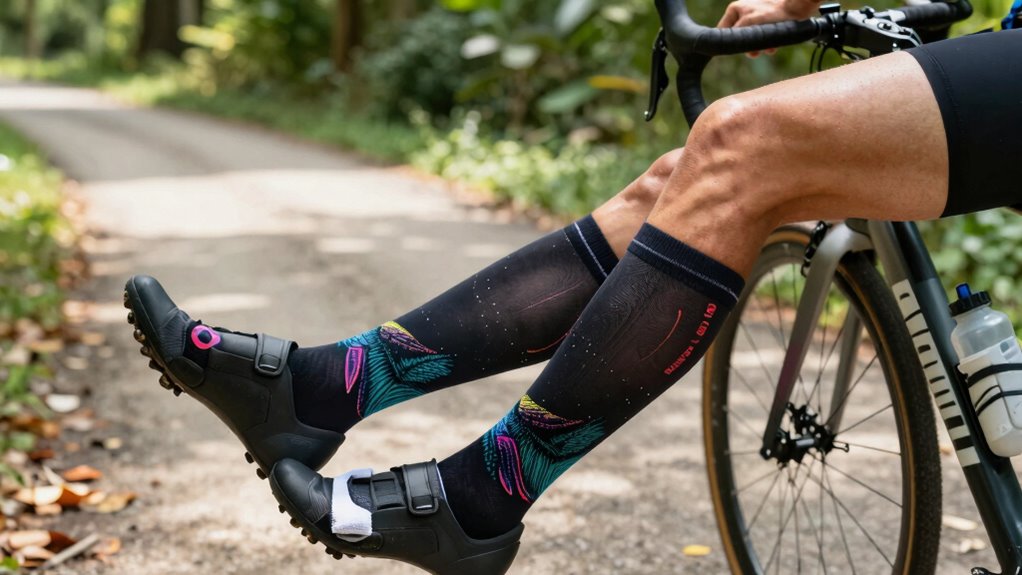

To keep your calves happy during mileage bumps, stretch regularly with dynamic moves before runs and static stretches afterward to loosen muscles. Wear supportive, well-fitting shoes to reduce strain. Incorporate strength exercises to build resilience and prevent fatigue. Pay attention to your body’s signals, rest, hydrate, and ice sore areas. Consistent calf care and mindful progress make longer runs smoother. Keep going to discover more tips to protect your calves and enjoy your running journey.

Get workout gear delivered free with Prime
- Fast, free delivery on millions of items
- Prime Video, Amazon Music and more included
- Member-only deals all year
Key Takeaways
- Incorporate dynamic stretches before runs and static stretches afterward to maintain calf flexibility.
- Wear supportive, well-fitting shoes that cushion shock and reduce calf strain during increased mileage.
- Strengthen calves and supporting muscles regularly to improve resilience and prevent fatigue.
- Gradually increase mileage to allow calves to adapt without undue stress.
- Listen to your body, prioritize recovery, and address soreness early with rest, hydration, and icing.
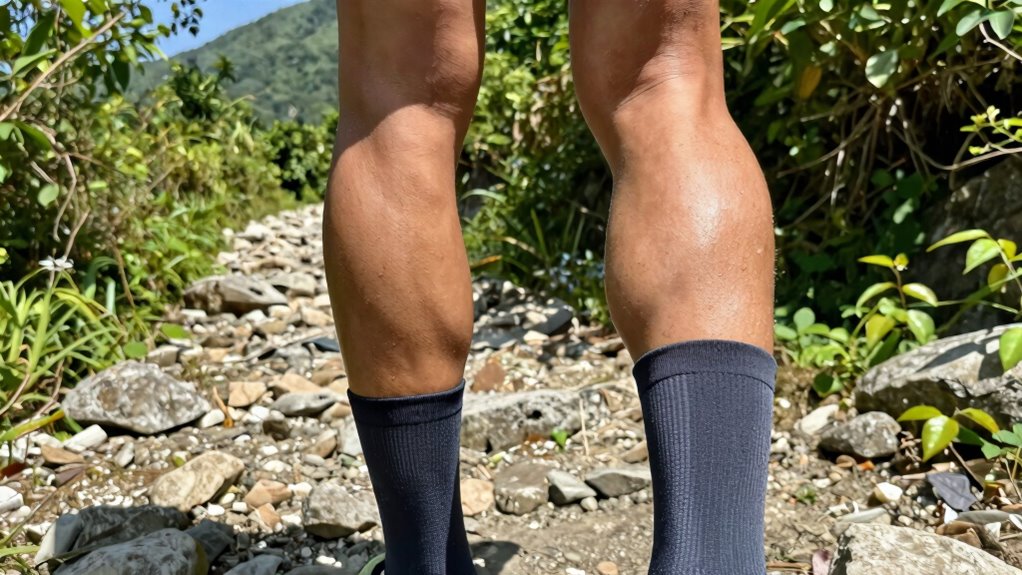
Ever wonder why your calves sometimes ache more during mileage bumps? It’s often a mix of factors, but the key lies in how you prepare and support your muscles. When you increase your mileage suddenly, your calves get put under extra strain. To keep them happy and avoid pain, you need to pay attention to calf stretching and make sure you’re wearing proper footwear. These simple steps make a big difference in how your calves respond to longer runs or unexpected mileage increases.
Proper stretching and supportive shoes help prevent calf pain during mileage increases.
Calf stretching is essential because tight muscles are more prone to fatigue and injury when mileage jumps. Before you hit the road, spend a few minutes doing dynamic stretches like leg swings or lunges to loosen up your calves. After your run, dedicate time to static stretches—bending your foot upward and holding the stretch for 20-30 seconds helps lengthen the calf muscles. Consistently stretching keeps your muscles flexible, reducing the risk of cramps and soreness during mileage bumps. Remember, stretching isn’t a one-time fix; make it part of your regular routine, especially when you plan to increase mileage. When your calves are well-stretched, they can handle the extra load more efficiently, making those mileage increases feel less taxing. Incorporating strength exercises can also improve muscle resilience and reduce strain during sudden mileage increases which is key for preventing injuries. Proper footwear plays a vital role in maintaining calf health during mileage spikes. Wearing shoes that don’t provide enough support can lead to overcompensation by your calves, causing fatigue and discomfort. Conversely, shoes that fit well and have adequate cushioning help absorb shock and reduce the strain on your muscles. Make sure your running shoes are suited to your foot type and replaced regularly—worn-out shoes lose their ability to support your arches and calves properly. If you’re planning a mileage bump, it’s worth investing in quality running shoes that fit well and offer enough support for longer distances. Proper footwear not only prevents calf pain but also helps maintain overall running efficiency, making your mileage increases smoother and more comfortable. Additionally, paying attention to foot biomechanics can help identify specific support needs for your calves during mileage increases.
In addition to calf stretching and proper footwear, listen to your body. If your calves start feeling tight or sore early on, don’t push through the pain. Rest, hydrate, and ice if necessary. Gradually increase your mileage rather than jumping ahead abruptly, giving your calves time to adapt. Staying attentive to these details keeps your calves happy, resilient, and ready to handle those mileage bumps without causing setbacks. With consistent care, your calves will become stronger and more capable of handling longer runs, making your running journey more enjoyable and injury-free.
running calf stretching exercises
As an affiliate, we earn on qualifying purchases.
As an affiliate, we earn on qualifying purchases.
Frequently Asked Questions
What Are Common Signs of Calf Fatigue During Long Rides?
You’ll notice calf fatigue during long rides when your muscles feel tight, sore, or cramp easily, signaling you need some calf stretching. You might also experience a burning sensation or muscle twitching. To aid muscle recovery, take regular breaks and stretch your calves gently. Staying hydrated and properly fueling helps prevent fatigue. Listening to your body and addressing these signs early keeps your calves healthy and ready for the next mile.
How Can I Prevent Calf Soreness After a Ride?
To prevent calf soreness after a ride, focus on calf muscle recovery and follow cycling nutrition tips. For example, after a long ride, you might do gentle calf stretches and use ice to reduce inflammation. Hydrate well and eat foods rich in protein and antioxidants to aid recovery. Incorporate magnesium-rich snacks to relax muscles. These steps help minimize soreness and promote faster healing, keeping your calves healthy for your next ride.
Are There Specific Stretches to Relieve Calf Tension?
Yes, there are specific stretches for calf tension relief. You can try calf stretching by standing facing a wall, placing your hands on it, and stepping one foot back with the heel on the ground. Keep your back leg straight and lean forward gently. This stretch targets your calves and helps relieve tension. Doing this regularly can help reduce soreness and improve flexibility, especially after mileage bumps.
What’s the Best Footwear for Comfortable Riding?
You should prioritize footwear that offers excellent shoe cushioning and ideal footwear ergonomics, as studies show proper support reduces fatigue by 30%. Look for shoes with good arch support and shock absorption to keep your calves comfortable on long rides. The right footwear minimizes strain and helps prevent injuries, so choose shoes designed for comfort and alignment. Your calves will thank you for the extra support during those mileage bumps.
How Does Hydration Affect Calf Comfort During Mileage Bumps?
Hydration plays a vital role in calf comfort during mileage bumps by maintaining electrolyte balance and muscle endurance. When you’re well-hydrated, your muscles stay supple and less prone to cramping or fatigue. Proper hydration guarantees electrolytes like sodium, potassium, and magnesium are balanced, supporting muscle function. This helps you ride longer without calf discomfort, making those mileage bumps easier to handle and keeping your legs feeling strong and pain-free.
Conclusion
Remember, your calves are like the roots of a tree—stable yet flexible. I once pushed my mileage too quickly and felt tightness ripple through my legs, like a branch about to snap. But by listening to my body and taking care of my calves, I stayed grounded. Keep stretching, hydrate, and listen to your muscles. When you nurture them, you’ll grow stronger with each bump in your mileage, just like a tree that flourishes through changing seasons.
Halloween Picks
halloween
As an affiliate, we earn on qualifying purchases.