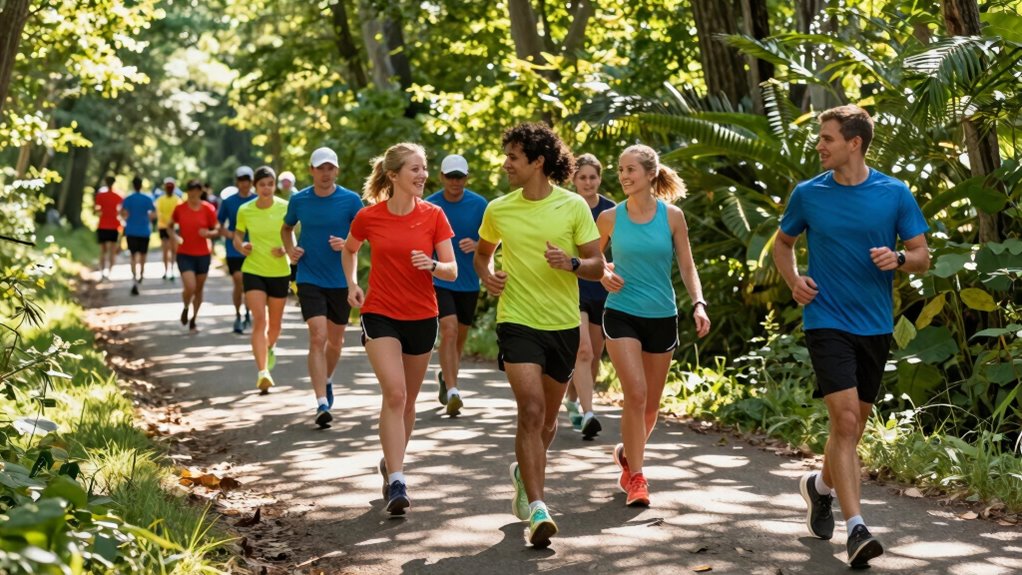
Running has long served as a way for communities to connect, celebrate, and uphold their shared identity. From ancient hunting and spiritual practices to modern relay races, it symbolizes teamwork, resilience, and cultural continuity. Across societies, running isn’t just about competition — it’s about coming together to pass down stories, honor traditions, and build strength collectively. If you keep exploring, you’ll discover the deep roots and powerful stories behind this enduring practice.

Get workout gear delivered free with Prime
- Fast, free delivery on millions of items
- Prime Video, Amazon Music and more included
- Member-only deals all year
Key Takeaways
- Running historically served as a means of communication, celebration, and social cohesion in ancient civilizations.
- Cultural traditions like Japan’s Ekiden and Native American ceremonial runs emphasize teamwork and spiritual connection.
- Running acts as a cultural marker, preserving identity, passing down stories, and strengthening community bonds.
- Collective endurance in running reflects societal resilience and the preservation of cultural values over generations.
- Modern races focus on community spirit, charity, and shared purpose, maintaining the tradition of running as a unifying practice.
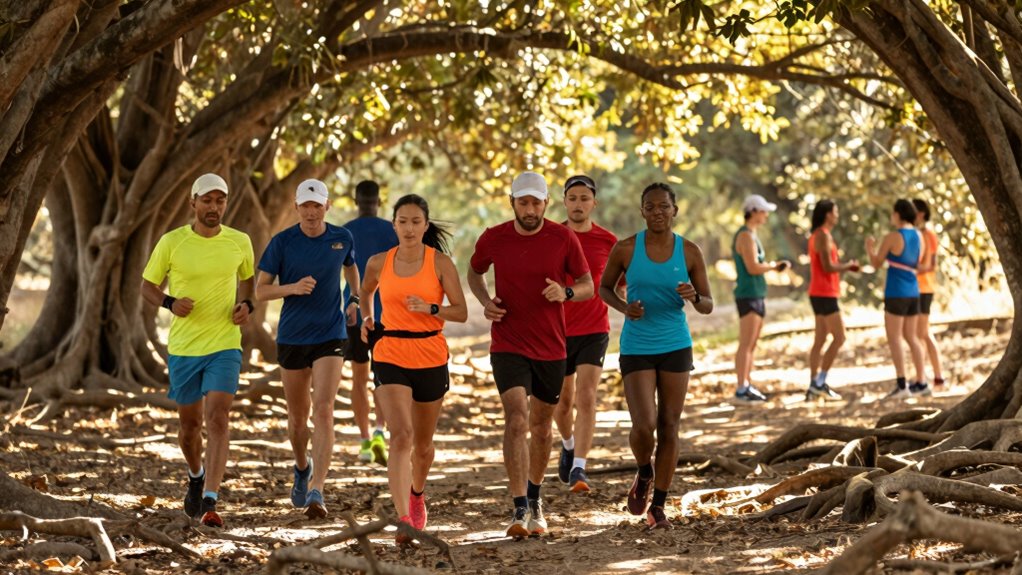
Running has always been more than just a solitary act; it’s a tradition that binds communities across cultures and centuries. From ancient times, people have relied on running not merely to move quickly but to forge bonds, share stories, and uphold cultural values. The roots of this collective spirit are deeply embedded in historical endurance—an enduring proof to human resilience and communal identity. Long before modern races and marathons, indigenous tribes and early civilizations used running as a way to communicate, celebrate, and survive. These events often symbolized more than individual prowess; they represented the strength and unity of the group. For example, in the African savannahs, long-distance running was integral to hunting and social cohesion, strengthening cultural traditions that continue today. Similarly, the ancient Greeks viewed running as a fundamental part of their athletic festivals, such as the Olympic Games, where it embodied both physical excellence and communal pride.
Throughout history, cultural traditions have shaped how communities approach running, transforming it from mere physical activity into a shared ritual. In Japan, the tradition of long-distance running, or “Ekiden,” symbolizes teamwork and perseverance, with relay races emphasizing collective effort over individual achievement. Native American tribes held ceremonial runs that reinforced spiritual beliefs and connected generations. These practices weren’t just about winning; they were about passing down stories, values, and identities through generations. The act of running became a living expression of cultural heritage, reinforcing community bonds and fostering a sense of belonging. In many cultures, communal runs or festivals still serve as occasions for celebration, remembrance, and social cohesion, illustrating how deeply rooted running is in cultural identity and tradition. Recognizing the cultural significance of these traditions highlights how running has served as a vital tool for maintaining social bonds and cultural continuity. The enduring nature of these practices demonstrates how physical activity can be a powerful form of cultural expression and tradition preservation. As these practices continue, they also serve as a reminder of the importance of preserving indigenous knowledge and traditional skills connected to physical activity.
Understanding the history behind running reveals that it’s always been about more than competition; it’s about connection and continuity. Communities have used running to mark important events, celebrate milestones, or honor ancestors, making it a crucial thread in the fabric of cultural traditions. The endurance shown in these collective efforts echoes the resilience of societies themselves—an ongoing proof to human strength and unity. Today, while races often highlight personal achievement, many modern running events still emphasize community spirit, charity, and shared purpose. Recognizing the historical endurance and cultural roots of running helps us appreciate that every stride we take is part of a larger story—one that spans generations and unites people through the simple yet profound act of moving forward together.
Products Worth Considering

Garmin Forerunner 55 GPS Running Smartwatch, Black

Garmin Forerunner 165 GPS Running Smartwatch, 43 mm, Black

Garmin Forerunner 70 GPS Running Smartwatch, 43 mm, Black
As an affiliate, we earn on qualifying purchases.
Frequently Asked Questions
How Did Ancient Runners Organize Their Community Events?
Ancient runners organized their community events around shared goals and rituals. You’d see ancient race rituals that celebrated gods or honor traditions, creating a sacred atmosphere. Community storytelling played a crucial role, where participants and spectators exchanged stories, reinforcing bonds. These events weren’t just competitions—they fostered unity, cultural identity, and collective pride. By participating in rituals and storytelling, you became part of a tradition that connected everyone through history and shared values.
What Cultural Traditions Are Tied to Communal Running Practices?
You’ll find that communal running practices often incorporate cultural symbolism and historical rituals, emphasizing community bonds and cultural identity. These traditions might include ceremonial races, offerings, or storytelling that honor ancestors or deities. You participate in rituals that reinforce cultural values, connecting you with your heritage. These practices transform running from mere exercise into a meaningful act that preserves history, celebrates shared identity, and strengthens community ties through time-honored symbolism.
How Has Technology Influenced Community Running Over History?
You’ve likely noticed that technology has revolutionized community running, with over 3.5 million virtual marathon finishers in recent years. Tech-enabled coaching provides personalized training plans, making running more accessible and connected. Virtual marathons allow people worldwide to participate without travel, fostering a global community. These innovations help runners stay motivated, share experiences, and build bonds, proving that technology enhances the communal spirit of running beyond traditional races.
Are There Specific Rituals Associated With Communal Running?
Yes, there are specific rituals associated with communal running. You might start with a warm-up, symbolizing unity and readiness, and end with a cool-down, emphasizing reflection and connection. Personal motivations often drive these rituals, reinforcing shared purpose. Ritual symbolism, like wearing team colors or performing group cheers, strengthens community bonds and highlights collective identity. These rituals transform running into more than just exercise—they become meaningful acts of togetherness.
How Do Modern Running Clubs Sustain Community Bonds?
Modern running clubs sustain community bonds by fostering training camaraderie and social connectivity. You participate in group runs, where shared goals and mutual encouragement strengthen relationships. Clubs often organize social events, races, and workshops, creating a supportive environment beyond just running. This continuous interaction builds trust and friendship, making members feel connected and motivated. Your active involvement helps sustain the sense of community that keeps runners engaged and inspired over time.
Conclusion
As you lace up and hit the trail, remember you’re joining a timeless river flowing through history—its waters carrying stories of unity, perseverance, and shared passion. Running isn’t just about crossing finish lines; it’s about weaving a vibrant tapestry of community that stretches back centuries. So, keep moving forward, knowing every step you take adds your thread to this enduring fabric, keeping the spirit of connection alive in every heartbeat and breath.