To dry wet shoes without damaging the foam, start by removing insoles and laces, then gently blot with a towel to absorb moisture. Stuff the shoes with crumpled newspaper or paper towels to draw out dampness from inside. Place them in a shaded, well-ventilated area, avoiding direct sunlight or heat sources. Use fans or a hairdryer on the lowest heat setting, keeping it at a safe distance and moving constantly. If you want to learn more about safe drying techniques, keep exploring helpful tips.

Get workout gear delivered free with Prime
- Fast, free delivery on millions of items
- Prime Video, Amazon Music and more included
- Member-only deals all year
Key Takeaways
- Remove insoles and laces, then gently blot shoes with a towel to absorb surface moisture.
- Stuff shoes with newspaper or paper towels to draw moisture from inside without deforming foam.
- Air dry shoes in a shaded, well-ventilated area, avoiding direct sunlight and high heat sources.
- Use a fan or a hairdryer on the lowest heat setting, keeping it at a safe distance and moving constantly.
- Allow sufficient time for natural drying, avoiding rushing to prevent warping or damage to foam and materials.
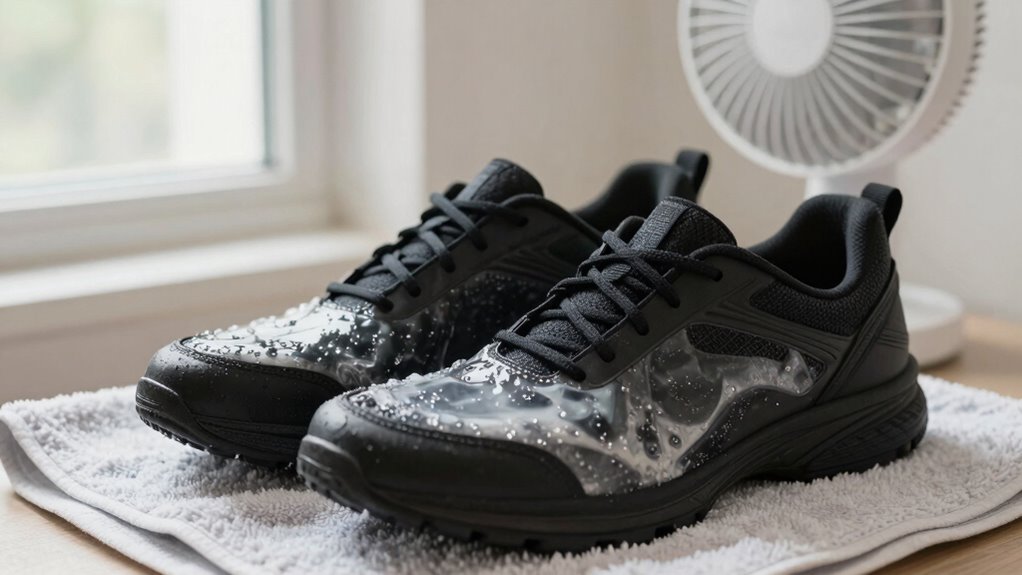
Getting your shoes wet can be frustrating, especially when you want to dry them quickly without damaging the foam inside. The key to achieving this lies in understanding your shoe material and choosing the right drying methods. Different materials, such as leather, canvas, or synthetic fabrics, respond differently to various drying techniques. Leather shoes, for example, require gentle handling to prevent cracking or warping, while canvas and synthetic shoes are more forgiving but still demand care to preserve their integrity. No matter the material, rushing the drying process can cause the foam insoles to lose their shape, become deformed, or develop unpleasant odors. That’s why knowing how to dry shoes properly is vital for maintaining their comfort and longevity.
Proper shoe drying preserves shape, prevents damage, and extends your footwear’s lifespan.
When it comes to drying methods, air drying is generally the safest option. You want to remove excess water without subjecting your shoes to direct heat, which can cause damage to the shoe material and the foam inside. To start, remove the insoles and laces, then gently blot the shoes with a clean towel to soak up surface moisture. Avoid wringing or squeezing, as this can distort the shape and harm the foam. Instead, stuff the shoes with crumpled newspaper or paper towels to absorb moisture from the inside. This not only helps draw out water but also helps maintain the shoe’s form as it dries. Additionally, understanding the shoe material, such as leather or synthetic fabrics, guides you in selecting the most appropriate drying technique. Knowing the properties of different shoe materials can help you tailor your drying approach for better results. Using proper drying techniques can significantly extend the lifespan of your footwear. It is also helpful to be aware of the effects of heat on foam, which can guide your choice of drying tools to avoid damage.
For faster drying, you might consider using a fan or placing your shoes in a well-ventilated area. Just be cautious not to expose them to direct sunlight or high heat sources like radiators or heaters, which can cause the shoe material to crack or warp. If you’re in a hurry, some people use a hairdryer on the lowest heat setting, but keep the dryer at a safe distance and move it constantly to avoid localized overheating. Incorporating appropriate drying tools like a fan can also help speed up the process while maintaining safety. Remember, never use a microwave or oven, as the intense heat can ruin the foam and ruin the shoes altogether.
Ultimately, patience is your best ally. Allow your shoes to dry naturally in a shaded, ventilated space until they’re completely dry. This gentle process prevents damage to the foam and preserves the shoe material’s integrity. By understanding your shoes’ material and employing the right drying methods, you can keep your footwear in good shape without risking warping, cracking, or sogginess. Proper drying not only extends the life of your shoes but also ensures they stay comfortable and supportive for every step you take.
As an affiliate, we earn on qualifying purchases.
Frequently Asked Questions
How Long Does It Typically Take to Dry Wet Shoes?
It usually takes 12 to 24 hours for your shoes to dry completely, depending on humidity and airflow. To prevent shoe odor and mold, you should remove insoles and laces, and stuff the shoes with paper towels or newspaper to absorb moisture. Placing them in a well-ventilated area speeds up drying. Regularly drying your shoes helps prevent mold growth and keeps them smelling fresh longer.
Can Drying Shoes in the Sun Damage the Foam?
Yes, exposing your shoes to the sun can turn your foam into a crispy, frying-pan disaster. Sun exposure accelerates foam deterioration, making it brittle and prone to cracking—like a cookie left in the oven too long. So, if you want your shoes to last, avoid the blazing sun. Instead, opt for air drying in a shaded, well-ventilated spot to keep your foam intact and happy.
Is Using a Hairdryer Safe for Drying Foam Shoes?
Using a hairdryer to dry foam shoes can be risky if you don’t use it carefully. The heat can cause damage, leading to foam deformation or weakening the material. To stay safe, keep the dryer on a low or cool setting and hold it at a distance. Avoid concentrated heat, and don’t leave it running in one spot. This way, you prevent heat damage and preserve your shoes’ shape.
Should I Remove the Insoles Before Drying?
Yes, you should remove the insoles before drying your shoes. Insole removal allows better airflow, preventing moisture buildup and reducing the risk of mold or odor. When using shoe drying techniques, take out the insoles and let them dry separately. This helps your shoes dry faster and more thoroughly. Be gentle, and avoid direct heat which can damage the foam. Air drying in a well-ventilated area is usually the safest method.
What Are Alternative Methods to Dry Shoes Quickly?
Think of your shoes as seeds needing quick sunlight to sprout again. Using a dehumidifier benefits your process by pulling moisture away, speeding up drying. Place shoes on a sturdy shoe drying rack, allowing air to circulate freely around them. For faster results, combine both methods—placing the rack in a well-ventilated room with a dehumidifier. This twin approach guarantees your shoes dry swiftly without harm.
Conclusion
Now that you know how to carefully dry your shoes, think of them as a delicate garden that needs gentle tending. With patience and the right methods, you’ll restore them to their former glory, avoiding the destructive storm of damage. Your shoes will emerge resilient, ready to take on new adventures, whispering stories of care and resilience. Keep their spirit alive, and they’ll walk with you through countless journeys ahead.
Halloween Picks
halloween
As an affiliate, we earn on qualifying purchases.