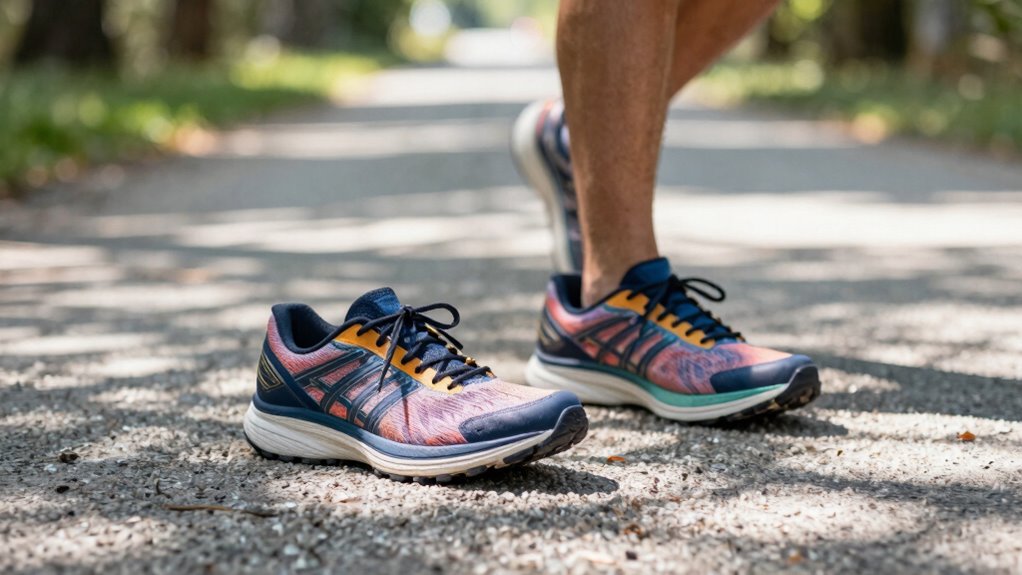

To rotate your super shoes without wasting their best miles, choose two or three pairs tailored to specific runs, like speed workouts or long distances. Track your mileage for each pair to guarantee even wear and prevent overuse. Allow shoes to decompress between runs and inspect them regularly for wear signs. This way, you optimize performance and keep your feet feeling fresh. Discover more techniques to enhance your shoe rotation strategy for peak running performance.

Get workout gear delivered free with Prime
- Fast, free delivery on millions of items
- Prime Video, Amazon Music and more included
- Member-only deals all year
Key Takeaways
- Designate specific shoes for different types of runs to maximize their performance potential and prevent overuse.
- Track mileage for each pair to ensure even wear and avoid wasting the best miles on any single shoe.
- Rotate shoes frequently, ideally every few runs, to allow each pair to decompress and maintain optimal cushioning.
- Choose terrain-appropriate shoes for varied surfaces to enhance stability and comfort, reducing the risk of injury.
- Regularly inspect shoes for wear and prioritize newer pairs for important workouts to make the most of their capabilities.

When it comes to maximizing the performance of your super shoes, many runners find that rotating them can make a significant difference. By using multiple pairs, you not only extend the life of each shoe but also enhance your overall running experience. This strategy isn’t just about having a backup pair; it’s a smart way to optimize performance and keep your feet feeling fresh.
Start by choosing two or three pairs of super shoes, ideally suited for different types of runs. For instance, you might have a pair for speed workouts, another for long runs, and a third for recovery days. This variety allows you to tailor your footwear to the specific demands of each run, making sure you’re always equipped for performance optimization. Mixing up your shoes also helps distribute the wear and tear, which is essential for shoe longevity.
To rotate effectively, keep a log of your runs. Track how many miles each pair has accumulated. This way, you can guarantee you’re not overusing one pair while neglecting another. By consciously switching shoes based on mileage and intensity, you can manage their lifespan and prevent premature breakdown. It’s one of those shoe longevity tips that can really pay off. Incorporating proper recovery techniques can also help extend their lifespan. Additionally, paying attention to shoe materials can inform you about how well they’re holding up over time. Being aware of material degradation can help you identify when it’s time to retire a pair before they become unsafe or ineffective. Regularly inspecting your shoes and understanding the signs of wear and tear can further aid in optimal rotation planning.
Another key factor in your rotation strategy is the terrain. If you’re running on varied surfaces, different shoes can provide the right grip and cushioning. For instance, if you’re hitting the trails one day and the road the next, using shoes designed for each environment can enhance your stability and comfort. This not only optimizes your performance but also reduces the risk of injury.
Timing also plays a role in your rotation. Ideally, you should rotate your shoes every few runs to allow each pair time to decompress. Super shoes often contain advanced materials that need recovery time. By giving your shoes a chance to bounce back, you’ll retain their responsiveness and cushioning for a longer period. Regularly inspecting your shoes for signs of wear can help you determine when a pair is nearing the end of its life. If you catch issues early, you can adjust your rotation to prioritize newer shoes for important runs, making sure you don’t waste their best miles.
As an affiliate, we earn on qualifying purchases.
Frequently Asked Questions
How Often Should I Replace My Super Shoes?
You should replace your super shoes every 300 to 500 miles, depending on your running style and the shoe’s construction. Keep an eye on your mileage tracking, and consider rotating them with other pairs to extend their lifespan. If you notice significant wear or a drop in performance, it’s time to get new ones. Regularly check for wear patterns, as this can help you decide when to retire your favorite pair.
Can I Use Super Shoes for Everyday Training?
Sure, you can use super shoes for everyday training, but keep their performance benefits in mind. Stride smartly, balancing training intensity with shoe longevity. By mixing in regular trainers, you’ll maintain your super shoes’ springy spark while enjoying daily runs. This way, you’ll preserve their powerful performance for race day and avoid wear and tear during routine runs. So, lace up wisely and let each shoe shine in its own right!
What Is the Lifespan of Super Shoes?
Super shoes typically last between 200 to 300 miles, depending on your weight, running style, and the shoe technology involved. Their performance metrics can decline as the cushioning compresses and the outsole wears down. To maximize their lifespan, keep track of your mileage and rotate them with other shoes. This way, you’ll maintain peak performance while extending their usability for race day or speed workouts.
Are Super Shoes Suitable for All Running Surfaces?
Super shoes excel on paved roads, offering impressive surface grip and responsiveness. However, their terrain adaptability can be limited. While some designs handle light trails, they struggle on rugged surfaces. If you’re hitting diverse road conditions, consider pairing your super shoes with a more versatile option. The advanced shoe technology may enhance your performance, but it’s key to know when to switch based on the terrain you’re tackling.
How Do I Clean My Super Shoes Properly?
To clean your super shoes properly, start by removing the laces and insoles. Use a soft brush or cloth to remove dirt and debris, focusing on the outsole. For tougher stains, a mild soap solution works best. Rinse with water, but avoid soaking them. Air dry in a cool place, away from direct sunlight. These shoe maintenance tips help keep your shoes in top shape, prolonging their life and performance with effective cleaning techniques.
Conclusion
In the dance of miles, let your super shoes twirl gracefully, embracing each stride with purpose. By rotating them wisely, you’ll stretch their lifespan like a well-loved melody, ensuring the rhythm of your runs never falters. Keep the tread fresh and the energy alive, like a vibrant tapestry woven with diverse threads. So lace up, mix it up, and watch your performance soar—your feet will thank you, and every mile will sing a sweet song of endurance.
Fall Picks
fall essentials
As an affiliate, we earn on qualifying purchases.