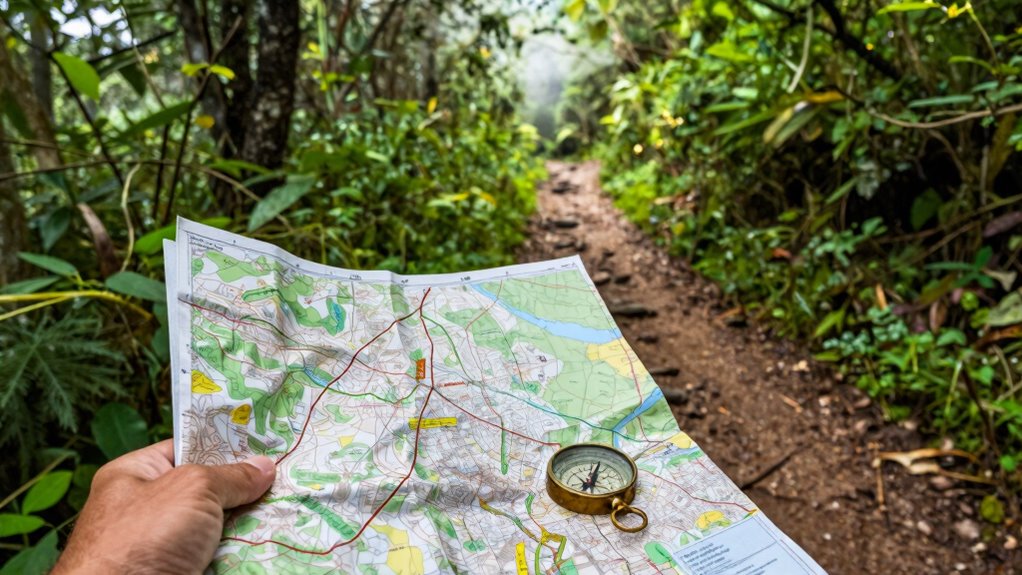

To tell if your watch maps are good enough for local trails, check if they accurately display trails, paths, and landmarks. Look for high-resolution maps that reflect current conditions. Make certain the GPS reliably connects in various environments, especially dense forests or urban areas. Assess battery life to confirm your watch lasts through your adventures. If you find performance issues or lacking features, you’re not fully prepared for your outdoor activities. Discover more key aspects next.

Get workout gear delivered free with Prime
- Fast, free delivery on millions of items
- Prime Video, Amazon Music and more included
- Member-only deals all year
Key Takeaways
- Verify Map Resolution: Ensure the watch maps display high-resolution details of trails, landmarks, and paths for accurate navigation.
- Check Trail Compatibility: Assess if your watch is optimized for the specific terrain types you’ll encounter, such as urban versus rugged landscapes.
- Test GPS Accuracy: Review user feedback for GPS reliability in various environments, especially in dense forests or urban settings where signal can falter.
- Evaluate Battery Life: Confirm the device’s battery longevity under GPS mode to ensure it lasts throughout your outdoor activities without interruption.
- Explore Map Features: Look for additional functionalities like offline maps and route planning to enhance usability in unpredictable outdoor conditions.
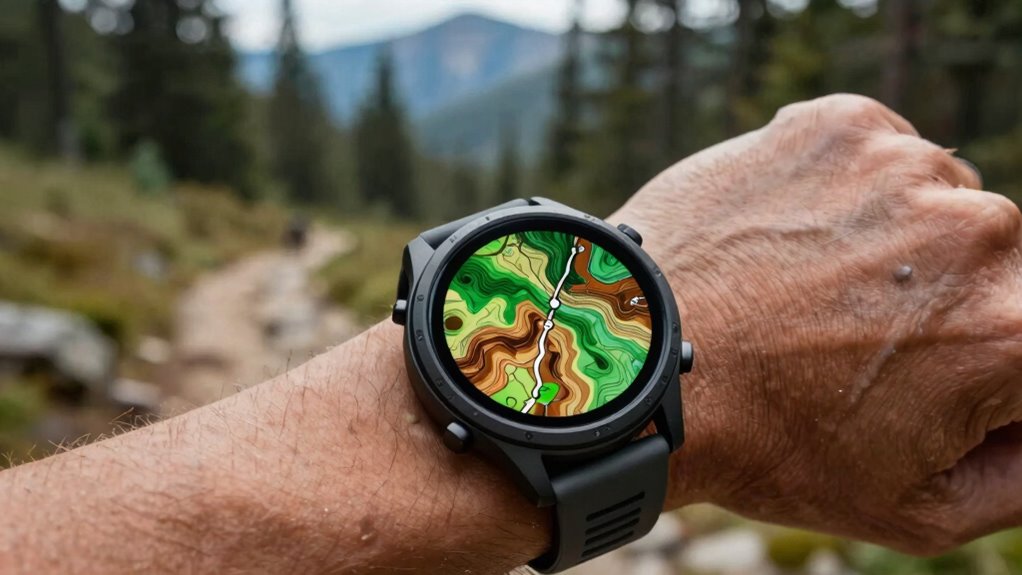
Are your watch maps really up to par? If you’re hitting the trails regularly, you need to make certain your watch maps are reliable and accurate. Mapping accuracy is vital, especially when traversing unfamiliar terrain types. You wouldn’t want to find yourself lost in the woods because your watch led you astray. Check if your watch offers high-resolution maps that accurately depict trails, paths, and landmarks.
Next, reflect on trail compatibility. Not all watches are created equal when it comes to the trails you want to explore. Some watches may excel in urban environments but falter in rugged landscapes. Confirm your device is designed for the type of trails you regularly hike or run on. If you’re into mountain biking or trail running, your watch should account for diverse terrain types to give you the best experience.
GPS reliability is another factor you can’t overlook. A watch with poor GPS accuracy can lead to frustration and misadventures. Make sure it connects quickly and consistently to satellites, even in dense forests or urban settings. User reviews are a goldmine of information; take a moment to read what others have experienced with GPS accuracy on your watch model. If you see recurring complaints about GPS issues, it might be time to think about an upgrade. Additionally, understanding the mapping features your device offers can help you utilize its full potential during your outdoor adventures. Staying informed about mapping updates can ensure your device maintains optimal accuracy over time. Regularly updating your device’s firmware can also improve overall mapping accuracy.
Battery life is another aspect. A watch that can’t hold a charge for an entire day of hiking can be a dealbreaker. Look for watches that offer extended battery life, especially in GPS mode. You don’t want your device dying halfway through your adventure, leaving you without navigation tools.
Finally, pay attention to map features. Some watches offer additional functionalities, such as route planning or offline maps. These features can be incredibly useful for dynamic environments. Evaluate your needs and how your watch meets them. If your device ticks all these boxes, you’re likely set for a great outdoor experience. If not, it might be time to explore new options.
GPS hiking watch with offline maps
As an affiliate, we earn on qualifying purchases.
As an affiliate, we earn on qualifying purchases.
Frequently Asked Questions
Can I Use My Smartwatch Offline for Trail Navigation?
Yes, you can use your smartwatch offline for trail navigation if it has the right features. Look for models that support offline navigation, allowing you to download maps in advance. Before heading out, preload your desired trails onto your watch. This way, you won’t rely on a cellular connection while exploring. Always check that your smartwatch’s battery is charged, as navigation can consume more power than usual during your adventures.
How Often Are the Map Updates Released for My Watch?
Think of your watch’s maps as a garden that needs regular watering. Typically, map updates are released every few months, ensuring your trails stay fresh and accurate. This update frequency helps maintain map accuracy, so you won’t get lost in the wilderness. To keep your navigation sharp, check for updates often and sync your device regularly. This way, you’ll always have the latest trails at your fingertips, ready for adventure.
What Types of Maps Are Best for Hiking Trails?
For hiking trails, topographic maps are the best choice. They highlight elevation changes and terrain features, helping you navigate steep areas or valleys. You’ll want to guarantee your maps have high accuracy for reliable guidance. Look for features like contour lines and detailed landmarks, which can make a big difference on your hike. If your watch offers these maps, you’re likely set for a safe and enjoyable outdoor adventure.
Are There Specific Watches Recommended for Trail Mapping?
Yes, several watches excel in trail mapping. Look for models with high GPS accuracy and long battery life, like the Garmin Fenix series or Suunto 9. These watches offer essential trail features, including offline maps for areas without cell service. Make certain to check user reviews to guarantee the watch meets your specific needs. With the right choice, you’ll navigate local trails confidently and efficiently.
How Do I Troubleshoot Map Loading Issues on My Watch?
If your maps aren’t loading, don’t panic! Start by checking your watch’s connectivity; make sure it’s paired properly with your phone. Try restarting both devices to refresh the connection. For map synchronization tips, verify you’re using the latest software and that your maps are downloaded and updated. If issues persist, explore the watch’s settings or consult the user manual for troubleshooting connectivity. You’ll be back on those trails in no time!
Conclusion
In the end, it’s essential to trust your watch maps for local trails just like you’d trust a trusty compass in a foggy forest. If they guide you well, support features like real-time updates and offline access can be your lifeline. Don’t settle for anything less than reliable; after all, you wouldn’t want to get lost in your own backyard. So, gear up, stay adventurous, and let your watch lead the way through nature’s wonders!
Evergreen bestsellers Picks
bestsellers
As an affiliate, we earn on qualifying purchases.