

Football's best-kept secret lies in how player positions dictate their strength levels. Centre-backs need upper body power for aerial duels, while strikers depend on explosive strength for quick sprints and sharp direction changes. Midfielders must blend strength with stamina to cover the field effectively, while wingers and full-backs focus on speed and agility over sheer power. Each position demands tailored training to unlock its full potential. Discover how these nuances play a vital role in overall performance.

Get workout gear delivered free with Prime
- Fast, free delivery on millions of items
- Prime Video, Amazon Music and more included
- Member-only deals all year
Key Takeaways
- Player positions significantly influence the specific strength attributes needed for optimal performance in football.
- Defensive players require robust upper and lower body strength for tackling and aerial challenges.
- Forwards depend on explosive strength to enhance sprinting, direction changes, and navigating tight spaces.
- Midfielders need a balanced strength profile combining strength and endurance for effective play across the pitch.
- Wingers and full-backs prioritize speed and agility, requiring training focused on explosive power and quick movements.
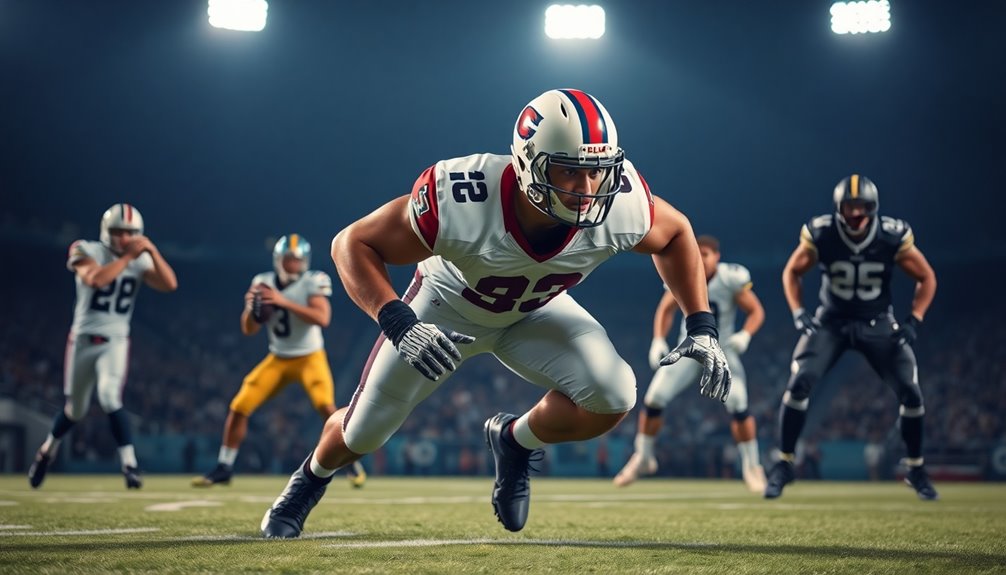
In football, understanding player positions and their required strength levels is crucial for optimizing performance. Each position demands unique physical attributes tailored to specific responsibilities on the field. For instance, a quarterback must exhibit exceptional arm strength and agility, while a lineman relies heavily on explosive power and mass to withstand intense physical confrontations. Exploring these football position strength secrets can reveal how athletes can tailor their training regimens to enhance their capabilities for their specific roles. Ultimately, a deeper understanding of these demands not only improves individual performance but also contributes to the overall effectiveness of the team.
For instance, defensive players like centre-backs need substantial upper body strength to win aerial duels and effectively challenge strikers. When you're out there, you'll notice that a strong upper body can make all the difference in holding your ground during set pieces or one-on-one situations.
Forwards, particularly strikers, thrive on explosive strength. This attribute enhances sprinting capabilities, allowing you to unleash powerful bursts of speed that are essential when attacking the goal. Quick direction changes can be the key to beating defenders, and that explosive strength helps you navigate tight spaces.
Meanwhile, midfielders, especially those who play a box-to-box role, need a balanced strength profile. They've to withstand tackles while maintaining the stamina to cover large distances throughout a match. If you play this position, you'll find that endurance is just as important as strength.
When it comes to defensive players, like linebackers and defensive ends, lower body strength is paramount. You need to execute powerful tackles and maintain stability against ball carriers. This strength allows you to stay grounded while making pivotal stops, which can turn the tide of a game.
In contrast, wingers and full-backs often emphasize speed and agility over raw strength. They require a blend of explosive power and endurance to outpace defenders and support both offensive and defensive plays. If you find yourself in these positions, honing your speed and agility will help you make a significant impact on the game.
It's essential to recognize how these varying strength levels influence your training regimen. By tailoring your workouts to match your position's demands, you can enhance your performance on the field.
Whether it's focusing on upper body strength for defensive players, explosive strength for forwards, or stamina for midfielders, your approach should be strategic. This nuanced understanding of player positions and their corresponding strength levels not only optimizes individual performance but also contributes to team success.
football training upper body strength equipment
As an affiliate, we earn on qualifying purchases.
As an affiliate, we earn on qualifying purchases.
Conclusion
In football, understanding how player positions dictate strength levels can give you a competitive edge. Whether you're a quarterback needing explosive power or a lineman relying on raw strength, recognizing these dynamics is crucial. Embracing your role and tailoring your training accordingly can unlock your full potential. So, pay attention to your position, enhance your specific strengths, and watch as you transform into a powerhouse on the field. Your success starts with knowing how to leverage your unique attributes!
Fall Picks
fall essentials
As an affiliate, we earn on qualifying purchases.