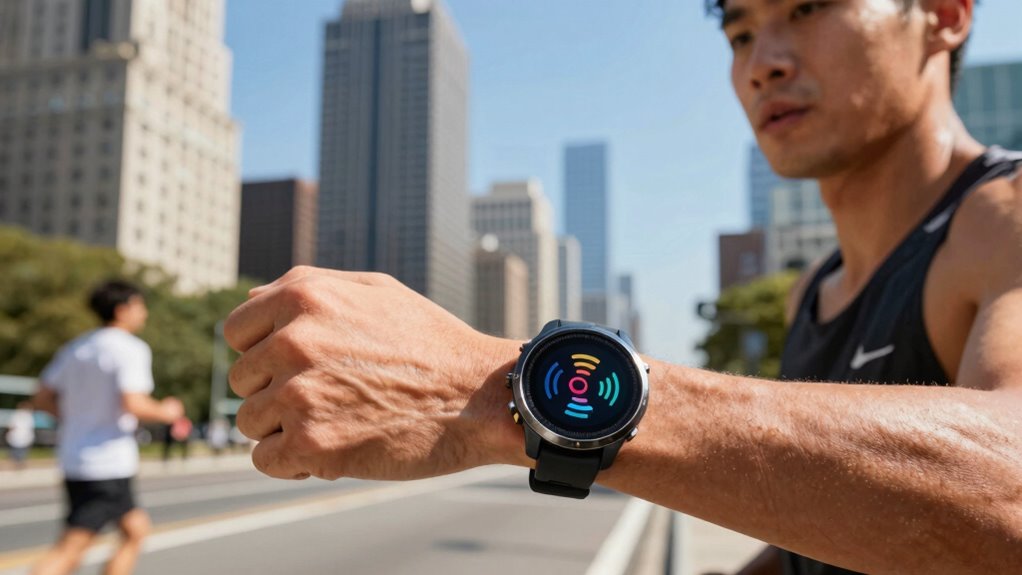

Dual-frequency GPS matters most in city running because it cuts through the chaos of tall buildings and crowded streets. By receiving signals from multiple satellites, it enhances accuracy, reducing navigation errors that could lead to missed turns or wrong distances. This technology helps you stay focused on your performance, ensuring you maintain your desired pace and route. With dual-frequency GPS, you can explore new paths confidently and enjoy your urban runs. Discover more about its advantages and how it can transform your experience.

Get workout gear delivered free with Prime
- Fast, free delivery on millions of items
- Prime Video, Amazon Music and more included
- Member-only deals all year
Key Takeaways
- Dual-frequency GPS improves accuracy in urban environments, overcoming challenges posed by tall buildings and crowded streets.
- It filters out errors from obstructions and atmospheric interference, ensuring reliable positioning for runners.
- Enhanced navigation confidence allows runners to focus on performance without worrying about miscalculations.
- Dual-frequency systems provide clearer tracking in urban canyons, reducing the risk of navigation errors.
- Trustworthy GPS data supports better route exploration and aids in achieving specific distance goals.

When you’re traversing the bustling streets of a city, dual-frequency GPS technology can be a game changer. You might think your regular GPS works just fine, but when you’re running in urban environments, the challenges multiply. Tall buildings, narrow streets, and crowded sidewalks can all affect satellite signals, leading to inaccuracies that can throw you off course. With dual-frequency GPS, you gain improved satellite accuracy, allowing you to steer through complex city landscapes with confidence.
Imagine you’re out for a run, weaving in and out of traffic, dodging pedestrians, and maneuvering turns. Regular GPS systems often struggle in these conditions, resulting in delays or miscalculations that can disrupt your pace. Dual-frequency GPS, on the other hand, receives signals from multiple satellites across different frequencies. This means it can filter out errors caused by obstructions and atmospheric interference. The result? You get a more reliable read on your position, helping you maintain your desired route and pace.
Imagine navigating crowded streets with precision; dual-frequency GPS ensures accurate positioning, keeping your run on track even amidst urban chaos.
Urban navigation can be tricky, especially when you’re trying to follow a specific path or hit certain distance goals. If your GPS isn’t working accurately, you might end up running longer or shorter distances than intended. With dual-frequency technology, you can trust that you’re getting the right data, letting you focus on your performance rather than worrying about whether you’re on track. It’s like having a reliable partner by your side, guiding you through the maze of city streets.
Moreover, the enhanced satellite accuracy of dual-frequency GPS means it can better handle urban canyons, those streets flanked by skyscrapers that sometimes confuse standard GPS systems. When you’re running in these areas, the last thing you want is a navigation error leading you astray. The dual-frequency system cuts through the noise, giving you a clearer picture of your location.
Incorporating dual-frequency GPS into your running routine not only enhances accuracy but also boosts your overall experience. You’ll find that you can explore new routes with confidence, knowing your device can handle the challenges of urban environments. So, next time you lace up your shoes for a city run, consider the advantages of dual-frequency GPS technology. It could very well transform the way you traverse your favorite routes.
Additionally, understanding the satellite accuracy of your GPS device can help you make more informed choices about your gear and improve your overall running experience.
dual-frequency GPS running watch
As an affiliate, we earn on qualifying purchases.
As an affiliate, we earn on qualifying purchases.
Frequently Asked Questions
How Does Dual-Frequency GPS Work Compared to Standard GPS?
Dual-frequency GPS uses two different signal frequencies, improving signal accuracy compared to standard GPS, which typically relies on one. In urban navigation, this means you’ll experience fewer errors, even in challenging environments like canyons of buildings. The additional frequency helps your device filter out interference from obstacles, ensuring you get a more precise location fix. So, when you’re running through the city, you’ll stay on track more reliably with dual-frequency GPS.
Is Dual-Frequency GPS More Expensive Than Regular GPS?
When it comes to GPS tech, you often get what you pay for. Dual-frequency GPS is typically more expensive than regular GPS due to its advanced technology benefits. The cost comparison reflects its ability to provide more accurate positioning, especially in challenging environments like urban areas. While it may stretch your budget, investing in dual-frequency GPS can enhance your running experience, ensuring you stay on track without missing a beat.
Can Dual-Frequency GPS Be Used for Hiking or Biking?
Yes, dual-frequency GPS can definitely be used for hiking and biking. Its enhanced accuracy provides significant hiking benefits, helping you navigate tricky trails with confidence. When biking, it improves your route tracking, ensuring you stay on course even in challenging environments. This technology reduces signal interference, giving you reliable data for both activities. So, whether you’re conquering mountains or cycling through parks, dual-frequency GPS enhances your experience.
What Are the Battery Implications of Dual-Frequency GPS Devices?
Imagine your phone’s battery draining faster than your excitement during a marathon. Dual-frequency GPS devices can enhance signal accuracy, but they often require more power. You might find that while they offer improved performance, battery efficiency takes a hit, especially in urban environments with many obstacles. So, if you’re planning a long run, keep a portable charger handy to guarantee your GPS stays on track as you navigate the city’s twists and turns.
Are All Running Watches Equipped With Dual-Frequency GPS?
Not all running watches come with dual-frequency GPS. While many high-end models offer this feature for better accuracy advantages and improved urban navigation, budget-friendly options typically stick to single-frequency GPS. If you’re serious about tracking your runs in the city, investing in a dual-frequency watch can make a significant difference. You’ll enjoy more precise data, ensuring you’re always on the right path, even in challenging environments like urban areas.
Conclusion
In city running, dual-frequency GPS isn’t just a nice-to-have; it’s a game-changer. With its ability to cut through urban canyons and bounce signals off towering buildings, you’ll experience accuracy that feels like you’re gliding through a digital sky. No more wandering off track or second-guessing your route! Embrace the precision and confidence dual-frequency GPS brings, and transform your runs into exhilarating adventures, where every step leads you exactly where you want to go.
Halloween Picks
halloween
As an affiliate, we earn on qualifying purchases.